Pigeon Chest Brace: An Evidence-Based Patient Guide

Bracing is commonly the first treatment option for flexible pectus carinatum in growing children and teenagers. The brace must be fitted and adjusted by an experienced clinical team; an online, off-the-shelf brace may not provide safe or effective pressure.
Key Takeaways
- Bracing is commonly the first treatment option for flexible pectus carinatum in growing children and teenagers.
- The brace must be fitted and adjusted by an experienced clinical team; an online, off-the-shelf brace may not provide safe or effective pressure.
- Many people wear a brace for months, often with a more intensive correction phase followed by maintenance wear.
- Skin irritation, discomfort and pressure sores can occur, but are often reduced through correct fit, gradual adjustment and skin care.
- Adults may still benefit when the chest wall is flexible, although correction can take longer and surgery may be considered in selected cases.
A pigeon chest brace is a non-surgical treatment that applies measured pressure to gradually flatten the outward breastbone seen in pectus carinatum, also called pigeon chest. It is most effective when the chest wall is still flexible, so assessment, custom fitting and regular follow-up with a specialist are important.
Overview: What Is a Pigeon Chest Brace?
A pigeon chest brace is a medical compression brace used to treat pectus carinatum, a chest-wall difference in which the breastbone and nearby ribs project outward. The brace delivers controlled pressure over the prominent area, encouraging the flexible chest wall to gradually move toward a flatter position. For many children and teenagers with a flexible chest wall, it is the preferred first approach because it avoids an operation.
Pectus carinatum is usually noticed during childhood or adolescence and may become more apparent during a growth spurt. It does not always cause physical health problems, but some people experience chest discomfort with activity, shortness of breath, or concerns about appearance and confidence. A clinician can assess whether symptoms are related to the chest shape or another condition.
A brace is not a one-size-fits-all product. Effective treatment depends on an individual assessment, appropriate pressure measurement, a well-fitting device and ongoing adjustments. Families considering a pigeon chest brace should seek advice from a chest-wall specialist rather than relying on a general product advertised as a pigeon chest brace Amazon option.
How Does a Pectus Carinatum Brace Work?
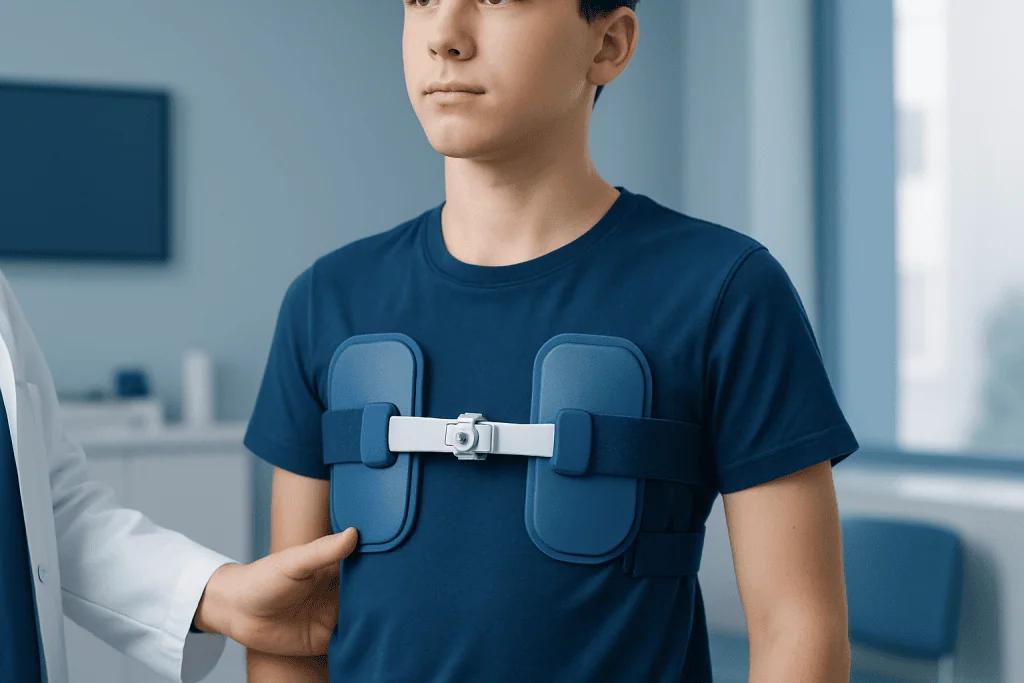
Pectus carinatum bracing uses two padded plates or panels connected by a frame and straps. One panel sits over the area that protrudes, while the opposing panel supports the back. As the straps are adjusted, the front panel provides gentle, sustained compression. Over time, cartilage and the growing chest wall can remodel in response to this pressure.
Before recommending bracing, the specialist checks chest-wall flexibility. They may gently press the prominent area during examination to see whether it moves inward comfortably. Some services measure the pressure needed to flatten the chest temporarily; lower correction pressure generally suggests a more flexible chest wall and a greater likelihood of successful brace treatment.
Bracing improves the external contour but does not change a person’s genetic makeup or guarantee identical results for everyone. Consistent wear, physical growth, skin tolerance and the original chest shape all influence pigeon chest brace results. Photographs taken at clinic visits may help the team compare progress over time, but so-called pigeon chest brace before and after images online cannot predict an individual outcome.
Who Is a Candidate for Bracing?

Bracing is most often considered for children and adolescents who have pectus carinatum and a chest wall that remains flexible. Treatment is commonly started after the chest has grown enough for reliable fitting and while growth is still ongoing. The exact timing varies, so a pediatric surgeon, thoracic surgeon or chest-wall team should advise the individual family.
A clinician will review the pattern and severity of the chest prominence, posture, symptoms, medical history and emotional wellbeing. Examination may be sufficient in straightforward cases, but imaging, lung-function testing or heart assessment can be considered when symptoms, an unusual chest shape or another health concern requires further evaluation. Pectus carinatum can occasionally occur alongside connective-tissue conditions, so relevant personal and family history matters.
A pigeon chest brace for adults can be an option if the chest wall remains compressible. However, the chest becomes less flexible after skeletal maturity, which can make treatment slower, less comfortable or less likely to achieve the desired correction. For rigid or more severe cases, a specialist may discuss surgical chest-wall repair as an alternative.
Patients should avoid beginning self-directed compression with sports tape, tight garments or an unmeasured brace. Excess pressure can injure skin and soft tissue, while insufficient or poorly targeted pressure is unlikely to correct the shape.
What Happens During Brace Fitting and Treatment?
At the first visit, the clinical team confirms the diagnosis and discusses goals, expected commitment and alternatives. Measurements or a scan of the chest may be used to create or select a customized brace. The clinician positions the pads over the correct areas and adjusts the straps so pressure is therapeutic but tolerable.
The patient and caregiver are shown how to put the brace on, take it off, check the skin and care for the device. The team may recommend building up wear gradually over several days. Wearing instructions differ by brace design and individual flexibility, but a correction phase commonly involves daily use for many hours, followed by a maintenance phase after the chest contour has improved.
Follow-up appointments are essential. At each review, the specialist assesses comfort, skin condition, chest shape, growth and adherence, then adjusts the brace if needed. A brace may need modification or replacement as a child grows. Keeping scheduled reviews allows problems to be addressed early and helps ensure pressure remains appropriate.
For international patients, Acibadem International’s multidisciplinary specialists and JCI-accredited hospitals can assess pectus carinatum and discuss appropriate non-surgical or surgical treatment pathways.
How Long Do You Have to Wear a Pectus Carinatum Brace?
The answer to “pigeon chest brace how long” varies considerably. Many patients use a brace for several months to a year or longer, depending on age, chest-wall flexibility, the degree of prominence, daily wear time and how the body responds. A visible change may occur earlier, but stopping too soon can allow the chest to project outward again.
During the active correction phase, clinicians often recommend wearing the brace for most of the day and night, with time removed for washing, skin checks and activities when advised. Once a satisfactory contour is reached, wear time may be reduced gradually to a maintenance schedule. The maintenance period helps preserve correction during ongoing growth.
It is important not to tighten the brace independently beyond the clinician’s instructions in an effort to speed up results. More pressure is not necessarily better and can increase the risk of skin injury and pain. The treating team should set the schedule and make adjustments based on examination findings.
What Are the Benefits and Side Effects of Wearing a Chest Brace?
The main potential benefit is gradual improvement in chest contour without surgery, anesthesia or a surgical recovery period. Bracing may also reduce discomfort related to the protrusion and can improve body image for some people. It is reversible and can be modified throughout treatment, but it requires commitment and regular supervision.
Common side effects of wearing a chest brace include temporary pressure marks, mild soreness, warmth, sweating, rubbing and skin redness beneath the pads. These effects should fade after the brace is removed. If redness persists, blisters, broken skin, increasing pain, numbness or a rash develops, the brace should be removed and the clinical team contacted for advice.
Some people find the brace inconvenient during school, work, sports or sleep. Clothing choices and a gradual wearing plan can help. The team may recommend specific adjustments for exercise, but patients should not assume a brace is safe for contact sports or strenuous activities without individualized guidance.
Adherence can be difficult, especially when a brace is uncomfortable or the result is not immediately visible. Honest discussion at follow-up visits helps the team adjust the plan rather than leaving the patient to manage discomfort alone.
At What Age Does Pectus Carinatum Get Worse?
Pectus carinatum often becomes more noticeable during the adolescent growth spurt, commonly in the early- to mid-teen years. It may be present earlier in childhood, but rapid growth can make the breastbone and rib prominence more apparent. The pace and extent of change vary from person to person.
Because the chest wall is usually more flexible during growth, this period can also be an effective time to consider bracing. That does not mean every child needs treatment immediately; the decision should reflect chest flexibility, symptoms, personal concerns and the family’s ability to follow the treatment plan.
Regular medical review is sensible if the shape is changing quickly, pain develops, exercise tolerance declines or a child is distressed by the appearance of the chest. A clinician can also check for features that might suggest another chest-wall, heart, lung or connective-tissue condition.
Can You Fix Pigeon Chest in Adults? When to Seek Medical Care
Adults can seek treatment for pigeon chest. A pigeon chest brace for adults may improve a flexible chest wall, although correction may take longer than it does in adolescents and results may be more limited when the cartilage is rigid. A chest-wall specialist can assess flexibility and explain whether monitored bracing, observation, symptom management or surgery is most appropriate.
Medical review is recommended for a new or changing chest-wall prominence, persistent chest pain, shortness of breath, palpitations, fainting, reduced ability to exercise, or concerns about a child’s growth and development. Urgent medical care is appropriate for severe chest pain, significant breathing difficulty or fainting, as these symptoms should not be assumed to be caused by pectus carinatum.
People also benefit from professional support when the condition affects self-esteem, social activities or mental wellbeing. The goal of care is not only to improve chest shape, but also to understand symptoms, provide realistic expectations and choose an approach that fits the patient’s health needs and preferences.
Frequently asked questions
Is a pigeon chest brace painful?
A correctly fitted brace may cause pressure and mild soreness, particularly when treatment begins or after an adjustment. It should not cause severe pain, numbness, blisters or broken skin. These symptoms should be reported to the treating team promptly so the fit and pressure can be reviewed.
How many hours a day should a pectus carinatum brace be worn?
The prescribed schedule depends on the patient’s chest-wall flexibility, brace type and stage of treatment. Many programs use prolonged daily wear during active correction, followed by less frequent maintenance wear. The specialist should provide the individual schedule and should be consulted before changing it.
Can an adult use a pigeon chest brace?
Yes, some adults can use a brace if the chest wall is still flexible enough to respond to compression. Treatment can take longer after skeletal maturity, and not every adult will be a suitable candidate. A chest-wall assessment is the safest way to determine whether bracing is reasonable.
Will a brace completely fix pectus carinatum?
A brace can substantially improve the outward chest prominence in many appropriately selected patients, especially when it is worn consistently during growth. The degree of correction varies, and some asymmetry or prominence may remain. A specialist can discuss realistic goals based on the chest shape and flexibility.
Can I buy a pectus carinatum brace online?
Online products may not be designed for a person’s specific chest shape or provide measurable, safe pressure. An improperly fitted brace can cause skin problems and may not be effective. Assessment and fitting by an experienced clinical team are recommended.
Does pectus carinatum cause heart or lung problems?
Many people with pectus carinatum have no significant heart or lung impairment. Some may report exercise-related symptoms, discomfort or reduced confidence, and these symptoms deserve medical assessment because they can also have other causes. Testing is considered when the clinician identifies a reason to investigate further.
References
- American Academy of Pediatrics
- Children's Hospital of Philadelphia
- Mayo Clinic
- National Institutes of Health
- Society of American Gastrointestinal and Endoscopic Surgeons
This article is for general information only and is not a substitute for professional medical advice. Please consult a qualified doctor about your individual situation.
Explore treatments in Turkey — costs, top hospitals & a free quote
JCI-accredited · board-certified surgeons · reply within 24h
Add us as a Preferred Source to see more of our trusted health content across Google Search, AI Overviews and Discover.

More from the Health Library



Related Specialists

Dr. Cem Tangay
Orthopedic Surgery & Traumatology
Dr. Hande Simten Demirel Kaya
Anesthesiology
Dt. Ferah Kuybulu
Oral & Dental Health
Assoc. Prof. Dr. Esma Kobak Tur
Neurology