Pink Eye in Children: Causes, Contagiousness, and Treatment

Pink eye in children can be caused by viruses, bacteria, allergies, or irritants. Viral and bacterial pink eye may spread easily, especially in schools and daycare settings.
Key Takeaways
- Pink eye in children can be caused by viruses, bacteria, allergies, or irritants.
- Viral and bacterial pink eye may spread easily, especially in schools and daycare settings.
- Symptoms such as redness, tearing, itching, and discharge can help suggest the cause, but a doctor may be needed to confirm it.
- Treatment depends on the type of pink eye and may include supportive care, hygiene measures, or prescribed eye drops.
- Children should see a doctor urgently if they have severe pain, trouble seeing, or significant swelling.
Pink eye in children, also called conjunctivitis, is a common eye condition that causes redness, irritation, and discharge. It can be contagious when caused by a virus or bacteria, but many cases improve with simple care and the right treatment.
Overview
Pink eye in children is the common name for conjunctivitis, an inflammation of the conjunctiva. This is the thin, clear tissue that covers the white part of the eye and lines the inside of the eyelids. When it becomes irritated or infected, the eye may look pink or red and feel uncomfortable.
Conjunctivitis is very common in infants, toddlers, and school-age children. It often spreads in places where children are in close contact, such as homes, classrooms, and daycare centers. Even so, most cases are mild and improve without causing lasting eye damage.
Pink eye is not a single disease with one cause. It may be triggered by a viral infection, a bacterial infection, allergies, or irritation from substances such as smoke, chlorine, or dust. Because treatment depends on the cause, it is helpful for parents and caregivers to understand the different patterns of symptoms.
Symptoms of Pink Eye in Children
The most noticeable symptom is redness in one or both eyes. A child may also have tearing, burning, itching, or a feeling that something is in the eye. Younger children may rub their eyes often or become fussy because they cannot describe the discomfort clearly.
Discharge can vary depending on the cause. Viral pink eye often causes watery eyes, while bacterial pink eye is more likely to produce thicker yellow, white, or green discharge that can make the eyelids stick together, especially after sleep. Allergic pink eye usually causes intense itching, watery eyes, and swelling, often in both eyes.
Other symptoms may include swollen eyelids, sensitivity to light, or mild blurred vision that clears after wiping away discharge. If pink eye occurs with a cold, sore throat, or fever, a viral cause may be more likely. In some children, pink eye may be part of a broader conjunctivitis picture that needs medical assessment to identify the source.
- Red or pink appearance of the eye
- Watery or sticky discharge
- Itching, irritation, or burning
- Crusting on the eyelashes
- Swollen eyelids
- Sensitivity to light
Causes and Risk Factors
Viruses are a frequent cause of pink eye in children. Viral conjunctivitis often appears along with symptoms of an upper respiratory infection, such as a runny nose or cough. It is usually very contagious and can spread through direct contact with eye secretions, hands, towels, or shared surfaces.
Bacterial pink eye is also common in children. It may cause more noticeable discharge and can spread in similar ways. Children who touch their eyes often, do not wash their hands regularly, or spend time in close-contact settings may have a higher risk of spreading or catching it.
Allergic conjunctivitis is different because it is not caused by an infection and is not contagious. It may be triggered by pollen, dust mites, pet dander, or mold. Irritant conjunctivitis can happen after exposure to smoke, air pollution, shampoos, or chlorinated water. Contact lens use in older children and teens can increase the risk of irritation or infection if lens hygiene is poor.
Newborns need special attention because eye redness or discharge in the first weeks of life can have different causes and should always be assessed promptly by a doctor. In rare cases, serious eye conditions can resemble pink eye, so persistent symptoms should not be ignored.
Is Pink Eye Contagious?
Many parents ask whether pink eye spreads easily. The answer depends on the cause. Viral and bacterial pink eye can be contagious, while allergic and irritant forms are not. This is why looking at the full pattern of symptoms matters when deciding how careful a family needs to be about preventing spread.
Contagious pink eye usually spreads through hands, tissues, pillowcases, washcloths, toys, and other shared items. A child may touch eye discharge and then touch another person or a surface. Because children often rub their eyes without thinking, spread can happen quickly in households, schools, and daycare centers.
Good hygiene helps reduce transmission. Frequent handwashing, avoiding shared towels, changing pillowcases, and cleaning commonly touched surfaces can all help. A child should be taught not to rub the eyes and to use tissues once before throwing them away. Schools and childcare centers may have different return policies, so families should follow local guidance and a doctor’s advice.
How Doctors Diagnose Pink Eye
Doctors usually diagnose pink eye by asking about symptoms and examining the eyes. They may ask when the redness started, whether one or both eyes are affected, what the discharge looks like, and whether the child has itching, fever, cold symptoms, or allergy triggers. This history often gives strong clues about the cause.
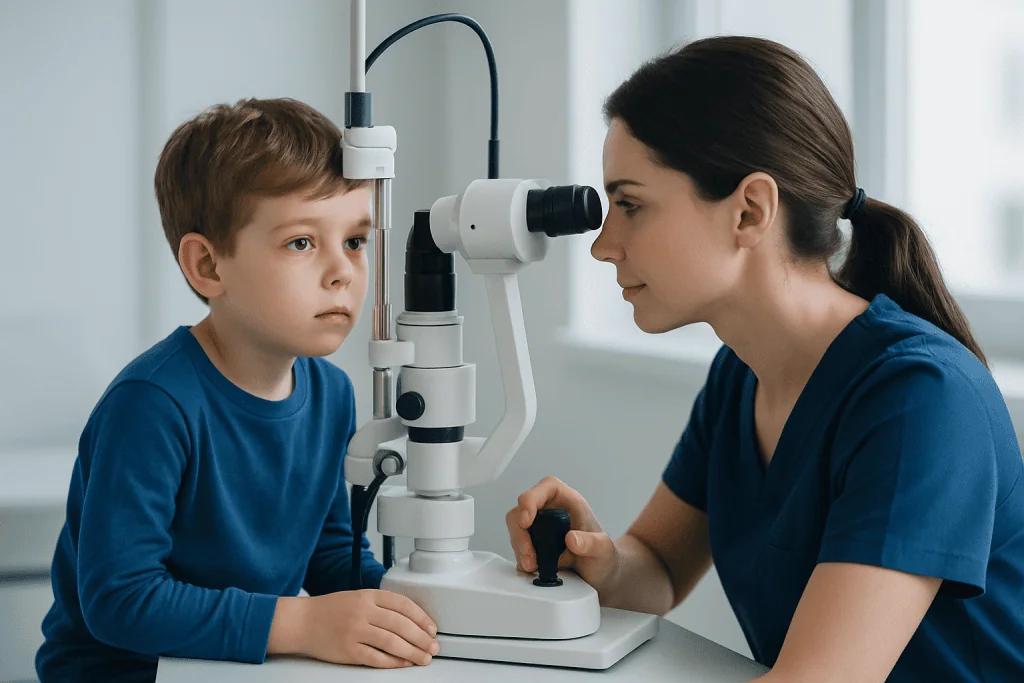
During the examination, the doctor looks at the white of the eye, the eyelids, the type of discharge, and any swelling. They may also check vision, eye movement, and how the child reacts to light. In most cases, laboratory testing is not needed.
Additional testing may be considered if symptoms are severe, unusual, long-lasting, or not improving as expected. Urgent evaluation is especially important if there is significant eye pain, trouble seeing, marked sensitivity to light, injury, or concern for a deeper eye infection. If needed, an ophthalmology assessment and comprehensive eye exam can help rule out more serious conditions.
Treatment Options for Pink Eye in Children
Treatment depends on the cause. Viral pink eye often gets better on its own with supportive care. Cool compresses, gentle cleaning of discharge, and artificial tears recommended by a doctor can help ease discomfort. Antibiotics do not treat viral infections, so they are not helpful in these cases.
Bacterial pink eye may improve on its own, but some children are prescribed antibiotic eye drops or ointment, especially if symptoms are more pronounced or school attendance is affected. Families should use medicines exactly as prescribed and avoid sharing eye drops between children. Contact lenses should not be worn until the eyes are fully better and a doctor says it is safe.
Allergic pink eye is treated by reducing exposure to triggers and, when appropriate, using allergy medicines or eye drops recommended by a doctor. Irritant pink eye improves when the irritating substance is removed and the eye is gently rinsed if advised by a healthcare professional. In persistent, recurrent, or complicated cases, doctors may recommend specialist ophthalmology care to guide treatment safely.
Parents should avoid using leftover prescriptions or over-the-counter redness-relief drops without medical advice. Some products may not be suitable for children or may mask symptoms rather than treat the cause. If symptoms do not improve, a doctor should reassess the child.
Prevention and Home Care
Simple hygiene is the best way to lower the risk of contagious pink eye. Children should wash their hands often with soap and water, especially after touching their face. Caregivers should also wash hands before and after cleaning the child’s eyes or giving any eye medicine.
At home, it helps to use a clean cloth or cotton pad for each eye and each cleaning session. Towels, pillows, makeup, washcloths, and eye drops should not be shared. Bedding can be washed regularly while symptoms are active. If a child has allergies, reducing exposure to known triggers may help prevent repeated episodes.
Supportive home care can make a child more comfortable. A cool compress placed gently over closed eyelids may reduce irritation. Discharge can be wiped away with warm water and a clean cloth. Children should be reminded not to rub the eyes, since rubbing can worsen irritation and spread germs. If specialized evaluation is needed, pediatric ophthalmology services may be helpful for younger children or complex cases.
When to See a Doctor
Many mild cases of pink eye improve with time and supportive care, but medical advice is important when the cause is unclear or symptoms are more than mild. A child should be seen if there is thick discharge, swelling that is getting worse, symptoms lasting more than a few days, or frequent recurrence.
Urgent medical care is needed if the child has severe eye pain, trouble seeing, strong sensitivity to light, a significant eye injury, or marked redness with swelling around the eye. Babies younger than 1 month with eye redness or discharge should be evaluated promptly. These signs may suggest a condition more serious than routine conjunctivitis.
Parents should also seek guidance if the child wears contact lenses, has a weakened immune system, or has an existing eye condition. Near the end of the care journey, if further evaluation or treatment is needed, Acibadem International’s multidisciplinary specialists and JCI-accredited hospitals diagnose and treat eye conditions for international patients.
Frequently asked questions
How can parents tell if pink eye is viral or bacterial?
The symptoms can offer clues, but they do not always give a definite answer. Viral pink eye often causes watery discharge and may come with cold symptoms, while bacterial pink eye more often causes thicker discharge and crusting. A doctor can help decide the most likely cause and whether treatment is needed.
Can a child go to school or daycare with pink eye?
This depends on the cause of the pink eye, the child’s symptoms, and the policy of the school or daycare. Viral and bacterial pink eye can spread, so good hygiene is important. Families should follow advice from their doctor and local childcare or school guidance.
Do all children with pink eye need antibiotics?
No. Antibiotics do not help viral or allergic pink eye. They may be prescribed for some cases of bacterial pink eye, but many mild infections improve without them. A doctor can decide whether antibiotic treatment is appropriate.
How long does pink eye in children usually last?
Many mild cases start to improve within a few days, but the exact duration depends on the cause. Viral cases may last longer than bacterial ones, and allergic pink eye can continue as long as the trigger is present. If symptoms are not improving, the child should be re-evaluated.
Is it safe to use home remedies for pink eye?
Gentle home care, such as cool compresses and careful cleaning of discharge, may help comfort the child. However, homemade eye drops, leftover medications, or non-prescribed products should not be used. A doctor should guide treatment, especially for babies or more severe symptoms.
When is pink eye an emergency?
Pink eye needs urgent medical attention if the child has severe pain, reduced vision, strong light sensitivity, major swelling, or an eye injury. Newborns with eye redness or discharge also need prompt evaluation. These signs may point to a more serious eye problem.
References
- American Academy of Pediatrics
- American Academy of Ophthalmology
- Centers for Disease Control and Prevention
- National Eye Institute
This article is for general information only and is not a substitute for professional medical advice. Please consult a qualified doctor about your individual situation.
Explore treatments in Turkey — costs, top hospitals & a free quote
JCI-accredited · board-certified surgeons · reply within 24h
Add us as a Preferred Source to see more of our trusted health content across Google Search, AI Overviews and Discover.