Planters wart salicylic acid: Symptoms, Causes, and Treatment — Complete Patient Guide

Salicylic acid is a standard, evidence-based treatment for many plantar warts. Plantar warts are caused by human papillomavirus entering the skin through tiny breaks.
Key Takeaways
- Salicylic acid is a standard, evidence-based treatment for many plantar warts.
- Plantar warts are caused by human papillomavirus entering the skin through tiny breaks.
- Treatment often takes several weeks and works best when dead skin is gently removed regularly.
- Not every bump on the sole is a wart, so persistent or painful lesions should be checked by a doctor.
- People with diabetes, nerve damage, or circulation problems should seek medical advice before self-treating.
Planters wart salicylic acid is a common first-line treatment for plantar warts, helping dissolve thickened skin and gradually clear the wart when used consistently. Most plantar warts are harmless, but some need professional diagnosis or treatment, especially if they are painful, persistent, or occur in people with diabetes or poor circulation.
Overview: How salicylic acid helps plantar warts
Planters wart salicylic acid usually refers to using salicylic acid to treat a plantar wart, a wart that grows on the sole of the foot. Salicylic acid is one of the most widely recommended nonprescription treatments because it softens and peels away the thickened, virus-infected skin layer by layer. With steady use, many plantar warts become smaller and may clear completely.
Plantar warts are caused by certain strains of human papillomavirus, or HPV. They often appear on pressure-bearing areas such as the heel or ball of the foot, where walking can push them inward and make them feel tender. Although they are usually not dangerous, they can be uncomfortable and sometimes persist for months.
A key point for patients is that salicylic acid is not an instant fix. The treatment is gradual and depends on routine application, gentle removal of dead skin, and patience. If a lesion is uncertain, very painful, bleeding, rapidly changing, or not improving, medical evaluation is important because other foot conditions can look similar.
What a plantar wart looks and feels like
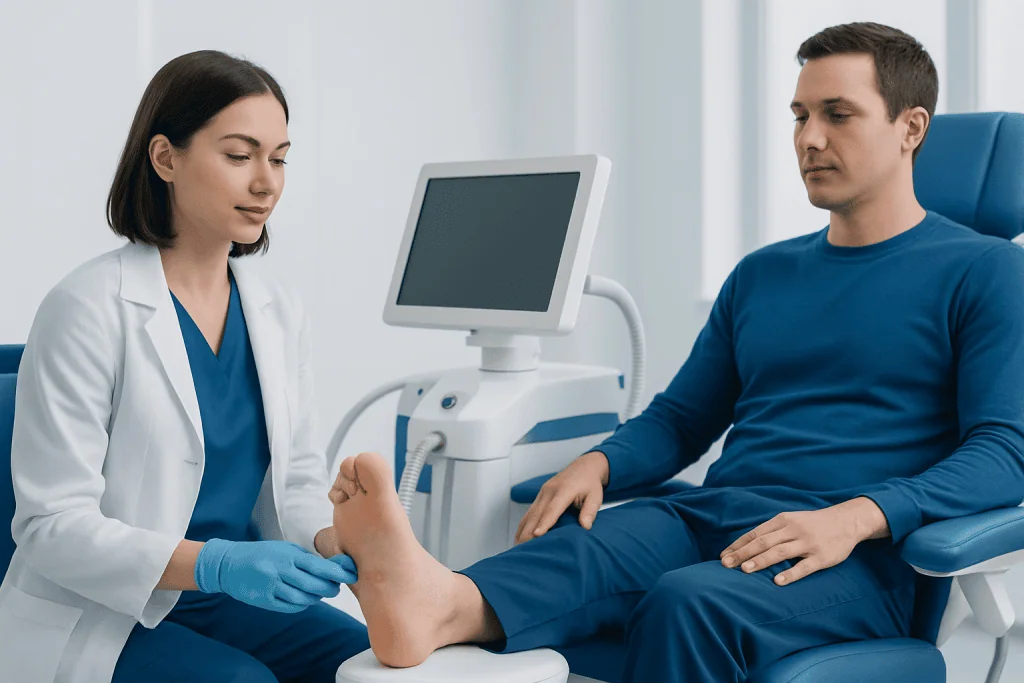
Plantar warts often develop as rough, grainy, or hardened areas on the bottom of the foot. Unlike some raised warts on other parts of the body, they may look flatter because body weight presses them inward. The surrounding skin may become thick or callus-like, which can make the wart harder to recognize.
Many people notice pain when walking or standing, sometimes describing the feeling as if they are stepping on a pebble. Small black dots may be visible inside the wart; these are tiny clotted blood vessels rather than dirt. The skin lines on the sole may also be interrupted where the wart sits, which can help distinguish it from a simple callus.
Symptoms can vary. Some plantar warts are single, while others occur in clusters called mosaic warts. A doctor may help tell the difference between a wart and problems such as a callus, corn, foreign body reaction, or another skin lesion if the diagnosis is unclear.
- Rough or thickened skin on the sole
- Tenderness with pressure or walking
- Small black pinpoint dots
- Flattened appearance due to pressure
- Single or clustered lesions
Causes and risk factors

Plantar warts develop when HPV enters the outer layer of skin through tiny cuts, cracks, or softened areas. The virus is common and tends to spread in warm, moist environments such as communal showers, pool areas, and locker rooms. Not everyone exposed to the virus develops a wart, because individual immune response plays a role.
Walking barefoot in shared spaces may increase exposure, but direct skin contact and contaminated surfaces are only part of the story. Friction, sweating, and skin maceration can make the foot more vulnerable. Children, teenagers, and people with weakened immune systems may develop warts more easily, though adults can get them as well.
Plantar warts are generally a skin infection rather than a sign of poor hygiene. However, certain factors may make them more likely or more difficult to treat. These include repeated pressure on the feet, existing eczema or cracked skin, and conditions that affect healing. People with diabetes or poor circulation should be particularly cautious and should avoid self-treatment unless a clinician advises it.
Using salicylic acid safely and effectively
Salicylic acid works by slowly breaking down the thick outer skin that covers the wart. It is available in different forms, such as liquids, gels, pads, and medicated plasters. Products made for plantar warts are usually stronger than those used for facial acne, but the right choice depends on the wart’s location, size, and the sensitivity of the surrounding skin.
For best results, many patients are advised to soak the foot in warm water for several minutes, dry it well, and gently file away loose dead skin with an emery board or pumice reserved only for that wart. After that, the salicylic acid can be applied carefully to the wart itself while avoiding normal skin. Repeating this regularly over several weeks is often necessary before improvement is clear.
Healthy surrounding skin can be protected with petroleum jelly or a protective dressing if needed. Salicylic acid should not be used on irritated, infected, or uncertain skin lesions unless a doctor recommends it. It is also important not to pick, cut, or dig into the wart, as this can injure the skin and increase the chance of infection or spread.
If there is uncertainty about whether the lesion is truly a wart, a dermatology assessment may help. In some cases, a specialist may suggest a different approach after evaluating the skin, including options used in dermatology care.
How plantar warts are diagnosed
Diagnosis is often clinical, meaning a doctor can identify a plantar wart by examining the foot. The appearance, location, pain pattern, and interruption of normal skin lines often provide useful clues. Sometimes a clinician pares down the thick surface slightly to look for the pinpoint blood vessels that support the diagnosis.
Because not every bump on the sole is a wart, evaluation matters when a lesion is persistent or unusual. A callus or corn may look similar but usually preserves normal skin lines and tends to hurt more with direct pressure in a different way. Less commonly, other skin growths can mimic a wart and require different treatment.
A doctor may also assess related concerns such as athlete’s foot, nail fungus, or pressure-related skin changes, especially if the foot has multiple issues at once. If needed, imaging or biopsy is rarely considered for atypical lesions, although this is not routine. When a diagnosis is uncertain, a broader skin review may help rule out conditions such as skin cancer in lesions that do not behave like ordinary warts.
Other treatment options if salicylic acid is not enough
While salicylic acid is a common first step, it is not the only option. If the wart is painful, very thick, spreading, or not improving after a reasonable trial, a clinician may recommend office-based treatment. One common method is freezing the wart with liquid nitrogen, also called cryotherapy. This aims to destroy infected tissue and stimulate an immune response, though more than one session is often needed.
Doctors may also consider stronger prescription peeling agents, careful debridement, or other targeted therapies depending on the person’s age, health, symptoms, and previous treatments. In selected cases, minor procedures or advanced therapies may be discussed, especially for stubborn plantar warts that interfere with walking.
People sometimes ask whether laser or surgical approaches are necessary. These are usually reserved for persistent cases after simpler treatments have failed or when diagnosis is uncertain. If a person also has other skin concerns, a specialist may coordinate treatment through skin and wart treatment planning.
When foot pain or pressure points are contributing to symptoms, broader evaluation may also be useful through orthopedic assessment or a podiatry-style foot examination where available.
Prevention and self-care
Plantar warts cannot always be prevented, but a few habits may reduce risk and lower the chance of spreading the virus. Wearing sandals in communal showers and around pools can help limit contact with contaminated surfaces. Keeping feet clean and dry and changing damp socks promptly may also support skin health.
It is helpful not to share nail files, pumice stones, socks, or shoes. If a wart is present, covering it during activities may reduce spread to other areas of the foot or to other people. Picking at the wart can spread the virus and delay healing, so patients are advised to leave it alone except for careful treatment steps.
Good foot care matters, especially for people who walk or stand for long periods. Moisturizing cracked skin, choosing well-fitting footwear, and reducing friction may lower the chance of new viral entry points. If there are signs of another foot skin problem, such as peeling between the toes, a doctor may check for conditions like athlete's foot that can damage the skin barrier.
When to seek medical care
Medical care is appropriate if a suspected plantar wart is very painful, rapidly growing, bleeding, changing color, or not improving with home treatment. Patients should also seek care if they are unsure the lesion is actually a wart. A professional diagnosis can help avoid unnecessary or potentially irritating treatments.
Prompt medical advice is especially important for people with diabetes, reduced feeling in the feet, poor circulation, or immune suppression. In these situations, self-treatment with salicylic acid may not be safe because skin injury can heal slowly or go unnoticed. Children or older adults may also benefit from guided treatment if the wart is affecting walking.
Near the end of the care pathway, if home treatment has failed or symptoms are interfering with daily life, specialist evaluation can be useful. Acibadem International’s multidisciplinary specialists in JCI-accredited hospitals diagnose and treat plantar warts and related foot skin conditions for international patients.
Frequently asked questions
How long does salicylic acid take to remove a plantar wart?
Salicylic acid usually works gradually rather than quickly. Many plantar warts need several weeks of regular treatment, and some take longer depending on their size, depth, and location. Consistent use and gentle removal of dead skin often improve results.
Can a plantar wart go away without treatment?
Yes, some plantar warts can clear on their own as the immune system responds to the virus. However, this may take months or even longer, and the wart can remain painful or spread in the meantime. Treatment is often chosen to relieve symptoms and speed clearance.
Is salicylic acid safe for everyone?
Salicylic acid is not ideal for everyone. People with diabetes, poor circulation, nerve damage, or uncertain skin lesions should speak with a doctor before using it. It should also be used carefully to avoid irritating the healthy skin around the wart.
What is the difference between a plantar wart and a callus?
A plantar wart is caused by a viral infection, while a callus forms from repeated pressure or friction. Warts may show tiny black dots and often interrupt the normal skin lines, while calluses usually do not. If it is hard to tell the difference, a doctor can examine the lesion.
Can plantar warts spread to other people or other parts of the foot?
Yes, the virus that causes plantar warts can spread through direct contact or shared damp surfaces. It can also spread from one area of the foot to another, especially if the wart is picked or shaved. Covering the wart and not sharing personal foot-care items may help reduce spread.
When should a person stop home treatment and see a doctor?
A doctor should be consulted if the lesion is worsening, very painful, bleeding, or not improving after a reasonable trial of treatment. Medical review is also important if the diagnosis is uncertain or if the person has diabetes, immune suppression, or poor circulation. Early assessment can help guide safer and more effective care.
References
- American Academy of Dermatology
- National Health Service
- Mayo Clinic
- Centers for Disease Control and Prevention
- American Podiatric Medical Association
This article is for general information only and is not a substitute for professional medical advice. Please consult a qualified doctor about your individual situation.
Explore treatments in Turkey — costs, top hospitals & a free quote
JCI-accredited · board-certified surgeons · reply within 24h
Add us as a Preferred Source to see more of our trusted health content across Google Search, AI Overviews and Discover.