Pneumocystis Pneumonia: A Complete Medical Overview

Pneumocystis pneumonia is most likely to occur in people with weakened immune defenses. Common symptoms include breathlessness, dry cough, fever, and unusual tiredness.
Key Takeaways
- Pneumocystis pneumonia is most likely to occur in people with weakened immune defenses.
- Common symptoms include breathlessness, dry cough, fever, and unusual tiredness.
- Diagnosis often combines imaging, oxygen assessment, and laboratory testing of respiratory samples.
- Treatment usually includes specific antimicrobial medicines and supportive care.
- Preventive medication may be recommended for people at high risk.
Pneumocystis pneumonia is a lung infection caused by the fungus Pneumocystis jirovecii, mainly affecting people whose immune systems are weakened. It can cause shortness of breath, fever, and a dry cough, and it usually requires prompt medical evaluation and targeted treatment.
Overview
Pneumocystis pneumonia, also called Pneumocystis jirovecii pneumonia or PJP, is a serious infection of the lungs caused by a fungus named Pneumocystis jirovecii. It is best known as an opportunistic infection, which means it mainly affects people whose immune systems are not able to control germs in the usual way. In healthy people, exposure may not cause illness, but in vulnerable patients the organism can lead to inflammation in the air sacs of the lungs and difficulty getting enough oxygen.
This condition is different from typical bacterial pneumonia. It often develops more gradually, with increasing shortness of breath, dry cough, and fever over days to weeks rather than suddenly. Because symptoms may begin subtly, some people do not realize how serious the illness is until breathing becomes noticeably harder.
Pneumocystis pneumonia is most closely linked with HIV infection when the immune system is severely weakened, but it can also occur in people receiving chemotherapy, long-term corticosteroids, organ-transplant medicines, or other treatments that suppress immunity. It may also be seen in certain blood cancers, autoimmune diseases, and after transplantation. In some cases, evaluating PJP also leads doctors to look for an underlying immune problem such as HIV/AIDS.
How Pneumocystis Pneumonia Affects the Lungs
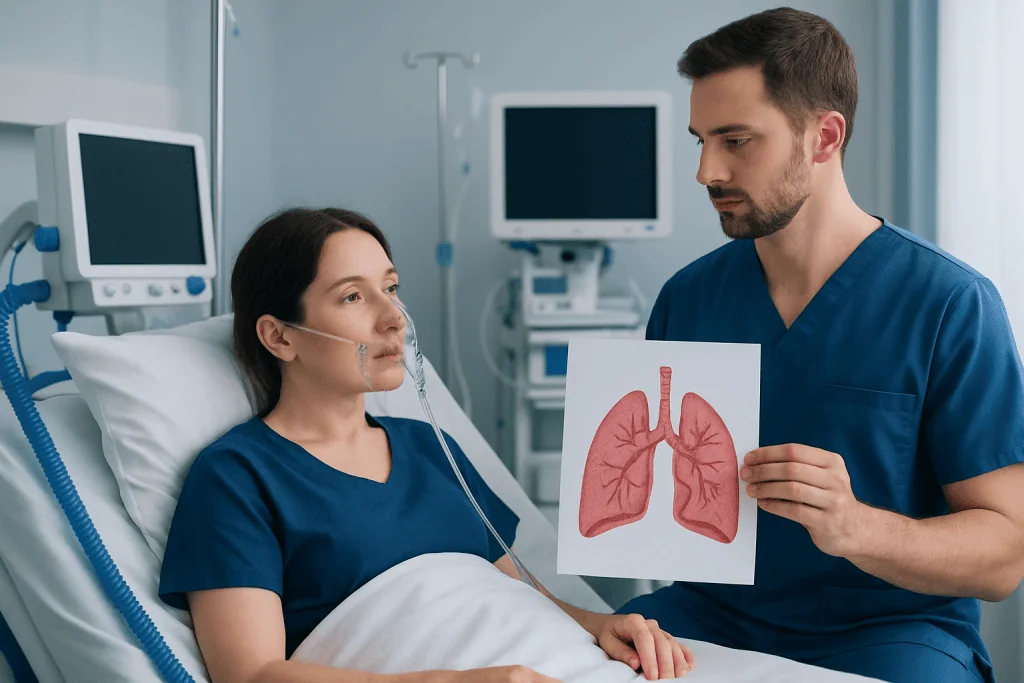
In pneumocystis pneumonia, the fungus causes inflammation inside the tiny air sacs in the lungs, called alveoli. These air sacs are where oxygen passes into the bloodstream. When they become inflamed and filled with protein-rich material, oxygen transfer becomes less efficient, which can lead to low oxygen levels, especially during activity.
This is one reason a person may feel breathless even when a chest examination seems less dramatic than expected. Some patients feel only mild symptoms at rest but become very short of breath when walking, climbing stairs, or speaking for long periods. Fatigue and rapid breathing can also occur as the body works harder to maintain oxygen levels.
If the infection becomes more severe, the lungs may not provide enough oxygen to the body. This can require hospital care, oxygen therapy, and close monitoring. In advanced cases, complications can include respiratory failure or air leaks around the lungs, although not every patient develops these problems.
Symptoms

The symptoms of pneumocystis pneumonia often build gradually. Many people first notice increasing breathlessness during activity, a dry cough that does not bring up much mucus, fever, and unusual tiredness. Some also have chest discomfort, loss of appetite, or weight loss, especially if symptoms have been present for some time.
Because the illness is linked to low oxygen levels, one important clue is feeling more short of breath than expected for the degree of cough. A person may feel winded with simple tasks such as dressing, walking short distances, or climbing a few stairs. In more severe illness, shortness of breath may also happen at rest.
Common symptoms can include:
- Dry cough
- Fever
- Shortness of breath
- Fast breathing
- Fatigue or weakness
- Reduced exercise tolerance
- Chest tightness or discomfort
These symptoms are not unique to PJP and can overlap with other lung conditions such as viral pneumonia, bacterial pneumonia, or pneumonia from other causes. That is why clinical assessment and testing are important rather than relying on symptoms alone.
Causes and Risk Factors
Pneumocystis pneumonia is caused by the fungus Pneumocystis jirovecii. The organism is believed to spread through the air, but illness usually develops only when immune defenses are reduced. It does not behave like a routine community infection in most healthy people. Instead, it tends to take advantage of a weakened immune system.
The highest-risk groups include people with advanced HIV infection, especially when CD4 counts are low, and people taking medicines that suppress the immune system. These may include chemotherapy, medications used after organ transplant, biologic agents for autoimmune diseases, and prolonged or high-dose corticosteroid therapy. Blood cancers and some inherited or acquired immune deficiencies can also increase risk.
Risk factors often include:
- HIV infection with significant immune suppression
- Organ or stem cell transplantation
- Cancer treatment, especially for blood cancers
- Long-term corticosteroid use
- Autoimmune or inflammatory diseases requiring immunosuppressive therapy
- Severe malnutrition or other causes of immune dysfunction
Doctors do not look only at the presence of one disease; they assess the full pattern of risk. The type of medication, its duration, the degree of immune suppression, and the presence of other infections all influence how likely PJP is and how urgently it should be considered.
Diagnosis
Diagnosing pneumocystis pneumonia usually starts with a careful review of symptoms, immune status, medication history, and oxygen levels. A doctor may notice rapid breathing or low oxygen saturation, particularly during walking. Blood tests can help assess inflammation, overall health, and possible underlying immune problems, but no single routine blood test confirms the diagnosis on its own.
Imaging is a key part of assessment. A chest X-ray may show diffuse or patchy changes in both lungs, but early disease can sometimes be subtle. A chest CT scan often provides more detail and may reveal characteristic ground-glass changes. When doctors need stronger confirmation, they may test sputum that has been induced in a controlled setting or obtain respiratory samples with bronchoscopy.
Diagnostic evaluation may include:
- Pulse oximetry and sometimes arterial blood gas testing
- Chest X-ray
- Chest CT scan, often through CT imaging
- Sputum analysis or molecular testing
- Bronchoscopy to collect samples when needed
- Assessment for HIV or other causes of immune suppression when appropriate
Because many infections and inflammatory lung disorders can resemble PJP, diagnosis often depends on combining several findings rather than one result alone. In complex cases, evaluation may also involve bronchoscopy to improve diagnostic accuracy and guide treatment.
Treatment Options
Pneumocystis pneumonia usually requires prescription antimicrobial treatment, and care should be directed by a qualified doctor. The exact medicine and duration depend on the patient’s overall condition, severity of illness, allergies, and other medical factors. Many patients improve with timely treatment, but severe cases may need hospital admission for oxygen support and close monitoring.
For patients with moderate to severe disease and low oxygen levels, doctors may add corticosteroids as part of treatment to reduce inflammation in the lungs. This decision is based on the degree of respiratory compromise and is made carefully because steroid use must be balanced against each person’s wider medical situation. Supportive care can include fluids, fever control, oxygen, and management of underlying conditions.
Treatment planning also includes addressing the reason the infection occurred. For example, doctors may assess HIV status, review immunosuppressive medicines, or coordinate care with oncology, transplant, or rheumatology teams. If breathing problems are significant, patients may benefit from evaluation by pulmonology specialists.
After recovery, some high-risk patients need preventive therapy to lower the chance of another episode. The need for prevention depends on the person’s immune status and whether the underlying risk factor is expected to continue.
Prevention and Self-care
Prevention is an important part of care for people at increased risk of pneumocystis pneumonia. In selected patients, doctors prescribe preventive antimicrobial medication, often called prophylaxis, when the risk of PJP is high enough to justify it. This is common in advanced HIV, after some transplants, and during certain types of immunosuppressive treatment.
Regular medical follow-up matters because risk can change over time. Monitoring immune status, reviewing medicines, and addressing early respiratory symptoms may allow earlier treatment and better outcomes. People with HIV can reduce risk significantly by taking antiretroviral therapy as prescribed and staying engaged with routine care.
General self-care measures can support overall lung health, although they do not replace medical prevention. These include avoiding smoking, keeping vaccinations up to date when recommended by a doctor, maintaining adequate nutrition, and seeking prompt advice for new fever or breathing symptoms. Anyone who is immunocompromised should avoid delaying evaluation if symptoms are worsening.
Near the end of the care journey, some people may need coordinated follow-up across specialties. Acibadem International’s multidisciplinary specialists and JCI-accredited hospitals diagnose and treat pneumocystis pneumonia for international patients when complex assessment and ongoing management are needed.
When to Seek Medical Care
Medical review is important if a person at risk for pneumocystis pneumonia develops a dry cough, fever, or increasing shortness of breath. Symptoms that slowly worsen over several days or weeks should not be ignored, especially in someone with HIV, cancer treatment, transplant history, or regular immunosuppressive medication use.
Urgent care is needed if there is difficulty breathing at rest, bluish lips, confusion, chest pain, severe weakness, or signs of very low oxygen levels. These symptoms can indicate a more serious lung problem and may require hospital-based treatment. It is safer to seek assessment early than to wait for symptoms to become severe.
Even if symptoms seem mild, a high-risk patient should contact a doctor promptly. Early diagnosis can shorten delays in treatment and help distinguish PJP from other infections or noninfectious lung conditions.
Frequently asked questions
Is pneumocystis pneumonia contagious?
Pneumocystis jirovecii is thought to spread through the air, but pneumocystis pneumonia mainly develops in people with weakened immune systems. For most healthy people, exposure does not usually lead to illness. Doctors focus more on a patient's immune status than on casual contact alone.
Who is most at risk for pneumocystis pneumonia?
The highest-risk groups include people with advanced HIV infection, organ transplant recipients, patients receiving chemotherapy, and those taking long-term or high-dose immunosuppressive medicines. Some autoimmune diseases and blood cancers can also increase risk. A doctor considers the full medical picture when estimating risk.
Can pneumocystis pneumonia happen without HIV?
Yes. Although it is strongly associated with HIV, pneumocystis pneumonia also occurs in people without HIV whose immune systems are weakened for other reasons. This includes transplant recipients, cancer patients, and people taking corticosteroids or other immunosuppressive drugs.
How is pneumocystis pneumonia different from regular pneumonia?
PJP often causes a dry cough and gradually worsening breathlessness rather than the more sudden symptoms sometimes seen with bacterial pneumonia. It is caused by a fungus and is especially linked to immune suppression. Diagnosis and treatment are therefore different from routine community-acquired pneumonia.
How long does recovery from pneumocystis pneumonia take?
Recovery time varies depending on how severe the infection is, how early treatment begins, and whether the person has other medical problems. Some patients improve over days, while full recovery of strength and breathing may take longer. Follow-up is important to confirm that oxygen levels and symptoms are improving.
Can pneumocystis pneumonia be prevented?
In many high-risk patients, yes. Doctors may prescribe preventive medication when the risk of PJP is significant, and controlling the underlying cause of immune suppression is also important. People with HIV can reduce risk by staying on antiretroviral therapy and attending regular medical follow-up.
This article is for general information only and is not a substitute for professional medical advice. Please consult a qualified doctor about your individual situation.
Pneumonia in Turkey — costs, top hospitals & a free quote
JCI-accredited · board-certified surgeons · reply within 24h
Add us as a Preferred Source to see more of our trusted health content across Google Search, AI Overviews and Discover.

More from the Health Library

Ricin Poisoning: What Patients Need to Know

Junctional Escape Rhythm: A Complete Medical Overview
Aching Jaw and Ear: A Complete Medical Overview

Swan Neck Deformity: A Complete Medical Overview
Lymph Nodes — Explained by Medical Evidence, Not Myths