Pnf Stretching: An Evidence-Based Guide for Patients

PNF stretching uses a pattern of stretch, contract, and relax to improve flexibility. It is often more effective than basic static stretching for short-term range-of-motion gains.
Key Takeaways
- PNF stretching uses a pattern of stretch, contract, and relax to improve flexibility.
- It is often more effective than basic static stretching for short-term range-of-motion gains.
- Good technique, controlled effort, and proper timing matter more than force.
- PNF stretching may not be suitable for acute injuries, unstable joints, or significant pain.
- A physiotherapist or sports medicine professional can help tailor it safely.
PNF stretching is a flexibility technique that combines gentle stretching with brief muscle contractions to help improve range of motion. It can be effective for some people when performed correctly, but it is not appropriate for every injury or medical condition.
What PNF Stretching Is
PNF stretching, short for proprioceptive neuromuscular facilitation, is a stretching method that combines a muscle stretch with a brief, controlled muscle contraction. In simple terms, a person moves a muscle into a comfortable stretch, gently contracts that muscle or its opposite muscle for a few seconds, then relaxes and stretches again. This sequence is designed to help the body tolerate a greater range of motion.
For patients, the most important point is that PNF stretching is not simply “stretching harder.” It is a structured technique used in rehabilitation, sports medicine, and flexibility training. When done correctly, it may improve flexibility more effectively than holding a stretch alone, especially in the short term.
PNF stretching is commonly used for tight hamstrings, hip muscles, calves, shoulders, and other muscle groups that affect movement. Because technique matters, many people first learn it from a physiotherapist, athletic trainer, or rehabilitation specialist. It may also be included as part of a broader physical therapy and rehabilitation plan.
How PNF Stretching Works in the Body
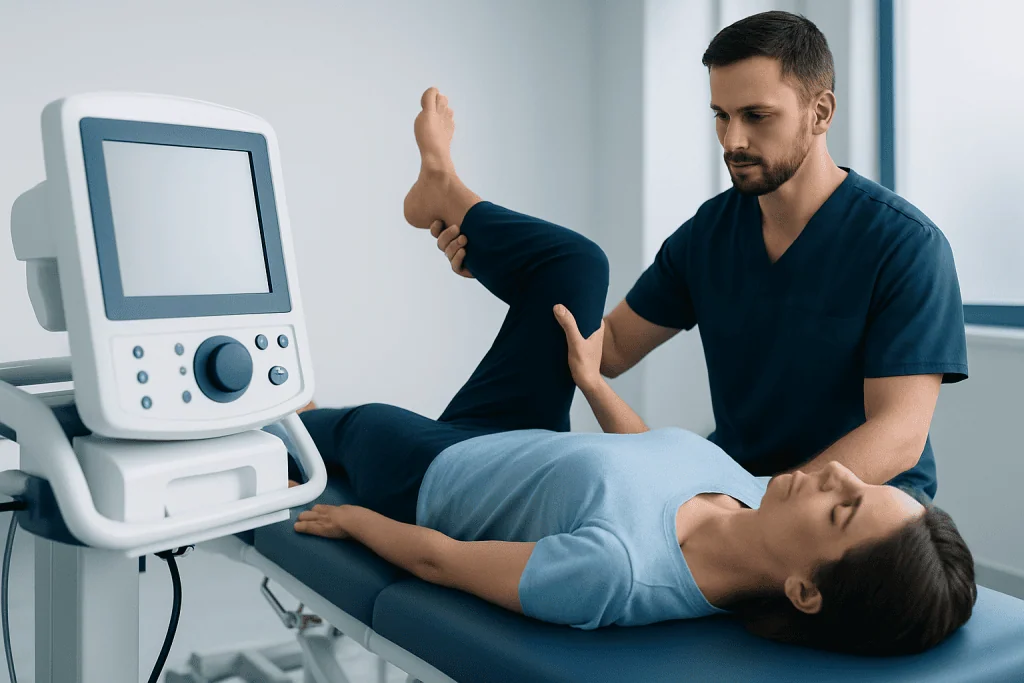
PNF stretching is based on how muscles and nerves work together to control movement. Muscles contain sensory receptors that respond to stretch and tension. When a muscle contracts and then relaxes in a controlled way, the nervous system may allow that muscle to lengthen further for a short period. This can make the next stretch feel easier and slightly deeper without forcing the movement.
Several versions of PNF exist, but the two most commonly discussed are “contract-relax” and “hold-relax.” In a typical approach, the muscle is stretched to a mild tension, contracted against resistance for a few seconds, and then relaxed before repeating the stretch. Some methods also use contraction of the opposite muscle group, which may further support movement control.
Although the exact physiological mechanisms are complex, the practical message is straightforward: PNF stretching aims to improve flexibility by combining muscle effort with relaxation. It is most helpful when the contraction is controlled and the stretch remains comfortable. Pain is not a sign that the technique is working better.
Potential Benefits and Who May Benefit

PNF stretching is often used to increase flexibility and joint range of motion. It may be helpful for people who feel limited by muscle tightness, such as those returning to exercise, participating in sports, or recovering from certain movement-related problems. Some patients also find that improved flexibility supports better posture, easier daily movement, and more comfortable exercise performance.
Evidence suggests that PNF stretching can improve short-term flexibility, often more than static stretching alone. It may be especially useful when a specific muscle group is limiting movement, such as the hamstrings affecting bending or the calf muscles affecting ankle mobility. In rehabilitation settings, clinicians may combine it with strength, balance, and mobility exercises rather than using it as a stand-alone solution.
However, PNF stretching is not automatically the best choice for everyone. If reduced mobility is caused by joint disease, nerve problems, or structural issues rather than muscle tightness, stretching alone may not address the underlying cause. A fuller assessment may be needed, especially if symptoms suggest a herniated disc or another condition affecting movement.
Common Techniques and Safe Practice
A commonly used PNF method is the hold-relax technique. The muscle is first moved into a gentle stretch until mild tension is felt. The person then performs a brief isometric contraction, meaning the muscle tightens without changing length, usually against a partner’s hand, a strap, or a stable surface. After relaxing, the stretch is repeated carefully.
Another method is contract-relax, in which the muscle contracts through a small range against resistance before relaxing into the next stretch. These approaches are often easiest and safest when taught by a trained professional. A therapist can choose the right muscle group, body position, and amount of resistance, especially for people with pain, stiffness, or a history of injury.
General safety principles include warming up first, using moderate rather than maximal effort, and avoiding bouncing. Helpful habits include:
- Stretch only to mild or moderate tension, not sharp pain.
- Keep contractions controlled and brief.
- Breathe normally and avoid holding the breath.
- Stop if there is numbness, tingling, dizziness, or joint instability.
- Progress gradually over time instead of forcing quick results.
PNF stretching is often more suitable after light activity or at the end of an exercise session than before explosive performance. For some athletes, prolonged stretching immediately before sprinting or power activities may temporarily reduce peak output. A clinician can help decide how and when to use it within a training plan.
Risks, Limitations, and When PNF May Not Be Appropriate
Like any physical technique, PNF stretching has limits. If it is performed too aggressively, it may irritate muscles, tendons, or joints rather than help them. Overstretching can lead to soreness, muscle strain, or increased symptoms in people who already have inflammation or instability. This is why controlled effort is usually safer than strong resistance.
PNF stretching may not be appropriate during an acute injury, soon after surgery unless a surgeon or therapist advises it, or when a joint is unstable. It should also be used with caution in people with osteoporosis, severe arthritis, connective tissue disorders, or significant neurological symptoms. If a person has unexplained pain radiating down an arm or leg, they may need evaluation for causes such as sciatica before beginning more advanced stretching.
Some people assume that more flexibility is always better, but this is not necessarily true. Certain individuals already have high mobility and instead need better strength and joint control. In these cases, repeated stretching without strengthening may worsen symptoms. A personalized plan may include mobility work alongside orthopedic rehabilitation or supervised exercise.
How Professionals Assess Tightness and Build a Plan
When flexibility problems interfere with comfort or function, clinicians usually look beyond the stretch itself. They assess which movements are limited, whether the restriction is muscular or joint-related, and whether pain is coming from the back, hip, shoulder, or another area. They may also evaluate posture, gait, balance, and muscle strength to understand the full pattern.
This matters because tightness can sometimes be protective. For example, a muscle may feel “tight” because it is guarding an irritated joint or compensating for weakness elsewhere. In that situation, stretching the muscle without addressing the cause may provide only temporary relief. A careful assessment helps determine whether PNF stretching is useful, unnecessary, or best delayed.
In many cases, PNF stretching is one part of a broader plan that may include strengthening, manual therapy, ergonomic changes, and home exercises. If there is concern about a structural problem, a specialist may recommend further evaluation through orthopedics or rehabilitation services. Near the end of the care pathway, some international patients may seek assessment at Acibadem International, where multidisciplinary specialists in JCI-accredited hospitals evaluate musculoskeletal concerns and design individualized treatment plans.
Self-Care Tips and When to Seek Medical Care
For general self-care, PNF stretching works best as part of an overall movement routine. Light aerobic warm-up, regular strength training, good sleep, hydration, and gradual activity progression all support flexibility and recovery. People often get better results by stretching consistently several times per week rather than pushing too hard in a single session.
It is sensible to start with simpler stretches before moving to PNF. If a person is unsure about form, a physiotherapist can teach safe positioning and resistance. Home practice should feel controlled and repeatable, not competitive. Lasting gains usually come from patience, not force.
Medical care should be sought if stretching causes sharp pain, swelling, bruising, weakness, numbness, tingling, or a feeling that a joint is giving way. Evaluation is also important if stiffness follows a fall, sports injury, surgery, fever, or if it limits normal walking, lifting, or sleep. People with chronic diseases affecting the joints, nerves, or bones should ask a qualified clinician before starting advanced stretching methods.
Frequently asked questions
Is PNF stretching better than static stretching?
PNF stretching may improve short-term range of motion more than static stretching alone in some people. However, “better” depends on the goal, the body area involved, and whether pain or injury is present. Static stretching may still be appropriate for many people, especially beginners.
Can PNF stretching help with tight hamstrings?
Yes, PNF stretching is commonly used for hamstring tightness and may help improve flexibility when done correctly. It should feel controlled rather than painful. If hamstring tightness is linked to back pain or nerve irritation, medical assessment may be needed.
Is PNF stretching safe to do alone?
Some forms can be done alone using a strap or wall, but many people learn the method more safely with professional guidance first. Incorrect resistance or poor positioning can increase the risk of strain. A physiotherapist can show how much effort and stretch is appropriate.
How often should PNF stretching be done?
Frequency varies based on a person’s health, fitness, and goals, but consistency is usually more important than intensity. Many people include it a few times per week rather than every day. A clinician can suggest a schedule that matches symptoms and activity level.
Should PNF stretching hurt?
No. Mild tension or a strong but tolerable stretch may be expected, but sharp pain is not a normal or helpful part of the technique. Pain can be a sign that the tissue is being overloaded or that another problem is present.
Who should avoid PNF stretching?
People with acute muscle strains, unstable joints, recent surgery, severe osteoporosis, or significant nerve symptoms should avoid it unless a qualified clinician recommends it. It may also be unsuitable for some people with hypermobility or inflammatory joint conditions. A medical professional can advise on safer alternatives.
This article is for general information only and is not a substitute for professional medical advice. Please consult a qualified doctor about your individual situation.
Explore treatments in Turkey — costs, top hospitals & a free quote
JCI-accredited · board-certified surgeons · reply within 24h
Add us as a Preferred Source to see more of our trusted health content across Google Search, AI Overviews and Discover.

More from the Health Library

Methyldopa: An Evidence-Based Guide for Patients

Apple Cider Vinegar for Hair — Explained by Medical Evidence, Not Myths

Blocked Hair Glands: An Evidence-Based Guide for Patients

Out of Breath When Walking: An Evidence-Based Guide for Patients

Common Myths About Staying Healthy: What the Evidence Really Shows