

Polycystic Ovary Syndrome: Irregular Periods, Acne, and Fertility Concerns
Polycystic ovary syndrome, often called PCOS, is related to hormonal imbalance and ovulation changes. Symptoms may include irregular periods, acne, excess facial or body hair, scalp hair thinning, weight changes, and fertility concerns.
Key Takeaways
- Polycystic ovary syndrome, often called PCOS, is related to hormonal imbalance and ovulation changes.
- Symptoms may include irregular periods, acne, excess facial or body hair, scalp hair thinning, weight changes, and fertility concerns.
- Diagnosis is based on a combination of medical history, examination, blood tests, and sometimes pelvic ultrasound.
- Treatment depends on a person's priorities, such as regulating periods, improving skin symptoms, managing metabolic health, or trying to conceive.
- Healthy lifestyle habits, regular follow-up, and early medical guidance can reduce long-term risks and improve quality of life.
Polycystic ovary syndrome is a common hormonal condition that can cause irregular periods, acne, excess hair growth, and difficulties with ovulation. With the right diagnosis, lifestyle support, and individualized medical care, many symptoms can be managed and fertility goals can often be supported.
Overview
Polycystic ovary syndrome, commonly known as PCOS, is a hormonal condition that affects how the ovaries work. It is often linked with higher-than-usual levels of androgens, sometimes called male-type hormones, although all women naturally produce them in small amounts. These hormone changes can interfere with regular ovulation, which is why many people with PCOS have irregular periods or find it harder to predict their fertile days.
The name can be confusing because not everyone with PCOS has cysts on the ovaries, and the small fluid-filled follicles seen on ultrasound are not dangerous cysts in the usual sense. PCOS is diagnosed by looking at the whole picture, including menstrual patterns, physical symptoms, hormone tests, and sometimes imaging. It is a long-term condition, but it can be managed well with personalized care.
PCOS can affect reproductive health, skin, hair growth, weight, insulin function, and emotional well-being. The experience varies widely: one person may mainly notice acne and irregular cycles, while another may seek help because of fertility concerns. A calm, step-by-step approach helps identify the main issues and choose treatment that fits the person’s age, symptoms, and goals.
Symptoms of Polycystic Ovary Syndrome
PCOS symptoms often begin in the teenage years or early adulthood, but the condition may be recognized later, especially when a person starts trying to conceive. The most common sign is an irregular menstrual cycle. Periods may come less often than expected, be unpredictable, or occasionally be very heavy after a long gap because the uterine lining has built up over time.
Higher androgen levels can lead to skin and hair symptoms. These may include persistent acne, oily skin, excess hair growth on the upper lip, chin, chest, abdomen, or thighs, and thinning hair on the scalp. These symptoms can affect confidence and emotional health, so they should be taken seriously even when they are not medically dangerous.
Common symptoms and related concerns can include:
- Irregular, infrequent, or absent periods
- Acne that continues beyond adolescence or is difficult to control
- Increased facial or body hair growth
- Scalp hair thinning or hair shedding
- Weight gain or difficulty losing weight, although PCOS can occur at any body size
- Difficulty becoming pregnant due to irregular ovulation
- Darkened, velvety skin patches in body folds, which may be linked with insulin resistance
Not every person has every symptom. Some people have regular-looking cycles but still have hormone-related signs, while others have few outward symptoms but ovulate irregularly. Because symptoms overlap with other conditions, medical assessment is important before assuming PCOS is the cause.
Causes and Risk Factors
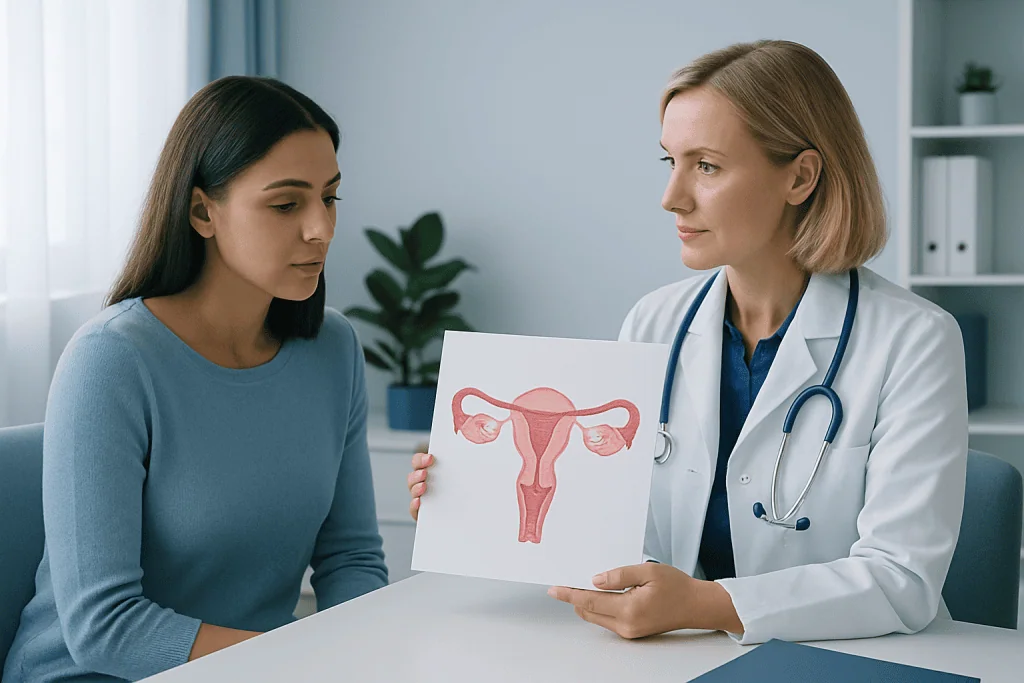
The exact cause of PCOS is not fully understood. It is considered a complex condition influenced by genetics, hormone signaling, and metabolism. Many people with PCOS have a family history of irregular periods, excess hair growth, type 2 diabetes, or fertility difficulties, suggesting that inherited factors may contribute.
Insulin resistance is an important feature for many, though not all, people with PCOS. Insulin is a hormone that helps move glucose from the blood into the body’s cells. When the body becomes less responsive to insulin, the pancreas may produce more of it. Higher insulin levels can encourage the ovaries to produce more androgens, which may disrupt ovulation and contribute to acne and excess hair growth.
Body weight can influence PCOS symptoms, but it is not the only factor. PCOS can affect people with lower, average, or higher body weight. For some individuals, weight gain can worsen insulin resistance and menstrual irregularity, while even modest lifestyle improvements may help hormone balance. However, PCOS should never be viewed as a simple matter of willpower; it is a medical condition with biological and environmental influences.
Other conditions can look similar to PCOS, including thyroid disorders, high prolactin levels, congenital adrenal hyperplasia, and rarely, androgen-producing tumors. This is why a careful evaluation is needed, especially if symptoms appear suddenly or progress quickly.
Diagnosis
Diagnosis usually begins with a detailed medical history. A doctor may ask about the age when periods started, cycle length, changes in bleeding, acne, hair growth, weight changes, medications, family history, and pregnancy plans. A physical examination may assess blood pressure, body mass index, acne, hair growth patterns, scalp hair, and skin signs of insulin resistance.
Blood tests are commonly used to evaluate hormone levels and rule out other causes of irregular periods or androgen-related symptoms. These may include tests for androgens, thyroid function, prolactin, and sometimes adrenal hormones. Doctors may also check metabolic health with blood glucose, HbA1c, insulin-related assessment, and cholesterol or triglyceride levels, depending on the individual situation.
A pelvic ultrasound may be recommended to look at the ovaries and the lining of the uterus. In PCOS, the ovaries may contain many small follicles, but ultrasound findings alone do not confirm the diagnosis. In adolescents, ultrasound is used carefully because multifollicular ovaries can be common during normal puberty.
Many clinicians use diagnostic criteria that consider three main features: irregular or absent ovulation, clinical or laboratory signs of higher androgen levels, and polycystic ovarian appearance on ultrasound. Usually, PCOS is diagnosed when enough features are present and other possible conditions have been excluded. A clear diagnosis can help people understand their symptoms and choose appropriate care.
Treatment Options
PCOS treatment is individualized. The best plan depends on whether the main goal is regulating periods, improving acne or hair growth, reducing metabolic risks, or becoming pregnant. Because priorities can change over time, treatment plans are often reviewed and adjusted.
For people not currently trying to conceive, hormonal contraception may be used to regulate menstrual bleeding, reduce androgen-related symptoms, and protect the uterine lining from long gaps between periods. Other medications may be considered for acne or excess hair growth, but some are not safe in pregnancy and require reliable contraception. Dermatologic treatments, such as acne therapies or hair removal methods, may also be part of care.
For metabolic health, doctors may recommend nutrition and physical activity changes, and in some cases medication to support insulin sensitivity. The aim is not only weight management, but also improving blood sugar control, cholesterol levels, energy, and long-term cardiovascular health. People with PCOS may benefit from regular screening for diabetes risk, blood pressure, and lipid levels.
If pregnancy is desired, the focus shifts to helping ovulation occur more regularly. Ovulation-inducing medicines can be effective for many people with PCOS, but they should be taken under medical supervision. If additional fertility factors are present, such as blocked fallopian tubes or male-factor infertility, a fertility specialist may recommend further treatment options, including assisted reproductive techniques when appropriate.
Fertility, Pregnancy, and Long-Term Health
PCOS is one of the common reasons for irregular ovulation, which can make it harder to time conception. However, many people with PCOS do become pregnant, either naturally or with medical support. The first step is often to confirm whether ovulation is occurring and to assess both partners when pregnancy has not happened after an appropriate period of trying.
Before pregnancy, a doctor may recommend optimizing general health, reviewing medications, checking blood sugar, and starting folic acid if appropriate. During pregnancy, people with PCOS may need closer attention to glucose levels and blood pressure, depending on their individual risk factors. This does not mean complications will occur, but planned care helps support a safer pregnancy journey.
Long-term health is also important. PCOS can be associated with insulin resistance, type 2 diabetes risk, abnormal cholesterol levels, high blood pressure, sleep apnea in some individuals, and endometrial overgrowth when periods are very infrequent. Regular follow-up helps detect and manage these issues early.
Emotional well-being should be included in care. Acne, hair growth, body image concerns, fertility stress, and chronic symptoms can contribute to anxiety or low mood. Support from healthcare professionals, counseling when needed, and reliable education can make PCOS feel more manageable.
Prevention and Self-Care
PCOS cannot always be prevented, especially when genetic and hormonal factors are involved. However, self-care can reduce symptom burden and support metabolic health. Small, sustainable habits are usually more effective than restrictive diets or short-term plans.
A balanced eating pattern can help stabilize energy and support insulin function. Many people benefit from meals that include vegetables, fruit, whole grains or other high-fiber carbohydrates, lean proteins, healthy fats, and limited highly processed sugary foods. There is no single PCOS diet that works for everyone, so nutrition guidance should be individualized and respectful of cultural preferences and medical needs.
Regular physical activity is helpful even when weight does not change. A combination of aerobic exercise, such as brisk walking or cycling, and strength training can support insulin sensitivity, mood, sleep, and cardiovascular health. Starting gradually is acceptable; consistency is more important than intensity.
Other self-care steps include tracking menstrual cycles, prioritizing sleep, managing stress, avoiding smoking, and attending regular medical check-ups. People with bothersome acne or excess hair growth should know that treatments exist, but results may take months because hair and skin cycles change slowly.
When to See a Doctor
A medical appointment is recommended if periods are repeatedly more than 35 days apart, absent for several months, very unpredictable, or unusually heavy. It is also sensible to seek care for persistent acne, new or worsening excess hair growth, scalp hair thinning, unexplained weight changes, or signs of insulin resistance such as darkened skin patches in body folds.
Anyone trying to conceive who has irregular cycles should consider early medical guidance, rather than waiting too long without support. A doctor can assess ovulation, review overall reproductive health, and discuss safe treatment options. Urgent evaluation is needed if androgen-related symptoms develop rapidly, such as sudden severe hair growth, deepening voice, or rapid muscle changes, because these are not typical for most PCOS cases.
Patients should also seek help if PCOS symptoms are affecting self-esteem, relationships, eating patterns, or mood. Emotional support is a valid part of treatment. At Acibadem International, multidisciplinary specialists in JCI-accredited hospitals diagnose and treat PCOS and related fertility or metabolic concerns for international patients, with care plans tailored to each person’s needs.
Frequently asked questions
Is polycystic ovary syndrome the same as having ovarian cysts?
No. The small follicles sometimes seen on ultrasound in PCOS are not the same as harmful ovarian cysts. PCOS is a hormonal and metabolic condition diagnosed by symptoms, hormone findings, ovulation patterns, and sometimes ultrasound.
Can someone have PCOS with regular periods?
Yes, although irregular periods are common, some people with PCOS appear to have fairly regular cycles. They may still have androgen-related symptoms such as acne or excess hair growth. A doctor can check whether ovulation is occurring and whether another condition could explain the symptoms.
Does PCOS always cause infertility?
No. PCOS can make pregnancy more difficult because ovulation may be irregular, but many people with PCOS conceive naturally or with treatment. If pregnancy is a goal, medical care can help identify the best approach and check for any additional fertility factors.
Can weight loss cure PCOS?
There is no guaranteed cure for PCOS, and the condition can affect people at any body size. For some people with higher weight, modest weight loss may improve cycles, insulin resistance, and symptoms. Treatment should still focus on overall health, not only the number on the scale.
What tests are usually done for PCOS?
Testing may include hormone blood tests, thyroid and prolactin tests, glucose or HbA1c, cholesterol levels, and sometimes pelvic ultrasound. The exact tests depend on symptoms, age, menstrual pattern, and pregnancy plans. The goal is to confirm PCOS and rule out similar conditions.
How long does PCOS treatment take to work?
Some improvements, such as more predictable bleeding, may occur within a few cycles after starting treatment. Acne and excess hair growth often take several months to improve because skin and hair follicles respond gradually. Regular follow-up helps adjust the plan if progress is slower than expected.
References
- World Health Organization
- American College of Obstetricians and Gynecologists
- Endocrine Society
- European Society of Human Reproduction and Embryology
- National Institute for Health and Care Excellence
This article is for general information only and is not a substitute for professional medical advice. Please consult a qualified doctor about your individual situation.
Polycystic Ovary Syndrome in Turkey — costs, top hospitals & a free quote
JCI-accredited · board-certified surgeons · reply within 24h
Add us as a Preferred Source to see more of our trusted health content across Google Search, AI Overviews and Discover.
Check your numbers in seconds
BMI, calories, due date, blood pressure and 30+ more clinical calculators — free, instant, doctor-reviewed ranges.

Gynecology & Obstetrics
Women’s health across pregnancy, gynecologic surgery and high-risk pregnancy care.
187 specialists in this unitMore from the Health Library


Related Specialists
Prof. Dr. Kenan Çekem
Internal Medicine
Dr. Şirin Zeynep Haskalp Arıkan
Pediatrics
Dr. Erhan Çatalbaş
Emergency Service
Prof. Dr. M. Özcan Erdemli
Anesthesiology