Polymer Heart Valve: An Evidence-Based Patient Guide

Polymer heart valves are an emerging technology and are not yet the standard choice for most valve replacement procedures. Current valve replacement options usually include mechanical valves, biological tissue valves, and transcatheter heart valves.
Key Takeaways
- Polymer heart valves are an emerging technology and are not yet the standard choice for most valve replacement procedures.
- Current valve replacement options usually include mechanical valves, biological tissue valves, and transcatheter heart valves.
- The best valve approach depends on the affected valve, symptoms, anatomy, age, other health conditions, and preferences about long-term medicines.
- TAVR is mainly used for selected people with severe aortic stenosis and is not appropriate for every type of valve disease.
- Regular cardiology follow-up is essential after any valve repair or replacement.
A polymer heart valve is a synthetic valve made from advanced polymer materials rather than animal tissue or metal. These devices are being studied as possible alternatives for valve replacement, but conventional mechanical and bioprosthetic valves remain the established options in routine clinical care.
Overview: What Is a Polymer Heart Valve?
A polymer heart valve is a replacement heart valve made from engineered synthetic materials, usually flexible medical-grade polymers. It is designed to open and close with each heartbeat, directing blood forward and helping prevent backward leakage. The goal is to reproduce the function of a healthy native valve while potentially avoiding some limitations associated with traditional mechanical or animal-tissue valves.
Polymer valve technology is still developing. Some polymer-based valves and related materials are being investigated in laboratory, early clinical, or limited-use settings, but they are not the routine standard for most people who need valve replacement. In everyday clinical practice, doctors most often use mechanical valves, bioprosthetic valves made from animal tissue, or transcatheter tissue valves.
Heart valve treatment should be individualized. A multidisciplinary heart team considers the affected valve, the severity and cause of disease, heart function, vessel anatomy, surgical risk, expected durability, need for anticoagulant medicines, and a person’s goals before recommending a repair or replacement strategy.
How a Synthetic Heart Valve Works
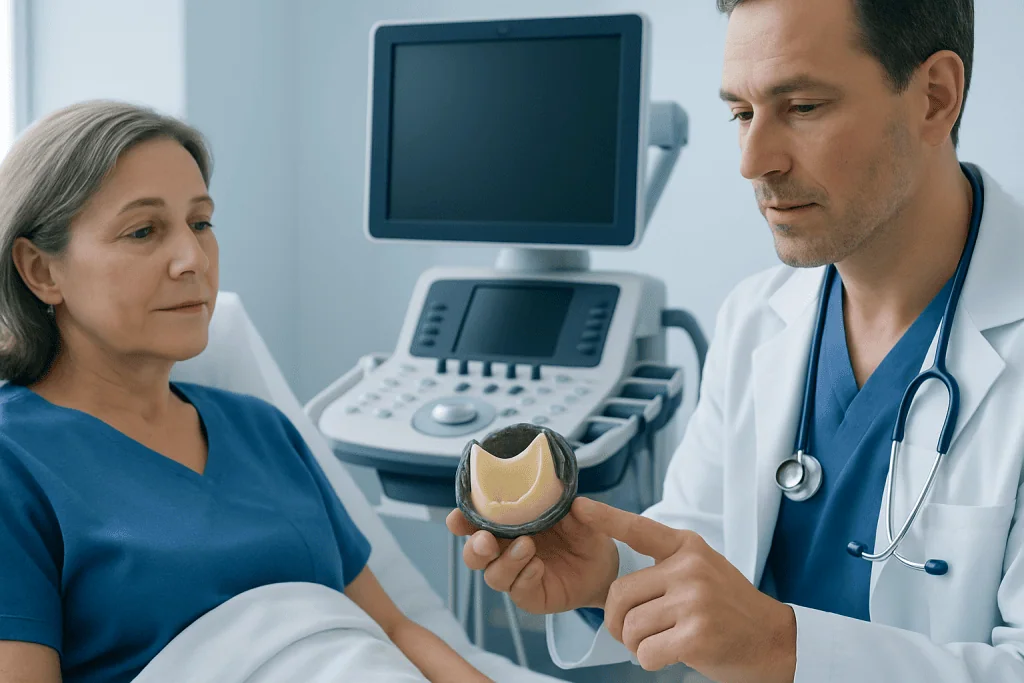
The heart has four valves: aortic, mitral, tricuspid, and pulmonary. Each valve acts as a one-way door. Valve disease may cause narrowing, called stenosis, or leaking, called regurgitation. When disease becomes severe, the heart may need to work harder to maintain adequate circulation.
A synthetic valve is designed to sit in the position of the damaged valve and control blood flow through a central opening. Polymer materials can be engineered for flexibility, strength, and compatibility with blood and surrounding tissue. Developers aim to create leaflets that move smoothly, withstand repeated opening and closing, and reduce problems such as clot formation or structural breakdown.
Despite these potential advantages, long-term durability and safety need to be demonstrated through robust clinical studies. For this reason, a cardiologist should explain whether a particular valve is established therapy, available only in a specialized setting, or being assessed in a clinical trial. People considering treatment for heart valve disease should ask which device options have evidence for their individual situation.
Who May Be a Candidate for Valve Replacement?

Valve replacement may be considered when a valve is severely narrowed or leaking and symptoms, heart enlargement, reduced pumping function, or other complications are present. Symptoms can include breathlessness, chest discomfort, tiredness, dizziness, fainting, palpitations, or swelling in the ankles and legs. Some people have few symptoms, which is why scheduled monitoring can be important.
Eligibility for a specific procedure is not determined by age alone. Doctors use echocardiography, CT imaging when needed, heart rhythm assessment, medical history, and physical examination to understand the valve problem and procedural risk. A heart team may include a cardiologist, cardiac surgeon, interventional cardiologist, imaging specialist, anesthesiologist, and other professionals.
For many people, valve repair is preferred when it can provide a durable result, especially in selected mitral or tricuspid valve conditions. If replacement is needed, the choice between open surgery and a catheter-based procedure depends on the valve involved and the person’s anatomy. Polymer valves may become relevant in the future, but suitability depends on regulatory availability and the quality of evidence at the time of assessment.
- Mechanical valves are durable but usually require lifelong anticoagulant medication.
- Bioprosthetic valves avoid lifelong anticoagulation in many cases but can gradually wear out over time.
- Transcatheter valves are usually biological tissue valves delivered through a catheter and are primarily used for selected aortic valve conditions.
What Happens During Valve Replacement?
The procedure depends on whether the valve is repaired, replaced surgically, or replaced through a catheter. Before treatment, patients commonly have blood tests, an electrocardiogram, echocardiography, and imaging to map the heart and blood vessels. The clinical team also reviews medications, allergies, kidney function, dental health, and any history of bleeding or infection.
In surgical valve replacement, the surgeon accesses the heart through an incision in the chest. The person is generally placed under general anesthesia, and a heart-lung machine may temporarily support circulation while the diseased valve is repaired or replaced. The replacement valve is secured in place, the heart is restarted, and the patient is monitored in intensive care after surgery.
In transcatheter aortic valve replacement, or TAVR, a collapsible valve is guided through a catheter, often inserted through an artery in the groin. It is positioned inside the diseased aortic valve and expanded to support blood flow. This less invasive approach may be appropriate for selected people with severe aortic stenosis. Transcatheter aortic valve replacement (TAVR) requires detailed imaging and careful planning by an experienced heart team.
Polymer valve devices, if used in a study or specialized program, would follow a similarly structured process of pre-procedure assessment, implantation, monitoring, and long-term follow-up. The exact technique depends on the device design and the route approved for its use.
Benefits, Risks, and Recovery Timeline
The main expected benefit of successful valve treatment is improved blood flow and reduced strain on the heart. Many people experience less breathlessness, better exercise tolerance, and improved daily functioning after recovery. Treatment may also help prevent further decline in heart function when performed at the appropriate time.
Every heart valve procedure has possible risks. These may include bleeding, infection, irregular heart rhythms, stroke, blood clots, kidney problems, valve leakage, the need for a pacemaker, or the need for another procedure. Surgical risks and transcatheter risks differ, and individual risk is influenced by age, frailty, lung or kidney disease, previous chest surgery, vascular disease, and the complexity of the valve condition.
Recovery after open-heart surgery generally takes weeks, with gradual improvement in comfort, mobility, and stamina. Hospital stays and recovery vary considerably. Recovery after TAVR is often shorter, and many people begin walking soon after the procedure, although follow-up and activity instructions remain important. A clinician will advise when driving, work, exercise, and heavier lifting can safely resume.
After any valve intervention, patients need regular echocardiograms and cardiology appointments. They may need medicines for blood thinning, rhythm control, blood pressure, or heart failure depending on the type of valve and their health needs. Good dental hygiene and prompt assessment of unexplained fever are important because infections can affect heart valves.
How Long Does a Synthetic Heart Valve Last?
The lifespan of a synthetic heart valve depends on what “synthetic” means. Mechanical valves are made from durable artificial materials and can often function for decades, sometimes for the rest of a person’s life. However, most people with a mechanical valve need lifelong anticoagulation to reduce the risk of blood clots.
Bioprosthetic valves are usually made from animal tissue supported by a frame, rather than fully synthetic polymer. They may gradually deteriorate over time, and their durability varies with age, valve position, health conditions, and the specific device. Younger people may experience valve degeneration sooner because of higher calcium metabolism and longer lifetime exposure.
For polymer heart valves specifically, reliable long-term human durability data are still limited compared with established mechanical and bioprosthetic valve technologies. A patient should ask their heart team what follow-up evidence exists for any proposed device, whether reintervention may be needed, and what options would remain available in the future.
What Is the Age Cut Off for TAVR?
There is no single age cut off for TAVR. Rather than using age alone, heart teams consider life expectancy, surgical risk, anatomical suitability, the expected durability of the valve, and whether future valve procedures may be needed. TAVR is most commonly considered in older adults with severe symptomatic aortic stenosis, but selected younger patients may also be evaluated.
In general, surgical aortic valve replacement may be favored for many younger people who are suitable for surgery, particularly when long-term durability and future treatment planning are central concerns. TAVR may be preferred for people whose age, medical conditions, frailty, or surgical risk make open surgery less suitable. These are broad principles rather than fixed rules.
TAVR is not used as a general replacement approach for every diseased heart valve. Its role is best established for aortic stenosis. Decisions should be made after review by a valve team, which may also discuss heart valve surgery when surgical repair or replacement is more appropriate.
Which Is the Hardest Heart Valve to Repair, and Why Is TAVR Not Recommended for Everyone?
The mitral valve is often considered one of the most complex valves to repair because it has two leaflets, supporting cords called chordae, papillary muscles, and a changing ring-like structure called the annulus. Successful repair requires these components to work together. Complexity varies widely, however, and some aortic, tricuspid, congenital, or previously treated valve problems can also be especially challenging.
TAVR is not recommended for everyone because it treats a specific problem: selected cases of severe aortic stenosis. It does not routinely treat most mitral, tricuspid, or pulmonary valve disease. It may also be unsuitable when blood vessels are too narrow or diseased for catheter access, the aortic valve anatomy is unfavorable, there is active infection, another heart operation is needed, or the balance of benefits and risks favors surgery.
Patients with a bicuspid aortic valve, severe aortic regurgitation without stenosis, coronary artery disease needing bypass surgery, or complex valve anatomy may need particularly careful assessment. This does not automatically exclude TAVR, but it means that imaging and expert review are essential. The safest option is the one that best fits the person’s complete clinical picture.
Acibadem International’s multidisciplinary specialists and JCI-accredited hospitals assess and treat heart valve conditions for international patients, with treatment planning based on individual anatomy and clinical needs.
When to Seek Medical Care
A person should arrange medical assessment if they develop new or worsening shortness of breath, reduced ability to exercise, chest pressure, unexplained fatigue, palpitations, ankle swelling, dizziness, or fainting. These symptoms can have several causes, but they should not be ignored, particularly in someone known to have a heart murmur or valve disease.
Urgent medical care is needed for severe or persistent chest pain, fainting, marked breathing difficulty, sudden weakness on one side of the body, trouble speaking, or symptoms of a possible stroke. People who have had valve replacement should seek prompt assessment for fever, chills, worsening shortness of breath, unusual bleeding, or a sudden change in symptoms.
Regular follow-up is part of long-term valve health. Keeping appointments, taking prescribed medicines as directed, maintaining dental care, and discussing planned dental or surgical procedures with the cardiology team can help reduce preventable complications.
Frequently asked questions
Is a polymer heart valve available for routine use?
Polymer heart valves are an emerging area of cardiovascular device development. Availability varies by country, device approval status, and clinical setting, while mechanical and bioprosthetic valves remain the established choices for most valve replacements. A cardiologist can explain which options are appropriate and available for a particular patient.
How long does a synthetic heart valve last?
Mechanical synthetic valves are highly durable and can often last for decades, but they usually require lifelong anticoagulant medication. Polymer heart valves do not yet have the same depth of long-term clinical evidence. Tissue valves may wear out over time, with durability influenced by age and other factors.
What is the age cut off for TAVR?
There is no strict age cut off for TAVR. Heart teams consider age alongside surgical risk, anatomy, life expectancy, valve durability, and the likelihood of needing future procedures. TAVR is commonly used in older adults with severe aortic stenosis but may be considered in selected younger adults.
Which is the hardest heart valve to repair?
The mitral valve is frequently considered one of the most complex valves to repair because its leaflets, chordae, papillary muscles, and annulus must function together. The difficulty of repair depends on the specific cause and pattern of valve disease. An experienced valve team can assess whether repair or replacement is more suitable.
Why is TAVR not recommended for everyone?
TAVR is designed primarily for selected people with severe aortic stenosis, so it is not a universal treatment for all valve diseases. Anatomy, access through the blood vessels, infection, the need for other heart surgery, and expected long-term valve strategy can affect suitability. Some people receive better long-term benefit from surgical valve repair or replacement.
Will I need blood thinners after heart valve replacement?
The need for blood-thinning medicine depends on the type of valve and a person’s medical history. Mechanical valves generally require lifelong anticoagulation, while tissue valves may require blood-thinning treatment for a limited time or for other reasons such as atrial fibrillation. The care team will provide an individualized medication plan.
References
- American Heart Association
- American College of Cardiology
- European Society of Cardiology
- U.S. Food and Drug Administration
- National Heart, Lung, and Blood Institute
This article is for general information only and is not a substitute for professional medical advice. Please consult a qualified doctor about your individual situation.
Explore treatments in Turkey — costs, top hospitals & a free quote
JCI-accredited · board-certified surgeons · reply within 24h
Add us as a Preferred Source to see more of our trusted health content across Google Search, AI Overviews and Discover.

More from the Health Library



Related Specialists

Dr. Ayşe Özboz
Anesthesiology
Dr. Meltem Hüner
Infectious Diseases & Clinical Microbiology
Fzt. Sevim Korkmaz
Physical Medicine & Rehabilitation
Dr. Aygun Babayeva
Pediatrics