

Pork Tenderloin Temp: An Evidence-Based Guide for Patients

The recommended minimum pork tenderloin temp is 145°F (63°C) with a 3-minute rest. A food thermometer is the most reliable way to check doneness.
Key Takeaways
- The recommended minimum pork tenderloin temp is 145°F (63°C) with a 3-minute rest.
- A food thermometer is the most reliable way to check doneness.
- Color alone does not confirm whether pork is safe to eat.
- Undercooked or poorly handled pork can increase the risk of foodborne illness.
- People who are pregnant, older, immunocompromised, or very young should be especially careful with food safety.
Pork tenderloin temp should reach 145°F (63°C), followed by a 3-minute rest, to balance food safety and quality. For patients, the key is understanding safe minimum temperature, correct thermometer use, and when undercooked pork may require medical attention.
Overview: What pork tenderloin temp should be?
Pork tenderloin temp should reach 145°F (63°C), then rest for at least 3 minutes before slicing or serving. This is the evidence-based minimum internal temperature widely recommended for whole cuts of pork, including tenderloin, and it helps reduce the risk of foodborne illness while keeping the meat tender and moist.
For patients and families, this matters because food safety is part of overall health. Pork that is not cooked to a safe temperature may carry germs or parasites that can cause digestive illness. At the same time, cooking pork far beyond the recommended temperature can make it dry, which often leads people to rely on color rather than a thermometer the next time they cook.
Pork tenderloin is different from ground pork. Whole-muscle cuts such as tenderloin, loin chops, and roasts have a lower minimum safe temperature than ground pork because bacteria are more likely to stay on the surface of intact meat. Once meat is ground, bacteria can be mixed throughout, which is why ground pork must be cooked more thoroughly.
The safest approach is simple: measure the thickest part of the tenderloin with a digital food thermometer, remove it from heat at about 145°F (63°C), and let it rest. During the rest period, temperature remains stable or may rise slightly, while juices redistribute through the meat.
Why temperature matters for health

Cooking pork to the right internal temperature lowers the chance of foodborne infection. Raw or undercooked pork can sometimes contain harmful organisms such as Salmonella, Yersinia, Listeria, or certain parasites. Proper cooking substantially reduces these risks, although safe storage and avoiding cross-contamination are also important.
Symptoms of foodborne illness can include nausea, vomiting, diarrhea, stomach cramps, fever, and dehydration. In many healthy adults, these illnesses are mild and self-limited, but some people are at higher risk of complications. This includes pregnant people, young children, older adults, and people with weakened immune systems due to illness or medication.
It is also helpful to understand that safe cooking is only one step in the chain of prevention. A pork tenderloin that reaches a safe temperature can still be linked to illness if raw juices contaminate salad ingredients, cutting boards, knives, or hands. Good kitchen hygiene is therefore just as important as correct cooking.
When gastrointestinal symptoms are severe or prolonged, doctors may evaluate for dehydration, bacterial infection, or another digestive condition. Persistent diarrhea is not always caused by food poisoning, and clinicians may also consider broader causes of colitis or other digestive illnesses depending on the person’s symptoms and medical history.
How to measure pork tenderloin temp correctly
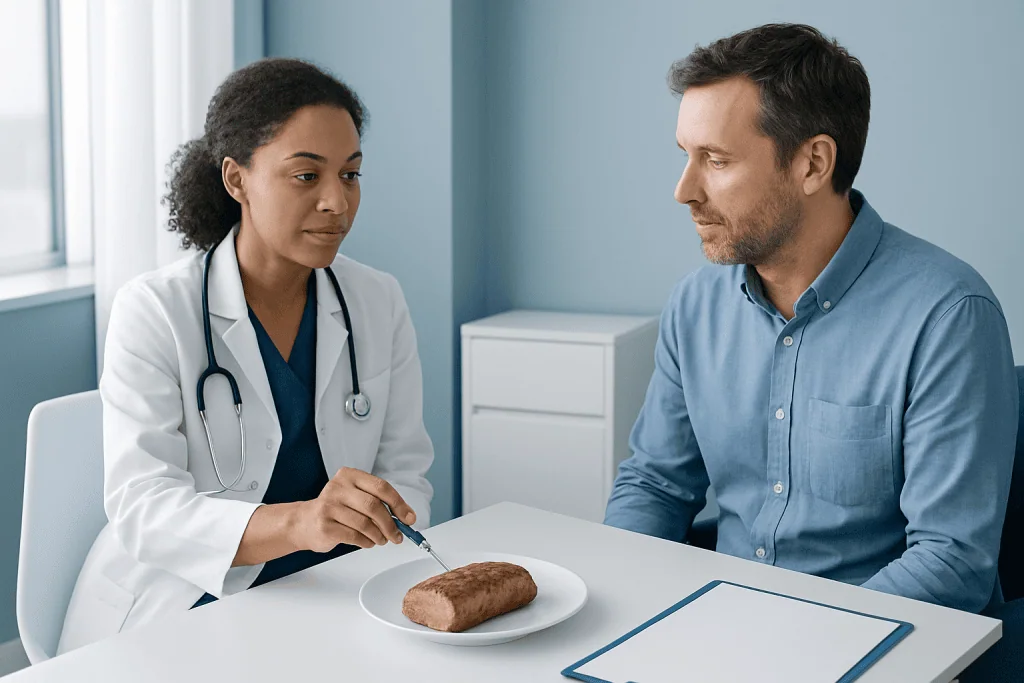
A food thermometer gives a more accurate answer than cutting into the meat or judging by color. To check pork tenderloin temp, insert the thermometer into the thickest part of the meat, avoiding the pan, skewer, or any large pocket of fat. If the tenderloin is very uneven in shape, check more than one spot.
Digital instant-read thermometers are practical for most home kitchens. Probe thermometers that remain in the meat during cooking can also work well, especially in the oven. Whatever type is used, it should be clean and, if possible, calibrated according to the manufacturer’s instructions so the reading is dependable.
Because pork tenderloin is a narrow cut, care with placement matters. If the thermometer tip passes through to the other side or sits too close to the surface, the reading may be lower or less accurate than the true center temperature. Waiting until the thickest section reaches 145°F (63°C) is the clearest way to confirm doneness.
After removing the pork from heat, let it rest for at least 3 minutes. Resting is part of the safety guidance, not only a cooking preference. It also improves texture and reduces juice loss when the tenderloin is sliced.
Common misconceptions about pork doneness
One common myth is that pork must be cooked until it is completely white or very firm to be safe. In reality, whole cuts of pork can remain slightly pink in the center and still be safely cooked if they have reached 145°F (63°C) and rested appropriately. Color varies with cooking method, pH, lighting, and the meat itself.
Another misunderstanding is that all pork needs to be cooked the same way. Whole pork tenderloin is not the same as ground pork, sausage, or processed products. The recommended endpoint differs because the pattern of contamination risk differs. For this reason, people should not apply tenderloin guidance to all pork foods.
Some people assume searing the outside is enough. Searing improves flavor, but it does not guarantee the center has reached a safe temperature. This is particularly relevant when cooking quickly at high heat or using methods that brown the outside before the middle is done.
Finally, it is a mistake to rely on timing alone. Oven temperature, pan thickness, starting meat temperature, and tenderloin size all affect how quickly pork cooks. A thermometer remains the most reliable tool for safety.
Safe handling before and after cooking
Food safety begins before the pork goes into the oven or pan. Raw pork should be kept refrigerated until use and separated from ready-to-eat foods. Hands should be washed after handling raw meat, and cutting boards, knives, counters, and plates that touched raw pork should be cleaned before they contact cooked food.
Marinating should be done in the refrigerator, not on the kitchen counter. If marinade has touched raw pork, it should not be reused as a sauce unless it is boiled first. These steps help reduce cross-contamination, which is a common route for household foodborne illness.
After cooking, leftovers should be refrigerated promptly in shallow containers so they cool efficiently. Reheated pork should be steaming hot throughout before eating. If there is any doubt about how long cooked pork has been left out at room temperature, it is safer not to eat it.
People with underlying digestive disease may be more affected by dehydration and diarrhea after foodborne illness. If symptoms occur, doctors may use tests such as endoscopy or colonoscopy when symptoms persist, blood is present, or another gastrointestinal disorder is suspected rather than a short-lived infection.
Who should be extra cautious?
Some groups should be especially careful about pork tenderloin temp and kitchen hygiene because they are more vulnerable to complications from foodborne infection. This includes pregnant people, infants and young children, adults over 65, transplant recipients, people receiving chemotherapy, and anyone with a weakened immune system.
For these individuals, even an infection that seems minor at first can lead to more serious dehydration or systemic illness. In pregnancy, some foodborne pathogens are particularly concerning because they may affect both the pregnant person and the fetus. Extra care with refrigeration, handwashing, and thermometer use is worthwhile.
People with chronic conditions such as inflammatory bowel disease, liver disease, kidney disease, or diabetes may also become unwell more easily if they develop vomiting or diarrhea. Fluid loss can worsen existing health problems. It is sensible for these patients to contact a clinician earlier if symptoms begin after eating suspect food.
If a doctor is concerned about complications, assessment may include stool testing, blood tests, and supportive care. In selected situations involving prolonged symptoms, imaging or gastroenterology evaluation may be advised to rule out another cause or to manage ongoing digestive symptoms.
What to do if pork may have been undercooked
If pork tenderloin was served below the recommended temperature and is noticed immediately, the safest option is to return it to heat and cook until the center reaches 145°F (63°C), then rest it for 3 minutes. If the meat has already been eaten, most people do not need emergency treatment. Instead, they can monitor for symptoms over the following hours to days.
Helpful self-care includes drinking fluids, resting, and avoiding foods that worsen nausea or diarrhea. Oral rehydration solutions can be useful if symptoms develop. Anti-diarrheal medicines may not be appropriate in every case, especially when there is fever or blood in the stool, so medical advice may be needed.
It is best not to take antibiotics without a doctor’s recommendation. Many foodborne illnesses improve with supportive care alone, and the right treatment depends on the suspected organism, symptom severity, and the person’s underlying health. Unnecessary antibiotic use can sometimes do more harm than good.
For ongoing abdominal pain, persistent vomiting, or signs of dehydration, medical review is important. Clinicians may consider infection, food intolerance, or another digestive diagnosis such as gastroenteritis depending on the pattern of symptoms and possible exposures.
When to seek medical care
Medical care should be sought if symptoms after eating pork are severe, last more than a few days, or raise concern for dehydration. Warning signs include high fever, repeated vomiting, severe abdominal pain, blood in the stool, fainting, confusion, or inability to keep fluids down. Infants, older adults, pregnant people, and immunocompromised patients should contact a doctor sooner.
People should also seek advice if they have diarrhea that is persistent, worsening, or associated with significant weakness. Dehydration can develop gradually, especially in hot weather or in people who already have kidney, heart, or metabolic conditions. Dark urine, dizziness, dry mouth, or very low urine output can suggest that fluid loss is becoming significant.
In some cases, a clinician may recommend examination, laboratory testing, or referral for digestive assessment. Acibadem International’s multidisciplinary specialists and JCI-accredited hospitals evaluate and treat digestive complaints for international patients when further care is needed.
Most episodes linked to questionable food improve without complications, but timely assessment is sensible when symptoms are intense or unusual. A qualified doctor can help distinguish simple foodborne illness from conditions that need more specific treatment.
Frequently asked questions
What is the safe pork tenderloin temp?
The safe minimum pork tenderloin temp for a whole cut is 145°F (63°C), followed by a 3-minute rest. Using a food thermometer is the most reliable way to confirm this.
Can pork tenderloin be a little pink and still be safe?
Yes. Pork tenderloin can remain slightly pink in the center and still be safe if it has reached 145°F (63°C) and rested for 3 minutes. Color alone is not a dependable sign of safety.
Is pork tenderloin temperature the same as ground pork?
No. Whole pork tenderloin and ground pork are handled differently because contamination risk differs. Ground pork generally needs a higher final temperature than intact whole cuts.
How should a thermometer be inserted into pork tenderloin?
The thermometer should be inserted into the thickest part of the tenderloin, avoiding the pan and any skewer. If the cut is uneven, checking more than one spot can help ensure the center is fully cooked.
What symptoms can happen after eating undercooked pork?
Possible symptoms include nausea, vomiting, diarrhea, stomach cramps, and fever. Some people have mild illness, while others, especially those at higher risk, may develop dehydration or more serious infection.
When should someone call a doctor after eating undercooked pork?
A doctor should be contacted for severe abdominal pain, high fever, blood in the stool, repeated vomiting, or signs of dehydration. Medical advice is also important sooner for pregnant people, older adults, young children, and anyone with a weakened immune system.
References
- United States Department of Agriculture Food Safety and Inspection Service
- Centers for Disease Control and Prevention
- U.S. Food and Drug Administration
- World Health Organization
- National Institute of Diabetes and Digestive and Kidney Diseases
This article is for general information only and is not a substitute for professional medical advice. Please consult a qualified doctor about your individual situation.
Explore treatments in Turkey — costs, top hospitals & a free quote
JCI-accredited · board-certified surgeons · reply within 24h
Add us as a Preferred Source to see more of our trusted health content across Google Search, AI Overviews and Discover.

More from the Health Library



Related Specialists

Prof. Dr. Ece Aydoğ
Physical Medicine & Rehabilitation
Dr. Mustafa Sungur
Orthopedic Surgery & Traumatology
Dr. Beyhan Levent Erdoğan
Pediatrics
Dr. Nilüfer Oğuz
Dermatology