Port Wine Stain: What Patients Need to Know

A port wine stain is a congenital vascular birthmark caused by enlarged capillaries in the skin. It usually does not fade on its own and may become darker, thicker, or bumpier with age.
Key Takeaways
- A port wine stain is a congenital vascular birthmark caused by enlarged capillaries in the skin.
- It usually does not fade on its own and may become darker, thicker, or bumpier with age.
- Most cases are isolated, but some facial port wine stains may be linked with conditions that affect the eyes or brain.
- Diagnosis is often clinical, though some patients need eye exams or imaging based on the birthmark’s location.
- Laser therapy is the most common treatment to lighten a port wine stain and is often most effective when started early.
A port wine stain is a flat vascular birthmark present at birth, caused by widened tiny blood vessels in the skin. It is not contagious and often does not harm overall health, but it may darken or thicken over time and sometimes needs medical evaluation or treatment.
Overview
A port wine stain is a type of birthmark made up of enlarged blood vessels near the surface of the skin. It is usually present from birth and often appears as a pink, red, purple, or deep wine-colored patch. These marks can occur anywhere on the body, but they are commonly seen on the face, neck, arms, or legs.
Unlike some other birthmarks, a port wine stain usually does not go away on its own. In many people, it stays the same size relative to body growth, but its color and texture can change over time. Some remain flat and light, while others gradually become darker, thicker, or develop a cobblestone-like surface in adulthood.
For many patients, the main concerns are appearance, self-confidence, or social discomfort. In some situations, especially when the birthmark affects certain areas of the face, doctors may also assess for related medical conditions. This is why a careful medical review can be helpful even when the skin mark itself is not painful.
What a Port Wine Stain Looks Like
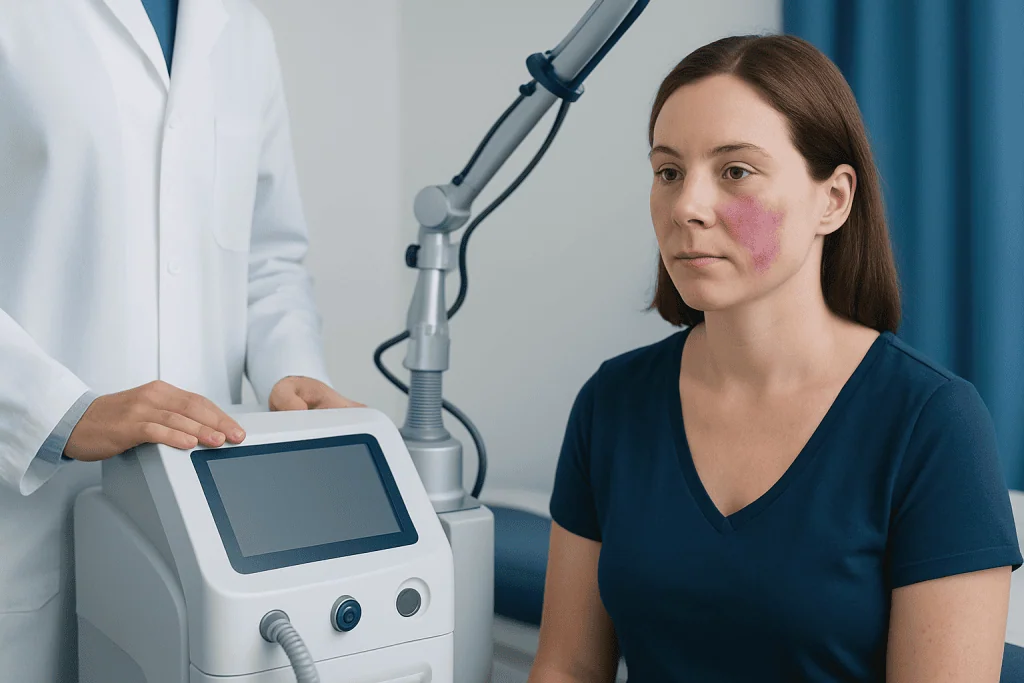
A port wine stain is usually a sharply outlined, flat patch of discolored skin. In infancy, it may look light pink or red and can sometimes be mistaken for a simple rash or another common birthmark. Over time, the color often deepens, especially if it is not treated.
The surface is often smooth in childhood. As a person gets older, the affected skin may become thicker, slightly raised, or develop small lumps due to changes in the blood vessels and surrounding tissue. This change does not necessarily mean something dangerous is happening, but it is one reason some adults seek specialist care.
Port wine stains differ from other vascular birthmarks. For example, they are not the same as infantile hemangiomas, which typically grow after birth and may later shrink. They are also distinct from some other vascular birthmarks such as hemangiomas, which follow a different pattern and may need different treatment.
Causes and Risk Factors

A port wine stain happens because tiny blood vessels called capillaries remain widened in a specific area of skin. This gives the skin its red or purple color. It is a congenital condition, meaning it is present at birth. In most cases, it is not caused by anything a parent did or did not do during pregnancy.
Research suggests that many port wine stains are related to changes in genes that affect blood vessel development in the skin. These changes usually occur sporadically and are not commonly inherited in a simple pattern. Most children with a port wine stain have no family history of the condition.
There are no well-established lifestyle risk factors for developing a port wine stain. It is not contagious, not due to infection, and not a sign of poor health habits. However, location matters medically: a port wine stain involving the forehead, eyelid, or upper face may sometimes be associated with neurological or eye-related conditions that need further review.
Possible Related Conditions and Complications
Most port wine stains occur alone and do not indicate a serious health problem. Still, specialists pay close attention to certain facial patterns because they can sometimes be associated with syndromes involving deeper blood vessels. One important example is Sturge-Weber syndrome, which may affect the brain and eyes in addition to the skin.
When a port wine stain involves the eyelid or skin around the eye, doctors may recommend regular eye examinations to check for glaucoma. Glaucoma is increased pressure in the eye that can gradually affect vision if not detected and treated. A child may not show obvious symptoms early on, which is why screening can be important.
Other possible long-term changes include skin thickening, easy bleeding from raised areas, and soft tissue overgrowth in the affected region. These changes are not inevitable, but they can become more noticeable with age. Early assessment helps doctors decide whether observation alone is appropriate or whether treatment may be beneficial.
How Doctors Diagnose a Port Wine Stain
Diagnosis is often based on a physical examination and medical history. A dermatologist, pediatrician, or vascular anomalies specialist can usually identify a port wine stain by its appearance and the fact that it has been present since birth. In many cases, no biopsy is needed.
Additional evaluation depends on where the birthmark is located and whether there are any other symptoms. If the stain affects the forehead, upper face, or eyelid, a doctor may advise an eye examination and sometimes imaging studies to look for associated changes. Imaging is not required for every patient, but it can be important in selected cases.
Doctors also consider other causes of skin redness or vascular marks before confirming the diagnosis. If there is uncertainty, a patient may be referred for MRI scanning or specialist review to assess deeper structures. This tailored approach helps avoid unnecessary tests while making sure important related conditions are not missed.
Treatment Options
Treatment is not always medically necessary, but many patients choose it to lighten the birthmark, reduce thickening over time, or address emotional and cosmetic concerns. The most commonly used treatment is laser therapy, especially pulsed dye laser. This treatment targets the abnormal blood vessels while trying to preserve the surrounding skin.
Laser treatment often works best when started in infancy or early childhood, but adults can also benefit. Several sessions are usually needed, and results vary from person to person. Some stains lighten significantly, while others respond only partly. Complete removal is not always possible, and some areas may darken again over time.
In more complex cases, doctors may combine approaches or recommend additional procedures for thickened tissue. Patients with facial involvement may also need input from eye specialists or neurologists depending on the location. When appropriate, a care plan may include laser treatment and supportive skin care, guided by a multidisciplinary team.
Near the end of the care pathway, some international patients seek evaluation at centers with coordinated dermatology, pediatrics, ophthalmology, and radiology services. Acibadem International’s multidisciplinary specialists and JCI-accredited hospitals diagnose and treat this condition for international patients when a broader assessment is needed.
Self-care and Living With a Port Wine Stain
Daily skin care can help protect the affected area, especially if the skin becomes dry, fragile, or uneven with age. Gentle cleansing, regular moisturizing, and sun protection are sensible measures. Sunscreen will not remove a port wine stain, but it may help reduce contrast between affected and unaffected skin and support overall skin health.
It can also help to monitor the birthmark over time. Patients or parents may notice changes in color, texture, size relative to growth, or bleeding from raised areas. Taking occasional photographs in similar lighting can make it easier to discuss changes at follow-up visits.
Emotional well-being matters too. Visible birthmarks can affect self-esteem, especially in school-age children and adolescents. Supportive conversations, reassurance, and, when needed, referral for counseling can be valuable parts of care. Some families also find it useful to discuss camouflage makeup techniques with a skin specialist.
When to Seek Medical Care
Medical review is advisable for any newborn or child with a suspected port wine stain, especially if it is on the face. Early assessment helps confirm the diagnosis, discuss treatment timing, and identify whether eye exams or other evaluations are needed. A doctor can also explain how this birthmark differs from other vascular skin conditions.
Prompt medical attention is particularly important if the mark involves the forehead, upper eyelid, or skin around the eye; if it becomes raised or bleeds; or if there are symptoms such as seizures, developmental concerns, or vision changes. These features do not always mean a serious problem is present, but they should be checked by a qualified clinician.
Adults should also seek care if a long-standing port wine stain becomes noticeably thicker, darker, painful, or prone to repeated bleeding. If treatment is being considered, a specialist can review realistic expectations, possible side effects, and whether options such as dermatology evaluation are appropriate.
Frequently asked questions
Is a port wine stain dangerous?
A port wine stain is often not dangerous by itself and many people have no health problems related to it. However, some facial port wine stains, especially around the forehead or eye, can be associated with conditions that affect the eyes or brain, so medical assessment is important.
Does a port wine stain go away on its own?
A port wine stain usually does not fade away completely without treatment. In many cases, it becomes darker or thicker over time, which is why some patients consider early evaluation and treatment.
What is the best treatment for a port wine stain?
Laser therapy, particularly pulsed dye laser, is the most common treatment used to lighten a port wine stain. The best approach depends on the patient’s age, the size and location of the birthmark, and whether the skin has become thicker over time.
At what age should treatment start?
Treatment can be considered at almost any age, but many specialists prefer to assess children early because laser therapy may work better on thinner, lighter lesions. Even so, adults can still benefit and should discuss options with a qualified doctor.
Can a port wine stain be linked to Sturge-Weber syndrome?
Yes, some port wine stains on the upper face or forehead may be associated with Sturge-Weber syndrome. Not every child with a facial port wine stain has this condition, but doctors may recommend eye exams and sometimes imaging based on the birthmark’s pattern.
Can makeup or skin care products treat a port wine stain?
Skin care products do not remove a port wine stain, but gentle skin care and sunscreen can help protect the area. Camouflage makeup may help reduce the visible contrast and improve confidence for some patients.
References
- American Academy of Dermatology
- National Organization for Rare Disorders
- National Health Service
- DermNet
- American Academy of Ophthalmology
This article is for general information only and is not a substitute for professional medical advice. Please consult a qualified doctor about your individual situation.
Explore treatments in Turkey — costs, top hospitals & a free quote
JCI-accredited · board-certified surgeons · reply within 24h
Add us as a Preferred Source to see more of our trusted health content across Google Search, AI Overviews and Discover.