Portable Nebulizer Machine — Explained by Medical Evidence, Not Myths

Portable nebulizers deliver liquid medication as an inhaled mist, but only medicines specifically prescribed for nebulization should be used. They may be useful for children, older adults, and people who have difficulty coordinating a handheld inhaler, although inhalers are often equally effective when used correctly.
Key Takeaways
- Portable nebulizers deliver liquid medication as an inhaled mist, but only medicines specifically prescribed for nebulization should be used.
- They may be useful for children, older adults, and people who have difficulty coordinating a handheld inhaler, although inhalers are often equally effective when used correctly.
- Device type, medication compatibility, breathing technique and regular cleaning all affect how well treatment works.
- A nebulizer should not be used with tap water, essential oils, homemade mixtures or another person’s medication.
- Urgent medical help is needed for severe breathlessness, blue or grey lips, confusion, chest pain, or worsening symptoms despite prescribed rescue treatment.
A portable nebulizer machine is a small device that converts certain prescribed liquid medicines into a breathable aerosol mist. It can support treatment for selected respiratory conditions when used exactly as directed, but it does not replace a medical assessment, an inhaler when that is preferred, or emergency care for severe breathing difficulty.
What is a portable nebulizer machine?
A portable nebulizer machine is a compact medical device that changes a liquid medicine into a fine mist, also called an aerosol. The person breathes the mist through a mouthpiece or face mask, allowing the medicine to reach the airways. Portable models may be battery-operated, rechargeable or designed for use with a power adapter, making treatment more convenient away from home.
Nebulizers are used for particular medicines and situations, not for every cough, cold or breathing symptom. A clinician may recommend one for conditions involving narrowed or inflamed airways, such as asthma or chronic obstructive pulmonary disease (COPD), or when a person cannot use an inhaler effectively. The correct choice depends on the diagnosis, the medicine prescribed, the person’s age and ability to use the device, and the treatment plan.
Medical evidence does not show that nebulizers are automatically stronger or better than inhalers. For many people with asthma or COPD, a pressurized metered-dose inhaler used with a spacer can deliver medicine as effectively as a nebulizer. A portable nebulizer can nevertheless be a practical option when a healthcare professional considers it appropriate.
How portable nebulizers work and the main types
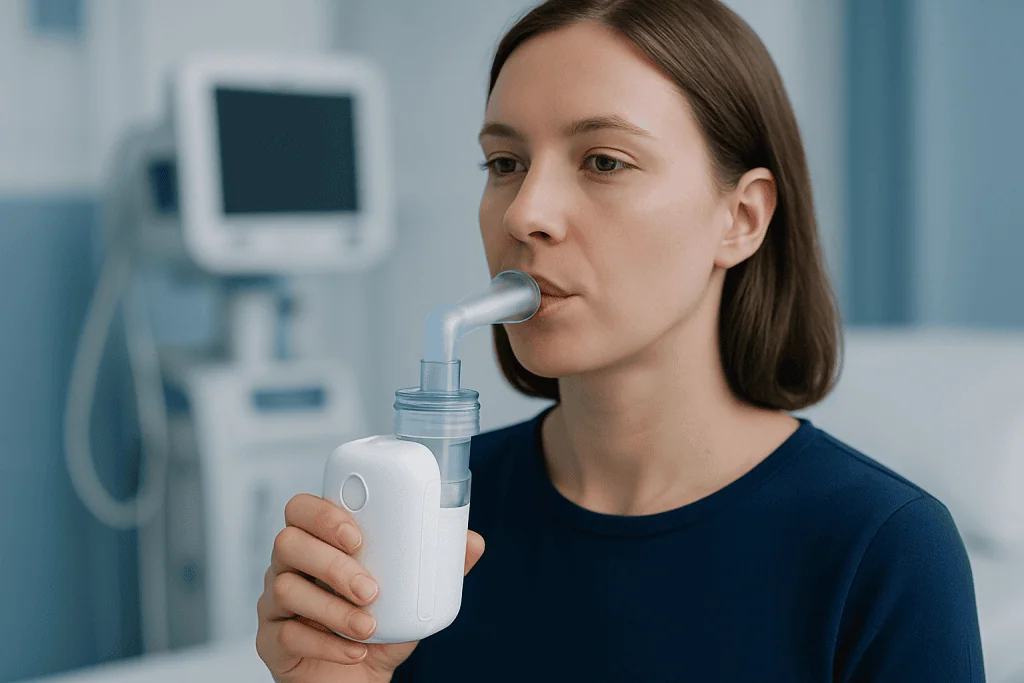
All nebulizers create an inhalable mist, but they do so in different ways. Jet nebulizers use compressed air to break liquid into droplets. They are familiar and reliable, but may be larger and noisier. Ultrasonic nebulizers use vibrations, while vibrating mesh nebulizers push liquid through a very fine mesh to create aerosol. Mesh devices are often quiet and compact, but they require careful cleaning because the mesh can clog.
The medicine cup, mouthpiece or mask, tubing where applicable, and power source should be assembled according to the manufacturer’s instructions. A treatment commonly continues until the prescribed dose has been nebulized and the device begins to sputter or no longer produces mist. Treatment duration varies with the device, the volume of medicine and the formulation.
Not every liquid medicine is suitable for every nebulizer. Some suspensions, thicker formulations or solutions may not work correctly in certain mesh devices. Before buying or using a portable nebulizer machine, the person should ask a pharmacist, respiratory clinician or prescribing doctor whether the exact medicine is compatible with that device.
What medicines can be used in a nebulizer?
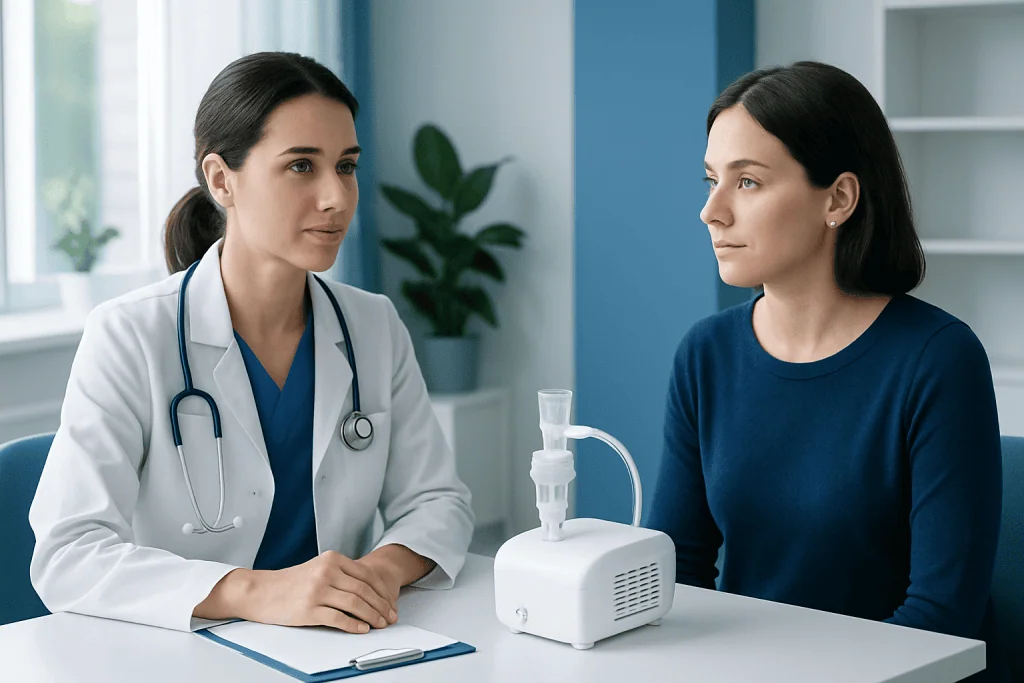
Nebulized medicines are prescribed for specific clinical reasons. They may include bronchodilators that relax airway muscles, anti-inflammatory medicines such as inhaled corticosteroids, saline in selected circumstances, or other therapies used under specialist guidance. The medication, frequency and device should be individualized; a nebulizer is a delivery method rather than a diagnosis or treatment on its own.
Only sterile, ready-to-nebulize products or solutions specifically instructed by a clinician should go into the medication cup. Tap water, bottled water, essential oils, herbal extracts, hydrogen peroxide and homemade salt solutions may irritate the lungs, damage the device, introduce contamination or delay appropriate treatment. Nebulizers should also never be shared between people.
Some medicines can cause temporary effects such as shaking, a fast heartbeat, dry mouth, throat irritation or hoarseness. These effects depend on the medicine rather than the nebulizer itself. A person should discuss unexpected side effects, frequent need for rescue medicine, or uncertainty about their prescription with their healthcare team rather than changing treatment independently.
- Use the exact medicine and amount prescribed.
- Check expiry dates and storage instructions before each use.
- Do not mix medicines unless a clinician or pharmacist has said it is appropriate.
- Keep an up-to-date written action plan for asthma, COPD or another diagnosed respiratory condition.
Using a portable nebulizer safely and effectively
Before treatment, hands should be washed and the device should be placed on a clean, stable surface. The prescribed medication is placed in the cup, and the person sits upright where possible. A mouthpiece is often preferred for adults and older children who can seal their lips around it; a properly fitted mask may be needed for young children or people unable to use a mouthpiece.
The person should breathe calmly through the mouth during treatment, without rushing or taking unusually deep breaths unless their clinician has advised this. Crying, talking, lying flat or a poorly fitting mask can reduce the amount of medicine reaching the lungs. If a child resists a mask, caregivers should seek practical guidance from the prescribing team rather than forcing treatment in a way that causes distress.
A portable device should be charged or fitted with fresh batteries before travel, but a backup plan is also important. People with asthma or COPD should not assume that a nebulizer alone is adequate for every flare-up. Their clinician can explain which medicines to carry, when to use a rescue inhaler if prescribed, and when symptoms require urgent assessment.
Cleaning, storage and infection prevention
Cleaning is a central part of safe nebulizer use. Moisture and medication residue can allow germs to grow or can block small device parts, especially in portable mesh models. After each treatment, the medication cup, mouthpiece and mask should generally be taken apart, rinsed and air-dried as directed by the manufacturer. Tubing and electrical components usually have different care requirements and should not be immersed unless the instructions specifically allow it.
Disinfection schedules differ by device. Some parts may be boiled, steam-disinfected or soaked using a manufacturer-approved method, while others may be damaged by heat or cleaning chemicals. Following the device manual and the instructions from a pharmacist or respiratory team is safer than using a generic cleaning method. Components should be fully dry before storage in a clean, dry container.
Disposable parts need replacement at the intervals recommended by the manufacturer or sooner if they are cracked, cloudy, blocked or difficult to clean. If the machine produces less mist than usual, leaks, makes an unfamiliar sound or stops working, it should be checked before the next planned treatment. Proper maintenance helps preserve medication delivery and reduces avoidable infection risk.
Common myths and evidence-based facts
Myth: A nebulizer always works better than an inhaler. In reality, both can be effective when the right medicine is delivered with correct technique. In many acute and long-term respiratory care plans, a metered-dose inhaler with a spacer is an effective alternative. The preferred method should be based on the individual’s condition, coordination, preference, access to equipment and clinical advice.
Myth: Nebulizers are only for severe illness. Nebulizers may be prescribed across a range of circumstances, including for people who cannot coordinate inhaler use. However, needing repeated rescue treatments or having symptoms that are worsening can indicate inadequate control or a more serious problem, and it deserves medical review.
Myth: Any mist is soothing and safe to inhale. The lungs are sensitive organs, and inhaling unapproved liquids can be harmful. A portable nebulizer machine should deliver only prescribed or specifically recommended sterile solutions. It is not a general wellness device and should not be used for aromatherapy or untested home remedies.
When to seek medical care
Medical advice should be sought promptly if cough, wheezing, shortness of breath or chest tightness is new, persistent, recurrent or interfering with sleep, exercise or normal daily activities. A clinician can determine whether symptoms are related to asthma, COPD, infection, allergies, heart disease or another cause, and can make sure the treatment plan and inhalation technique are appropriate.
Emergency care is needed for severe or rapidly worsening breathlessness, difficulty speaking in full sentences, blue or grey lips or face, fainting, confusion, severe chest pain, marked drowsiness, or symptoms that do not improve after using prescribed rescue treatment as directed. Infants and young children with struggling or fast breathing, poor feeding, unusual sleepiness, or chest retractions should be assessed urgently.
People who are travelling or seeking care internationally can discuss respiratory assessment and treatment planning with qualified clinicians. Acibadem International’s multidisciplinary specialists and JCI-accredited hospitals provide diagnostic and treatment services for international patients, with care tailored to the individual’s medical needs.
Frequently asked questions
Can a portable nebulizer machine replace an inhaler?
Not necessarily. For many people, especially those who can use the technique correctly, an inhaler with a spacer can be as effective as a nebulizer for delivering certain medicines. A doctor or respiratory clinician can recommend the most suitable device for the person’s diagnosis and treatment plan.
What liquid can be put in a portable nebulizer?
Only medication or sterile solution specifically prescribed or recommended for nebulization should be used. Tap water, essential oils, homemade mixtures and non-sterile liquids should not be placed in the device because they may irritate the lungs or introduce germs.
Are portable mesh nebulizers effective?
Portable mesh nebulizers can effectively deliver compatible medications when used and maintained correctly. Their small size and quiet operation can be convenient, but the mesh needs careful cleaning and not all medicines are compatible with every model.
How often should a nebulizer be cleaned?
The medication cup, mouthpiece or mask generally needs cleaning after each use, following the manufacturer’s instructions. The device should also be disinfected at the recommended intervals, and worn or blocked parts should be replaced.
Can a child use a portable nebulizer?
Yes, a clinician may prescribe nebulizer treatment for a child when appropriate. Caregivers should use the prescribed medication, ensure the mask fits comfortably, supervise every treatment and ask the child’s healthcare team for technique advice.
Why does a nebulizer make less mist than usual?
Reduced mist can result from low battery power, an incorrectly assembled device, residue in the medicine cup or mesh, a blocked component, or an incompatible medication. The person should consult the device instructions and seek advice from a pharmacist or clinician if the problem continues.
References
- Global Initiative for Asthma
- Global Initiative for Chronic Obstructive Lung Disease
- American Lung Association
- U.S. Food and Drug Administration
- Centers for Disease Control and Prevention
This article is for general information only and is not a substitute for professional medical advice. Please consult a qualified doctor about your individual situation.
Explore treatments in Turkey — costs, top hospitals & a free quote
JCI-accredited · board-certified surgeons · reply within 24h
Add us as a Preferred Source to see more of our trusted health content across Google Search, AI Overviews and Discover.

More from the Health Library

Lubiprostone — Explained by Medical Evidence, Not Myths

White Vinegar — Explained by Medical Evidence, Not Myths

Cedar Point Dragster Height: What Patients Need to Know

How much ibuprofen can i take in one day? The Numbers, Explained by Clinicians

Suvorexant — Explained by Medical Evidence, Not Myths