Positioning of Fetus — Explained by Medical Evidence, Not Myths

Positioning of fetus refers to the baby's lie, presentation, and the direction the baby is facing in the uterus. A head-down, occiput-anterior position is usually the most favorable for vaginal birth.
Key Takeaways
- Positioning of fetus refers to the baby's lie, presentation, and the direction the baby is facing in the uterus.
- A head-down, occiput-anterior position is usually the most favorable for vaginal birth.
- Breech, transverse, or persistent posterior positions may affect labor and may need closer monitoring or treatment planning.
- Doctors assess fetal position with abdominal examination and ultrasound when needed.
- Many concerns about fetal position are best guided by medical assessment rather than myths, exercises, or unproven home methods.
Positioning of fetus means the way a baby lies and faces inside the uterus during pregnancy and before labor. Most babies settle into a head-down position by late pregnancy, but several normal and less common positions are possible, and they can influence labor and delivery planning.
Overview: what positioning of fetus actually means
Positioning of fetus is the medical description of how a baby is situated inside the uterus, especially in the third trimester and around the time of labor. It includes whether the baby is head-down or bottom-down, whether the baby is lying lengthwise or sideways, and whether the back of the baby’s head is facing the front or back of the pregnant person’s pelvis.
In everyday conversation, people often use “baby position” to mean one simple thing, but clinicians usually consider three related ideas: fetal lie, presentation, and position. The lie describes whether the baby is lengthwise, diagonal, or sideways. Presentation describes which part of the baby is closest to the birth canal, such as the head or buttocks. Position describes which way the presenting part is facing.
Most babies move frequently earlier in pregnancy, so a position seen in the second trimester often does not predict how birth will happen. As pregnancy progresses and space becomes more limited, the baby is more likely to settle into a stable position. By the last weeks of pregnancy, many babies are head-down, which is generally the safest and most efficient position for vaginal birth.
Medical evidence is important because many common beliefs about fetal position are oversimplified or unproven. A person’s belly shape, where kicks are felt, or old sayings about carrying high or low cannot reliably diagnose the baby’s exact position. Clinical assessment gives a clearer answer and helps the care team plan safely.
Types of fetal positions and what they may mean
The most common and usually most favorable position for birth is cephalic, meaning the baby is head-down. Within this group, the ideal position for many vaginal births is occiput anterior, where the back of the baby’s head faces the front of the pelvis. In this arrangement, the smallest diameter of the head often fits the birth canal more effectively.
Another common variation is occiput posterior, sometimes called “sunny-side up,” where the baby’s head is down but the back of the head faces the pregnant person’s back. This can still result in a vaginal birth, but it may be associated with longer labor, more back pain, or a greater chance of assisted delivery depending on the individual situation.
Breech position means the baby is not head-down; the buttocks or feet are closest to the cervix. Breech types include frank breech, complete breech, and footling breech. A transverse lie means the baby is lying sideways across the uterus. A transverse or some breech positions near term can make vaginal birth difficult or unsafe and may require special management.
Doctors may also describe whether the baby’s head is flexed or extended, and whether the baby has engaged in the pelvis. These details matter because even within the same broad category, the exact orientation can influence labor progress and decisions about monitoring or delivery method. If concerns arise, a specialist may assess whether related conditions such as high-risk pregnancy are present.
What influences fetal position

Fetal position changes naturally throughout pregnancy, especially before the third trimester. A baby may turn many times a day when there is still plenty of room in the uterus. Later in pregnancy, position is influenced by the shape of the uterus and pelvis, the amount of amniotic fluid, the location of the placenta, and whether this is a first pregnancy or a later one.
Some medical factors can make certain positions more likely. Examples include preterm pregnancy, multiple pregnancy, uterine differences such as fibroids or structural variations, placenta previa, and unusually high or low amniotic fluid levels. In some cases, the reason a baby remains breech or transverse is never clearly identified.
It is also important to separate evidence from myth. There is limited evidence that posture, sleeping side, or carrying style alone determines the baby’s final position. Gentle movement and exercise may support comfort and overall health in pregnancy, but they should not be treated as guaranteed methods to turn a baby. Any exercises or techniques should be discussed with a qualified maternity professional, especially if pregnancy complications exist.
Perception of movement can sometimes hint at where the baby is, but it is not a precise diagnostic tool. For example, strong kicks high in the abdomen may suggest a head-down position, but this is not always the case. A doctor or midwife can clarify uncertainty with examination and ultrasound rather than relying on assumptions.
How doctors assess the baby's position
Assessment usually begins with routine prenatal care. A clinician may feel the abdomen using specific palpation techniques to estimate the baby’s lie, presentation, and back position. This can often identify whether the baby is head-down, breech, or transverse, especially later in pregnancy.
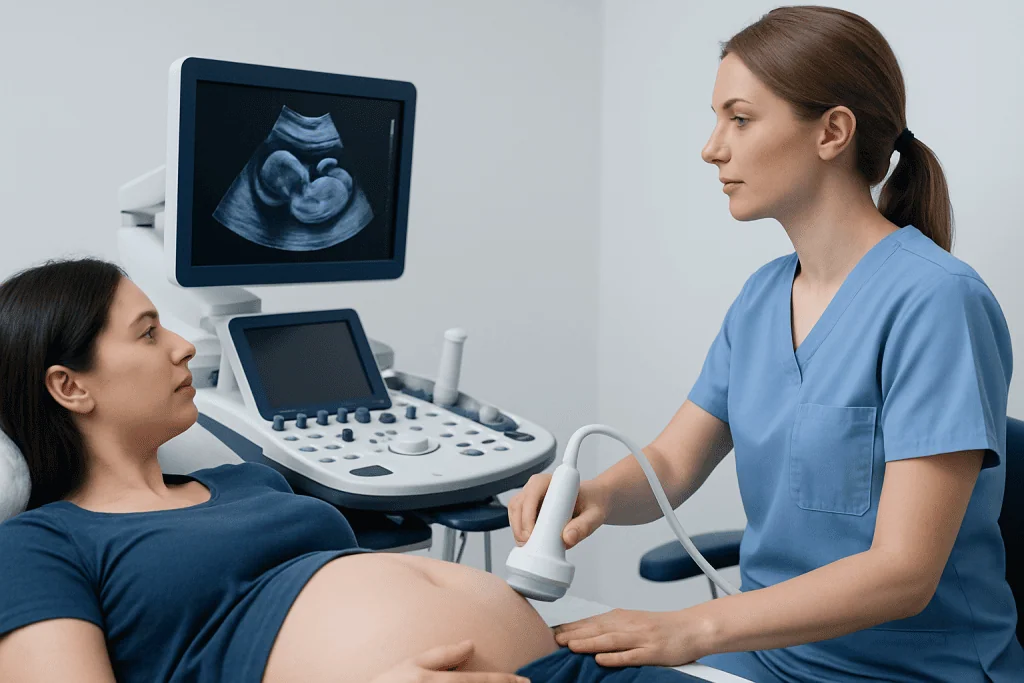
The baby’s heartbeat may also provide clues, because the best place to hear it can change with fetal position. Still, ultrasound is the most reliable tool when the position is uncertain, when labor is not progressing as expected, or when there is concern about a non-head-down presentation. Ultrasound can confirm head position, placental location, amniotic fluid, and other factors relevant to delivery planning.
In labor, the care team may continue to evaluate position because babies can rotate as labor progresses. Vaginal examination, when appropriate, may help determine which part of the head is leading and whether the baby has descended into the pelvis. This information can guide decisions about patience, pain management, positioning in labor, or whether intervention is needed.
If a breech or transverse lie is found near term, further assessment may include discussion of options such as obstetric ultrasound assessment and whether an attempt to turn the baby from the outside could be appropriate. The right plan depends on the pregnancy, the baby’s well-being, and the experience of the care team.
Treatment and management options when position is less favorable
Not every non-ideal fetal position needs treatment. Some babies who are posterior rotate during labor on their own, and many pregnancies with temporary positioning concerns progress normally. Management depends on gestational age, maternal comfort, the baby’s condition, and whether labor has started.
When a baby remains breech near term, one evidence-based option may be external cephalic version, often called ECV. This is a procedure in which an experienced clinician applies pressure to the abdomen to try to turn the baby into a head-down position. It is not suitable for every pregnancy, but for selected patients it may reduce the need for cesarean birth.
If turning is not possible, not successful, or not recommended, the care team discusses the safest delivery approach. In many breech or transverse cases, cesarean section is advised because it can reduce certain delivery risks. In carefully selected situations and experienced centers, a vaginal breech birth may be considered, but this requires strict criteria and specialist planning.
During labor, supportive care may help when the baby is posterior or labor is slow. This can include position changes, mobility, hydration, pain relief options, and close monitoring. If labor does not progress or there are signs of fetal distress, doctors may recommend additional measures, including specialist pregnancy follow-up and delivery planning.
What is supported by evidence, and what is not
Many people hear advice from friends, social media, or family about how to influence fetal position. Some suggestions, such as staying active in pregnancy or using comfortable upright positions in labor, can be reasonable and may improve comfort. However, comfort measures are not the same as proven ways to turn a baby.
There is limited and mixed evidence for many popular techniques advertised to correct fetal position, especially when they are presented as certain or universal solutions. Methods involving strong pressure, inversion, unregulated devices, or unsupervised manipulation should be approached carefully. A pregnant person should not attempt anything that causes pain, dizziness, reduced fetal movement, bleeding, or contractions without medical advice.
Complementary approaches such as prenatal exercise, stretching, or bodywork may be used by some individuals for well-being, but they should complement, not replace, medical assessment. If a baby is breech or transverse late in pregnancy, proper evaluation is important because placenta position, amniotic fluid, and other factors may affect what is safe.
The most reliable approach is to combine routine prenatal care with individualized guidance. This is especially important if there is previous cesarean birth, twins, bleeding, high blood pressure, diabetes, growth concerns, or another condition that may place the pregnancy into a more complex category such as pregnancy complications.
When to seek medical care
Questions about positioning of fetus are common, and most are not emergencies. Still, a person should contact their maternity team if they are near term and have been told the baby may be breech or sideways, if they notice a clear change in fetal movements, or if they are unsure whether labor has started and the baby’s position is not known.
Urgent medical attention is needed for vaginal bleeding, leaking of fluid, painful regular contractions before term, severe abdominal pain, severe headache, fainting, fever, or significantly reduced fetal movement. These symptoms do not always mean there is a problem with fetal position, but they do need prompt assessment.
People should also seek timely review if labor seems prolonged, if there is intense back labor, or if a previous examination suggested the baby was not head-down. Monitoring helps determine whether the baby has rotated, whether labor is progressing safely, and whether intervention is necessary.
Near the end of pregnancy, maternity care should always be individualized. Acibadem International’s multidisciplinary specialists in JCI-accredited hospitals diagnose and treat pregnancy-related conditions for international patients, including assessment of fetal position and planning for safe delivery when needed.
Frequently asked questions
What does positioning of fetus mean?
Positioning of fetus describes how the baby is lying in the uterus and which part of the baby is closest to the birth canal. It also includes which direction the baby is facing, such as facing the front or the back of the pelvis.
When does the baby usually turn head-down?
Many babies turn head-down during the third trimester, often by the last weeks of pregnancy. Earlier in pregnancy, the baby still has more space to move, so position can change often and may not predict the final birth position.
Can fetal position affect labor?
Yes. A head-down, front-facing head position is usually the most favorable for vaginal birth. Breech, transverse, or persistent posterior positions can sometimes make labor longer, more painful, or more likely to need intervention.
How can a doctor tell the baby's position?
Doctors and midwives often estimate fetal position by feeling the abdomen during prenatal visits. If the position is unclear or important for delivery planning, ultrasound is commonly used because it gives a more reliable picture.
Can exercises or posture turn a breech baby?
Some movements or positions may help comfort and support general mobility, but they are not guaranteed to turn a breech baby. If a baby remains breech near term, medical evaluation is the safest way to discuss options such as external cephalic version.
Is a posterior baby position dangerous?
Not necessarily. Many babies who start labor in a posterior position rotate during labor and are born vaginally. However, this position can be associated with longer labor, back pain, or a greater chance of assisted delivery in some cases.
When should someone worry about fetal position?
Concern is reasonable if the baby is still breech or transverse near term, if labor begins and the baby's position is unknown, or if there is reduced fetal movement. Immediate medical care is needed for warning signs such as bleeding, leaking fluid, severe pain, or signs of preterm labor.
This article is for general information only and is not a substitute for professional medical advice. Please consult a qualified doctor about your individual situation.
Explore treatments in Turkey — costs, top hospitals & a free quote
JCI-accredited · board-certified surgeons · reply within 24h
Add us as a Preferred Source to see more of our trusted health content across Google Search, AI Overviews and Discover.

More from the Health Library

Amlodipine Besylate — Explained by Medical Evidence, Not Myths

Saxagliptin — Explained by Medical Evidence, Not Myths

Demodectic Mange: What Patients Need to Know

Whole Grain Bread — Explained by Medical Evidence, Not Myths

Somatic Yoga — Explained by Medical Evidence, Not Myths