Posterior Hip Replacement: Benefits, Risks, and Recovery

Posterior hip replacement is one of the most established approaches for total hip replacement surgery. It is often used to treat severe hip arthritis, joint damage, or long-lasting pain that limits daily life.
Key Takeaways
- Posterior hip replacement is one of the most established approaches for total hip replacement surgery.
- It is often used to treat severe hip arthritis, joint damage, or long-lasting pain that limits daily life.
- Benefits may include pain relief, better mobility, and good surgical access for the orthopedic surgeon.
- Recovery usually involves early walking, physical therapy, and following movement precautions during healing.
- As with any surgery, risks such as infection, blood clots, dislocation, and implant wear should be discussed with a doctor.
Posterior hip replacement is a widely used surgical approach for replacing a damaged hip joint. It can reduce pain, improve mobility, and help people return to daily activities when combined with careful recovery and rehabilitation.
Overview
Posterior hip replacement is a surgical technique used during total hip replacement, also called total hip arthroplasty. In this approach, the surgeon reaches the hip joint through an incision made toward the back and side of the hip. The damaged ball-and-socket joint is removed and replaced with artificial components designed to restore smoother movement and reduce pain.
This approach has been used for many years and remains one of the most common methods for hip replacement surgery. Many orthopedic surgeons are highly experienced with it because it gives good access to the hip joint and allows accurate placement of the implants. For many patients, this can translate into reliable pain relief and improved function after surgery.
Posterior hip replacement is most often considered when hip damage becomes severe enough that non-surgical measures no longer provide enough relief. Medicines, exercise, weight management, walking aids, and injections may help for a time, but surgery may become the most effective option when pain affects sleep, mobility, work, or independence.
Although the operation is major surgery, advances in anesthesia, surgical technique, pain control, and rehabilitation have improved the patient experience. A well-planned recovery program can help many people stand, walk, and begin gentle activity soon after the procedure.
Who May Need Posterior Hip Replacement
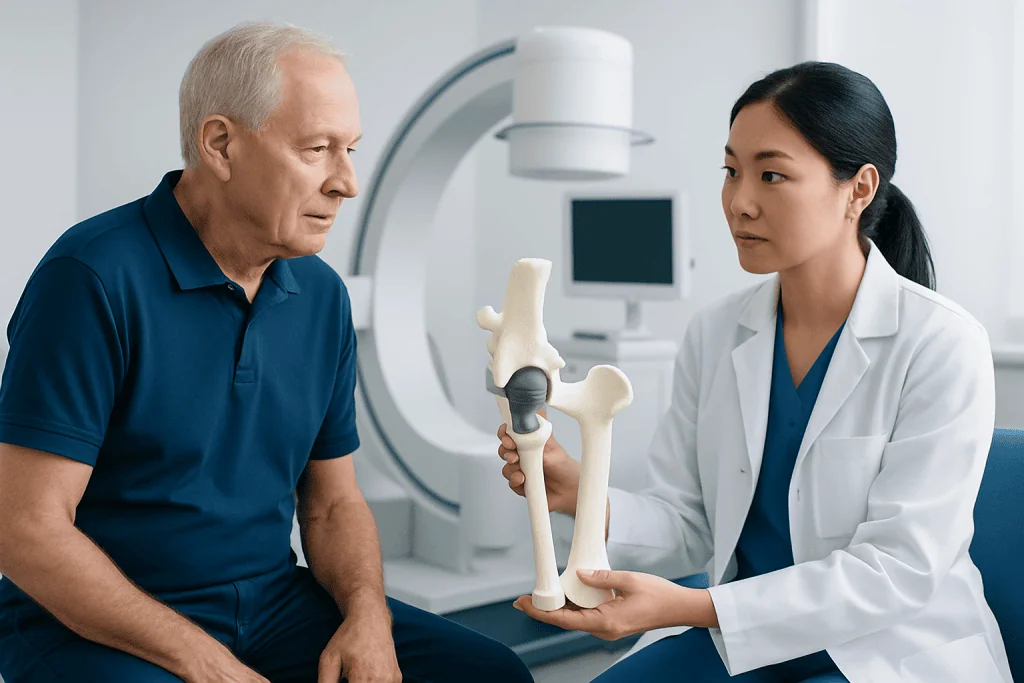
The most common reason for hip replacement is osteoarthritis, a condition in which the cartilage that cushions the joint gradually wears away. As the surfaces become rough and less protected, the hip may become stiff, painful, and difficult to move. Some people may already be familiar with osteoarthritis as a frequent cause of chronic joint pain in later life.
Other reasons for surgery include rheumatoid arthritis, avascular necrosis, hip fractures affecting the joint, certain childhood hip disorders, and damage caused by injury. In some patients, long-term inflammation or poor blood supply to the femoral head leads to joint collapse and severe discomfort.
Doctors usually recommend hip replacement when symptoms are significant and conservative treatment has not worked well enough. Signs that surgery may be considered include pain during walking or resting, difficulty climbing stairs, trouble putting on shoes or socks, and reduced quality of life.
Suitability for the posterior approach depends on several factors, including anatomy, bone quality, previous surgery, overall health, body weight, muscle strength, and the surgeon’s experience. The best approach is individualized, so the final decision is made after a careful orthopedic assessment.
Benefits and Possible Risks

The main benefit of posterior hip replacement is relief from pain caused by a damaged joint. As healing progresses, many patients also notice better mobility, improved ability to walk, and greater ease with daily activities such as getting in and out of a chair or car. For people whose lives have become limited by hip disease, these changes can be meaningful.
From a surgical perspective, the posterior approach offers wide exposure of the hip joint. This can help the surgeon position the implant accurately and manage different patterns of joint damage. It is commonly used in primary hip replacement and may also be useful in some more complex cases.
Like all major operations, posterior hip replacement carries risks. These may include infection, bleeding, blood clots, nerve or blood vessel injury, leg-length difference, fracture around the implant, stiffness, ongoing pain, and anesthetic complications. Over time, the artificial joint can also loosen or wear, especially after many years of use.
One of the best-known concerns with the posterior approach is hip dislocation, especially early in recovery before soft tissues heal. Modern surgical methods, improved implant designs, and careful rehabilitation have helped lower this risk, but patients still need to follow movement instructions closely after surgery.
- Potential benefits: less pain, improved walking, better joint function, improved quality of life
- Short-term risks: infection, blood clots, wound problems, dislocation
- Long-term considerations: implant wear, loosening, need for revision surgery in some patients
How the Procedure Is Performed
Before surgery, the patient typically has a full medical review, blood tests, and imaging such as X-rays. The orthopedic team assesses the hip joint, overall fitness for surgery, current medicines, and any conditions that may affect healing. This planning stage is important for choosing the right implant and reducing complications.
During posterior hip replacement, the surgeon makes an incision near the outer buttock and separates tissues to reach the hip joint. The damaged femoral head is removed, the socket is prepared, and artificial components are placed into the pelvis and upper thigh bone. These implants may be fixed with or without bone cement, depending on factors such as age, bone quality, and implant choice.
The goal is to create a stable, well-aligned joint that moves smoothly and supports everyday function. In many hospitals, patients receive modern pain-control methods and begin mobilizing early, often with the help of physiotherapists. People exploring hip replacement surgery often find it helpful to understand that the exact technique can vary from person to person.
Hospital stay depends on the individual’s health, mobility, pain control, and home support. Some people go home relatively quickly, while others may benefit from a short inpatient rehabilitation period before returning to normal routines.
Recovery and Rehabilitation
Recovery from posterior hip replacement begins immediately after surgery. Patients are usually encouraged to stand and take a few steps with assistance as soon as it is safe. Early movement supports circulation, lowers the risk of blood clots, and helps the body adapt to the new joint.
Pain and swelling are common at first, but these usually improve gradually with medicine, rest, and activity guidance. Physical therapy is a central part of recovery. Exercises focus on improving strength, flexibility, balance, and walking pattern while protecting the healing hip. Some patients may also benefit from structured physical therapy and rehabilitation after surgery.
Because the operation uses a posterior approach, the care team may advise temporary precautions to reduce the chance of dislocation. These often include avoiding deep bending at the hip, crossing the legs, or twisting the leg inward, especially in the early weeks. Specific advice varies by surgeon, implant type, and individual risk factors.
Most people improve steadily over weeks to months, but the timeline is different for everyone. Returning to driving, work, sports, and travel depends on healing, strength, balance, and the type of activity. Regular follow-up visits help the surgeon check recovery and monitor implant position and function.
Prevention, Self-care, and Long-Term Results
While not every cause of hip joint damage can be prevented, some steps may support hip health and overall joint function. Maintaining a healthy weight can reduce pressure on the hip. Regular low-impact activity, such as walking, swimming, or cycling, may help preserve muscle strength and flexibility around the joint.
Before surgery, preparing the home can make recovery smoother. Helpful steps include removing trip hazards, arranging a comfortable sleeping space, placing frequently used items within easy reach, and organizing support for meals or transport. Stopping smoking, improving nutrition, and managing long-term conditions such as diabetes can also support healing.
After hip replacement, long-term self-care remains important. Patients should follow exercise advice, attend follow-up appointments, and report any new pain, swelling, or changes in function. Protecting the joint from falls and avoiding very high-impact strain may help preserve the implant over time.
Most modern hip replacements are designed to last many years, but they do not last forever. Long-term results depend on age, activity level, bone health, implant type, and surgical factors. If symptoms return years later, the doctor may evaluate for implant wear or loosening and discuss whether further treatment is needed, including revision hip replacement in selected cases.
When to See a Doctor
A doctor should assess hip pain that persists, worsens, or starts to limit walking, sleeping, or daily activity. Evaluation is also important if the hip feels stiff, unstable, or weak, or if pain begins after an injury. Early diagnosis can help identify the cause and guide the most suitable treatment plan.
People who already have a hip replacement should seek medical advice if they notice redness around the wound, fever, increasing swelling, sudden severe pain, chest pain, shortness of breath, or calf tenderness. These symptoms can sometimes signal complications that need prompt attention.
Even without urgent warning signs, follow-up matters. Ongoing pain after surgery, a limp that does not improve, a feeling that the hip is slipping, or reduced range of motion should be discussed with an orthopedic specialist. If further imaging or rehabilitation is needed, timely review can help prevent bigger problems later.
For international patients seeking specialist assessment, Acibadem International’s multidisciplinary orthopedic teams in JCI-accredited hospitals diagnose and treat hip conditions, including hip replacement and recovery-related concerns, with individualized care plans.
Frequently asked questions
What is posterior hip replacement?
Posterior hip replacement is a method of performing total hip replacement through an incision made toward the back and side of the hip. The surgeon removes the damaged joint surfaces and replaces them with artificial components to improve movement and reduce pain.
Why is the posterior approach used for hip replacement?
The posterior approach is widely used because it gives the surgeon good access to the hip joint and is familiar to many orthopedic specialists. It can be an effective option for accurate implant placement and is commonly chosen based on the patient's needs and the surgeon's experience.
How long does recovery take after posterior hip replacement?
Recovery often begins with standing and walking shortly after surgery, but full improvement takes time. Many people make steady progress over several weeks, while strength, confidence, and function may continue improving over a few months.
What precautions are needed after posterior hip replacement?
Patients are often advised to avoid certain movements during early healing, such as deep bending at the hip, crossing the legs, or twisting the operated leg inward. The exact precautions depend on the surgeon's instructions, the implant used, and the patient's individual risk factors.
What are the risks of posterior hip replacement?
Possible risks include infection, blood clots, bleeding, dislocation, nerve injury, stiffness, and implant-related problems over time. Although complications are not common for most patients, it is important to understand them before surgery and follow recovery advice carefully.
Is posterior hip replacement better than other hip replacement approaches?
No single approach is best for every person. The posterior approach, anterior approach, and other techniques each have potential advantages and limitations, and the best choice depends on anatomy, diagnosis, surgeon expertise, and recovery goals.
References
- American Academy of Orthopaedic Surgeons
- National Institute for Health and Care Excellence
- National Institute of Arthritis and Musculoskeletal and Skin Diseases
- Mayo Clinic
- OrthoInfo
This article is for general information only and is not a substitute for professional medical advice. Please consult a qualified doctor about your individual situation.
Hip Replacement in Turkey — costs, top hospitals & a free quote
JCI-accredited · board-certified surgeons · reply within 24h
Add us as a Preferred Source to see more of our trusted health content across Google Search, AI Overviews and Discover.

Orthopedics & Spine
Care for bones, joints and the musculoskeletal system, including joint replacement, sports injuries and trauma.
125 specialists in this unit