

Posterior vs Anterior Hip Replacement: Key Differences

The main difference is the path the surgeon uses to reach the hip joint. Both anterior and posterior approaches can provide reliable pain relief and improved mobility.
Key Takeaways
- The main difference is the path the surgeon uses to reach the hip joint.
- Both anterior and posterior approaches can provide reliable pain relief and improved mobility.
- No single approach is best for everyone; patient anatomy and surgeon expertise matter most.
- Recovery experience, precautions, and early mobility may differ between approaches.
- A personalized discussion with an orthopedic surgeon helps match the approach to the patient’s needs.
Posterior and anterior hip replacement are two established surgical approaches used to place an artificial hip joint. Each has potential advantages, limits, and recovery considerations, so the best option depends on a person’s anatomy, health, goals, and the surgeon’s experience.
Overview: What Posterior and Anterior Hip Replacement Mean
Hip replacement surgery, also called total hip arthroplasty, is a common procedure used to treat severe hip pain and stiffness when other treatments no longer provide enough relief. In this operation, damaged parts of the hip joint are replaced with artificial components designed to improve movement and reduce pain. The terms “posterior” and “anterior” refer to the surgical approach, meaning the route the surgeon takes to reach the hip joint.
In a posterior hip replacement, the surgeon reaches the joint from the back or side-back of the hip. In an anterior hip replacement, the surgeon approaches the joint from the front of the hip. The implant itself may be similar in both procedures; the key difference is how the surgeon accesses the joint and which tissues are moved to perform the operation.
Both approaches are well established and widely used. For many patients, the long-term goal is the same: less pain, better function, and improved quality of life. The choice between them usually depends on the patient’s body shape, bone anatomy, previous surgeries, other health conditions, and the surgeon’s training and experience with a particular technique.
Key Differences Between Posterior and Anterior Approaches
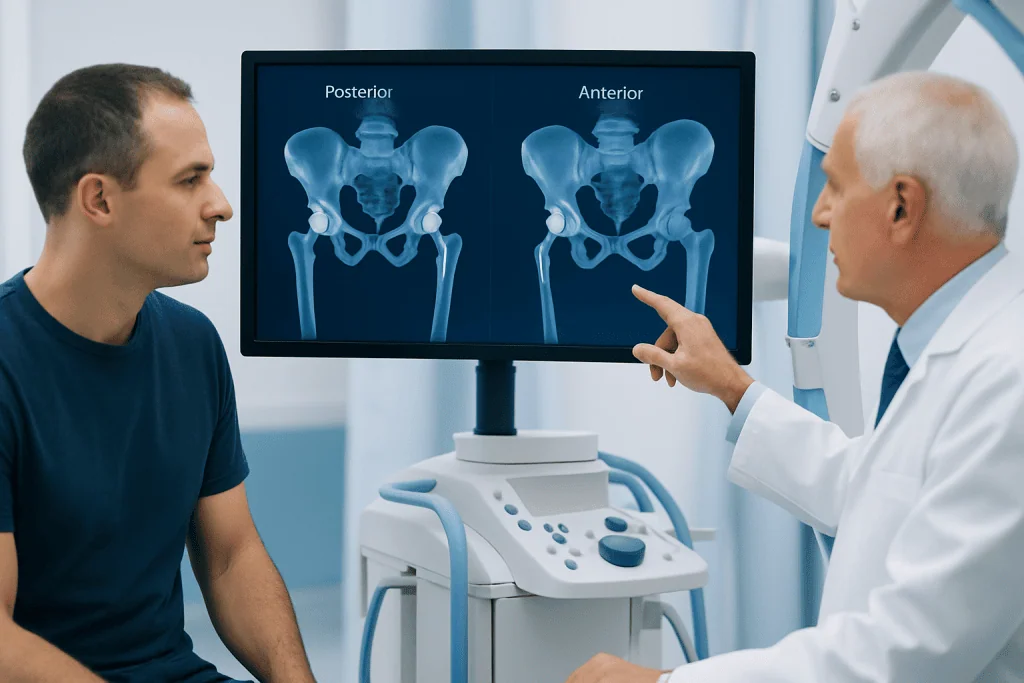
The most important difference is where the incision is placed and how the surgeon works through the surrounding muscles and soft tissues. In the posterior approach, the incision is typically made toward the outer-back part of the hip. In the anterior approach, the incision is generally made at the front of the hip. These routes give the surgeon different views of the joint and involve different ways of navigating nearby muscles, tendons, and nerves.
The anterior approach is often described as muscle-sparing because it usually follows a natural interval between muscles rather than detaching certain muscles from bone. This may help some patients with early mobility after surgery. However, it is technically demanding and may not be suitable for every body type or every hip condition. The posterior approach has been used for many years and remains one of the most common and versatile techniques worldwide.
Another difference involves precautions after surgery. Because the posterior approach reaches the hip from behind, some patients may be advised to avoid certain bending and twisting positions for a period of time while tissues heal. With the anterior approach, precautions may be different and sometimes less restrictive, although this varies by surgeon and patient. Recovery plans should always follow the surgical team’s advice rather than general assumptions.
- Posterior approach: access from the back of the hip; commonly used and adaptable.
- Anterior approach: access from the front of the hip; may allow easier early movement for selected patients.
- Shared goal: pain relief, improved walking, and better hip function.
Who May Benefit From Each Approach

There is no universal “best” approach for all patients. A younger, active patient with straightforward hip arthritis and favorable anatomy may be a candidate for either approach. An older adult, a person with obesity, someone with complex hip deformity, or a patient who has had previous hip surgery may be better suited to one technique over the other depending on the clinical situation.
The surgeon will consider several factors before recommending an approach. These include the shape of the pelvis and femur, muscle quality, skin and soft tissue thickness, spinal alignment, flexibility, leg length concerns, and whether there is hardware from prior procedures. The presence of hip conditions such as advanced osteoarthritis or damage from hip fracture can also influence planning.
Surgeon expertise is especially important. A highly experienced surgeon using one approach consistently may achieve better results than a less experienced surgeon using a technique that appears attractive in theory. For this reason, patients often benefit from asking why a particular approach is recommended for their individual needs rather than focusing only on incision location or marketing terms.
Potential Advantages and Limitations
Both approaches have possible benefits and trade-offs. Some studies and clinical experience suggest that anterior hip replacement may allow certain patients to walk more comfortably sooner and may involve fewer traditional hip precautions in early recovery. Some people are also interested in the front incision location. At the same time, the anterior approach can have specific technical challenges, including limited exposure in some body types and a risk of irritation or numbness in skin nerves near the front of the thigh.
The posterior approach offers broad visualization of the hip joint and is familiar to many orthopedic surgeons. It is often considered a flexible option for a wide range of patients, including some with more complex anatomy. A traditional concern with the posterior approach has been the possibility of hip dislocation if healing tissues are stressed too early, though modern surgical methods, implant design, and repair techniques have helped reduce this risk.
It is important to remember that outcomes depend on more than the approach alone. Implant positioning, soft-tissue balance, infection prevention, rehabilitation, and the patient’s overall health all affect success. When discussing hip replacement surgery with a surgeon, patients may find it helpful to ask about expected benefits, possible complications, and the team’s experience with the recommended technique.
Recovery, Rehabilitation, and Daily Activities
Recovery after hip replacement is a process that continues for weeks to months, regardless of approach. Many patients stand and begin walking with assistance soon after surgery. Pain generally improves gradually, and physical therapy or structured home exercises help rebuild strength, balance, and confidence. While some people report a quicker early recovery after anterior hip replacement, the difference often becomes less pronounced over time.
Patients can usually expect guidance on walking aids, wound care, sleep positions, climbing stairs, and safe movement during daily tasks. After posterior surgery, patients may be told to limit deep bending at the hip, crossing the legs, or twisting inward for a period of time. After anterior surgery, restrictions may differ, but care is still needed to avoid falls and protect healing tissues.
Return to driving, office work, travel, and low-impact exercise varies from person to person. Factors such as age, strength before surgery, home support, other medical conditions, and the type of work performed all play a role. A rehabilitation plan may include gait training, exercises for hip and core muscles, and gradual return to activities under medical guidance. In some cases, patients may also benefit from physical therapy and rehabilitation as part of recovery.
Regardless of approach, the goals of aftercare are similar: control pain, prevent complications, restore mobility, and help the new joint function well in everyday life. Consistent follow-up is important, especially if there is increasing pain, fever, wound drainage, calf swelling, or difficulty bearing weight.
Risks, Complications, and What Affects Outcomes
As with any major surgery, both posterior and anterior hip replacement carry potential risks. These can include infection, blood clots, bleeding, nerve injury, fracture, differences in leg length, implant loosening over time, and joint dislocation. Most patients do well, but understanding possible complications supports informed decision-making and safer recovery.
Some risks are related to the approach, while others apply to all hip replacements. For example, the anterior approach may involve irritation of a sensory nerve near the front of the thigh, which can lead to numbness or tingling. The posterior approach has traditionally been associated with specific movement precautions during healing. However, complication rates are influenced by many factors beyond incision location alone.
General health matters greatly. Smoking, poorly controlled diabetes, obesity, low bone quality, malnutrition, and limited physical fitness can all affect healing and recovery. Good surgical planning, careful technique, infection prevention measures, and patient participation in rehabilitation are major parts of achieving a successful result. A comprehensive orthopedic assessment may also consider whether related treatments, such as joint replacement care or broader musculoskeletal support, are relevant to overall mobility.
How Doctors Decide Which Approach Is Best
Choosing the right approach usually starts with a detailed orthopedic evaluation. The doctor reviews symptoms, daily limitations, prior treatments, medical history, and imaging studies such as X-rays. The severity of joint damage, the shape of the bones, and the condition of the soft tissues help determine whether hip replacement is appropriate and which surgical route may be safest and most effective.
Patients may want to ask practical questions during the consultation. Examples include: Why is this approach recommended for me? How many of these procedures do you perform? What should I expect in the first few weeks after surgery? What movement precautions will I have? How long before I can return to work, travel, or exercise? Clear answers can make the decision feel more manageable.
Sometimes the choice is straightforward, but in other cases more than one option is reasonable. In that setting, shared decision-making is helpful. The patient’s preferences, lifestyle, home environment, and goals all matter. Near the end of the care pathway, international patients may also seek treatment in experienced centers; Acibadem International’s multidisciplinary specialists and JCI-accredited hospitals diagnose and treat hip conditions for patients traveling from abroad.
When to See a Doctor About Hip Replacement
A person should consider medical evaluation if hip pain is persistent, limits walking, interrupts sleep, or makes daily tasks such as climbing stairs, standing, or getting dressed difficult. Medical care is also important when pain continues despite medications, exercise therapy, weight management, or assistive devices. Not all hip pain requires surgery, but an assessment can clarify the cause and the treatment options.
Doctors usually try conservative care first when appropriate. This may include activity modification, targeted exercise, pain-relief strategies, and treatment for underlying joint disease. If these measures no longer control symptoms and imaging shows significant joint damage, hip replacement may become the next step. Some patients may be evaluated for orthopedic specialist care to discuss the full range of options.
Urgent medical attention is needed after surgery if there is chest pain, sudden shortness of breath, heavy wound drainage, fever, severe calf swelling, or sudden inability to move the leg normally. Prompt communication with the surgical team helps address complications early and supports safer recovery.
Frequently asked questions
Is anterior hip replacement better than posterior hip replacement?
Neither approach is automatically better for every patient. The best choice depends on anatomy, medical history, the reason for surgery, and the surgeon’s experience. Both techniques can provide excellent pain relief and improved mobility.
Does anterior hip replacement heal faster?
Some patients experience easier early movement and a quicker short-term recovery with the anterior approach. However, recovery varies widely, and long-term results are often similar between anterior and posterior procedures. Overall healing still takes time and depends on rehabilitation and general health.
Which approach has a lower dislocation risk?
Dislocation risk is influenced by many factors, including implant position, soft-tissue repair, and patient movement during recovery. Traditionally, the posterior approach required more precautions, but modern techniques have improved stability. A surgeon can explain the specific risks in an individual case.
Will the scar be different with anterior versus posterior hip replacement?
Yes, the scar is usually located in a different area depending on the approach. An anterior scar is typically at the front of the hip, while a posterior scar is more toward the side-back area. Scar appearance also depends on healing, skin type, and surgical technique.
Can all patients have anterior hip replacement?
No, not every patient is an ideal candidate for the anterior approach. Body shape, previous surgery, complex anatomy, or certain hip problems may make another approach safer or more effective. An orthopedic surgeon decides this after examination and imaging.
How long does recovery from hip replacement usually take?
Many people begin walking soon after surgery, but full recovery continues over weeks to months. Daily activities improve gradually, and strength and balance often keep improving with exercise and therapy. The exact timeline depends on the person, not only on the surgical approach.
References
- American Academy of Orthopaedic Surgeons
- National Institute for Health and Care Excellence
- National Institutes of Health
- British Orthopaedic Association
- Arthritis Foundation
This article is for general information only and is not a substitute for professional medical advice. Please consult a qualified doctor about your individual situation.
Hip Replacement in Turkey — costs, top hospitals & a free quote
JCI-accredited · board-certified surgeons · reply within 24h
Add us as a Preferred Source to see more of our trusted health content across Google Search, AI Overviews and Discover.

Orthopedics & Spine
Care for bones, joints and the musculoskeletal system, including joint replacement, sports injuries and trauma.
125 specialists in this unitMore from the Health Library



Related Specialists

Assoc. Prof. Dr. İlker Özgür Koska
Radiology
Dr. Işıl Avcı
Physical Medicine & Rehabilitation
Burcu Kocabey
Physical Medicine & Rehabilitation
Dr. Baris Chousein
Neurosurgery