Power Chain Braces — Explained by Medical Evidence, Not Myths

Power chain braces use connected elastic rings to apply steady force between brackets. They are commonly used to close gaps, align teeth, and coordinate tooth movement during orthodontic treatment.
Key Takeaways
- Power chain braces use connected elastic rings to apply steady force between brackets.
- They are commonly used to close gaps, align teeth, and coordinate tooth movement during orthodontic treatment.
- Mild pressure or soreness after placement or adjustment is common and usually short-lived.
- Good oral hygiene is especially important because elastic chains can trap food and plaque.
- A dentist or orthodontist should assess ongoing pain, swelling, loose hardware, or mouth sores that do not improve.
Power chain braces are orthodontic elastic chains that connect brackets to help close spaces and improve tooth alignment more efficiently. They are a common, evidence-based tool in orthodontic treatment, and while they can cause temporary soreness, they are generally safe when monitored by a dental professional.
Overview: what power chain braces are
Power chain braces are a type of orthodontic elastic used together with fixed braces. Instead of placing a separate elastic ring on each bracket, the orthodontist uses a connected chain of elastic loops. This chain links several brackets and creates a more continuous force across multiple teeth.
In simple terms, power chain braces help move teeth in a controlled way, especially when the goal is to close spaces or improve how teeth line up next to each other. They are not a separate type of braces; they are an add-on component that may be used during one stage of treatment and removed or replaced later as teeth shift.
Power chains come in different forms, including short, medium, and long spacing between loops. The orthodontist selects the type based on the treatment plan, how much force is needed, and which teeth need to move. Their use is guided by clinical judgment, regular follow-up, and how the teeth and gums respond over time.
How power chains work and why they are used
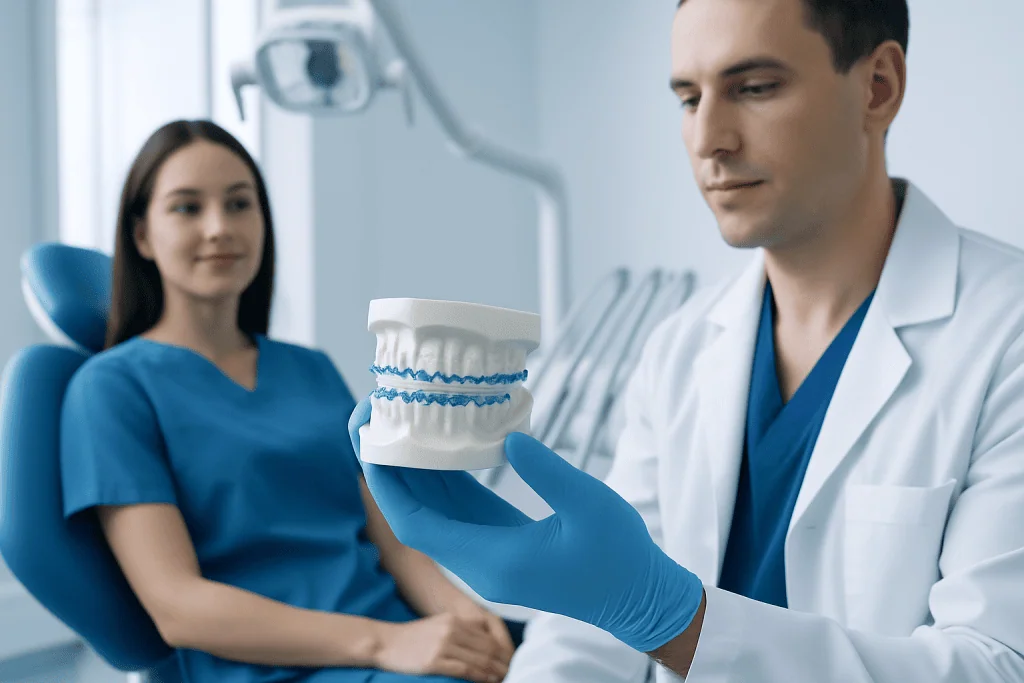
Orthodontic tooth movement happens when light, steady force is applied over time. This force creates gradual remodeling in the tissues around the tooth roots, allowing teeth to shift into new positions. Power chains help deliver that force across several teeth at once, which can be useful for closing extraction spaces, reducing small gaps, or helping straighten a dental arch more evenly.
They are often used after the initial alignment phase, once teeth are more level and ready for finer adjustments. In many cases, an orthodontist may switch from individual elastic ties to a power chain for a period of treatment, then change to another method later. This staged approach is common in modern orthodontics and is based on how the bite and tooth positions evolve.
Power chains are not always necessary for every patient. Some people need only standard archwires and individual ties, while others benefit from additional tools such as springs, elastics, or temporary anchorage devices. If tooth crowding, spacing, or bite issues are more complex, a broader orthodontic plan may be needed, sometimes alongside evaluation for related jaw concerns such as jaw cysts or impacted teeth.
Who may need power chain braces

Power chain braces may be recommended for teenagers or adults undergoing orthodontic treatment who have spaces between teeth, rotated teeth, or areas where neighboring teeth need to be drawn together. They are commonly used after tooth extraction in orthodontic care, but they can also help with naturally occurring gaps or adjustments in bite coordination.
An orthodontist decides whether power chains are appropriate by examining tooth position, gum health, the bite, and X-rays or digital scans. Patients with healthy supporting bone and gums usually tolerate them well, but people with active gum disease or poor oral hygiene may need those issues treated first. This is because healthy tissues are essential for safe and effective tooth movement.
Some patients also compare power chains with clear aligners or other orthodontic methods. Each option has strengths and limitations. Fixed braces with power chains may provide more precise control in certain movements, especially when multiple teeth need to shift together. In some cases, a broader orthodontic or restorative plan can involve dental treatment tailored to the individual’s bite, oral health, and cosmetic goals.
What to expect: placement, discomfort, and progress
Placing a power chain is usually quick and done during a routine orthodontic adjustment visit. The chain is stretched over a series of brackets after the archwire is in place. The process itself is generally not painful, although the pressure may become more noticeable a few hours later as the teeth begin responding to the new force.
Mild soreness, pressure, or tenderness is common for a few days after placement or tightening. This temporary discomfort usually affects chewing more than speaking. Soft foods, cool water, and good oral care often help during this period. Persistent or severe pain is less typical and should be discussed with the treating clinician.
Progress with power chain braces varies. Some spaces close relatively quickly, while others take longer depending on age, bone support, root position, treatment goals, and whether the patient follows instructions for appointments and any additional elastics. Regular reviews are important because elastic chains can lose force over time and may need replacement.
- Common early effects: pressure, tooth tenderness, and mild difficulty chewing hard foods
- Less common issues: irritation of the lips or cheeks, chain breakage, or food trapping
- Expected follow-up: regular orthodontic visits to monitor movement and oral health
Benefits, limits, and common myths
The main benefit of power chain braces is efficiency in selected tooth movements. They can help close spaces, improve contact between teeth, and support coordinated movement over a segment of the mouth. For many patients, this can make a treatment plan more streamlined, especially when the orthodontist wants several teeth to move together rather than individually.
However, power chains are not a shortcut that works the same way for everyone. They do not guarantee faster treatment in every case, and stronger force is not necessarily better. Orthodontic treatment is safest when force is controlled and monitored. Excessive or poorly directed force can increase discomfort and may affect roots or gum support, which is why self-adjustment is not safe.
Several myths can cause confusion. One is that power chains are only cosmetic; in fact, their role is mechanical and therapeutic. Another is that they always mean treatment is almost finished. Sometimes they are used late in treatment, but they may also be introduced earlier depending on the case. A third myth is that more pain means better progress, which is not supported by clinical practice.
Oral hygiene, eating, and self-care with power chain braces
Because elastic chains create more connected surfaces around brackets, they can trap food and plaque more easily than individual ties. Daily cleaning is therefore especially important. Patients are usually advised to brush carefully after meals, clean around brackets and along the gumline, and use flossing aids or interdental brushes where recommended by their orthodontic team.
Food choices also matter. Sticky, hard, or very chewy foods can pull, stain, or damage power chains and brackets. Softer choices may be more comfortable for the first few days after adjustment. Cutting food into small pieces and chewing slowly can reduce strain on sore teeth and hardware.
Staining is another practical concern, especially with clear or light-colored elastics. Foods and drinks such as curry, coffee, tea, and strongly colored sauces may discolor them. While this does not usually affect function, some patients prefer to avoid these foods before appointments. If a person has recurrent gum irritation, decalcification, or signs of tooth decay, an orthodontist may work closely with providers offering prosthetic dentistry or preventive dental care to protect long-term oral health.
- Brush gently but thoroughly at least twice a day
- Use orthodontic cleaning aids if recommended
- Avoid hard candies, chewing gum, and sticky sweets
- Contact the clinic if a chain snaps or a bracket becomes loose
Diagnosis and treatment planning in orthodontic care
Power chain braces are used only after a full dental and orthodontic assessment. This usually includes an examination of the teeth, gums, and bite, along with photographs, dental impressions or scans, and imaging such as panoramic X-rays or cephalometric studies when needed. These steps help the clinician understand spacing, crowding, root position, jaw relationships, and gum support.
Treatment planning is individualized. The orthodontist considers whether spaces should be closed, maintained, or managed as part of a wider restorative plan. They also assess whether there are any obstacles to tooth movement, such as impacted teeth, missing teeth, or bone limitations. In some patients, additional specialist input may be helpful, particularly if there are jaw joint symptoms, gum disease, or prior dental work.
When braces are part of a more complex oral health pathway, patients may also need evaluation through broader oral and dental health services. This coordinated approach can help ensure that tooth movement, gum health, and long-term function are considered together rather than separately.
When to seek medical care
Most people experience only temporary discomfort after a power chain is placed or adjusted. Even so, some symptoms should be reviewed promptly. A dentist or orthodontist should be contacted if there is severe pain that does not improve, significant swelling, pus, fever, bleeding from the gums that is more than mild irritation, or an injury to the mouth or face.
Care is also important if a bracket becomes loose, a wire starts poking the cheek, the chain breaks repeatedly, or sores in the mouth do not heal. Ongoing bad breath, gum recession, or white chalky spots on teeth may point to hygiene-related problems that need attention before they worsen. Children and adults with underlying medical conditions that affect healing or immunity should follow their clinician’s advice closely.
Orthodontic treatment is usually routine, but it should always be supervised by qualified dental professionals. Near the end of care, or if concerns arise during treatment, a multidisciplinary team may be useful. Acibadem International’s JCI-accredited hospitals and dental specialists evaluate and manage orthodontic and oral health conditions for international patients when this is needed.
Frequently asked questions
Are power chain braces more painful than regular braces?
They can cause more noticeable pressure for a short time after placement or adjustment, but this is usually temporary. Most people describe soreness rather than severe pain, and it often improves within a few days.
How long do power chain braces stay on?
There is no single timeline because treatment depends on the amount of space closure and the overall orthodontic plan. Some patients wear power chains for a few visits, while others may need them for a longer phase with periodic replacement.
Do power chain braces make teeth move faster?
They can make certain types of movement, such as closing gaps, more efficient when used appropriately. However, tooth movement still needs to be gradual and carefully controlled, so they are not a guaranteed way to shorten treatment for everyone.
Can power chains stain?
Yes, especially if they are clear or light colored. Drinks and foods with strong pigments, such as coffee, tea, and some sauces, can discolor them, although staining usually affects appearance more than function.
What should a person eat after getting power chains?
Soft foods are often more comfortable for the first day or two, especially if the teeth feel tender. It is best to avoid sticky, hard, or chewy foods that can damage braces or pull on the elastic chain.
What happens if a power chain breaks?
A broken chain should be reported to the orthodontic office because it may reduce the planned force on the teeth. It is not something patients should try to repair themselves, as this can affect treatment or injure the mouth.
This article is for general information only and is not a substitute for professional medical advice. Please consult a qualified doctor about your individual situation.
Explore treatments in Turkey — costs, top hospitals & a free quote
JCI-accredited · board-certified surgeons · reply within 24h
Add us as a Preferred Source to see more of our trusted health content across Google Search, AI Overviews and Discover.

More from the Health Library

Sundowners: An Evidence-Based Guide for Patients

Bladder Stones: A Complete Medical Overview
Oxygen Bar: An Evidence-Based Guide for Patients

Lymph Nodes Enlarge: A Complete Medical Overview

Squatting: What Patients Need to Know