Prenuvo Scan Cost — Explained by Medical Evidence, Not Myths

Prenuvo scan cost varies with the body areas imaged, facility, radiologist expertise, and follow-up services. A whole-body MRI may detect unexpected abnormalities, but not every finding is important or beneficial to know.
Key Takeaways
- Prenuvo scan cost varies with the body areas imaged, facility, radiologist expertise, and follow-up services.
- A whole-body MRI may detect unexpected abnormalities, but not every finding is important or beneficial to know.
- The value of screening depends on personal risk factors, symptoms, age, and family history—not on price alone.
- Incidental findings can lead to extra imaging, biopsies, referrals, and anxiety, even when no serious disease is present.
- A doctor can help decide whether targeted testing may be more useful than broad screening for a particular person.
Prenuvo scan cost is not defined by a single standard fee. The real question is what is included, whether the scan is medically appropriate, and what further tests or specialist visits may follow from the findings.
Overview: what "Prenuvo scan cost" really means
Prenuvo scan cost is best understood as the total cost of a screening pathway rather than the price of one imaging appointment alone. A whole-body MRI screening exam may include image acquisition, radiology interpretation, and a report, but the larger financial and medical picture can also involve consultations, repeat scans, laboratory tests, or referrals triggered by the results.
For many people, the more helpful question is not simply, “How much does it cost?” but “What clinical value does it provide for me?” Whole-body MRI is marketed as an early-detection tool, yet medical value depends on the person’s symptoms, risk factors, family history, and whether the scan is likely to change care in a meaningful way.
Unlike imaging ordered to evaluate a clear symptom or known condition, broad screening in otherwise well adults can uncover incidental findings. These are unexpected abnormalities that may be harmless, uncertain, or occasionally important. Because of this, understanding prenuvo scan cost also means understanding the possible downstream effects of screening—both practical and emotional.
What is a Prenuvo-style whole-body MRI scan?
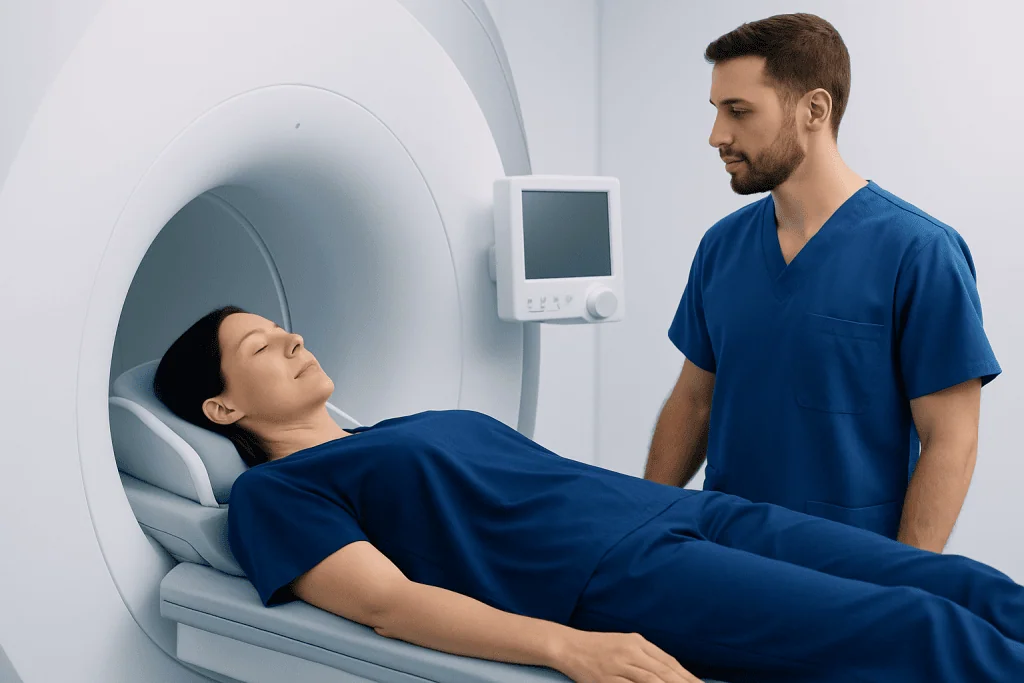
A Prenuvo-style scan refers to a private whole-body MRI screening exam designed to look across multiple body regions without using ionizing radiation. MRI uses strong magnets and radio waves to create detailed images of soft tissues, organs, joints, and other structures. It is different from a standard MRI ordered by a doctor to investigate a specific symptom, such as back pain, headaches, or a suspected tumor.
Whole-body MRI is often presented as a proactive health check. In theory, it may detect some abnormalities before symptoms begin. However, it is not a universal replacement for evidence-based screening programs such as mammography, colon cancer screening, or cervical screening, and it does not rule out every disease.
These scans can identify some concerning patterns that may lead to further assessment for conditions such as cancer or organ abnormalities. They may also overlap with conventional MRI scan services used in hospitals, but the purpose is different: broad screening rather than targeted diagnosis.
What factors influence prenuvo scan cost?

There is no single universal price because several variables shape the final cost. One of the biggest factors is scan scope. Some centers offer whole-body imaging from head to ankle, while others provide more limited packages or optional add-ons for areas such as the brain, spine, or vascular structures.
Another important factor is what is included beyond the imaging itself. A scan may or may not cover specialist review, a formal radiology consultation, digital image access, or follow-up coordination. In some settings, post-scan support helps patients understand findings and decide whether more testing is appropriate; in others, extra appointments are billed separately.
Facility standards, geographic location, and the experience of the radiology team can also affect cost. High-end imaging centers may invest in advanced scanners, longer imaging protocols, and subspecialty interpretation. For patients comparing options internationally, accreditation, reporting quality, and access to multidisciplinary care matter as much as the base fee.
It is also wise to consider indirect costs. These can include time away from work, travel, sedation in rare cases for claustrophobia, and the expense of investigating incidental findings. In many cases, these downstream costs influence the real-world price of screening more than the initial booking amount.
Medical evidence: potential benefits and important limits
The possible benefit of whole-body MRI is early detection of selected abnormalities in people who do not yet feel unwell. This may be more relevant in some individuals with strong family histories, certain inherited cancer syndromes, or physician-identified elevated risk. In such cases, imaging may form part of a broader surveillance strategy rather than a standalone wellness purchase.
At the same time, medical evidence does not support broad MRI screening as a routine solution for everyone. Screening tests are most useful when they reliably reduce illness or death, identify conditions that can be treated effectively, and have an acceptable balance of benefit and harm. For whole-body MRI in the general population, this balance remains uncertain.
One major limitation is false-positive or indeterminate findings. A scan may reveal something unusual that turns out to be benign, but only after more imaging or specialist review. This can create anxiety, extra procedures, and added expense without improving health outcomes. Another limitation is false reassurance: a normal scan does not guarantee that all future or current disease has been excluded.
Some findings may lead to focused imaging such as MR angiography or cross-sectional scans such as CT scan when doctors need more detail. These next steps can be appropriate, but they show why cost should be viewed in the context of the entire diagnostic journey.
Who may consider it, and who may not benefit much?
A whole-body MRI may be considered by adults who want an in-depth review of their health status, especially if they have a strong family history of serious disease or a personalized recommendation from a doctor. It may also appeal to people who prefer non-radiation imaging and understand that screening can lead to unclear findings that need further assessment.
However, many healthy people at average risk may gain limited benefit compared with targeted, guideline-based screening and routine preventive care. Blood pressure checks, cholesterol management, diabetes screening, colon cancer screening, breast screening, vaccination, and lifestyle counseling often have clearer evidence of benefit for the general population.
It may be less suitable for people who are pregnant unless specifically advised, those with certain implanted metal devices, or anyone likely to find the scan environment very distressing. It may also be a poor fit for someone seeking absolute reassurance, because no screening test can promise that. A doctor can help compare broad screening with a more focused work-up if there are symptoms suggesting a problem in a specific area.
Questions to ask before paying for a whole-body MRI
Before booking, patients may benefit from asking practical and clinical questions, not just cost-related ones. It is helpful to understand exactly which body regions are included, how long the scan takes, who interprets the images, and whether the report is reviewed by a radiologist with relevant subspecialty expertise.
They should also ask what happens if something uncertain is found. A good screening pathway explains how results are categorized, whether urgent findings are flagged quickly, and who coordinates next steps. If no follow-up support is included, patients may need to arrange consultations independently with their own doctor or a specialist.
- Is the scan intended for screening, diagnosis, or both?
- What conditions can it reasonably detect, and what can it miss?
- Are contrast agents used, and if so, why?
- Will there be extra charges for consultations or second readings?
- How often do incidental findings lead to more testing?
- Would targeted screening based on age, symptoms, or family history be more appropriate?
These questions can help a person decide whether the likely benefit justifies the cost and whether a different evaluation plan would be more medically appropriate.
Alternatives to broad screening
In many cases, targeted testing offers a clearer benefit than broad whole-body imaging. When a person has symptoms such as persistent headaches, unexplained weight loss, rectal bleeding, a breast lump, or ongoing back pain, doctors usually recommend imaging or testing directed to that specific concern. A focused approach often produces more actionable answers.
Established screening programs are also important alternatives. These may include colon cancer screening, mammography, cervical screening, bone density testing in selected adults, and cardiovascular risk assessment. Such programs are designed around diseases where screening has been shown to help when used in the right population.
For patients with symptoms or exam findings, other tools may be more suitable, including blood tests, ultrasound, endoscopy, or region-specific MRI. If the question relates to the nervous system, targeted MRI scan protocols may provide more clinically useful detail than a broad screening exam. Choosing the right test is often more valuable than choosing the biggest test.
When to seek medical care
A whole-body MRI should not delay medical assessment when symptoms are present. People should seek medical care promptly for unexplained weight loss, persistent pain, blood in the stool or urine, new neurological symptoms, a new lump, ongoing shortness of breath, chest pain, or any symptom that is worsening or not improving.
If a screening scan has already shown an abnormality, timely follow-up matters. The right next step may be repeat imaging, specialist review, laboratory testing, or a targeted procedure. Trying to interpret the report without professional guidance can lead to unnecessary worry or, in some cases, underestimating an important finding.
Near the end of the care pathway, some patients prefer evaluation in a center where radiology, oncology, surgery, and internal medicine work together. Acibadem International’s multidisciplinary specialists and JCI-accredited hospitals diagnose and treat complex findings for international patients when further assessment is needed.
Frequently asked questions
Is a Prenuvo scan the same as a standard MRI?
Not exactly. A Prenuvo-style scan is generally a whole-body MRI screening exam, while a standard MRI is usually ordered to investigate a specific symptom or body area. The technology is similar, but the purpose and interpretation context are different.
Does a higher prenuvo scan cost mean better quality?
Not necessarily. Higher cost may reflect broader scan coverage, more detailed reporting, location, or extra consultation services, but price alone does not prove better medical value. Patients should look at what is included, who reads the scan, and how follow-up is managed.
Can a whole-body MRI find cancer early?
It may detect some suspicious abnormalities before symptoms appear, but it cannot find every cancer and it is not a replacement for established cancer screening programs. It can also identify findings that are harmless or uncertain, which may lead to more tests.
Are incidental findings common on whole-body MRI?
Incidental findings are a recognized part of broad imaging. Many are benign or low-risk, but some require follow-up to clarify their meaning. This is one reason why people should consider the potential emotional and financial impact before choosing screening.
Should healthy people get a whole-body MRI every year?
Routine repeat whole-body MRI is not universally recommended for all healthy adults. Whether repeat screening makes sense depends on age, risk factors, family history, symptoms, and the advice of a qualified doctor. In many cases, standard preventive care may offer clearer benefit.
Will insurance cover prenuvo scan cost?
Coverage depends on the insurer, the country, and whether the scan is considered screening or medically necessary diagnostic imaging. Many elective screening exams are not covered in the same way as doctor-ordered tests for symptoms. It is important to confirm coverage and out-of-pocket responsibilities in advance.
This article is for general information only and is not a substitute for professional medical advice. Please consult a qualified doctor about your individual situation.
Explore treatments in Turkey — costs, top hospitals & a free quote
JCI-accredited · board-certified surgeons · reply within 24h
Add us as a Preferred Source to see more of our trusted health content across Google Search, AI Overviews and Discover.

More from the Health Library

Progesterone Hypersensitivity — Explained by Medical Evidence, Not Myths

Buffalo Milk: An Evidence-Based Guide for Patients

Exercises for Chest with Resistance Bands — Explained by Medical Evidence, Not Myths

Larc Contraception: A Complete Medical Overview

Solar Purpura: What Patients Need to Know