

Price for Ultherapy: What Patients Really Pay

Ultherapy uses focused ultrasound energy to stimulate gradual collagen remodeling beneath the skin. There is no universal price for Ultherapy; meaningful quotes should clearly describe the treatment area and included care.
Key Takeaways
- Ultherapy uses focused ultrasound energy to stimulate gradual collagen remodeling beneath the skin.
- There is no universal price for Ultherapy; meaningful quotes should clearly describe the treatment area and included care.
- It may suit people with mild to moderate skin laxity who want a non-surgical option and realistic, subtle results.
- Temporary tenderness, redness, swelling or tingling can occur, while more significant complications are uncommon but should be assessed promptly.
- Age alone does not determine suitability; skin quality, degree of laxity, health history and treatment goals matter more.
- No treatment is universally better than Ultherapy because different procedures address laxity, wrinkles, volume loss and skin texture differently.
The price for Ultherapy is individualized rather than fixed, because the treatment area, skin concerns, treatment plan, clinician and facility can all affect a quote. A consultation with a qualified provider is the safest way to understand what is included and whether this non-surgical treatment is suitable.
Price for Ultherapy: what patients should expect
The price for Ultherapy does not have one standard amount because treatment is tailored to the person and the area being treated. A responsible quote follows an assessment of skin laxity, goals and the planned treatment coverage, rather than relying on a generic number found online. Since Ultherapy is an elective aesthetic procedure, patients should feel comfortable taking time to compare their options before deciding.
For example, a search for price Ultherapy face may refer to very different plans. One person may be asking about the brow or under-chin area, while another may mean several facial and neck areas. The size of the area, the number of ultrasound lines planned, the clinician’s expertise, the setting and local healthcare factors can all influence the price of Ultherapy treatment.
A written treatment plan can make comparisons clearer. Patients may ask whether the quoted amount includes the consultation, the planned treatment area, comfort measures, follow-up appointments and any relevant facility charges. Comparing the scope of care, not only a headline figure, helps ensure that two quotes are genuinely comparable.
How Ultherapy works and who may be a candidate
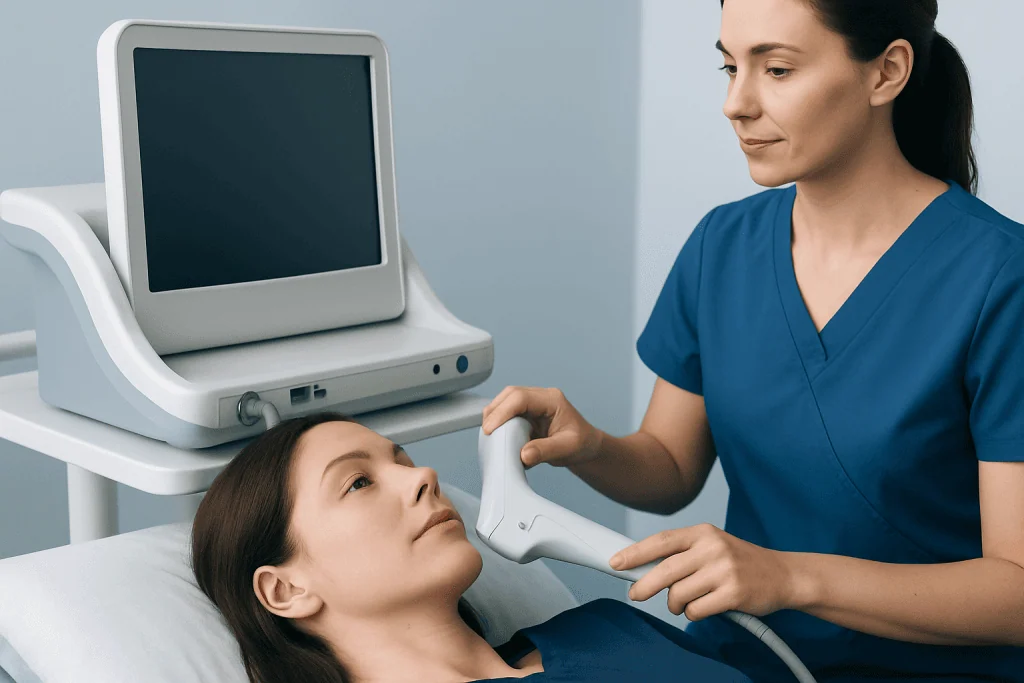
Ultherapy is a non-surgical procedure that uses focused ultrasound energy to create small, controlled areas of heat in selected layers beneath the skin. This process is designed to stimulate the body’s collagen response over time. The device uses ultrasound imaging to help the clinician identify relevant tissue layers during treatment.
It is commonly considered for mild to moderate skin laxity in areas such as the brow, under the chin, neck and upper chest, depending on local device indications and clinical assessment. It does not remove excess skin, replace lost facial volume or produce the same change as a surgical facelift. Results are usually gradual and may be subtle, so clear expectations are important.
A suitable candidate is generally in good health, has realistic goals and understands that individual response varies. People with marked skin laxity, significant jowling or substantial excess neck skin may benefit from discussing other approaches, including surgical options. Active skin infection, open wounds, certain implants, previous procedures and medical conditions should all be disclosed before treatment.
What happens during the procedure and recovery

The process normally starts with a clinical consultation. The provider reviews medical history, current medicines, supplements, allergies, previous facial procedures and aesthetic goals. Patients should not stop prescribed medicines on their own, but should ask the treating clinician whether any preparation is needed before their appointment.
On the day, the skin is cleansed and ultrasound gel is applied. The clinician places the handpiece on the selected areas, uses imaging to guide placement and delivers focused ultrasound pulses. Sensations differ between people and may include warmth, brief prickling or a deeper aching feeling as energy is delivered.
Comfort strategies vary by clinic and by the treatment plan. The provider may discuss topical numbing, oral pain relief or other suitable measures in advance. The length of the appointment depends on the areas being treated, so patients should ask their provider what to expect and whether they need someone to accompany them afterward.
There is often little formal downtime, although the skin can feel tender or appear mildly red or swollen after treatment. Some people notice temporary tingling, sensitivity or small areas of bruising. Collagen remodeling develops gradually, so visible changes are assessed over the following months rather than immediately after the appointment.
Benefits, limitations, risks, and when to seek medical care
A potential benefit of Ultherapy is that it can support skin tightening without incisions or surgical recovery. It may appeal to people seeking a gradual improvement in mild laxity and who prefer a procedure that does not involve injectable volume replacement. However, it cannot reliably correct every concern, especially pronounced skin excess, deep folds caused by volume loss or surface concerns such as pigment changes.
Common short-term effects can include redness, swelling, tenderness, warmth, tingling, temporary numbness or bruising. Less commonly, people may experience welts, altered sensation or temporary effects on facial nerve function. Choosing an appropriately trained clinician, providing a complete health history and following aftercare advice can support safe treatment planning.
When to seek medical care: Patients should contact their treating clinician promptly if pain is worsening, blistering occurs, swelling is significant, skin changes do not improve as expected, or there is new weakness or difficulty moving part of the face. Urgent medical help is appropriate for severe allergic-type symptoms, trouble breathing, sudden vision changes or any symptom that feels serious or unexpected.
Is Ultherapy worth the money?
Whether Ultherapy is worth the money is personal and depends on the concern being treated, the degree of laxity, the desired result and the person’s comfort with gradual, non-surgical change. It may offer value to someone who is a good candidate for subtle lifting and understands that collagen response varies. It may be less satisfying for someone hoping for the more dramatic change associated with surgery or for treatment of concerns ultrasound does not address well.
Before deciding, patients can ask what improvement is realistically expected for their anatomy, how results will be evaluated and what alternatives may better suit their goals. They should also consider the practical aspects of each option, including recovery, possible repeat care and whether a different approach may address multiple concerns more directly. An informed decision is more useful than choosing a procedure based on price alone.
Does Jennifer Aniston get Ultherapy?
It is not possible to confirm a person’s private medical or aesthetic treatment history unless that individual has clearly and reliably shared it themselves. Public images, social media posts, media speculation and product advertising cannot establish which procedures a celebrity has or has not received. For this reason, Jennifer Aniston’s appearance should not be treated as evidence of Ultherapy use.
Even when a public figure discusses an aesthetic treatment, their result cannot predict another person’s result. Skin type, anatomy, age-related changes, previous procedures, lighting, makeup and image editing can all affect appearance. A personal consultation is a more reliable basis for deciding whether Ultherapy may be appropriate.
Is 60 too old for Ultherapy?
No, being 60 is not automatically too old for Ultherapy. There is no single age cutoff because suitability depends more on skin quality, the amount and location of laxity, overall health, healing factors and the result a person hopes to achieve. Some people in their 60s may be good candidates for non-surgical tightening, while others may need a different approach to meet their goals.
At this age, an assessment should also consider volume loss, skin texture, sun damage and the amount of excess skin. If laxity is more advanced, a clinician may explain why a surgical consultation or a combination plan could provide a more appropriate outcome. Honest discussion about expected improvement is especially important at every age.
What's better than Ultherapy?
No procedure is universally better than Ultherapy. The best option depends on what needs treatment: skin laxity, wrinkles caused by muscle movement, lost facial volume, uneven texture, scars, pigment changes or a combination of concerns. Ultherapy may be suitable when deeper tissue tightening is the main goal, but it is not designed to solve every aspect of facial aging.
Other options may be considered for specific concerns:
- Radiofrequency-based procedures may be used for skin tightening and, in some cases, texture-focused treatment.
- Microneedling, chemical peels or laser-based procedures may be more relevant for surface texture, fine lines or pigment concerns.
- Injectable neuromodulators may soften movement-related lines, while dermal fillers can address selected areas of volume loss.
- A surgical facelift or neck lift may offer a more substantial option for pronounced skin laxity, but it also involves incisions and a longer recovery.
A qualified dermatologist, plastic surgeon or aesthetic clinician can explain the expected benefits and limitations of each choice. For international patients, Acibadem International’s multidisciplinary specialists in JCI-accredited hospitals can assess aesthetic concerns and discuss appropriate treatment options based on individual needs.
Frequently asked questions
How long do Ultherapy results last?
Results and their duration vary because collagen remodeling and natural skin aging differ from person to person. A clinician can discuss when reassessment or further treatment may be appropriate based on the individual's response and goals.
Is Ultherapy painful?
People can feel brief warmth, prickling or deeper discomfort while energy is being delivered, but the experience varies by treatment area and personal sensitivity. The provider can discuss suitable comfort measures before the procedure.
Can Ultherapy help a sagging neck?
Ultherapy may be considered for mild to moderate laxity under the chin or in the neck area when clinically appropriate. Significant excess skin or more advanced laxity may require a different procedure to achieve the desired change.
Can Ultherapy be combined with other aesthetic treatments?
It can sometimes be included in a broader treatment plan with other procedures, but the order and timing should be individualized. The treating clinician should review previous fillers, surgery, laser procedures and skin treatments before recommending a combination.
Does Ultherapy remove facial fat?
Ultherapy is intended for skin lifting and tightening through focused ultrasound energy, not for facial fat removal. People concerned about volume loss should discuss this specifically, as reducing volume may not be desirable in many areas of the face.
Who should postpone Ultherapy?
People with an active skin infection, open wound or recent procedure in the planned treatment area may need to postpone treatment. Anyone who is pregnant, has implanted devices, has had prior facial surgery or uses regular medicines should seek individualized medical advice before proceeding.
References
- U.S. Food and Drug Administration
- American Academy of Dermatology Association
- American Society for Dermatologic Surgery
- American Society of Plastic Surgeons
This article is for general information only and is not a substitute for professional medical advice. Please consult a qualified doctor about your individual situation.
Explore treatments in Turkey — costs, top hospitals & a free quote
JCI-accredited · board-certified surgeons · reply within 24h
Add us as a Preferred Source to see more of our trusted health content across Google Search, AI Overviews and Discover.

More from the Health Library



Related Specialists
Prof. Dr. Kerim Sarıyılmaz
Orthopedic Surgery & Traumatology
Dr. Sırrı Baştürk
Orthopedic Surgery & Traumatology
Asst. Prof. Dr. Özlem Aptı Sengkıoun
Dermatology
Assoc. Prof. Dr. Ece Orhon
Psychiatry