Prostate: What Patients Need to Know

The prostate helps produce fluid that nourishes and transports sperm. Common prostate problems include benign enlargement, inflammation, and cancer.
Key Takeaways
- The prostate helps produce fluid that nourishes and transports sperm.
- Common prostate problems include benign enlargement, inflammation, and cancer.
- Urinary changes do not always mean cancer, but they should be assessed if persistent or bothersome.
- Diagnosis may involve a medical history, examination, urine testing, blood tests, and imaging or biopsy when needed.
- Treatment depends on the exact problem and may range from monitoring and lifestyle changes to medication or surgery.
- Prompt medical review is important for blood in urine, fever with urinary symptoms, or inability to pass urine.
The prostate is a small gland below the bladder that helps make semen, and it commonly changes with age. Understanding prostate symptoms, screening, and treatment options can help patients know when a problem is minor, when it needs evaluation, and how care is tailored to the cause.
Overview: what the prostate is and why it matters
The prostate is a walnut-sized gland that sits just below the bladder and surrounds part of the urethra, the tube that carries urine out of the body. Its main role is to produce some of the fluid in semen. Because of its location, even small changes in the prostate can affect urination.
Many patients look up “prostate” when they notice changes such as getting up more often at night, a weaker urine stream, or concern about prostate cancer. These symptoms can have several causes. In many cases, they are related to benign prostate enlargement rather than cancer, but a proper evaluation is still important.
Prostate health becomes more relevant with age. The gland often grows larger over time, and the chance of certain prostate conditions rises later in adulthood. Family history, overall health, and individual symptoms all help guide what kind of testing or treatment may be needed.
How the prostate affects the body
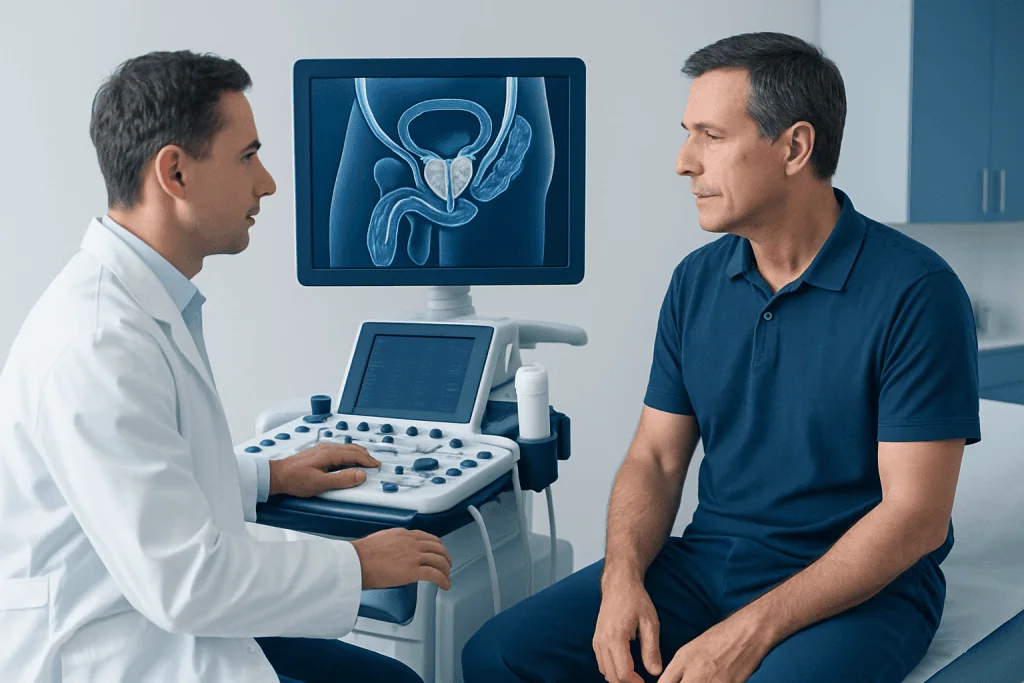
The prostate contributes fluid to semen, helping protect and transport sperm during ejaculation. This is part of its reproductive function. Although it is small, the gland sits in an area where it can influence bladder emptying and urinary flow.
When the prostate enlarges or becomes inflamed, it may press on the urethra. That pressure can make it harder to start urinating, slow the stream, or leave a feeling that the bladder has not fully emptied. Some people also notice urgency or a need to urinate more often, especially at night.
Understanding this relationship helps explain why urinary symptoms are often the first clue that the prostate needs attention. It also explains why doctors do not rely on symptoms alone to identify the cause. Similar symptoms can occur with urinary tract infections, bladder problems, nerve conditions, or certain medicines.
Common prostate conditions and symptoms

Three broad groups of prostate problems are seen most often: benign prostatic hyperplasia (BPH), prostatitis, and prostate cancer. BPH means non-cancerous enlargement of the prostate. It becomes more common with aging and can lead to urinary symptoms, but it is not the same as cancer. Patients interested in this condition may also read about benign prostatic hyperplasia.
Prostatitis refers to inflammation of the prostate. It may be linked to infection, but not always. Symptoms can include pelvic discomfort, painful urination, pain with ejaculation, urinary frequency, or flu-like symptoms if an infection is present. Prostate cancer often develops slowly and may not cause symptoms early on, which is why screening discussions can matter for some patients.
Symptoms that can occur with different prostate conditions include:
- Frequent urination, especially at night
- Urgent need to urinate
- Difficulty starting urination
- Weak or interrupted urine stream
- Feeling that the bladder does not empty fully
- Pain or burning with urination
- Blood in the urine or semen
- Pelvic, lower back, or groin discomfort
These symptoms do not point to one diagnosis on their own. Some men have significant enlargement with few symptoms, while others have bothersome urinary changes with only modest enlargement. That is why clinicians look at the whole picture rather than one symptom in isolation.
Causes and risk factors
The causes of prostate problems depend on the condition. BPH is strongly related to aging and hormone-related changes that happen over time. It is not caused by cancer, and having BPH does not mean a person will develop prostate cancer. Prostatitis may result from bacterial infection, pelvic floor tension, prior urinary procedures, or factors that are not fully understood.
Risk factors for prostate cancer include older age, family history, and certain inherited genetic changes. Ethnic background may also influence risk. Lifestyle factors such as obesity and low physical activity may affect overall urologic health, although they do not explain every case.
Other factors can worsen urinary symptoms even when the prostate is not the only issue. These include constipation, drinking large amounts of fluid late in the day, alcohol, caffeine, some cold and allergy medicines, and certain prescription drugs. Bladder conditions, diabetes, sleep disorders, and neurologic disease can also contribute.
Because many influences overlap, treatment is most effective when it addresses both the prostate itself and any related bladder or lifestyle factors. This is one reason specialist assessment can be helpful when symptoms continue or interfere with daily life.
How prostate problems are diagnosed
Diagnosis begins with a medical history and a discussion of symptoms, how long they have been present, and how much they affect sleep, work, or daily activities. A doctor may ask about fluid intake, medications, infections, and family history. A physical examination can include an abdominal exam and, when appropriate, a digital rectal exam to assess the size and texture of the prostate.
Common tests may include a urine test to look for infection or blood, blood tests such as prostate-specific antigen (PSA) when clinically appropriate, and sometimes kidney function tests. PSA is not a cancer diagnosis by itself. Levels can rise for several reasons, including enlargement, inflammation, or recent urinary procedures, so results need careful interpretation.
If symptoms are more complex, doctors may use ultrasound, bladder scans to check leftover urine after urination, urine flow studies, or MRI in selected cases. If cancer is suspected, further evaluation may include a prostate biopsy after review of PSA results, examination findings, and imaging.
Some patients also need evaluation for related urinary tract issues. Imaging and specialist review help distinguish prostate-related symptoms from bladder, kidney, or urethral conditions. This stepwise approach helps avoid unnecessary treatment while making sure important conditions are not missed.
Treatment options for prostate conditions
Treatment depends on the diagnosis, the severity of symptoms, and the patient’s age, overall health, and preferences. Mild symptoms from an enlarged prostate may only need monitoring and practical steps such as adjusting evening fluid intake. When symptoms become more disruptive, medications can help relax the muscles around the bladder outlet or reduce prostate size over time.
If prostatitis is present, treatment may include antibiotics when a bacterial infection is identified, along with pain relief and supportive measures. Chronic pelvic discomfort may require a broader plan that addresses muscle tension, bladder irritation, and symptom control. Because causes vary, self-treating recurring symptoms without medical advice is not ideal.
For more troublesome enlargement that does not improve enough with medicine, procedures may be recommended to relieve blockage. Depending on anatomy and test results, care may involve minimally invasive methods or operations such as transurethral resection of the prostate (TURP). The choice is individualized and based on expected benefits, recovery, and possible side effects.
If prostate cancer is diagnosed, treatment options may include active surveillance, surgery, radiation therapy, hormone therapy, or other oncology-based treatments depending on stage and risk. Some patients are candidates for robotic surgery as part of prostate cancer treatment planning. For broader context, patients may also find it helpful to read about prostate cancer.
Prevention, screening, and self-care
Not all prostate conditions can be prevented, but healthy habits can support urinary and general health. Regular physical activity, maintaining a healthy weight, managing constipation, and limiting excessive alcohol may reduce symptom burden for some people. If nighttime urination is a problem, reducing fluids close to bedtime can help.
Caffeine, carbonated drinks, and very spicy foods can irritate the bladder in some individuals. Keeping a symptom diary may help identify triggers. Patients should not stop prescribed medicines on their own, but it is reasonable to ask a doctor whether any current medication could be worsening urinary symptoms.
Prostate cancer screening is a personal decision best made with a clinician. Screening usually involves discussing benefits and limits of PSA testing, and sometimes examination, based on age, family history, and individual risk. The goal is not simply to find disease, but to make informed decisions that fit the patient’s situation and values.
Self-care does not replace evaluation when symptoms are new, persistent, or worsening. However, it can be a useful part of care while waiting for assessment or alongside medical treatment. Good hydration during the day, avoiding delayed urination for long periods, and following treatment plans consistently can all support symptom control.
When to seek medical care
Medical review is advisable if urinary symptoms last more than a short time, keep returning, disturb sleep, or affect daily activities. A patient should also seek care for pain with urination, pelvic discomfort, or concerns about prostate cancer risk, especially with a strong family history.
Urgent medical care is needed if someone cannot pass urine at all, develops fever or chills with urinary symptoms, notices blood in the urine, or has severe pain in the lower abdomen, pelvis, or back. These symptoms can signal retention, infection, stones, or another condition that needs prompt treatment.
Because prostate-related symptoms can overlap with bladder and kidney problems, a timely assessment helps clarify the cause and guide the right next steps. At Acibadem International, multidisciplinary specialists in JCI-accredited hospitals diagnose and treat prostate conditions for international patients using individualized evaluation and treatment planning.
Frequently asked questions
What does the prostate do?
The prostate is a gland that produces part of the fluid in semen. It also sits around the urethra, so changes in its size or inflammation can affect urination.
Do urinary symptoms always mean prostate cancer?
No. Urinary symptoms are often caused by benign prostate enlargement or inflammation rather than cancer. Still, persistent or bothersome symptoms should be assessed by a doctor because several conditions can cause similar changes.
At what age do prostate problems become more common?
Prostate enlargement becomes more common with aging, especially in midlife and later years. Prostate cancer risk also rises with age, although screening decisions depend on the person’s health, family history, and preferences.
What is the difference between BPH and prostatitis?
BPH is a non-cancerous enlargement of the prostate that can make urination more difficult. Prostatitis is inflammation of the prostate and may cause pain, burning, pelvic discomfort, or infection-related symptoms.
What tests are used to check the prostate?
Doctors may use a symptom review, physical examination, urine tests, blood tests such as PSA, and imaging when needed. In selected cases, additional studies or a biopsy are recommended to clarify the diagnosis.
Can prostate problems be treated without surgery?
Yes. Many prostate conditions can be managed with monitoring, lifestyle changes, medications, or other non-surgical approaches. Surgery or procedures are usually considered when symptoms are severe, complications develop, or other treatments do not help enough.
References
- National Institute on Aging
- National Cancer Institute
- American Urological Association
- European Association of Urology
- Mayo Clinic
This article is for general information only and is not a substitute for professional medical advice. Please consult a qualified doctor about your individual situation.
Explore treatments in Turkey — costs, top hospitals & a free quote
JCI-accredited · board-certified surgeons · reply within 24h
Add us as a Preferred Source to see more of our trusted health content across Google Search, AI Overviews and Discover.