Proton Therapy Treatment for Liver Cancer: How It Works, Results and What to Expect
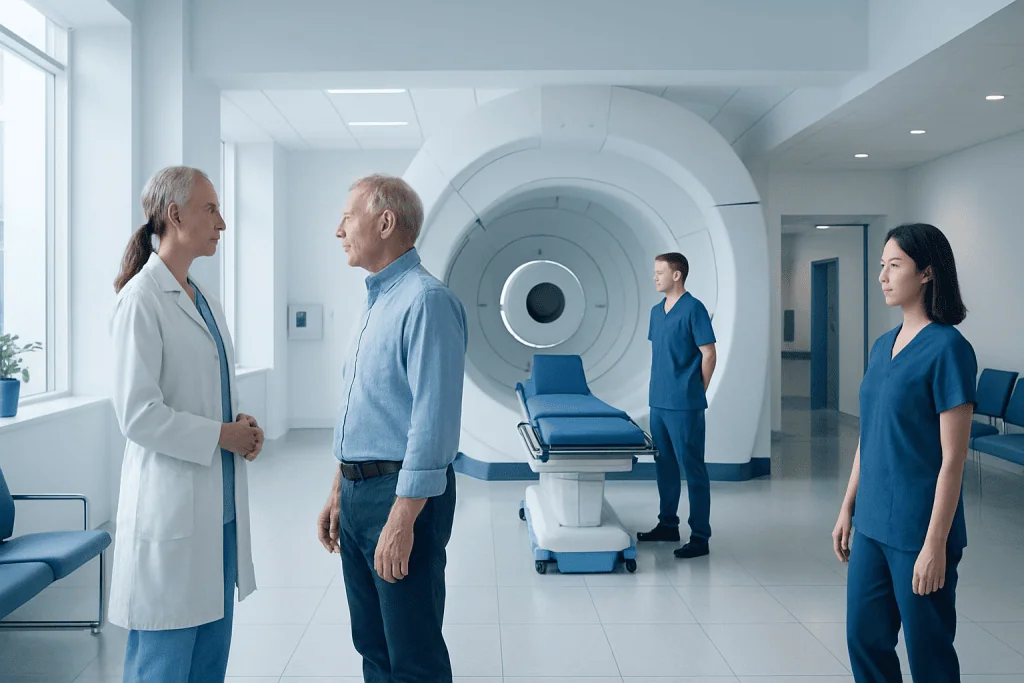
Proton therapy uses charged particles that release most of their energy at a planned depth within the body. It may help protect healthy liver tissue and nearby organs such as the stomach, bowel, kidneys and spinal cord.
Key Takeaways
- Proton therapy uses charged particles that release most of their energy at a planned depth within the body.
- It may help protect healthy liver tissue and nearby organs such as the stomach, bowel, kidneys and spinal cord.
- Suitability depends on tumor type, size, number, location, liver function, prior treatment and overall health.
- Treatment planning is individualized and commonly involves radiation oncologists, liver specialists, surgeons, medical oncologists and imaging experts.
- Results vary substantially; proton therapy is not the best or only treatment for every person with liver cancer.
- Follow-up remains essential to monitor treatment response, liver function and possible cancer recurrence.
Proton therapy treatment for liver cancer is a highly targeted form of radiation that can deliver a planned dose to a liver tumor while reducing radiation exposure beyond the target area. It may be considered for selected people with primary liver cancer or liver metastases, particularly when surgery or other local treatments are not suitable.
Overview: Proton Therapy Treatment for Liver Cancer
Proton therapy treatment for liver cancer is an external radiation treatment that uses positively charged particles, called protons, to damage the DNA of cancer cells. It is designed to deliver radiation very precisely to a tumor, with relatively little radiation continuing beyond the planned target. This physical property can be useful in the liver, where preserving as much healthy functioning tissue as possible is important.
Liver cancer may refer to a cancer that begins in the liver, such as hepatocellular carcinoma, or cancer that has spread to the liver from another organ. Proton therapy may be used as a local treatment for selected tumors in either situation. It does not replace a personalized assessment by a multidisciplinary cancer team, because treatment choices depend on the cancer type and stage as well as the condition of the liver.
For some people, proton therapy is considered when surgery, ablation, embolization, or conventional radiation is not appropriate or has not fully controlled the tumor. It can also be considered alongside other treatments, including systemic therapy. The aim may be to control a tumor, reduce the likelihood of local progression, relieve symptoms in selected cases, or help bridge a person to liver transplantation when clinically appropriate.
How Proton Therapy Works in the Liver
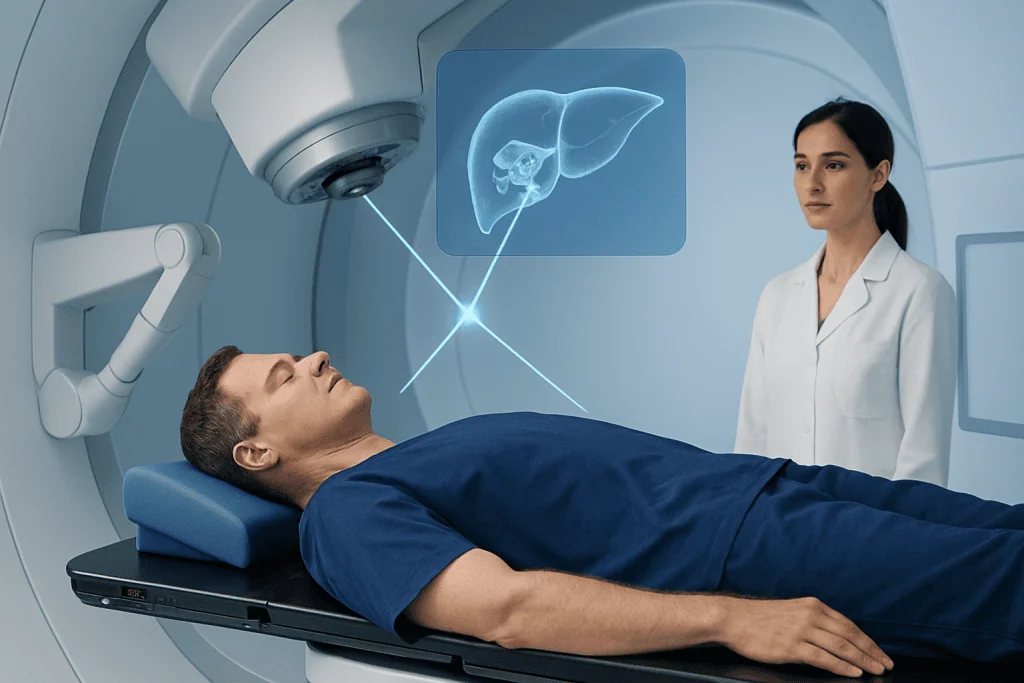
Standard photon radiation uses X-rays that deposit radiation as they enter the body, pass through the target and exit on the other side. Protons behave differently. They release much of their energy at a controllable depth, called the Bragg peak, and then deliver very little dose beyond that point. A radiation oncology team uses imaging and computer-based planning to shape and position this dose around the tumor.
The liver moves with breathing, and liver tumors can shift slightly from one treatment session to another. For this reason, planning commonly includes detailed CT imaging and may include MRI, contrast imaging or other scans. The team may use breathing-control techniques, image guidance before treatment, immobilization devices, or motion-management methods to improve accuracy.
Precision does not mean that healthy tissue receives no radiation. A small margin around the visible tumor is generally included to account for microscopic disease and normal motion. The treatment plan balances tumor coverage with protection of healthy liver, bile ducts, stomach, intestines, kidneys, lungs and other nearby structures.
Proton therapy is one form of radiation oncology care. Depending on the individual situation, a team may instead recommend surgery, thermal ablation, catheter-based liver treatments, systemic therapy, conventional external-beam radiation, or a combination of approaches.
Can Liver Cancer Be Treated With Proton Therapy?

Yes. Liver cancer can be treated with proton therapy in carefully selected patients. It may be used for primary liver cancers, particularly hepatocellular carcinoma, and for selected tumors that have spread to the liver. Its role is usually determined after reviewing the tumor’s location and extent, liver reserve, prior therapies and whether there is cancer outside the liver.
People may be considered when a tumor is difficult to remove surgically, lies close to sensitive organs, cannot safely be treated with ablation, or remains active after another local therapy. It may also be relevant for people with limited remaining healthy liver tissue, although impaired liver function requires especially careful evaluation.
Candidacy is not based on one scan or one test alone. A liver cancer team may review pathology results when available, blood tests including liver function, tumor markers, cross-sectional imaging, performance status and the presence of cirrhosis or portal hypertension. The plan should also take into account a person’s goals, practical ability to attend treatment and preferences.
- Potential candidates have a tumor that can be accurately targeted with radiation.
- The expected benefit of local treatment outweighs the risks to healthy liver and nearby organs.
- The person can lie still for imaging and treatment and follow motion-management instructions when needed.
- A multidisciplinary review supports radiation as part of the overall care plan.
What to Expect: Planning, Treatment and Recovery
Proton therapy begins with a consultation and treatment-planning process rather than radiation on the first visit. The radiation oncologist reviews imaging, medical history and previous treatments, explains expected benefits and risks, and coordinates with other specialists. During simulation, the person is positioned on a treatment table and may be fitted with a customized support device to help reproduce the same position each day.
Planning scans are then used to create an individualized treatment plan. Small skin marks or image-guidance references may be used to support accurate daily setup. In some cases, additional measures are used to track or limit breathing motion. Planning may take days to several weeks, depending on the complexity of the case and the need for additional tests or specialist review.
During each treatment session, the person lies on the treatment table while the proton machine delivers radiation from planned angles. The treatment itself is painless and a person does not become radioactive afterward. The appointment may last longer than the actual beam delivery because careful positioning and imaging checks are essential. Treatment is often delivered over several sessions, but the total number depends on the diagnosis, tumor characteristics and safety limits for nearby organs.
Many people continue normal light activities during treatment. Tiredness can develop gradually and may persist for a short time afterward. Follow-up imaging and blood tests are scheduled after treatment, but response can take time to assess because treated tumors may change gradually on scans.
Benefits, Risks and What Is the Downside of Proton Therapy?
The potential benefit of proton therapy is its ability to limit radiation beyond the target, which may reduce dose to some healthy liver tissue and nearby organs. This can be particularly meaningful when a tumor is close to the stomach, bowel, heart, kidneys or spinal cord, or when prior radiation has limited other options. However, the degree of advantage varies by tumor location and by the quality of alternative radiation plans.
The downside of proton therapy is that it is not automatically superior for every liver tumor. It requires specialized equipment, detailed planning and repeated visits, which can make treatment logistics demanding. Availability may be limited, and insurance coverage or authorization can vary by healthcare system. Small differences in breathing, body position or bowel filling can affect dose delivery, so motion management and image guidance are important.
Side effects depend on the treated area, total dose, liver function and other therapies. Possible short-term effects include fatigue, temporary skin irritation in the treatment area, nausea, reduced appetite or abdominal discomfort. More serious complications are uncommon but can include inflammation or injury to the liver, stomach or bowel, bile duct problems, or worsening liver function. People with cirrhosis or reduced liver reserve may face a higher risk of liver-related complications.
The care team discusses individual risks before treatment and monitors symptoms, blood tests and imaging afterward. New or worsening abdominal pain, persistent vomiting, jaundice, increasing swelling, fever or marked fatigue should be reported promptly rather than waiting for the next scheduled visit.
What Is the Success Rate of Proton Therapy?
There is no single success rate for proton therapy treatment for liver cancer. Outcomes differ according to whether the cancer began in the liver or spread there, how many tumors are present, tumor size and location, liver function, cancer stage, the treatments received before or after radiation and the definition of success being measured.
In clinical practice and published research, doctors may assess local control, meaning whether the treated tumor remains controlled at the radiation site; progression-free survival; overall survival; symptom improvement; and treatment-related side effects. Strong local control does not necessarily mean the cancer cannot recur elsewhere in the liver or outside the liver, especially when the underlying disease has a higher risk of spread.
For selected patients, proton therapy can offer effective local tumor control with the goal of preserving healthy tissue. It is important to interpret outcome discussions in the context of an individual case rather than comparing broad figures from different studies. Studies may include patients with different cancer stages, liver function and treatment histories, making direct comparisons difficult.
A radiation oncologist can explain what treatment is intended to achieve in a particular situation and how proton therapy compares with other realistic options. Regular surveillance is needed after treatment because early detection of recurrence or new liver tumors can affect future treatment choices.
What Is the Most Successful Treatment for Liver Cancer?
There is no one most successful treatment for all liver cancers. For some people with early-stage primary liver cancer and sufficient liver function, surgery or liver transplantation may offer the best opportunity for long-term disease control. For others, ablation, embolization procedures, radiation therapy, systemic medicines or carefully planned combinations may be more appropriate.
The best approach depends on whether the cancer is confined to the liver, the number and size of tumors, involvement of blood vessels, liver function, cirrhosis, general health and whether the cancer has spread. A treatment that is effective for one person may be unsafe or unlikely to help another. This is why liver cancer care is commonly planned by a multidisciplinary team.
Proton therapy may be a valuable option when a targeted radiation approach can safely treat the tumor while preserving healthy liver and protecting nearby organs. It may be used with curative intent in selected localized cases, for local control when surgery is not feasible, or as part of broader cancer management. The decision should be made with specialists experienced in liver tumors and radiation planning.
Acibadem International’s multidisciplinary specialists and JCI-accredited hospitals evaluate and treat liver cancer for international patients, coordinating radiation oncology with hepatology, medical oncology, surgery and interventional care when needed.
When to Seek Medical Care
Anyone diagnosed with liver cancer should discuss treatment options with an experienced cancer team without unnecessary delay. A timely specialist assessment is particularly important when imaging shows a growing liver lesion, when a previously treated tumor may have returned, or when treatment decisions are being considered after surgery, ablation, embolization or systemic therapy.
People receiving proton therapy or other cancer treatment should contact their healthcare team for symptoms that are new, severe or worsening. These include yellowing of the eyes or skin, confusion, a noticeably swollen abdomen, vomiting that prevents drinking fluids, black or bloody stools, fever, severe abdominal pain, shortness of breath or sudden weakness. Emergency care may be needed for severe symptoms.
People at increased risk of liver cancer, including those with cirrhosis or chronic viral hepatitis, should follow their clinician’s surveillance recommendations even if they feel well. Routine monitoring can help identify liver changes at an earlier stage, when more treatment options may be available.
Frequently asked questions
Is proton therapy painful?
Proton therapy itself is painless. The person lies still on a treatment table while the radiation is delivered, and they do not feel the proton beam. Some people may develop fatigue, skin changes or digestive symptoms over the course of treatment, depending on the area treated.
How long does proton therapy for liver cancer take?
The planning phase may take days to several weeks because imaging, motion assessment and individualized dose planning are needed. Treatment is delivered over a number of outpatient sessions, but the schedule varies based on the tumor, treatment goals and nearby organs. The radiation oncology team provides the specific timetable.
Can proton therapy cure liver cancer?
Proton therapy may be used with curative intent for some localized liver tumors when the clinical situation is suitable. However, whether cure is possible depends on the type and stage of cancer, liver function, tumor spread and other individual factors. It can also be used to achieve local tumor control when cure is not the realistic goal.
What happens after proton therapy for liver cancer?
Follow-up usually includes clinical visits, liver blood tests and imaging such as CT or MRI. Imaging changes can develop gradually, so the team interprets scans over time rather than relying on a single early result. Ongoing surveillance is important because new tumors or recurrence may occur elsewhere.
Who may not be suitable for proton therapy?
Proton therapy may not be suitable if the tumor cannot be safely targeted, if there is insufficient healthy liver reserve, or if the cancer has spread in a way that requires a different treatment priority. Severe difficulty lying still or completing treatment sessions can also affect feasibility. A specialist assessment is needed to determine whether another approach is safer or more beneficial.
Can proton therapy be combined with other liver cancer treatments?
In some cases, yes. Proton therapy may be sequenced with systemic medicines, surgery, ablation or catheter-based treatments, depending on the treatment objective and timing. Combining therapies requires careful coordination to avoid overlapping side effects and protect liver function.
References
- National Cancer Institute
- American Cancer Society
- American Society for Radiation Oncology
- European Society for Medical Oncology
- American Association for the Study of Liver Diseases
This article is for general information only and is not a substitute for professional medical advice. Please consult a qualified doctor about your individual situation.
Liver Cancer in Turkey — costs, top hospitals & a free quote
JCI-accredited · board-certified surgeons · reply within 24h
Add us as a Preferred Source to see more of our trusted health content across Google Search, AI Overviews and Discover.

Medical Oncology Department
Medical treatment of cancer with chemotherapy, immunotherapy and targeted therapies under a multidisciplinary tumor board.
60 specialists in this unitMore from the Health Library


Related Specialists

Prof. Dr. Okan Kuzhan
Medical Oncology
Prof. Dr. İsmail Hamzaoğlu
General Surgery
Dr. Ulduz Jafarova
Gynecology & Obstetrics
Assoc. Prof. Dr. Mustafa Aykut Kural
Neurology