Pterygium Nail Treatment: How It Works, Results and What to Expect

Nail pterygium is scarring that joins the skin at the base of the nail to the nail bed or matrix. It can result from inflammatory nail disease, injury, burns, infection or, less commonly, a growth affecting the nail unit.
Key Takeaways
- Nail pterygium is scarring that joins the skin at the base of the nail to the nail bed or matrix.
- It can result from inflammatory nail disease, injury, burns, infection or, less commonly, a growth affecting the nail unit.
- Treatment focuses first on identifying and controlling the cause; surgery may be considered in selected cases.
- Established scar tissue may cause permanent changes, but treatment can reduce symptoms and help preserve unaffected nail structures.
- A new, rapidly changing or single-nail pterygium should be assessed by a dermatologist or nail specialist.
Pterygium nail treatment depends on whether scar tissue is actively forming and what is causing it. Early specialist assessment is important because established scarring between the nail fold and nail bed can be difficult to reverse, while prompt treatment may help protect remaining nail growth.
Pterygium Nail Treatment: How It Works
Pterygium nail treatment aims to stop the process that is damaging the nail unit and, when appropriate, release or remove scar tissue. A nail pterygium is not the same as an eye pterygium. In the nail, it describes an abnormal, often V-shaped attachment of skin from the proximal nail fold (the skin at the nail base) to the nail bed, where the nail plate would normally grow.
The best approach depends on the type of pterygium, how long it has been present and its cause. In an early or active inflammatory condition, medical treatment may help limit further injury. If a scar band is already established, medication alone cannot reliably restore the normal nail anatomy. A carefully selected procedure may improve function, comfort or appearance, although complete nail regrowth cannot always be expected.
Assessment by a dermatologist experienced in nail disorders is particularly valuable. The clinician can distinguish pterygium from other causes of split, ridged, lifted or absent nails and can investigate conditions affecting the skin, immune system or nail matrix.
Understanding Nail Pterygium and Its Complications
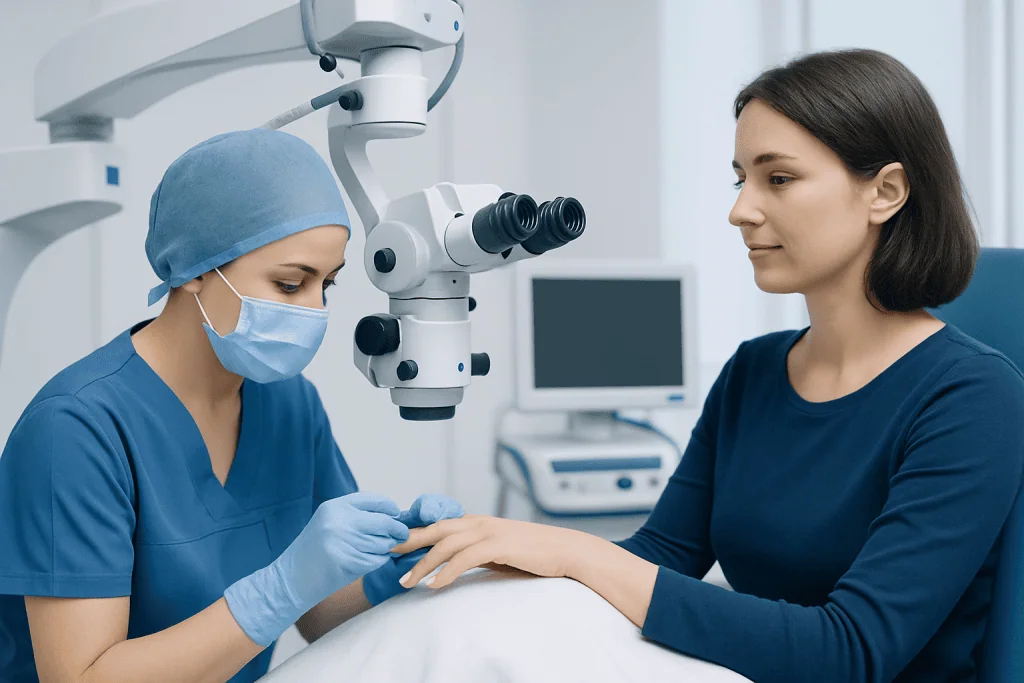
Two broad patterns may occur. Dorsal pterygium develops when the proximal nail fold adheres downward to the nail bed, often leaving a central V-shaped split or loss of the nail plate. Ventral pterygium involves the skin beneath the free edge of the nail extending farther forward than usual. Ventral changes can sometimes be harmless, but new or painful changes still need evaluation.
What are the complications of nail pterygium? The main complication is permanent nail dystrophy: the nail may become split, narrowed, ridged, misshapen or partly absent. The nail can become difficult to trim and may catch on clothing or objects. Some people experience tenderness, sensitivity or reduced fine finger function, especially when the thumb or several nails are involved.
Scarring may also conceal the underlying disorder that caused it. Conditions such as lichen planus can affect multiple nails and may progress without treatment. A change involving one nail, particularly with pain, bleeding, pigment change, a lump or ulceration, requires careful assessment to exclude infection, trauma-related damage or, rarely, a tumor of the nail unit.
Causes, Growth Rate and Who May Need Treatment

Nail pterygium forms when inflammation or injury damages the nail matrix, nail bed and nearby skin, leading tissues that are normally separate to heal together. Nail lichen planus is an important inflammatory cause. Other possible contributors include severe trauma, burns, repeated manipulation of the cuticle, chronic dermatitis, autoimmune blistering disorders, severe infection and some reactions to medicines. Occasionally, no clear cause is found.
How quickly can pterygium grow? The rate varies greatly. It may develop gradually over months as an inflammatory nail condition progresses, or it may appear more quickly after a significant injury or burn. Because fingernails grow slowly, the visible extent of nail change may lag behind the active disease process. A rapidly evolving change, especially in one nail, should not be assumed to be benign.
People may be candidates for treatment when there is active inflammation, pain, functional difficulty, progressive scarring or uncertainty about the diagnosis. Surgery is not suitable for every person. It is generally considered most carefully when the underlying disease is controlled, a discrete scar band is present and the potential benefit outweighs the possibility of renewed scarring.
- Several affected nails may suggest an inflammatory or systemic cause.
- A history of injury may point to localized scar formation.
- New symptoms such as bleeding, persistent swelling or a growing mass need timely medical review.
Diagnosis Before Pterygium Removal
Diagnosis usually begins with a detailed history and examination of all fingernails, toenails, surrounding skin, scalp and mouth. The clinician may ask about rashes, hair loss, mouth sores, medications, past injuries, occupational exposures and nail-care habits. Dermoscopy, a magnified examination of the nail unit, may provide additional detail without causing discomfort.
Tests are tailored to the clinical findings. A sample for fungal testing may be taken if infection is possible, but fungal infection alone does not usually explain true dorsal pterygium. When the diagnosis is uncertain or a tumor must be excluded, a nail biopsy may be recommended. Biopsy planning is important because the nail matrix is delicate and any procedure in this area can itself affect future nail growth.
Photographs and periodic review can help document whether changes are stable or progressing. This information guides decisions about medical therapy, observation or a procedural approach and helps set realistic expectations for recovery.
How to Treat Nail Pterygium?
How to treat nail pterygium? Treatment begins with the cause rather than the visible nail shape alone. If there is active inflammatory disease, a dermatologist may use topical, injected or oral anti-inflammatory treatment, or other immune-modifying medicines when appropriate. The choice depends on the diagnosis, number of involved nails, severity and the person’s overall health.
Protective nail care supports treatment. Keeping nails short, avoiding cutting or pushing back cuticles, limiting exposure to wet work and harsh chemicals, and using gloves for cleaning or gardening may reduce further trauma. Nail cosmetics can camouflage changes, but artificial nails, aggressive manicures and repeated scraping beneath the nail may worsen damage in some people.
Once a mature scar has formed, treatment may focus on symptoms, appearance and preventing progression in other nails. A nail specialist may discuss surgical release of an adhesion, removal of scar tissue or reconstructive techniques in carefully chosen cases. Surgical outcomes are variable because scar tissue can recur and the nail matrix may already be permanently injured.
Acibadem International’s multidisciplinary specialists and JCI-accredited hospitals can assess nail disorders and coordinate dermatology, pathology and surgical care for international patients when needed.
What Happens During Pterygium Removal and Recovery?
Pterygium removal is usually an outpatient nail procedure performed after diagnosis and treatment planning. The clinician first examines the nail unit and explains what the procedure can and cannot achieve. A local anesthetic is typically used to numb the digit. Depending on the anatomy, the nail plate may be partially lifted or removed to allow access to the scar band and underlying tissues.
The surgeon may carefully divide the adhesion and remove scar tissue while aiming to preserve healthy nail matrix and nail bed. In selected reconstructive procedures, a protective dressing, splint or tissue graft technique may be used to keep surfaces apart during healing. The exact method differs considerably between cases; it is not a routine cosmetic procedure and should be performed by an appropriately trained clinician.
How painful is pterygium removal? The anesthetic injection can cause brief discomfort, but the digit should be numb during the procedure. Soreness, throbbing and tenderness are common after the anesthetic wears off and are often managed with the aftercare plan recommended by the treating clinician. Increasing pain, spreading redness, fever, pus or numbness should be reported promptly.
Recovery of the skin commonly takes weeks, while nail growth is much slower. A fingernail may need several months to grow out, and toenails generally take longer. Follow-up visits allow the clinician to monitor healing, identify recurrent adhesion early and continue treatment for any underlying inflammatory condition.
Benefits, Risks and Expectations
The potential benefits of pterygium nail treatment include reducing active inflammation, limiting additional scarring, easing tenderness and improving the ability to use or trim the nail. For some people, releasing a scar band may improve the shape of the nail as it grows. However, results depend strongly on the extent of matrix damage and whether the cause is controlled.
Potential risks of a nail procedure include bleeding, infection, delayed healing, persistent pain, altered sensation, nail irregularity and recurrence of the adhesion. A procedure can occasionally lead to additional scarring or no meaningful improvement in nail growth. These possibilities should be discussed before consent, particularly when treatment is mainly intended to improve appearance.
Realistic expectations are essential. A pterygium that has been present for a long time may not be fully reversible. Even when the nail does not return to its previous appearance, effective management of the underlying condition can still protect remaining nail tissue and reduce the chance of further involvement.
When to Seek Medical Care
Medical assessment is advisable for a new nail pterygium, a progressive split or loss of nail, or changes affecting several nails. Early review is especially important when symptoms suggest active inflammation, because treatment may be more helpful before scarring becomes established. A dermatologist can determine whether observation, medication, testing or a procedure is appropriate.
Prompt care is recommended for severe pain, redness and warmth around the nail, drainage, fever, bleeding, a dark streak that is new or changing, an ulcer, or a lump beneath or around the nail. These findings have many possible causes and should be examined rather than treated at home.
People should avoid attempting to cut away attached skin or separate the nail fold themselves. This can injure the nail matrix, introduce infection and increase scarring. Gentle protection and professional assessment are safer next steps.
Frequently asked questions
Can nail pterygium go away on its own?
A true pterygium caused by established scar tissue usually does not fully resolve on its own. If the process is identified early and inflammation is controlled, further damage may sometimes be limited. A clinician can determine whether the change is active inflammation, stable scarring or another nail condition.
Is pterygium nail treatment always surgery?
No. Treatment often starts with addressing the underlying cause, particularly inflammatory nail disease. Surgery may be considered for selected scar bands or functional problems, but it is not appropriate or necessary for every case.
Can lichen planus cause nail pterygium?
Yes. Nail lichen planus is a recognized cause of dorsal pterygium and can lead to permanent nail scarring if active disease is not controlled. Changes may affect one or multiple nails, and specialist assessment is important.
How long does it take for a nail to grow back after pterygium removal?
Skin healing after a nail procedure often takes several weeks, but a fingernail may take several months to grow out. Toenails grow more slowly and may take substantially longer. The final appearance depends on the health of the nail matrix and whether scarring recurs.
Can I treat nail pterygium at home?
Home care cannot remove scar tissue or treat the underlying inflammatory condition. Gentle nail protection, avoiding cuticle trauma and limiting irritants may help prevent further injury, but a new or changing pterygium should be assessed by a clinician.
Does pterygium removal guarantee normal nail growth?
No. Surgery may improve an adhesion or relieve symptoms, but normal nail growth cannot be guaranteed when the nail matrix has been scarred. The treating clinician should explain the likely benefits, limitations and recurrence risk for the individual nail.
References
- American Academy of Dermatology
- British Association of Dermatologists
- DermNet
- National Institute of Arthritis and Musculoskeletal and Skin Diseases
This article is for general information only and is not a substitute for professional medical advice. Please consult a qualified doctor about your individual situation.
Explore treatments in Turkey — costs, top hospitals & a free quote
JCI-accredited · board-certified surgeons · reply within 24h
Add us as a Preferred Source to see more of our trusted health content across Google Search, AI Overviews and Discover.

More from the Health Library



Related Specialists

Prof. Dr. A. Taner Usta
Gynecology & Obstetrics
Dr. Ümit Ege Canyurt
Acibadem Life Clinical Service
Dr. Perviz Paşaoğlu
Otorhinolaryngology
Dyt. Bilgesu Pekcan
Nutrition & Diet