Ptosis and Unequal Pupils: Could a Nerve Problem Be the Cause?

Ptosis means drooping of the upper eyelid, and unequal pupils are called anisocoria. When ptosis and unequal pupils occur together, a nerve-related cause may need to be ruled out.
Key Takeaways
- Ptosis means drooping of the upper eyelid, and unequal pupils are called anisocoria.
- When ptosis and unequal pupils occur together, a nerve-related cause may need to be ruled out.
- Important causes include Horner syndrome, third nerve palsy, and less commonly other neurologic or eye conditions.
- A sudden onset, double vision, headache, neck pain, or new weakness needs urgent medical attention.
- Diagnosis often includes a detailed eye and nerve exam, and sometimes imaging such as MRI, CT, or vascular scans.
- Treatment depends on the underlying cause rather than the eyelid droop or pupil size alone.
Ptosis and unequal pupils can sometimes point to a problem affecting the nerves that control the eyelid and pupil. While not every case is urgent, this combination should be assessed promptly to look for causes such as Horner syndrome, third nerve palsy, or other neurologic conditions.
Overview
Ptosis is the medical term for a drooping upper eyelid. Unequal pupils are called anisocoria. Each can occur for many reasons on its own, but when they appear together, doctors often consider whether the nerves controlling the eyelid and pupil are being affected.
The eyelid is lifted mainly by muscles that receive nerve signals, and the pupil changes size through a balance of nerve input from the sympathetic and parasympathetic nervous systems. If one of these pathways is disrupted, a person may develop a droopy eyelid, a smaller or larger pupil on one side, or both.
Common nerve-related causes include Horner syndrome and third nerve palsy. These conditions are not diagnoses in themselves but signs that can result from problems ranging from relatively benign to more serious causes. Because of this, new ptosis with anisocoria deserves medical assessment rather than home diagnosis.
Neuroophthalmology focuses on conditions that overlap the eyes, brain, and nerves. In this setting, the pattern of eyelid droop, pupil asymmetry, eye movements, pain, and other neurologic symptoms helps guide the next steps.
Symptoms and What They May Suggest
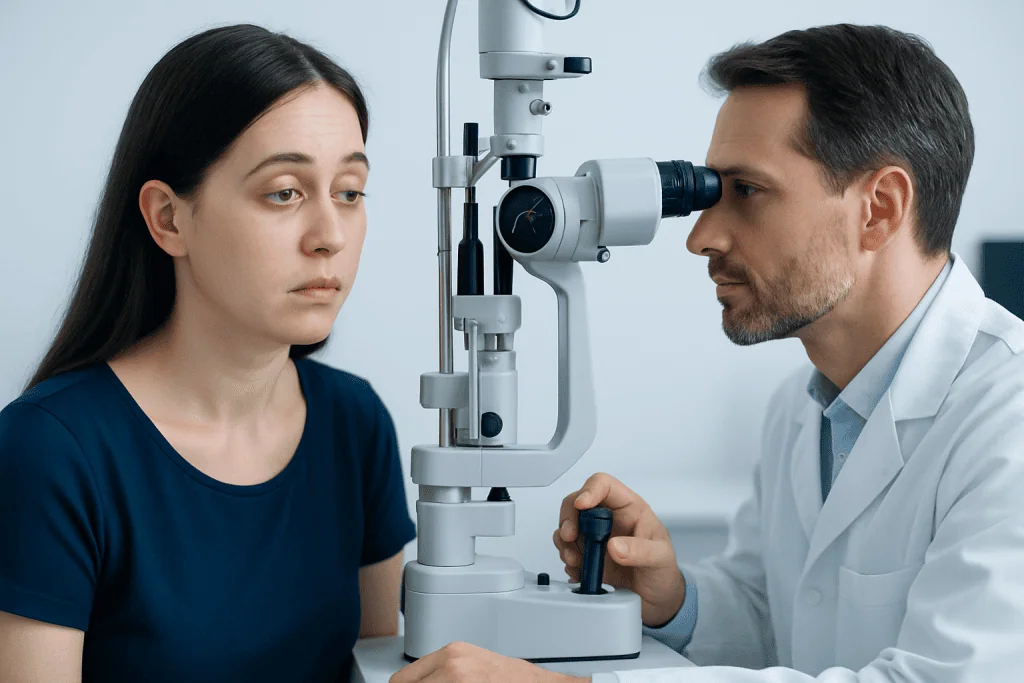
Ptosis may be mild, with only a subtle heaviness of one eyelid, or more obvious, with part of the pupil covered by the lid. Unequal pupils may be noticed in bright light, dim light, or both. Some people first see the change in photos, while others notice blurred vision, reduced peripheral vision from the drooping lid, or a different appearance of the eyes in the mirror.
The exact pattern can provide clues. In Horner syndrome, the eyelid droop is often slight and the pupil on the affected side is usually smaller, especially in dim light. In a third nerve palsy, the droop can be more pronounced, and the affected pupil may be larger than the other one. Some people also have double vision because the nerves that move the eye can be involved.
Other symptoms matter greatly. Headache, eye pain, neck pain, facial sweating changes, trouble moving the eye, double vision, dizziness, numbness, or weakness can help doctors identify the cause. Sudden onset symptoms are more concerning than long-standing stable differences, especially if they are accompanied by pain or other neurologic changes.
Not every case of anisocoria is abnormal. Some healthy people naturally have slightly different pupil sizes, known as physiologic anisocoria. However, physiologic anisocoria does not usually cause new ptosis, and it should not be assumed without an eye examination.
Possible Nerve-Related Causes

One important cause is Horner syndrome, which happens when the sympathetic nerve pathway to the eye is interrupted. This can produce a mildly droopy eyelid, a small pupil, and sometimes reduced sweating on one side of the face. The cause may lie in the brain, spinal cord, neck, chest, or along the carotid artery, so the location needs careful investigation.
Another key cause is third nerve palsy, involving the oculomotor nerve. This nerve helps lift the eyelid, move the eye, and control part of the pupil response. A third nerve palsy may cause marked ptosis, double vision, the eye turning outward or downward, and sometimes a dilated pupil. Some cases are related to diabetes or reduced blood supply to the nerve, while others may be caused by pressure on the nerve and need urgent evaluation.
Less commonly, ptosis and anisocoria may be linked to disorders affecting the brainstem, cavernous sinus, orbit, or nerves after trauma or surgery. Problems such as inflammation, tumors, aneurysms, carotid artery dissection, or stroke can sometimes present this way. Some conditions that mainly affect the eyelid, such as myasthenia gravis, can cause ptosis but usually do not create true pupil asymmetry.
Not all causes are neurologic. Eye injury, past surgery, certain eye drops or skin medications, and congenital differences can also change eyelid position or pupil size. The role of the medical evaluation is to separate harmless causes from those that require urgent treatment.
Risk Factors and Red Flags
Risk factors depend on the underlying condition. Vascular risk factors such as diabetes, high blood pressure, high cholesterol, and smoking can increase the risk of some nerve palsies. Trauma to the head, eye, or neck may also be relevant. In Horner syndrome, a recent neck injury or sudden neck pain may raise concern for a carotid artery problem.
Age can matter, but ptosis and unequal pupils can occur at any stage of life. In older adults, nerve palsies related to small blood vessel disease are more common. In younger people, trauma, migraine-related symptoms, inflammatory disorders, or congenital conditions may be part of the picture. Children with new anisocoria or ptosis also need proper assessment, as the causes can differ from those in adults.
Several red flags should prompt urgent care: sudden onset, severe headache, new double vision, reduced eye movements, eye pain, new weakness or numbness, difficulty speaking, facial droop, or significant neck pain. A droopy eyelid with a newly enlarged pupil is especially important because it may indicate a compressive third nerve palsy.
Even when symptoms are mild, a new combination of ptosis and unequal pupils should not be ignored. It does not always signal a serious problem, but timely evaluation helps reduce the chance of missing a treatable neurologic or vascular cause.
How Doctors Diagnose the Cause
Diagnosis begins with a detailed history and examination. A doctor will ask when the symptoms started, whether they are changing, and whether there is pain, double vision, headache, trauma, or past eye surgery. They will also review medications, including eye drops and skin patches, because some drugs can affect pupil size.
The examination includes checking vision, eyelid position, pupil size in bright and dim light, eye movements, and the reaction of each pupil to light. Doctors also look for associated signs such as differences in facial sweating, eye alignment changes, or signs of a broader neurologic problem. This careful pattern recognition is often what points toward Horner syndrome, third nerve palsy, or another diagnosis.
Additional testing may be needed depending on the findings. Imaging can include MRI or CT scan of the brain, orbit, neck, or chest, and in some cases vascular imaging such as CT angiography or MR angiography. Blood tests may be ordered if inflammation, infection, autoimmune disease, or metabolic causes are suspected.
Sometimes specialized eye tests or pharmacologic pupil testing are used to help confirm Horner syndrome. The exact workup is tailored to the symptoms and exam findings. If the cause appears urgent, doctors may arrange same-day imaging or emergency evaluation.
Treatment Options
Treatment focuses on the underlying cause rather than the eyelid or pupil change alone. For example, management of a third nerve palsy may differ depending on whether it is related to microvascular disease, inflammation, trauma, or pressure on the nerve. Horner syndrome is treated by identifying and addressing the source of nerve disruption, which may be in the neck, chest, or nervous system.
If a vascular or structural problem is suspected, urgent treatment may be required. Some patients need coordinated care from neurology, ophthalmology, neuroophthalmology, radiology, vascular specialists, or neurosurgery. When imaging or intervention is needed, evaluation may include advanced diagnostics and, if appropriate, interventional neuroradiology support.
For people with double vision, temporary measures such as patching one eye or prism support may help while the cause is being treated or monitored. If the ptosis persists after the underlying condition has stabilized, some patients may be considered for eyelid procedures, but only after the diagnosis is clear and the condition is no longer changing.
In selected cases, treatment of the underlying neurologic condition can improve both eyelid position and pupil findings over time. Near the end of the care pathway, rehabilitation or supportive eye care may also be recommended. Acibadem International’s multidisciplinary specialists and JCI-accredited hospitals diagnose and treat neuroophthalmic conditions for international patients when specialized assessment is needed.
Self-Care, Monitoring, and When to See a Doctor
There is no safe home treatment that can determine whether ptosis and unequal pupils are harmless. The most helpful step is to seek a professional evaluation, especially if the change is new. Taking note of when symptoms started, whether they fluctuate, and whether there is pain or double vision can help the doctor.
People should seek urgent care right away if symptoms begin suddenly or occur with severe headache, neck pain, eye movement problems, new weakness, numbness, confusion, trouble speaking, or facial asymmetry. These features may suggest a vascular or neurologic emergency. If the eyelid droop and pupil difference have been present for a long time and are unchanged, evaluation is still important, but the level of urgency may be different.
Until the cause is known, it may help to avoid driving if vision is impaired or if double vision is present. Good control of blood pressure, blood sugar, and cholesterol supports nerve and vascular health overall, although it does not replace proper assessment. If medications or eye drops seem related, they should not be stopped or changed without medical advice.
Follow-up matters because some conditions evolve over time. A normal initial examination may still need repeat review if symptoms change. Specialist input from neuroophthalmology or neurology care can be helpful when the diagnosis is uncertain or symptoms involve both the eyes and the nervous system.
Frequently asked questions
Are ptosis and unequal pupils always caused by a nerve problem?
No. They can result from several causes, including normal variation in pupil size, prior eye surgery, trauma, or medication effects. However, when a new droopy eyelid and unequal pupils appear together, a nerve-related cause should be considered and assessed by a doctor.
What is the difference between Horner syndrome and third nerve palsy?
Horner syndrome usually causes a mildly droopy eyelid and a smaller pupil on the affected side. Third nerve palsy often causes more obvious ptosis, trouble moving the eye, double vision, and sometimes a larger pupil. Both need medical evaluation because their underlying causes can vary widely.
Is anisocoria ever normal?
Yes. Some people naturally have a small difference in pupil size, called physiologic anisocoria, and it may be harmless. But a new change, especially when combined with ptosis, pain, or double vision, should not be assumed to be normal without an eye examination.
When should someone seek urgent medical attention?
Urgent care is important if ptosis and unequal pupils start suddenly or happen with severe headache, neck pain, eye movement problems, double vision, weakness, numbness, or trouble speaking. These symptoms may point to a condition that needs immediate treatment.
How do doctors test for the cause?
Doctors begin with a history and a detailed exam of the eyelids, pupils, vision, and eye movements. Depending on the findings, they may order imaging such as MRI or CT, vascular scans, blood tests, or specialized pupil testing.
Can treatment reverse the droopy eyelid and pupil difference?
Sometimes. Improvement depends on the underlying cause and how quickly it is identified and treated. In some cases the changes resolve or lessen over time, while in others they may persist and require supportive treatment or later eyelid correction.
References
- American Academy of Ophthalmology
- North American Neuro-Ophthalmology Society
- National Eye Institute
- National Institute of Neurological Disorders and Stroke
- Merck Manual Professional Edition
This article is for general information only and is not a substitute for professional medical advice. Please consult a qualified doctor about your individual situation.
Explore treatments in Turkey — costs, top hospitals & a free quote
JCI-accredited · board-certified surgeons · reply within 24h
Add us as a Preferred Source to see more of our trusted health content across Google Search, AI Overviews and Discover.
Check your numbers in seconds
BMI, calories, due date, blood pressure and 30+ more clinical calculators — free, instant, doctor-reviewed ranges.