Pudendal Nerve: An Evidence-Based Guide for Patients

The pudendal nerve supports sensation and muscle control in the pelvic and genital area. Pudendal nerve irritation may cause burning pain, numbness, sitting discomfort, or bowel, bladder, and sexual symptoms.
Key Takeaways
- The pudendal nerve supports sensation and muscle control in the pelvic and genital area.
- Pudendal nerve irritation may cause burning pain, numbness, sitting discomfort, or bowel, bladder, and sexual symptoms.
- Diagnosis is based on symptom pattern, examination, and selected tests to rule out other causes.
- Treatment often combines lifestyle changes, pelvic floor therapy, pain management, and treatment of the underlying cause.
- Early assessment is important if symptoms are persistent, worsening, or affecting daily life.
The pudendal nerve is a major pelvic nerve that helps carry sensation and control muscles involved in urination, bowel movements, and sexual function. When it becomes irritated, compressed, or injured, it may cause pelvic pain, burning, numbness, or functional symptoms that deserve careful medical evaluation.
Overview: what the pudendal nerve does
The pudendal nerve is one of the main nerves of the pelvis. It carries sensation from areas such as the perineum, anal region, and external genitalia, and it also helps control muscles involved in urination, bowel movements, and parts of sexual function. In simple terms, it is an important communication pathway between the brain and the pelvic floor.
Many people search for the term pudendal nerve because they are trying to understand pelvic pain, pressure, burning, numbness, or discomfort when sitting. These symptoms do not always mean there is a serious disease, but they can be very disruptive and may point to irritation or compression of the nerve. The medical term pudendal neuralgia is often used when the nerve is thought to be a source of chronic pelvic pain.
The challenge is that pudendal nerve symptoms can overlap with other pelvic conditions. Problems involving muscles, joints, the lower spine, urinary tract, bowel, or reproductive organs may feel similar. For that reason, an evidence-based assessment looks beyond the nerve itself and considers the whole pelvic region rather than relying on one symptom alone.
Where the nerve is located and why it matters
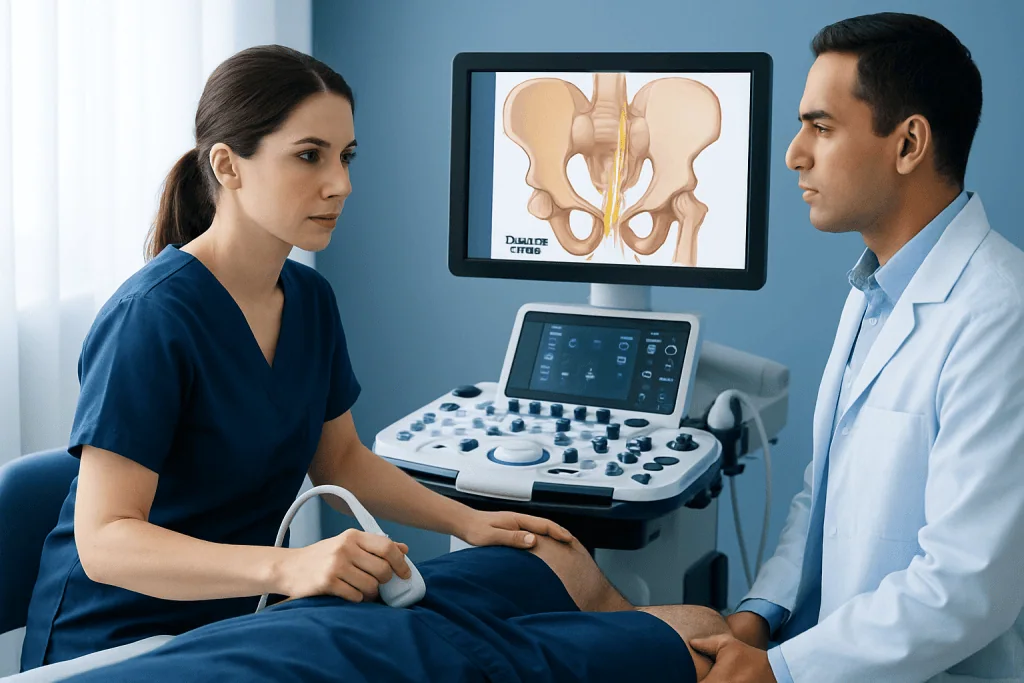
The pudendal nerve arises from nerves in the lower part of the spine, usually the sacral nerve roots. It travels through the pelvis and passes near ligaments and muscles before branching to supply the anal area, the perineum, and the external genital organs. Because of this long and narrow path, it can be affected by pressure, inflammation, muscle tension, scar tissue, or injury in several different places.
This anatomy helps explain why symptoms may vary from person to person. Some feel sharp, shooting, or burning pain; others notice tingling, reduced sensation, a feeling of swelling without visible swelling, or discomfort that becomes worse after sitting. In some cases, the main problem is not pain but difficulty coordinating bowel or bladder function or discomfort during sexual activity.
The pudendal nerve also matters because the pelvic floor muscles and nearby tissues work closely with it. Tight pelvic floor muscles can irritate the nerve, and nerve irritation can in turn make muscles more guarded and sensitive. That is one reason a multidisciplinary approach, often including neurology, pain medicine, gynecology, urology, colorectal care, and physical therapy, may be helpful when symptoms persist.
Symptoms linked to pudendal nerve problems

Pudendal nerve symptoms are usually felt in the pelvis, buttock, perineum, anus, or genital region. A common pattern is burning, stabbing, aching, or electric-like pain that becomes more noticeable while sitting and may improve when standing or lying down. Some people have symptoms on one side, while others feel them in a broader area.
Other symptoms may include numbness, tingling, hypersensitivity to touch, a sensation of fullness or a foreign body in the rectum or vagina, or discomfort with bowel movements, urination, or sexual activity. Men and women can both be affected, and the symptoms can interfere with work, exercise, sleep, and emotional well-being.
It is important to remember that these complaints are not specific to the pudendal nerve alone. Similar symptoms can happen in conditions such as chronic pelvic pain, pelvic floor dysfunction, hemorrhoids, prostatitis, vulvar pain disorders, lower back nerve irritation, or urinary tract conditions. A doctor aims to identify the most likely source rather than assuming all pelvic pain comes from one nerve.
- Burning or shooting pain in the perineum or genital area
- Pain that is worse when sitting
- Numbness, tingling, or altered sensation
- Pain with bowel movements, urination, or sexual activity
- A sense of pelvic pressure without a clear visible cause
Causes and risk factors
Pudendal nerve irritation can occur when the nerve is compressed, stretched, inflamed, or injured. Sometimes the cause is mechanical, such as prolonged sitting, repetitive cycling, pelvic trauma, childbirth-related injury, or scarring after surgery or a procedure. In other cases, no single trigger is identified, and symptoms may develop gradually over time.
Muscle-related causes are also common. Tightness or spasm in the pelvic floor can increase pressure around the nerve and contribute to pain. Problems in nearby structures, including the sacroiliac joints, hips, or lower back, may change posture and movement patterns in ways that stress the pelvis. Occasionally, a mass, cyst, or another structural problem may need to be excluded with imaging.
Risk factors vary and may include activities that place repeated pressure on the pelvic region, prior pelvic operations, injury from falls or accidents, chronic constipation with straining, and a history of other pain conditions. Some patients with symptoms eventually learn that the primary issue is broader nerve pain or neuropathy rather than isolated pudendal nerve entrapment. This is why the cause should be assessed individually instead of assumed.
How diagnosis is made
Diagnosis begins with a detailed clinical history. A doctor will ask where the pain is felt, what it feels like, what makes it better or worse, how long it has been present, and whether there are bowel, bladder, sexual, spinal, or musculoskeletal symptoms. The pattern of pain, especially whether sitting aggravates it, can provide useful clues.
A physical examination may include assessment of the pelvis, lower back, hips, and pelvic floor muscles. The goal is not only to look for signs of pudendal nerve irritation but also to rule out other possible causes. Depending on the person, doctors may recommend imaging such as MRI, nerve studies in selected cases, or targeted tests to evaluate the urinary tract, bowel, or reproductive organs.
Sometimes a diagnostic nerve block is considered. If an anesthetic placed near the pudendal nerve temporarily reduces pain, it may support the diagnosis, although it is not a perfect test on its own. In complex cases, imaging and procedures such as MRI scanning can help exclude structural problems, while assessment by specialists in neurology or pelvic pain medicine may guide the next steps.
Treatment options and recovery
Treatment depends on the likely cause, symptom severity, and how much daily life is affected. Many people do best with a combination of treatments rather than one single therapy. The first step is often reducing pressure on the area by modifying sitting habits, using a pressure-relieving cushion, and avoiding activities that clearly trigger symptoms.
Pelvic floor physical therapy can be helpful when muscle tension or poor pelvic floor coordination contributes to pain. Treatment may include relaxation techniques, breathing work, posture training, manual therapy, and gradual return to activity. In addition, doctors may consider medications used for nerve-related pain, although the choice depends on the patient’s overall health and other symptoms.
If symptoms continue, other options may include image-guided nerve blocks, pain management procedures, or treatment directed at a structural cause. Surgery is generally considered only for carefully selected patients when there is strong evidence of nerve entrapment and less invasive measures have not helped. Some individuals may also benefit from a coordinated plan involving physical therapy and rehabilitation and, when necessary, evaluation by pain management specialists.
Recovery can take time. Nerves heal slowly, and symptoms may fluctuate. A realistic plan usually focuses on reducing pain, improving function, restoring confidence with movement, and addressing contributing factors such as pelvic floor tension, constipation, or prolonged sitting.
Self-care and ways to reduce flare-ups
Self-care does not replace medical assessment, but it can support treatment and help reduce irritation of the pudendal nerve. One of the most practical steps is adjusting how and how long a person sits. Frequent standing breaks, avoiding hard surfaces, and trying cushions designed to reduce pressure on the perineal area may be useful.
Bowel habits also matter. Avoiding straining, staying hydrated, and following a fiber intake plan recommended by a clinician may help decrease pelvic floor stress. Gentle movement, stretching, and relaxation practices may reduce muscle guarding, but exercises that increase pressure or friction in the pelvic area may need to be limited during flare-ups.
People with persistent symptoms often benefit from keeping a simple symptom diary. Tracking activities, sitting time, bowel habits, menstrual factors, exercise, and pain patterns can help identify triggers and support a more focused discussion with a doctor. The aim is not complete rest, but gradual, sustainable activity with attention to what the body tolerates.
When to seek medical care
Medical review is advisable if pelvic, anal, or genital pain lasts more than a few weeks, keeps returning, or interferes with sleep, sitting, work, exercise, or sexual activity. Assessment is also important if there is numbness, a noticeable change in bladder or bowel control, or pain after childbirth, surgery, injury, or prolonged pressure on the pelvic area.
Urgent evaluation is needed for sudden severe weakness, new inability to control urination or bowel movements, fever with pelvic pain, major trauma, or rapidly worsening numbness. These features may suggest a different condition that requires prompt attention.
Because symptoms can overlap with many pelvic disorders, it is reasonable to seek care from clinicians familiar with chronic pelvic pain and nerve-related conditions. Near the end of the care pathway, some patients choose centers with multidisciplinary expertise; Acibadem International’s specialists in JCI-accredited hospitals diagnose and treat pelvic pain and related nerve conditions for international patients.
Frequently asked questions
What is the pudendal nerve?
The pudendal nerve is a pelvic nerve that carries sensation from the genital and anal region and helps control muscles involved in urination and bowel movements. It also contributes to parts of sexual function.
What does pudendal nerve pain feel like?
People often describe it as burning, stabbing, aching, or electric-like pain in the perineum, anus, buttock, or genital area. It may be worse when sitting and may occur with numbness, tingling, or sensitivity.
Can pudendal nerve symptoms affect bladder or bowel function?
Yes. Some people notice discomfort during urination or bowel movements, urgency, or difficulty coordinating pelvic floor muscles. However, these symptoms can also come from other pelvic or urinary conditions, so evaluation is important.
How is pudendal neuralgia diagnosed?
Diagnosis is based on symptom history, physical examination, and tests chosen to rule out other causes of pelvic pain. Imaging, pelvic floor assessment, and sometimes a diagnostic nerve block may be used in selected cases.
Does pudendal nerve pain go away on its own?
Some mild cases improve when pressure on the area is reduced and triggers are avoided. Persistent or worsening symptoms usually need medical assessment because treatment often depends on the underlying cause.
What treatments are used for pudendal nerve problems?
Common treatments include activity modification, sitting adjustments, pelvic floor physical therapy, and medicines used for nerve-related pain. In selected cases, nerve blocks, pain procedures, or surgery may be considered.
When should someone see a doctor for pudendal nerve symptoms?
A doctor should be consulted if symptoms last more than a few weeks, interfere with daily life, or involve numbness or bowel, bladder, or sexual problems. Urgent care is needed for sudden loss of bladder or bowel control, severe weakness, major trauma, or rapidly worsening symptoms.
This article is for general information only and is not a substitute for professional medical advice. Please consult a qualified doctor about your individual situation.
Persistent digestive symptoms? Get evaluated in Turkey
JCI-accredited · board-certified surgeons · reply within 24h
Add us as a Preferred Source to see more of our trusted health content across Google Search, AI Overviews and Discover.

More from the Health Library

Teeth Chattering: What Patients Need to Know

Fear of Heights: An Evidence-Based Guide for Patients

Mortality: A Complete Medical Overview

Primordial Dwarfism: An Evidence-Based Guide for Patients

Bikini Wax Waxing: A Complete Medical Overview