Pumpkin Seeds High in Magnesium: A Complete Medical Overview

Pumpkin seeds are a naturally magnesium-rich food that can support daily intake. Magnesium helps the body with muscle function, nerve signaling, energy production, and bone health.
Key Takeaways
- Pumpkin seeds are a naturally magnesium-rich food that can support daily intake.
- Magnesium helps the body with muscle function, nerve signaling, energy production, and bone health.
- Pumpkin seeds also provide healthy fats, protein, fiber, zinc, and iron.
- Portion size matters because pumpkin seeds are calorie-dense, especially when salted or flavored.
- People with symptoms of deficiency, kidney disease, or complex medical conditions should ask a doctor for personalized advice.
Pumpkin seeds are high in magnesium, making them a practical food choice for people who want to support normal muscle, nerve, heart, and bone function through diet. They can be a useful part of balanced eating, but they are not a substitute for medical care when magnesium deficiency or another health problem is suspected.
Overview: Are pumpkin seeds high in magnesium?
Yes. Pumpkin seeds are high in magnesium compared with many commonly eaten foods, which is why they are often recommended as part of a magnesium-conscious diet. In practical terms, a modest serving can make a meaningful contribution toward daily magnesium needs while also providing protein, healthy fats, fiber, and other minerals.
Magnesium is essential for many body processes. It helps muscles contract and relax properly, supports nerve signaling, contributes to a steady heart rhythm, and plays a role in blood sugar regulation, bone structure, and energy production. Because the body cannot make magnesium on its own, it must come from food or, in some cases, supplements recommended by a clinician.
Pumpkin seeds can be especially helpful for people who do not regularly eat other magnesium-rich foods such as legumes, nuts, whole grains, and leafy green vegetables. However, they work best as one part of an overall eating pattern rather than as a single “fix” for fatigue, cramps, or other symptoms that may have many different causes.
From a medical perspective, the most useful question is not only whether pumpkin seeds are rich in magnesium, but also how they fit into everyday health. For many people, they are a convenient, shelf-stable, plant-based option that can be added to meals and snacks in realistic portions.
Why magnesium matters to the body
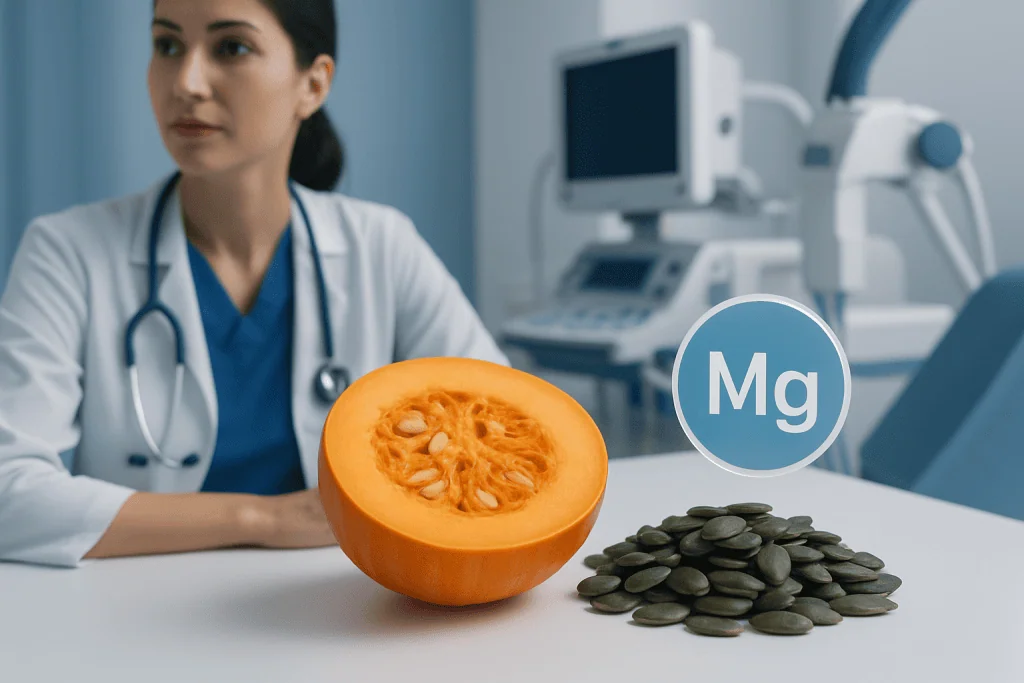
Magnesium is involved in hundreds of enzyme-driven reactions in the body. It supports normal muscle and nerve function, helps regulate blood pressure, assists with making protein and DNA, and contributes to the conversion of food into usable energy. Adequate intake is therefore important for general health, not just for one organ or one symptom.
It also works closely with other nutrients, especially calcium, potassium, and vitamin D. This means magnesium status is part of a wider nutritional picture. A balanced diet is usually more effective than focusing on a single nutrient in isolation.
Low magnesium intake may develop gradually. Some people have no clear symptoms at first, while others may notice muscle cramps, weakness, fatigue, loss of appetite, or abnormal heart rhythm. These symptoms are not specific to magnesium deficiency, so self-diagnosis can be misleading and medical evaluation may be needed.
Magnesium is also relevant in long-term health discussions. Clinicians may consider magnesium intake when assessing cardiovascular health, metabolic health, bone health, and dietary quality overall. In this context, pumpkin seeds can be a useful food choice, but they are not a treatment for a diagnosed condition such as high blood pressure or osteoporosis.
Nutritional profile of pumpkin seeds

Pumpkin seeds, sometimes called pepitas when sold without shells, are valued because they contain several nutrients in a relatively small serving. In addition to magnesium, they provide unsaturated fats, plant protein, fiber, zinc, iron, phosphorus, and manganese. This combination can make them a satisfying addition to meals, especially for people trying to improve nutrient density without eating large volumes of food.
The exact magnesium content varies depending on the variety, whether the seeds are shelled, how they are processed, and serving size. Even so, pumpkin seeds are consistently recognized as one of the richer food sources of magnesium. Unsalted, minimally processed versions are often the best option for people who want the nutritional benefits without excess sodium.
There are also practical differences between raw and roasted seeds. Light roasting may improve flavor and make the seeds easier to use in recipes, but heavily salted or sugar-coated products can add sodium or calories without improving nutritional value. Reading labels can help people choose products that align with their health goals.
For many adults, a small handful can fit well into a balanced eating plan. Pumpkin seeds can be sprinkled over salads, added to yogurt or oatmeal, blended into homemade trail mix, or used as a topping for soups and grain dishes. These small dietary changes may help improve magnesium intake over time.
Who may benefit most from magnesium-rich foods
Most people can benefit from eating a varied diet that includes magnesium-rich foods, but some groups may find this especially useful. This includes people whose diets rely heavily on highly processed foods, those with low intake of nuts, seeds, legumes, or vegetables, and older adults whose overall food intake may be limited.
Magnesium needs and absorption can also be affected by health conditions and medicines. Digestive disorders that reduce nutrient absorption, poorly controlled diabetes, long-term alcohol misuse, and some medications may contribute to lower magnesium levels. In such cases, food choices are helpful, but they may not fully correct the problem without medical guidance. For some patients, clinicians may investigate digestive causes, including conditions such as celiac disease.
People who follow vegetarian or plant-forward eating patterns often use pumpkin seeds as an easy way to add minerals and protein. They can also be useful for those who want snack foods with more nutritional value than refined carbohydrate options. Still, because seeds are energy-dense, portion awareness remains important.
Pumpkin seeds are not appropriate for everyone in the same way. People with seed allergies, swallowing difficulties, certain digestive sensitivities, or kidney disease may need more individualized advice. A clinician or dietitian can help determine whether they are a good fit for a person’s medical needs.
How to include pumpkin seeds in a healthy diet
The best way to use pumpkin seeds is as part of a balanced dietary pattern rather than as a stand-alone remedy. They pair well with vegetables, whole grains, fruit, dairy or fortified alternatives, and legumes. Combining different nutrient-rich foods can support overall health more effectively than relying on any one ingredient.
Simple uses often work best. A spoonful on a salad, soup, or breakfast bowl can add texture and nutrition without requiring major changes to eating habits. Ground pumpkin seeds can also be stirred into smoothies or mixed into homemade spreads and dips. For people who enjoy cooking, they can be added to whole-grain breads, roasted vegetables, or grain-based side dishes.
When choosing packaged pumpkin seeds, it is sensible to compare products. Unsalted or lightly salted options are generally preferred, particularly for people watching sodium intake because of cardiovascular concerns or conditions such as high blood pressure. Flavored products may contain added salt, sugar, or oils that change the nutritional balance.
Some people who have trouble meeting nutritional needs due to digestive or metabolic issues may benefit from professional support. In selected situations, assessment may include dietary counseling or evaluation by specialists, and some patients may receive care through services such as diet and nutrition planning or check-up and screening when broader health concerns are present.
Limits, precautions, and common misconceptions
Although pumpkin seeds are nutritious, they are not a cure-all. Online articles sometimes imply that magnesium-rich foods can quickly resolve sleep problems, anxiety, cramps, constipation, or migraines. In reality, these symptoms can have many causes, and a single food is unlikely to correct them on its own.
Another common misconception is that more is always better. Pumpkin seeds are calorie-dense, so very large portions may not fit every person’s health goals, especially if weight management is a concern. Salted products can also contribute substantial sodium. Moderation and variety remain the foundation of healthy eating.
Supplements are not automatically interchangeable with food. A doctor may recommend magnesium supplements in some circumstances, but they can cause side effects such as diarrhea and may interact with certain medications. People with kidney disease should be particularly cautious, because impaired kidneys may have difficulty handling excess magnesium.
Food quality and tolerance also matter. People with significant bloating, abdominal pain, or changes in bowel habits after eating seeds may need a medical assessment to look for digestive causes. If symptoms are persistent, a clinician may consider broader evaluation and, when indicated, tests such as gastroenterology check-up.
When to seek medical care
Most people can safely eat pumpkin seeds as part of a normal diet, but medical advice is important when symptoms suggest more than a simple dietary gap. A person should speak with a doctor if they have ongoing muscle cramps, marked fatigue, weakness, numbness, palpitations, poor appetite, or unexplained digestive symptoms. These problems can be related to many conditions, and proper diagnosis matters.
Prompt care is especially important if symptoms are severe, sudden, or associated with chest pain, fainting, confusion, severe dehydration, or a known heart or kidney condition. People who take multiple medications, have chronic gastrointestinal disease, or have been told they have abnormal electrolyte levels should not rely on self-treatment alone.
Clinical assessment may include a review of diet, symptoms, medications, kidney function, and other laboratory values. Treatment depends on the cause and may range from dietary changes to managing an underlying condition. Near the end of the care pathway, some international patients may choose centers such as Acibadem International, where multidisciplinary specialists in JCI-accredited hospitals evaluate and treat complex nutrition-related and medical conditions.
In short, pumpkin seeds can support healthy magnesium intake, but they should be viewed as part of preventive nutrition rather than a replacement for personalized medical care. If there is uncertainty about symptoms or nutritional status, professional advice is the safest next step.
Frequently asked questions
How much magnesium do pumpkin seeds provide?
Pumpkin seeds are considered one of the richer food sources of magnesium, but the exact amount varies by product, serving size, and whether the seeds are shelled, raw, or roasted. Nutrition labels can help estimate intake more accurately. A doctor or dietitian can help interpret intake in the context of total diet and health needs.
Are roasted pumpkin seeds still high in magnesium?
Yes, roasted pumpkin seeds still provide magnesium. However, processing may add salt, oils, or flavorings, so it is worth checking the label. Lightly roasted, unsalted options are often a practical choice for everyday use.
Can pumpkin seeds treat magnesium deficiency?
Pumpkin seeds can help improve magnesium intake, but they are not always enough to treat a true deficiency. Some people need medical evaluation, lab testing, or treatment of an underlying cause such as poor absorption or medication effects. Anyone with persistent symptoms should seek professional advice.
Who should be careful about eating pumpkin seeds?
People with seed allergies, swallowing problems, certain digestive sensitivities, or kidney disease may need individualized advice. Those on restricted diets or taking multiple medications should also ask a clinician before making major changes or adding supplements. Portion size matters as well because seeds are calorie-dense.
Are pumpkin seeds better than magnesium supplements?
For many people, food is a good first step because it provides magnesium along with fiber, protein, and other beneficial nutrients. Supplements may be appropriate in some medical situations, but they are not right for everyone and can cause side effects or interact with medicines. The best approach depends on a person’s symptoms, diet, and overall health.
Can eating pumpkin seeds help with muscle cramps or sleep?
They may support overall magnesium intake, which is relevant to muscle and nerve function, but they are not a guaranteed remedy for cramps or sleep problems. These symptoms can have many causes, including dehydration, medication effects, stress, or other medical conditions. Persistent or severe symptoms should be evaluated by a doctor.
References
- National Institutes of Health Office of Dietary Supplements
- Academy of Nutrition and Dietetics
- Harvard T.H. Chan School of Public Health
- World Health Organization
This article is for general information only and is not a substitute for professional medical advice. Please consult a qualified doctor about your individual situation.
Explore treatments in Turkey — costs, top hospitals & a free quote
JCI-accredited · board-certified surgeons · reply within 24h
Add us as a Preferred Source to see more of our trusted health content across Google Search, AI Overviews and Discover.
Check your numbers in seconds
BMI, calories, due date, blood pressure and 30+ more clinical calculators — free, instant, doctor-reviewed ranges.

More from the Health Library



Related Specialists

Funda Özdemir
Physical Medicine & Rehabilitation
Dt. Memduha Merve Kinay
Oral & Dental Health
Dr. Cihan Deniz Keleş
Gynecology & Obstetrics
Prof. Dr. Necmettin Pamir
Neurosurgery