Purple Coloured Feet — Explained by Medical Evidence, Not Myths

Purple coloured feet can be caused by cold exposure, pressure, vein problems, reduced circulation, or less commonly a blood clot or artery blockage. A brief color change that improves with warming or elevating the legs is often less urgent than a sudden, painful, one-sided change.
Key Takeaways
- Purple coloured feet can be caused by cold exposure, pressure, vein problems, reduced circulation, or less commonly a blood clot or artery blockage.
- A brief color change that improves with warming or elevating the legs is often less urgent than a sudden, painful, one-sided change.
- Warning signs include severe pain, numbness, swelling in one leg, shortness of breath, open sores, or skin that becomes cold and pale or dark.
- Diagnosis may involve a physical exam, pulse checks, blood pressure measurements in the legs, ultrasound, and blood tests.
- Treatment depends on the cause and may range from warming and lifestyle changes to medicines or specialist vascular care.
Purple coloured feet are a sign, not a diagnosis. They often happen when blood flow slows, oxygen levels in the skin change, or veins and small vessels react to cold or pressure, but the meaning depends on whether the color change is mild and temporary or sudden and persistent.
What purple coloured feet usually mean
Purple coloured feet usually mean that blood is not moving through the skin in the usual way. This may happen because the feet are cold, blood is pooling in the veins, the small blood vessels are tightening, or the arteries are not delivering enough oxygen-rich blood. In some people, the change is temporary and harmless; in others, it can signal a circulation problem that should be checked.
The color can look purple, bluish-purple, dusky red, or mottled. It may affect both feet or only one, and it may appear after standing, sitting still, being in a cold environment, or during exercise. The pattern matters: a symmetric change in both feet is often different from a sudden change in one foot.
Because many different conditions can cause this symptom, the surrounding details are important. Pain, swelling, numbness, skin ulcers, or a foot that feels unusually cold can point to a more serious cause than color change alone. That is why medical evaluation focuses on the whole picture rather than the color itself.
Common symptoms that may occur with purple feet
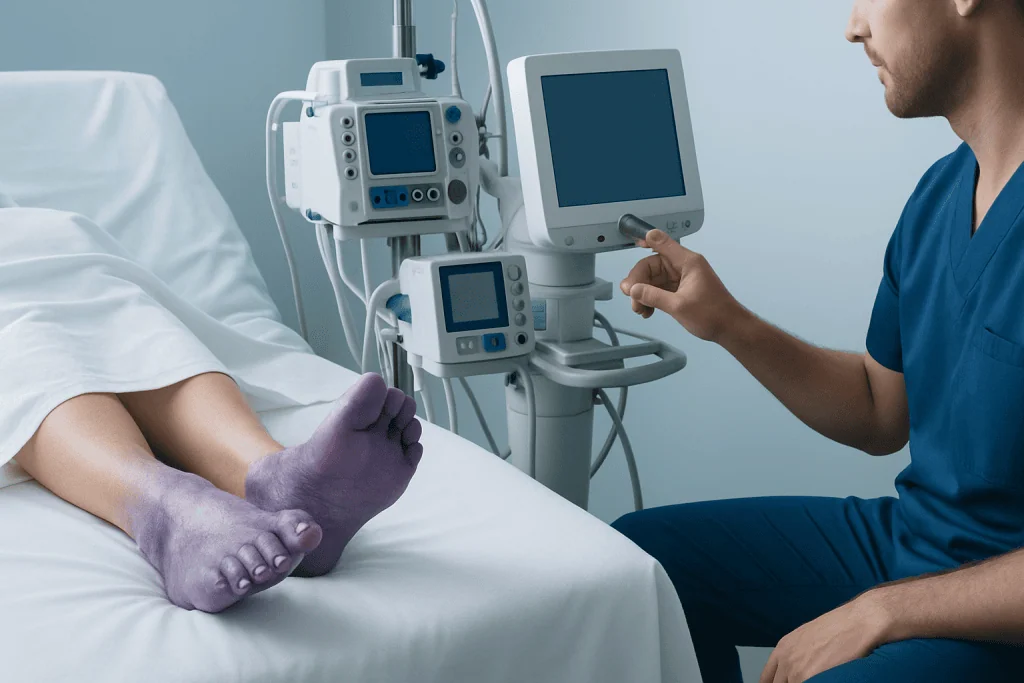
Purple coloured feet may come with other symptoms that help explain the cause. Some people notice coldness, tingling, mild swelling around the ankles, or aching after standing. Others describe heaviness, cramping in the calves when walking, or skin that looks shiny or thin.
The feet may also change color in stages. For example, skin can look pale in the cold, then bluish or purple, and later red as it warms. In vein-related problems, the color may become more noticeable by the end of the day and improve after elevating the legs.
Symptoms that deserve extra attention include:
- Sudden pain in the foot or calf
- One foot becoming purple while the other stays normal
- Numbness or weakness
- Marked swelling, especially in one leg
- Non-healing wounds or blackened skin
- Shortness of breath or chest pain along with leg symptoms
These warning signs can suggest reduced arterial blood flow, a clot, severe infection, or another urgent problem rather than a simple reaction to cold.
Causes and risk factors
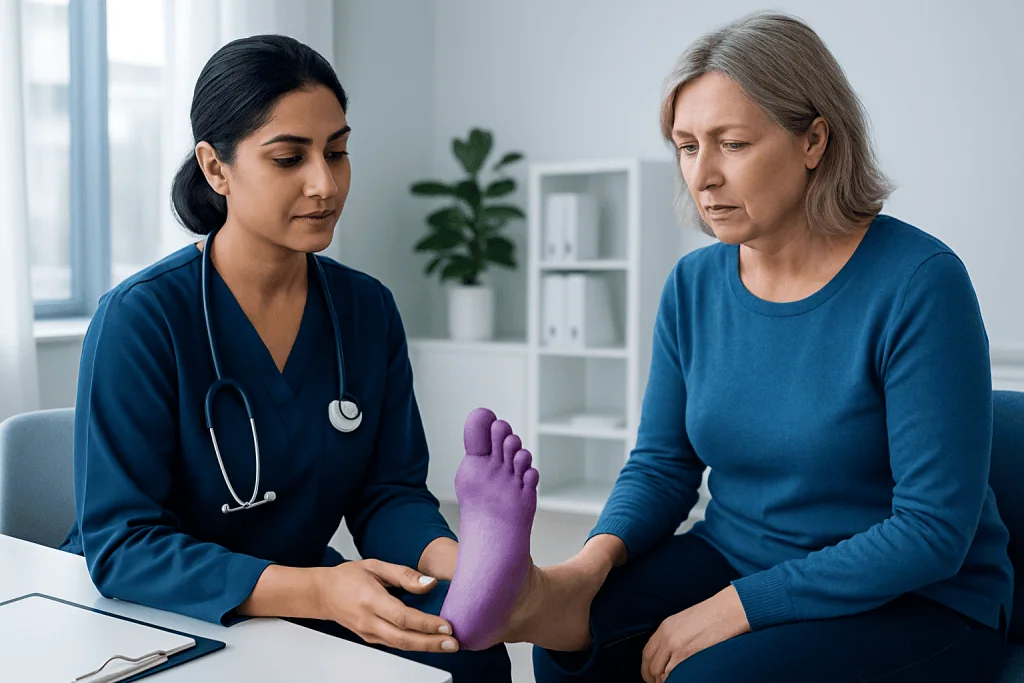
One of the most common reasons for purple coloured feet is cold-related vessel constriction. When the body tries to conserve heat, small blood vessels in the skin narrow. This can make the feet look blue or purple until they warm again. A related pattern can happen in conditions such as Raynaud phenomenon or acrocyanosis, where the vessels overreact to cold or stress.
Vein problems are another frequent cause. If blood pools in the legs instead of returning efficiently to the heart, the feet and ankles may look dusky, swollen, or discolored, especially after long periods of standing. Chronic venous insufficiency and varicose veins can lead to this type of change over time.
Artery-related causes are often more concerning. Peripheral artery disease can reduce blood flow to the feet, especially in people who smoke or have diabetes, high blood pressure, or high cholesterol. In a more sudden form, an artery may become blocked, causing pain, coldness, and rapid discoloration. Information about peripheral artery disease may be helpful when poor circulation is suspected.
Other possible causes include a blood clot in a deep leg vein, heart or lung conditions that lower oxygen delivery, certain medications that affect circulation, diabetes-related nerve and vessel disease, autoimmune disorders, and prolonged immobility. Risk factors include older age, smoking, obesity, pregnancy, a sedentary lifestyle, known vascular disease, and a family history of circulation or clotting problems.
How doctors evaluate purple coloured feet
Evaluation starts with a careful history. A doctor may ask when the color change began, whether it affects one or both feet, if it comes and goes, and whether it is triggered by cold, walking, standing, or rest. Questions about pain, swelling, ulcers, smoking, diabetes, medicines, and prior circulation problems can help narrow the cause.
The physical examination often includes checking skin temperature, pulses in the feet, capillary refill, swelling, tenderness, and changes in the toenails or skin. The doctor may compare both legs and look for signs of vein disease, nerve problems, or skin injury. Blood pressure may be measured in the arms and ankles to assess circulation.
If needed, tests may include a Doppler ultrasound to check blood flow in veins or arteries, an ankle-brachial index, blood tests, or imaging of blood vessels. In some cases, a person may be referred for a vascular assessment or for vascular surgery evaluation when significant circulation problems are suspected.
Treatment options depend on the cause
There is no single treatment for purple coloured feet because treatment targets the underlying reason for the discoloration. If cold exposure is responsible, warming the feet, wearing insulated socks, and avoiding sudden temperature changes may be enough. If symptoms relate to prolonged sitting or standing, regular movement and leg elevation can help improve circulation.
When vein problems are involved, treatment may include compression therapy if a doctor confirms it is safe, weight management, exercise, and measures to reduce prolonged pressure in the legs. In selected cases, procedures for venous disease may be considered. If arterial circulation is poor, treatment may focus on stopping smoking, controlling blood pressure, cholesterol, and diabetes, and improving blood flow through medication or specialist procedures.
Urgent treatment may be needed if there is a clot, sudden arterial blockage, severe infection, or tissue damage. Depending on the diagnosis, doctors may recommend hospital-based monitoring, blood-thinning treatment, or a procedure to restore circulation. For some patients, an endovascular approach such as angioplasty may be appropriate to open narrowed arteries.
If purple discoloration appears alongside chronic wounds, severe pain, or advanced circulation disease, specialist care may involve vascular imaging and targeted intervention. In suitable cases, doctors may discuss treatment for varicose veins or other circulation-focused therapies once the exact cause is confirmed.
Self-care and prevention
Self-care is most helpful when the symptom is mild, recurring, and already understood by a doctor. Keeping the feet warm and dry, avoiding tight shoes, and moving regularly during long periods of sitting can reduce color changes linked to cold or blood pooling. Gentle walking often supports circulation better than remaining still for long periods.
Long-term prevention focuses on vascular health. Not smoking, staying physically active, maintaining a healthy weight, and managing diabetes, cholesterol, and blood pressure all help protect the arteries and veins. People with desk-based work or frequent travel may benefit from standing, stretching, and ankle exercises throughout the day.
Skin care also matters. The feet should be checked for blisters, cracks, pressure marks, or wounds, especially in people with diabetes or reduced sensation. New compression socks should not be started without medical guidance if artery disease is possible, because compression is not appropriate for everyone.
Near the end of the care pathway, some people need coordinated assessment across vascular medicine, cardiology, endocrinology, or wound care. Acibadem International’s multidisciplinary specialists in JCI-accredited hospitals diagnose and treat circulation-related conditions for international patients when further evaluation is needed.
When to seek medical care
Medical care is recommended if purple coloured feet happen often, do not improve with warming or elevation, or are accompanied by pain, swelling, numbness, or sores. It is also wise to seek an assessment if the discoloration is new and there is a history of diabetes, smoking, vascular disease, or clotting problems.
Urgent medical care is needed if one foot suddenly becomes purple, blue, pale, or very cold, especially if there is severe pain or trouble walking. Immediate care is also important if leg discoloration comes with one-sided swelling, shortness of breath, chest pain, fever, or signs of an infected wound.
Even when the cause is not urgent, persistent foot discoloration should not be ignored. A timely evaluation can help identify treatable circulation problems early and reduce the risk of skin damage or complications over time.
Frequently asked questions
Are purple coloured feet always a sign of poor circulation?
Not always. Purple feet can happen with cold exposure or temporary blood pooling after standing, but they can also reflect vein disease, artery disease, or other circulation-related conditions. The meaning depends on symptoms such as pain, swelling, coldness, and whether one or both feet are affected.
Why do my feet turn purple when I sit or stand for a long time?
This can happen when blood collects in the veins of the lower legs and feet. Gravity makes it harder for blood to return upward, especially if vein valves are weak or a person stays still for long periods. If it happens often, a medical review can help check for venous insufficiency or other causes.
Can cold weather make feet look purple?
Yes. Cold temperatures can narrow the small blood vessels in the skin, reducing surface blood flow and causing a bluish or purple color. If the color returns to normal after gentle warming and there is no pain or injury, the cause may be a temporary vessel response.
When is purple discoloration of the feet an emergency?
It can be an emergency if the change is sudden, affects one foot, or comes with severe pain, numbness, marked coldness, or inability to walk. Emergency care is also important if there is one-sided leg swelling, shortness of breath, chest pain, or blackened skin. These patterns may suggest a clot or a sudden blockage of blood flow.
Can diabetes cause purple feet?
Yes, diabetes can contribute by damaging blood vessels and nerves over time. This may reduce circulation, change skin temperature and color, and increase the risk of wounds that heal slowly. People with diabetes should seek medical advice for any persistent foot color change.
Will exercise help purple coloured feet?
Gentle regular movement often helps when the cause is blood pooling from immobility or mild circulation changes. Walking and ankle exercises can support blood flow, but exercise is not a substitute for medical evaluation if there is pain, ulcers, severe swelling, or suspected artery disease. A doctor can advise which activity is safe.
References
- American Heart Association
- National Heart, Lung, and Blood Institute
- NHS
- Mayo Clinic
- Society for Vascular Surgery
This article is for general information only and is not a substitute for professional medical advice. Please consult a qualified doctor about your individual situation.
Explore treatments in Turkey — costs, top hospitals & a free quote
JCI-accredited · board-certified surgeons · reply within 24h
Add us as a Preferred Source to see more of our trusted health content across Google Search, AI Overviews and Discover.
Check your numbers in seconds
BMI, calories, due date, blood pressure and 30+ more clinical calculators — free, instant, doctor-reviewed ranges.