

Purple Stretch Marks: What Patients Need to Know

Purple stretch marks are early-stage stretch marks and usually fade gradually into lighter lines. They commonly develop during growth spurts, pregnancy, weight changes, muscle gain, or corticosteroid use.
Key Takeaways
- Purple stretch marks are early-stage stretch marks and usually fade gradually into lighter lines.
- They commonly develop during growth spurts, pregnancy, weight changes, muscle gain, or corticosteroid use.
- Stretch marks are not harmful in most cases, but sudden, widespread, or unusual marks may need medical evaluation.
- Creams may offer modest benefit early on, while procedures such as laser-based skin treatments can improve appearance in some people.
- A doctor can help rule out hormonal or medication-related causes when stretch marks appear unexpectedly.
Purple stretch marks are newly formed stretch marks that appear red, purple, or pink because blood vessels are still visible beneath the stretched skin. They are common, not dangerous on their own, and often become lighter with time, although medical treatments may help reduce their appearance.
Overview: what purple stretch marks mean
Purple stretch marks are a common skin change that usually means a stretch mark is new or still developing. Doctors often refer to this early stage as striae rubrae. The purple, red, or pink color appears because the skin has stretched enough to affect deeper support fibers, and small blood vessels remain more visible through the thinning skin.
These marks can appear on the abdomen, breasts, hips, buttocks, thighs, upper arms, or lower back. They are especially common during times of rapid body change, such as puberty, pregnancy, quick weight gain or loss, or periods of intensive muscle building. Although they can be frustrating cosmetically, they are usually not a sign of a serious illness by themselves.
Over time, purple stretch marks often become lighter and flatter. They may turn pale, silvery, or white as the skin changes and blood vessel visibility decreases. This later stage is often called striae albae. Even when they do not disappear completely, many people notice that the marks become less obvious over months to years.
How purple stretch marks look and feel
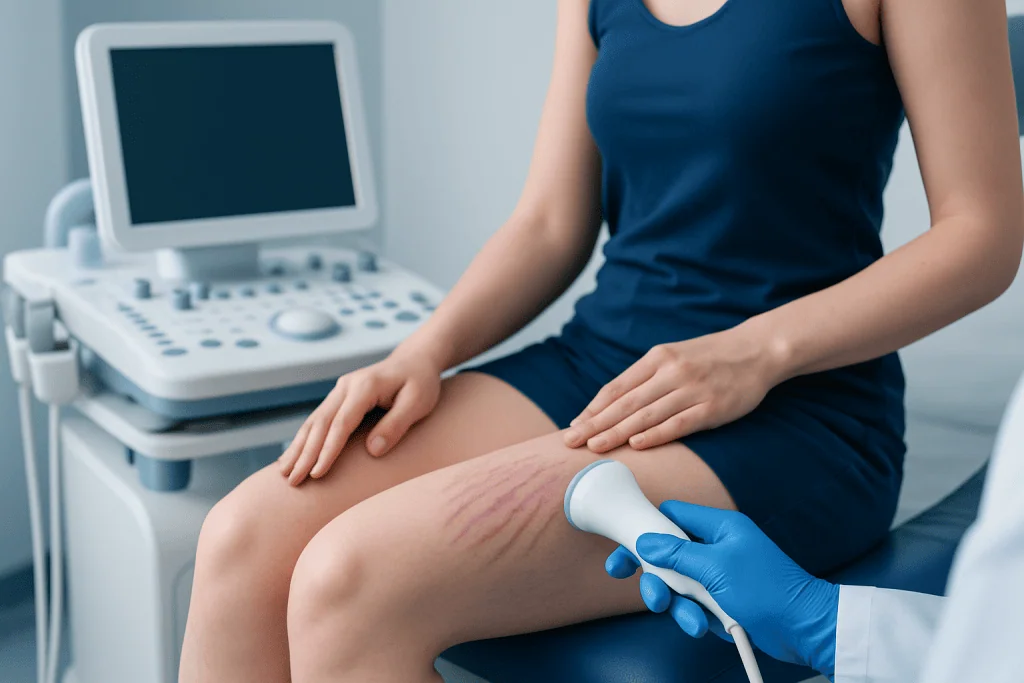
Purple stretch marks usually begin as narrow streaks or bands that run in parallel lines. Depending on a person’s skin tone, they may look purple, reddish-purple, dark pink, brownish-purple, or deep red. In the beginning, they can be slightly raised or feel different from the surrounding skin.
Some people notice itching, mild tenderness, or a stretched sensation before or during their appearance. The texture may seem thin, shiny, or wrinkled. As they mature, the color usually softens and the lines become flatter.
Stretch marks can vary in width and length. They may be few and subtle or more widespread in larger areas of the body. Their appearance is influenced by skin tone, genetics, the speed of skin stretching, and whether there are underlying hormonal or medication-related factors.
Because they are a skin finding rather than a disease on their own, purple stretch marks are often considered alongside the person’s overall health, recent body changes, medications, and other symptoms. This helps distinguish routine stretch marks from less common causes that may need attention.
Why they happen: causes and risk factors

Purple stretch marks form when the skin stretches faster than its collagen and elastin support network can adapt. Collagen gives skin strength, while elastin helps it return to shape. When these fibers are disrupted, linear marks can develop in the middle layer of the skin.
Common triggers include:
- Pregnancy, especially on the abdomen and breasts
- Puberty and rapid growth spurts
- Weight gain or weight loss over a short period
- Rapid muscle growth from bodybuilding or intensive training
- Use of corticosteroid creams, tablets, or injections over time
- Family tendency toward stretch marks
Hormonal changes can also make the skin more vulnerable. Conditions that affect cortisol or other hormone levels may increase the risk. For example, a doctor may consider whether unusual stretch marks could relate to an endocrine issue such as Cushing’s syndrome, especially if they are wide, dark, sudden, and accompanied by other symptoms.
People sometimes confuse stretch marks with scars, bruising, or other skin conditions. They are different from inflammatory rashes and from pigmentation disorders. If the appearance is uncertain, a dermatologist can help determine whether the marks are true stretch marks or another skin concern.
How doctors assess purple stretch marks
In most cases, doctors diagnose purple stretch marks by examining the skin and asking about recent changes in weight, growth, pregnancy, exercise habits, and medicines. This is usually enough to identify typical stretch marks and reassure the patient that they are benign.
A medical review becomes more important when the marks appear suddenly, are unusually wide or extensive, or happen without an obvious reason. The doctor may ask about symptoms such as easy bruising, fatigue, menstrual changes, muscle weakness, acne, increased body hair, or long-term steroid use. These details can point toward a hormonal or medication-related cause.
Tests are not always necessary. When the history suggests an underlying condition, blood tests, hormone studies, or specialist review may be recommended. In selected cases, doctors may also evaluate related concerns such as unexplained weight change or features associated with obesity or endocrine imbalance.
Photographs taken over time can sometimes be helpful for monitoring whether the marks are fading naturally or changing in a way that suggests another issue. A clear diagnosis helps guide realistic expectations about improvement and treatment options.
Treatment options and what results to expect
Purple stretch marks often improve on their own, but some patients seek treatment because the marks are noticeable or affect confidence. No treatment can guarantee complete removal, yet early stretch marks may respond better than older white ones. The main goal is usually to soften color, improve texture, and make the lines less visible.
Topical products may provide modest benefit, particularly when started early. A dermatologist may discuss options such as prescription retinoids for appropriate non-pregnant adults, along with moisturizers that support skin comfort. During pregnancy or breastfeeding, product choices should always be reviewed with a qualified doctor because not all ingredients are suitable.
Procedural treatments may offer greater improvement for some people. These can include laser-based approaches, energy-based skin resurfacing, or needling techniques chosen according to skin type and mark stage. In a specialist setting, doctors may discuss dermatology evaluation and skin treatment planning or selected laser treatment methods when appearance is a major concern.
If stretch marks are linked to a treatable cause, care focuses on that issue as well. This might mean adjusting corticosteroid use under medical guidance or investigating hormonal disorders. When stretch marks accompany major body changes, broader care such as weight management treatment may be relevant for some patients, depending on their overall health needs and goals.
Self-care, skin habits, and prevention
There is no guaranteed way to prevent stretch marks, because genetics and hormonal influences play a large role. Even so, gradual body changes and supportive skin care may help reduce strain on the skin. Keeping weight changes steady when possible and following a balanced lifestyle may be useful.
Helpful self-care measures include maintaining skin comfort with regular moisturizing, staying hydrated, and eating a balanced diet that supports overall skin health. While moisturizers do not erase stretch marks, they can reduce dryness and itching and help the skin feel more comfortable as the marks evolve.
It is also wise to use steroid creams only as directed and to ask a doctor before continuing them long term, especially on large skin areas. People who are building muscle rapidly may benefit from a gradual training plan rather than abrupt body-size changes.
Patients should be cautious with products marketed as “miracle cures.” Many over-the-counter creams and oils have limited evidence for substantial improvement. A realistic plan from a dermatologist is usually more helpful than trying multiple unproven remedies.
When to seek medical care
Most purple stretch marks do not need urgent treatment, but a medical review is sensible when they appear suddenly, spread quickly, or develop without a clear cause such as pregnancy, growth, or weight change. It is also worth seeking advice if they are very wide, unusually dark, or located in unexpected areas.
Other warning signs include easy bruising, thinning skin, significant fatigue, menstrual irregularities, muscle weakness, or long-term use of steroid medicines. These features may suggest an underlying hormonal issue that should be assessed rather than focusing only on the skin changes.
Anyone who is pregnant, breastfeeding, has a chronic condition, or takes regular medication should ask a doctor before starting active ingredients or cosmetic procedures. Early professional guidance can help avoid treatments that are unsuitable or unlikely to help.
For patients seeking diagnosis or cosmetic improvement, Acibadem International’s multidisciplinary specialists in JCI-accredited hospitals assess skin changes and provide treatment planning for international patients when appropriate.
Frequently asked questions
Are purple stretch marks permanent?
Purple stretch marks usually fade with time, but they may not disappear completely. They often become lighter, flatter, and less noticeable over months or years. Early treatment may improve their appearance, but complete removal is uncommon.
Why are my stretch marks purple instead of white?
Purple stretch marks are typically newer marks. Their color reflects early skin changes and the visibility of tiny blood vessels under stretched skin. As they mature, they often turn lighter or white.
Can purple stretch marks go away on their own?
They can improve naturally, especially if the body change that caused them has stabilized. The color usually fades first, while texture changes may take longer. Some marks remain visible but become much less prominent.
Do creams really help purple stretch marks?
Some creams may provide mild improvement, particularly in newer stretch marks, but results are often limited. Moisturizers can help with comfort and dryness, while prescription products may be considered in selected patients. It is best to discuss safe options with a doctor, especially during pregnancy or breastfeeding.
Are purple stretch marks a sign of a health problem?
Most of the time, no. They commonly happen with normal growth, pregnancy, weight changes, or muscle gain. However, unusual, sudden, or widespread stretch marks can sometimes point to hormonal problems or medication effects and should be evaluated.
What treatment works best for purple stretch marks?
The best treatment depends on the age of the stretch marks, skin type, and the cause. Newer purple marks may respond better than older white ones to medical treatments such as selected topical therapies or laser-based procedures. A dermatologist can explain which options are suitable and what level of improvement is realistic.
References
- American Academy of Dermatology
- National Health Service
- Mayo Clinic
- Cleveland Clinic
- Merck Manual
This article is for general information only and is not a substitute for professional medical advice. Please consult a qualified doctor about your individual situation.
Explore treatments in Turkey — costs, top hospitals & a free quote
JCI-accredited · board-certified surgeons · reply within 24h
Add us as a Preferred Source to see more of our trusted health content across Google Search, AI Overviews and Discover.

More from the Health Library



Related Specialists

Dr. Sinem Bostan Kayaoğlu
Gynecology & Obstetrics
Dr. Hamdi Karakulak
Emergency Service
Prof. Dr. Fulya Ağaoğlu
Radiation Oncology
Assoc. Prof. Dr. Seçkin Satılmış
Cardiology