

Pvr Medical Abbreviation — Explained by Medical Evidence, Not Myths

In urology, PVR usually means post-void residual urine volume. A bladder ultrasound or catheter may be used to measure post-void residual.
Key Takeaways
- In urology, PVR usually means post-void residual urine volume.
- A bladder ultrasound or catheter may be used to measure post-void residual.
- A raised PVR can occur for many reasons and does not by itself establish a diagnosis.
- In heart and lung medicine, PVR may instead mean pulmonary vascular resistance.
- New inability to pass urine, severe lower abdominal pain or fever with urinary symptoms requires prompt medical assessment.
The PVR medical abbreviation most commonly refers to post-void residual: the amount of urine remaining in the bladder after a person urinates. Its meaning can vary by clinical setting, so the surrounding note, test type and symptoms help clinicians interpret it correctly.
What Does PVR Mean in Medical Terms?
The PVR medical abbreviation most often means post-void residual, sometimes called post-void residual volume. It describes the amount of urine that remains in the bladder after a person has tried to empty it. Clinicians commonly use this measurement when assessing urinary symptoms such as a weak stream, difficulty starting urination, frequent urination, leakage or a feeling that the bladder has not emptied fully.
PVR is not a diagnosis or a disease. It is one piece of clinical information that may help a doctor understand how well the bladder is storing and releasing urine. The result must be considered alongside a person’s age, symptoms, medications, medical history, fluid intake and the way the test was performed.
In other specialties, PVR can mean something different. In cardiology and respiratory medicine, it often means pulmonary vascular resistance, a measurement related to blood flow through the blood vessels of the lungs. Less commonly, it may refer to peripheral vascular resistance, which concerns resistance in the body’s circulation. Reading the full report and asking the treating clinician can clarify which meaning applies.
Post-Void Residual: What the Test Measures
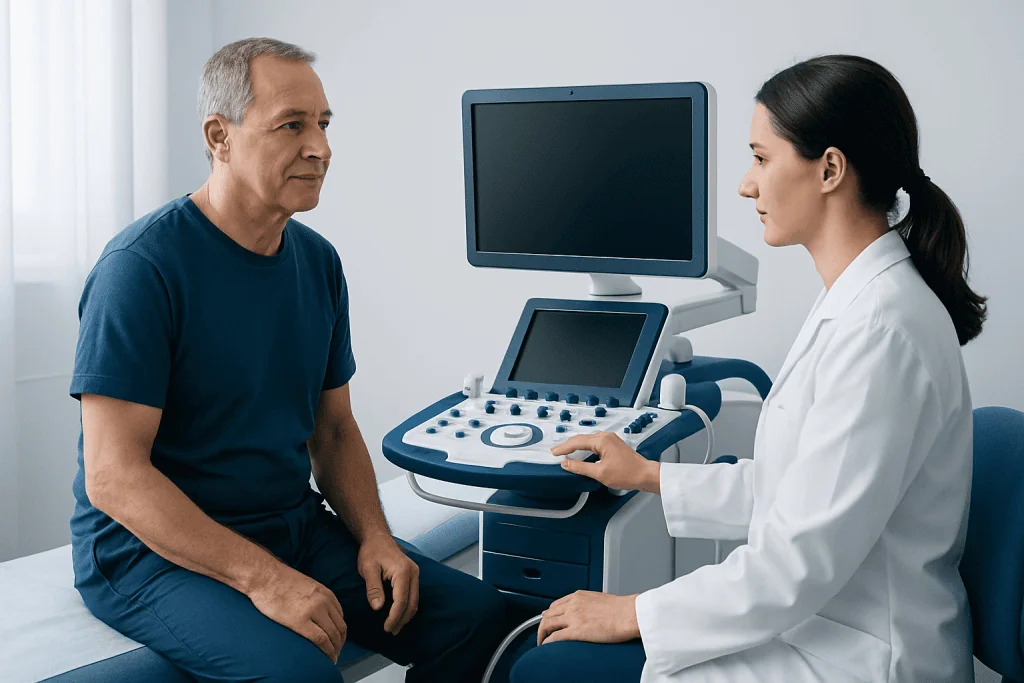
A post-void residual test measures urine left in the bladder shortly after urination. It is usually performed when a person feels the urge to urinate and then empties their bladder as normally as possible. Measuring the residual soon afterward matters because urine continues to enter the bladder from the kidneys.
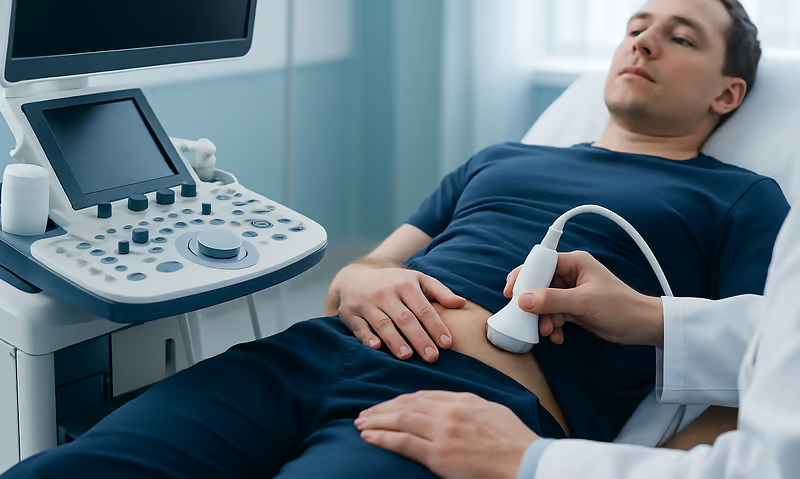
The most common method is a bladder scan. This is a painless ultrasound examination performed over the lower abdomen, often in a clinic, hospital or doctor’s office. A clinician places a small ultrasound probe on the skin with gel, and the device estimates the volume of urine in the bladder. There is no radiation exposure from this type of scan.
In some circumstances, the residual is measured by passing a thin tube called a catheter through the urethra into the bladder after urination. Catheter measurement can be useful when an ultrasound reading is uncertain or when a sterile urine sample is also needed. It is more invasive than a bladder scan and may cause brief discomfort, so it is not necessary for everyone.
One PVR result is a snapshot rather than a complete picture. Anxiety, privacy concerns, constipation, a very full bladder, an unfamiliar bathroom environment or difficulty relaxing during the test can affect voiding. A doctor may repeat the test when the result does not match the person’s symptoms or clinical examination.
How Are PVR Results Interpreted?

There is no single PVR value that has exactly the same meaning for every person. In general, a very small residual after urination is often reassuring. Higher residual volumes can suggest incomplete bladder emptying, but the clinical significance depends on the setting. Doctors interpret the number together with symptoms, kidney function, urinary infection history and other test findings.
A temporarily elevated result may occur when someone has delayed urination for a long time, is in pain, is constipated or has recently received anesthesia. Certain medicines can also reduce bladder contraction or make it harder for the urinary outlet to relax. For these reasons, it is not appropriate to self-diagnose urinary retention based on a result viewed in isolation.
Persistent incomplete emptying can increase the likelihood of bothersome urinary symptoms, recurrent urinary tract infections or bladder overdistension in some people. In more significant or longstanding cases, doctors may check whether urine flow is affecting the kidneys. However, many people with a mildly increased residual have no serious complication, especially when they are assessed and followed appropriately.
The most useful question is usually not simply whether PVR is “normal,” but why a residual is present and whether it is causing symptoms or health risks. A clinician can explain what the result means for the individual and whether monitoring, further testing or treatment is needed.
Why Can Urine Remain in the Bladder?
Incomplete emptying can happen when the bladder muscle does not squeeze strongly enough, when the pathway out of the bladder is narrowed or blocked, or when the nerves that coordinate urination are affected. In men, enlargement of the prostate is a common cause of bladder outlet obstruction. Women may experience incomplete emptying in connection with pelvic organ prolapse, prior pelvic surgery or other pelvic-floor conditions.
Neurological conditions that affect the brain, spinal cord or peripheral nerves can also influence bladder function. Diabetes, stroke, multiple sclerosis, spinal injury and some nerve disorders are examples of conditions that may contribute in some individuals. This does not mean that everyone with these conditions develops urinary retention; a clinician considers the complete clinical picture.
Constipation can place pressure on the bladder outlet and worsen urinary symptoms. Urinary tract infection, pain, swelling, recent surgery and anesthesia can contribute to temporary difficulty emptying. Medicines that may have an effect include some antihistamines, decongestants, antidepressants, antispasmodics, opioid pain medicines and medicines used for certain neurological or bladder conditions. People should not stop prescribed medication without speaking to the prescriber.
Urinary symptoms can overlap with other conditions. A medical review may assess for infection, prostate conditions, pelvic-floor issues, nerve-related bladder dysfunction and other causes of urinary tract infection when clinically relevant.
Other Meanings of PVR in Medical Reports
In cardiopulmonary medicine, PVR commonly stands for pulmonary vascular resistance. This refers to the resistance blood encounters while flowing through the lung circulation. It may be estimated or calculated during specialist assessment of conditions that affect the heart, lungs or pulmonary blood vessels, often using echocardiography and, in selected cases, right-heart catheterization.
Pulmonary vascular resistance is not the same as post-void residual. Although the abbreviation is identical, the tests, units, symptoms and medical implications are entirely different. A report discussing pulmonary artery pressure, right-heart function, cardiac output or catheterization is likely to be referring to pulmonary vascular resistance rather than bladder emptying.
Some clinical notes may use PVR for peripheral vascular resistance, also called systemic vascular resistance in many settings. This describes resistance in the blood vessels of the body and is generally used in critical care, anesthesia or cardiovascular assessment. Patients who are unsure about an abbreviation should ask their care team to explain it in the context of their own report.
What Happens After an Elevated Post-Void Residual?
If a PVR is elevated, a clinician may begin with a discussion of urinary symptoms, timing, fluid intake, bowel habits, medications and past medical history. They may perform an abdominal examination and, when appropriate, a prostate, pelvic or neurological examination. A urine test may be used to look for signs of infection, blood or other abnormalities.
Further assessment can include repeat PVR measurement, urine-flow testing, blood tests to assess kidney function, ultrasound imaging or specialized bladder testing known as urodynamics. The choice depends on the severity and duration of symptoms, the PVR measurement and possible underlying causes. Not every person requires every test.
Treatment is directed at the cause rather than the PVR number alone. Options may include addressing constipation, reviewing medicines, bladder-training guidance, pelvic-floor care, treatment for prostate enlargement or infection, and management of neurological conditions. When someone cannot empty the bladder adequately, temporary or intermittent catheterization may be needed under medical guidance. Procedures may be considered when an obstruction or structural problem is identified.
Acibadem International’s multidisciplinary specialists and JCI-accredited hospitals assess urinary symptoms and bladder-emptying concerns for international patients, with care tailored to the underlying cause and individual needs.
When to Seek Medical Care
People should arrange a medical appointment for persistent difficulty urinating, a slow or interrupted stream, repeated straining to empty the bladder, new leakage associated with poor emptying, frequent urinary infections or a continuing sensation that urine remains after voiding. These symptoms are common and often treatable, but an assessment can help identify the cause and prevent ongoing discomfort.
Urgent medical care is important if a person is unable to pass urine and develops painful lower abdominal swelling or discomfort. Prompt assessment is also needed for urinary symptoms accompanied by fever, chills, severe back or side pain, vomiting, visible blood in the urine, confusion, or new leg weakness, numbness around the groin or loss of bowel control.
Until assessed, it can help to note when symptoms occur, how often a person urinates, whether they wake at night to urinate, and any medicines or recent changes in health. Maintaining regular hydration is generally sensible, but people should avoid forcing large amounts of fluid in an attempt to solve suspected retention. A qualified doctor can provide advice that is appropriate for the individual situation.
Frequently asked questions
What is the most common meaning of PVR on a medical report?
In urinary care, PVR usually means post-void residual, or the amount of urine left in the bladder after urination. The report’s surrounding terms can confirm this meaning. If it mentions a bladder scan, voiding, urine flow or retention, post-void residual is likely intended.
Is a high post-void residual always serious?
Not necessarily. A raised PVR can be temporary and may be influenced by constipation, medications, discomfort, recent surgery or difficulty urinating during the test. Persistent or markedly elevated residual urine should be assessed because it can indicate an underlying bladder, prostate, pelvic-floor or nerve-related problem.
How is a PVR test performed?
Most PVR tests are performed with a bladder ultrasound scan after the person urinates. The scan is painless and does not use radiation. Less commonly, a clinician measures the remaining urine with a catheter when this is medically necessary.
Can anxiety affect a post-void residual result?
Yes. Anxiety, lack of privacy, rushing, pain and an unfamiliar environment can make it difficult to relax and empty the bladder normally. A clinician may repeat the measurement if the result seems inconsistent with symptoms or examination findings.
What does PVR mean in heart or lung testing?
In a heart or lung report, PVR often means pulmonary vascular resistance. It describes resistance to blood flow through the blood vessels of the lungs and is different from post-void residual urine. The clinician ordering the test can explain how the value relates to the person’s condition.
When is urinary retention an emergency?
Sudden inability to urinate, particularly with painful lower abdominal fullness or swelling, needs urgent medical attention. Urgent evaluation is also appropriate if urinary symptoms occur with fever, severe pain, vomiting, confusion or new neurological symptoms. These signs may require prompt treatment.
References
- National Institute of Diabetes and Digestive and Kidney Diseases
- American Urological Association
- European Association of Urology
- Merck Manual Professional Edition
- American Heart Association
This article is for general information only and is not a substitute for professional medical advice. Please consult a qualified doctor about your individual situation.
Explore treatments in Turkey — costs, top hospitals & a free quote
JCI-accredited · board-certified surgeons · reply within 24h
Add us as a Preferred Source to see more of our trusted health content across Google Search, AI Overviews and Discover.

More from the Health Library


Related Specialists

Dt. Mehpare Yener
Dentistry
Dr. Cemile Alçay
Gynecology & Obstetrics
Dr. Mutluhan Temizsoy
Aesthetic Plastic & Reconstructive Surgery
Prof. Dr. Ata Can Atalar
Orthopedic Surgery & Traumatology