Quadriceps Muscle Strain Treatment: How It Works, Results and What to Expect

A quadriceps strain is an overstretching or tearing injury affecting one or more muscles at the front of the thigh. Early treatment focuses on relative rest, ice or other comfort measures, compression, elevation and avoiding painful activity.
Key Takeaways
- A quadriceps strain is an overstretching or tearing injury affecting one or more muscles at the front of the thigh.
- Early treatment focuses on relative rest, ice or other comfort measures, compression, elevation and avoiding painful activity.
- Rehabilitation is progressed in stages, from restoring comfortable movement to rebuilding strength, control and sport-specific function.
- Recovery may take days to weeks for minor strains and several months for major tears, depending on severity and rehabilitation.
- A sudden pop, major swelling, inability to walk normally or an inability to straighten the knee needs prompt medical assessment.
Quadriceps muscle strain treatment usually starts with reducing pain and protecting the injured muscle, then progresses to guided mobility, strengthening and a gradual return to activity. Most mild strains improve without surgery, while severe tears may require specialist assessment and, rarely, repair.
Overview: How quadriceps muscle strain treatment works
Quadriceps muscle strain treatment works by allowing damaged muscle fibers to heal while gradually restoring the flexibility, strength and movement needed for daily life, work or sport. The quadriceps are four muscles at the front of the thigh that help straighten the knee and control movements such as walking, climbing stairs, running and kicking.
A strain happens when muscle fibers are stretched beyond their capacity or partially or completely torn. Treatment is tailored to the extent of injury, symptoms, activity goals and any associated injury to the hip, knee or tendon. A mild strain commonly responds to non-surgical care, whereas a suspected complete tear or significant loss of function needs urgent orthopedic or sports medicine review.
Care is usually delivered in phases rather than as a single procedure. Early protection and symptom control are followed by carefully increased movement and strengthening, then functional exercises that prepare the person for their usual activities. Returning too early can increase the chance of reinjury.
What does a strained quad feel like?
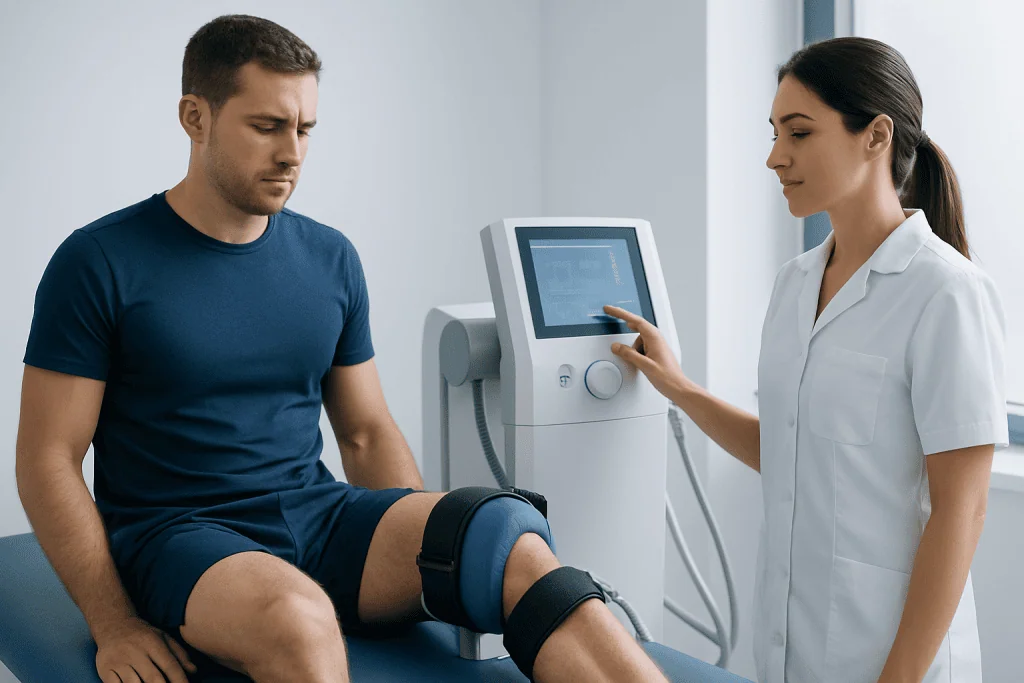
A strained quadriceps often causes a sudden sharp, pulling or tight sensation in the front of the thigh during sprinting, kicking, jumping, changing direction or forceful stretching. Some people notice the pain immediately, while others develop increasing soreness and stiffness after activity or the following day.
Symptoms can include pain when bending the knee or lifting the leg, tenderness over the injured area, weakness, limping, swelling or bruising. A more substantial tear may be associated with a popping sensation, pronounced swelling, a visible change in the muscle contour or difficulty bearing weight.
Not all thigh pain is a muscle strain. Hip or knee conditions, bone injuries, nerve-related pain and problems affecting the quadriceps tendon can produce similar symptoms. A clinician can assess the location, onset and movement pattern of pain to establish the likely cause.
Causes, risk factors and candidacy for treatment

Quadriceps strains commonly occur when the muscle is asked to lengthen and contract forcefully at the same time, particularly during acceleration, deceleration or kicking. Inadequate warm-up, a sudden increase in training intensity, fatigue, previous thigh injury and reduced flexibility or strength may raise the risk.
Anyone with a suspected quad strain can benefit from an appropriate assessment and rehabilitation plan. People who participate in running, football, basketball, tennis, dance or other high-demand activities may especially need structured return-to-sport guidance. Older adults and people taking medicines that affect bleeding should seek advice if substantial bruising develops after an injury.
The examination usually considers pain, swelling, gait, range of motion and strength. The clinician may also look for contributing factors, such as weakness around the hip, poor movement control, training errors or imbalance between the quadriceps and hamstrings. Related muscle injuries may be considered, including hamstring injury, when symptoms involve the back of the thigh.
Diagnosis and the treatment plan step by step
Diagnosis is often based on a clinical history and physical examination. Imaging is not always necessary for a straightforward mild strain. Ultrasound or magnetic resonance imaging may be used when the injury seems severe, the diagnosis is uncertain, symptoms do not improve as expected, or a tendon injury or complete tear is suspected.
In the early phase, the aim is to protect the muscle and settle symptoms. This may involve relative rest from painful activities, gentle compression, elevation when practical and cold packs for short periods if they provide comfort. Pain relief options should be discussed with a doctor or pharmacist, particularly for people with medical conditions, pregnancy, anticoagulant use or medication allergies.
Once acute pain and swelling begin to settle, rehabilitation moves toward comfortable range-of-motion exercises and gradual loading. A physiotherapist may prescribe gentle muscle activation, progressive resistance work, flexibility exercises and movement retraining. Later stages can include balance, running drills, jumping, changes of direction and sport-specific skills when appropriate.
Progression is guided by symptoms and function rather than a fixed schedule. The person should be able to complete each stage with good control and without a meaningful increase in pain during or after exercise. Structured physical therapy and rehabilitation can help tailor these stages to individual goals.
How long does a strained quadriceps take to heal?
Healing time depends mainly on the severity of the strain. A mild injury may improve substantially within one to three weeks, while a moderate partial tear can take several weeks or longer. A severe tear, especially one involving the quadriceps tendon or a large amount of muscle, may need months of rehabilitation and occasionally surgery.
Time away from sport should not be decided by pain alone. Before returning to demanding activity, the person should have near-normal movement, adequate strength compared with the uninjured side, confidence with relevant movements and no pain or swelling after progressive exercise. A clinician or physiotherapist can help determine readiness.
Healing can be slower when the injured muscle is repeatedly overloaded, rehabilitation is rushed, there is a previous injury, or another medical problem affects recovery. Follow-up is appropriate if progress stalls or symptoms recur when activity increases.
What helps a quad strain heal faster?
There is no safe shortcut that makes muscle tissue heal instantly. The most effective approach is appropriate early protection followed by gradual, consistent rehabilitation. Avoiding painful sprinting, kicking, deep lunges or heavy resistance in the first stage helps prevent further damage, but complete inactivity for an extended period is usually not necessary or helpful.
Regular sleep, adequate food and fluid intake, and enough dietary protein support general recovery. A balanced diet is preferable to unproven supplements. Smoking cessation can also support tissue healing and overall health. A clinician can advise people with diabetes, nutritional concerns or other health conditions that may influence recovery.
As pain improves, prescribed exercises are important for restoring the muscle’s capacity. Sudden increases in distance, speed, hills, training volume or resistance should be avoided. Warm-up, gradual conditioning and recovery days may reduce the risk of another strain after return to activity.
For athletes or people with persistent functional limitations, sports medicine care can coordinate assessment, rehabilitation and a safe return-to-performance plan.
Is it okay to walk with quad strain?
Walking may be appropriate with a mild quadriceps strain if it can be done with a normal or nearly normal gait and without worsening pain. Short, comfortable walks can maintain mobility, but the person should reduce distance or stop if limping, sharp pain, increasing swelling or loss of control develops.
Crutches or other temporary support may be advised when walking is painful or markedly altered. It is generally better to avoid “pushing through” a limp, because altered movement can overload other areas such as the hip, knee, back or opposite leg. A clinician can advise when normal walking, stairs, cycling or work tasks can be reintroduced.
Running, jumping, fast changes of direction and forceful kicking place much higher demands on the quadriceps than ordinary walking. These activities should be resumed only after a progressive strengthening and functional program has been completed.
When to seek medical care
Medical assessment is recommended for severe pain, rapid or extensive swelling, significant bruising, inability to walk normally, a visible indentation or bulge in the thigh, a pop at the time of injury, numbness, weakness, or inability to straighten the knee. Prompt evaluation is also important if the injury followed a major fall, collision or other significant trauma.
A doctor should review pain that does not begin to improve within a few days, symptoms that return repeatedly, or difficulty returning to usual activity after an expected recovery period. Urgent care is needed for a cold, pale or blue foot, severe worsening pain, or new symptoms suggesting impaired circulation or nerve function.
Acibadem International’s multidisciplinary specialists and JCI-accredited hospitals can assess and treat muscle and sports injuries for international patients, including coordinated orthopedic and rehabilitation care when needed.
Frequently asked questions
How is a quadriceps muscle strain treated?
Treatment usually begins with relative rest from painful activity, symptom control and protection of the injured thigh. It then progresses through mobility, strengthening and functional exercises guided by symptoms and recovery goals. Severe injuries may require imaging and specialist assessment.
How long does a strained quadriceps take to heal?
A mild strain may improve within one to three weeks, while moderate strains often take several weeks or longer. Severe tears can require months of rehabilitation. Return to sport should be based on restored function and strength, not only the number of days since injury.
What helps a quad strain heal faster?
Appropriate rest from painful activity, gradual rehabilitation, good sleep and balanced nutrition support recovery. Increasing activity in small steps is safer than returning abruptly to running or sport. There is no proven instant cure for a muscle strain.
Is it okay to walk with quad strain?
Walking is often acceptable for a mild strain if it does not cause a limp or make pain worse. Distance and speed should be reduced if symptoms increase. If walking is painful or difficult, medical advice is appropriate and temporary support may be needed.
What does a strained quad feel like?
A strained quad can feel sharp, pulling, tight or sore at the front of the thigh. Pain may occur when straightening the knee, climbing stairs, running or kicking. Bruising, swelling and weakness may indicate a more significant injury.
Can a quadriceps strain require surgery?
Most quadriceps muscle strains do not require surgery. Surgery may be considered for uncommon severe injuries, such as a complete rupture involving the quadriceps tendon or a major tear with substantial loss of function. An orthopedic specialist can determine whether repair is needed.
References
- American Academy of Orthopaedic Surgeons
- American College of Sports Medicine
- National Institute of Arthritis and Musculoskeletal and Skin Diseases
- National Health Service
- Mayo Clinic
This article is for general information only and is not a substitute for professional medical advice. Please consult a qualified doctor about your individual situation.
Joint and spine care in Turkey — expert assessment & treatment
JCI-accredited · board-certified surgeons · reply within 24h
Add us as a Preferred Source to see more of our trusted health content across Google Search, AI Overviews and Discover.

More from the Health Library



Related Specialists

Prof. Dr. Ayşenur Meriç Hafız
Otorhinolaryngology
Dr. Yasemin Ballıca Özen
Gynecology & Obstetrics
Assoc. Prof. Dr. Deniz Can Aliş
Radiology
Dr. Feyyaz Kabadayı
Pulmonary Medicine