Quadriceps Tendonitis: Diagnosis, Outlook, and Modern Treatment Approaches

Quadriceps tendonitis usually causes pain and tenderness just above the kneecap, especially with jumping, running, or stairs. It is often linked to overuse, training errors, muscle imbalance, or a sudden increase in activity.
Key Takeaways
- Quadriceps tendonitis usually causes pain and tenderness just above the kneecap, especially with jumping, running, or stairs.
- It is often linked to overuse, training errors, muscle imbalance, or a sudden increase in activity.
- Diagnosis is mainly based on symptoms and examination, with imaging used when the diagnosis is unclear or symptoms persist.
- Treatment commonly includes load reduction, physical therapy, pain relief measures, and a gradual return to activity.
- Early care can help prevent a short-term tendon irritation from becoming a longer-lasting tendon problem.
Quadriceps tendonitis is an overuse injury affecting the tendon that connects the front thigh muscles to the top of the kneecap. It typically causes pain above the knee during running, jumping, squatting, or climbing stairs, and most people improve with activity changes, rehabilitation, and timely medical care.
Overview: what quadriceps tendonitis means
Quadriceps tendonitis is irritation or overload of the quadriceps tendon, the strong band of tissue that connects the quadriceps muscles at the front of the thigh to the top of the kneecap. In many cases, the problem develops gradually from repeated stress rather than from a single injury. Although people often use the term “tendonitis,” long-lasting cases may involve tendon degeneration and are sometimes described more accurately as quadriceps tendinopathy.
This condition is most often felt as pain above the kneecap, especially during activities that load the knee repeatedly. Running, jumping, squatting, lunging, and climbing stairs commonly bring on symptoms. Athletes in sports that involve sprinting or jumping are at higher risk, but it can also affect active adults, people starting a new exercise routine, and anyone whose daily activities place repeated strain on the knee.
Quadriceps tendonitis is related to other causes of front-of-knee pain but is not exactly the same. For example, some people may also have knee pain from the patellar tendon, kneecap tracking issues, arthritis, or bursitis. A careful assessment helps identify the source of pain and guides the most suitable treatment plan.
Symptoms and how it affects daily activity
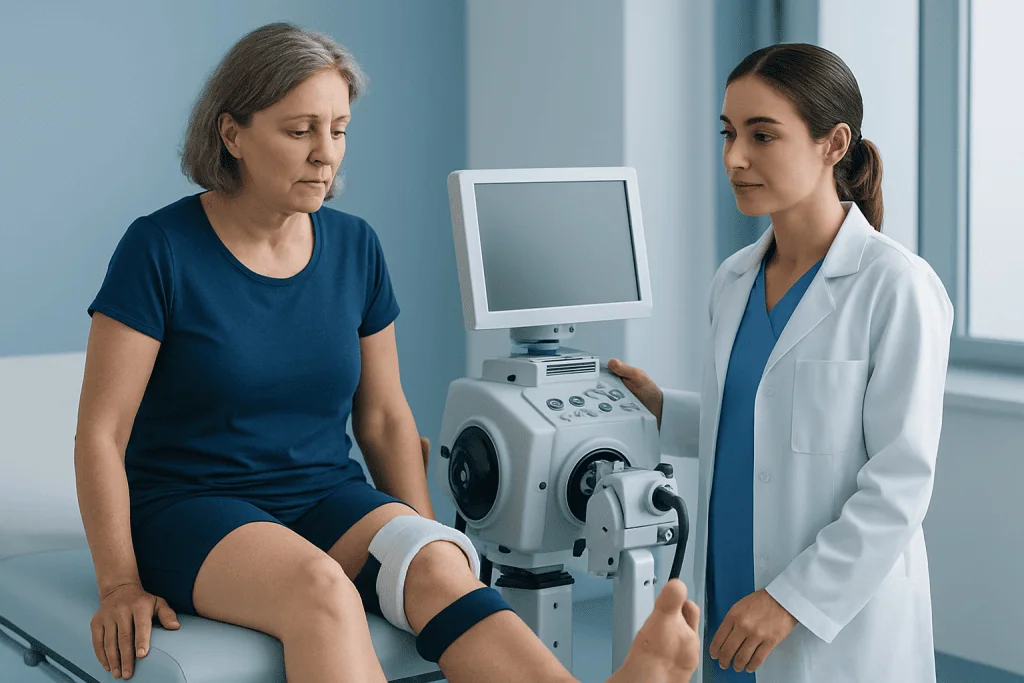
The main symptom of quadriceps tendonitis is pain at the top of the kneecap where the tendon attaches. At first, discomfort may appear only after exercise, but over time it can begin during activity and sometimes continue afterward. Many people notice tenderness when pressing the area, stiffness after rest, or a feeling that the front of the knee is not tolerating impact well.
Symptoms often become more noticeable with movements that ask the quadriceps muscle to work hard while the knee bends. Common triggers include:
- Running, especially uphill or downhill
- Jumping and landing
- Squatting, lunging, or kneeling
- Climbing or descending stairs
- Standing up from a seated position
In milder cases, the tendon may simply feel sore after exercise. In more persistent cases, people may reduce sports participation, avoid stairs, or notice weakness and loss of confidence in the knee. Swelling is usually limited, and symptoms tend to be quite localized above the kneecap rather than spreading through the whole knee.
Why it happens: causes and risk factors
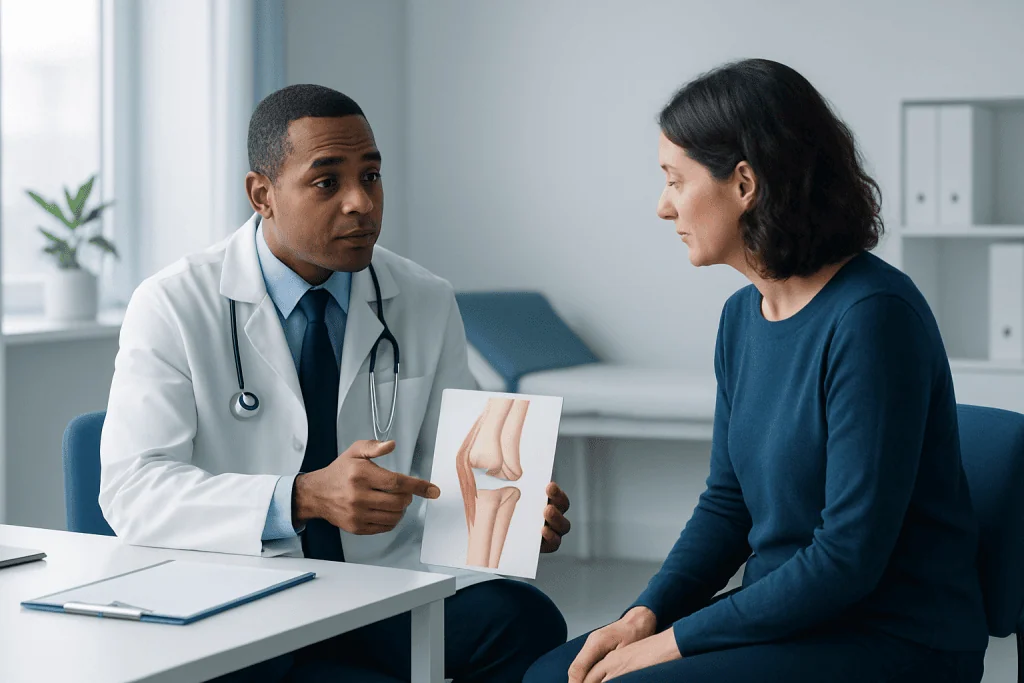
Quadriceps tendonitis usually develops when the tendon is asked to handle more force than it can adapt to. This can happen with a sudden increase in training volume, more frequent jumping or sprinting, a change in surface, or a return to exercise after a break. Tendons normally adapt to loading over time, but if the increase is too fast, microscopic damage and pain can follow.
Several body mechanics and health factors may also contribute. Tight quadriceps or hamstrings, weakness around the hips and core, reduced ankle mobility, and poor movement patterns can all increase the strain placed on the front of the knee. Previous knee injury may also change how the leg absorbs force. In some people, excess body weight can add to tendon load during everyday movement.
Age, overall health, and certain medications can affect tendon health as well. While quadriceps tendonitis is common in active people, a clinician may also consider related problems such as tendonitis in other areas or broader overuse injuries. Understanding the contributing factors is important, because successful treatment usually addresses both pain and the reasons the tendon became overloaded in the first place.
How quadriceps tendonitis is diagnosed
Diagnosis starts with a focused medical history and physical examination. A doctor or physical therapist will ask when the pain began, which activities trigger it, whether there was a specific injury, and how symptoms have changed over time. The examination usually includes checking for tenderness above the kneecap, evaluating range of motion, muscle strength, flexibility, and watching how the leg moves during tasks such as squatting or stepping down.
In many cases, the diagnosis can be made clinically without advanced testing. Imaging may be recommended if symptoms do not improve, if the diagnosis is uncertain, or if another condition is suspected. Ultrasound can show tendon thickening or structural change, while MRI may be useful when there is concern about a partial tear or another internal knee problem.
Because several conditions can cause pain at the front of the knee, diagnosis also involves ruling out alternatives such as patellar tendinopathy, bursitis, cartilage irritation, meniscus injury, or arthritis. If symptoms are severe, there is significant swelling, or the knee suddenly becomes difficult to straighten, urgent assessment is important to exclude a tendon rupture or other acute injury.
Modern treatment approaches and expected recovery
Treatment for quadriceps tendonitis usually begins with reducing the loads that irritate the tendon while keeping the person as active as safely possible. This often means temporarily cutting back on jumping, sprinting, deep squatting, or other painful activities rather than stopping all movement. Ice or other simple pain-relief measures may help in the short term, but recovery usually depends most on structured rehabilitation.
Physical therapy is a central part of care. Rehabilitation often starts with pain-calming strategies and controlled strengthening, then progresses to heavier resistance work, movement retraining, and sport-specific drills. A gradual loading program helps the tendon adapt and can improve both pain and function over time. When symptoms persist, a specialist may suggest further evaluation through orthopedic rehabilitation or imaging to refine the treatment plan.
Some people benefit from supportive measures such as temporary taping, activity modification advice, or guided return-to-sport planning. If a different knee problem is suspected, evaluation by a team experienced in knee surgery may be appropriate, although surgery is not the usual treatment for straightforward quadriceps tendonitis. Recovery time varies: milder cases may improve within weeks, while long-standing tendinopathy can take months of consistent, progressive rehabilitation.
The outlook is generally good when treatment begins early and the tendon is reloaded gradually. Pushing through pain or returning too quickly can prolong symptoms. Near the end of the care pathway, some patients may seek assessment at centers such as Acibadem International, where multidisciplinary specialists in JCI-accredited hospitals diagnose and treat knee tendon conditions for international patients.
Self-care, prevention, and safe return to exercise
Self-care for quadriceps tendonitis focuses on reducing irritation while maintaining healthy movement. During a painful flare, it often helps to limit the activities that clearly trigger symptoms and choose lower-impact alternatives for a period of time. Simple measures such as using supportive footwear, warming up properly, and avoiding sudden spikes in training volume can make daily activity more comfortable.
Long-term prevention depends on improving the tendon’s capacity to handle load. Strengthening the quadriceps, hips, and core, along with flexibility and movement control work, may reduce strain on the knee. A supervised program can be especially helpful for athletes, people returning after injury, or anyone who has had recurring symptoms. In some cases, a broader assessment through physical therapy and rehabilitation helps identify training errors or technique issues that keep the tendon irritated.
A gradual return to exercise is important even after pain begins to settle. It is usually best to increase one factor at a time, such as distance, speed, or jumping volume, and to watch for pain during and after activity. Mild soreness that settles quickly may be acceptable during rehabilitation, but increasing pain the next day can be a sign that the tendon was overloaded.
When to seek medical care
Medical assessment is recommended when pain above the kneecap lasts more than a short time, keeps returning, or limits work, sport, or normal daily movement. It is also sensible to seek care if home measures are not helping, if the diagnosis is uncertain, or if symptoms are affecting balance, strength, or confidence in the knee. Early evaluation may help prevent a manageable overuse problem from becoming more persistent.
Prompt medical care is especially important if pain starts suddenly after a forceful movement, there is marked swelling, a popping sensation, bruising, or difficulty straightening the knee. These features may suggest a more significant tendon injury that needs urgent attention. A doctor can also look for other causes of front-of-knee pain and advise whether imaging, bracing, rehabilitation, or specialist review is needed.
People with diabetes, inflammatory conditions, prior tendon injuries, or medication histories that may affect tendons should be particularly careful about ongoing pain. A qualified clinician can provide a safe diagnosis and an individualized plan rather than relying only on rest or internet advice.
Frequently asked questions
Is quadriceps tendonitis the same as a quadriceps tendon tear?
No. Quadriceps tendonitis usually refers to irritation or overload of the tendon, while a tear means the tendon fibers are partially or completely disrupted. A tear is generally more sudden and severe and may cause major weakness or difficulty straightening the knee.
How long does quadriceps tendonitis take to heal?
Recovery time varies depending on how long symptoms have been present and how much the tendon is being irritated. Mild cases may improve over several weeks, while persistent tendinopathy can take a few months of structured rehabilitation. Following a gradual return-to-activity plan often improves the outlook.
Should a person rest completely if they have quadriceps tendonitis?
Complete rest is not usually necessary or ideal. Most people do better with modified activity that reduces painful loading while keeping the knee moving and the muscles active. A clinician or physical therapist can help decide which activities are safe during recovery.
Can quadriceps tendonitis heal without surgery?
Yes. Most cases improve with non-surgical treatment such as activity adjustment, exercise-based rehabilitation, and attention to contributing factors like strength and training load. Surgery is generally considered only when there is a different structural problem or when symptoms remain severe despite appropriate conservative care.
What exercises are usually helpful for quadriceps tendonitis?
Exercise programs often include progressive strengthening for the quadriceps, hips, and core, along with movement control work. The exact exercises should match the person’s pain level, fitness, and goals. Because too much loading too soon can worsen symptoms, guidance from a qualified professional is helpful.
Can someone keep playing sports with quadriceps tendonitis?
Sometimes, but it depends on symptom severity and the demands of the sport. If pain is mild and managed within a structured plan, modified participation may be possible. If symptoms are worsening, affecting performance, or lingering after activity, medical review is a sensible next step.
References
- American Academy of Orthopaedic Surgeons
- National Institute of Arthritis and Musculoskeletal and Skin Diseases
- American Physical Therapy Association
- Mayo Clinic
- National Health Service
This article is for general information only and is not a substitute for professional medical advice. Please consult a qualified doctor about your individual situation.
Joint and spine care in Turkey — expert assessment & treatment
JCI-accredited · board-certified surgeons · reply within 24h
Add us as a Preferred Source to see more of our trusted health content across Google Search, AI Overviews and Discover.

More from the Health Library



Related Specialists

Dr. Buket Özel Bingöl
Otorhinolaryngology
Dr. Füsun Görözen
Pediatrics
Dr. Mete Rükşen
Neurosurgery
Prof. Dr. Ahmet Ümit Güllü
Cardiovascular Surgery