Radiation for Bone Metastases: How It Works, Results and What to Expect
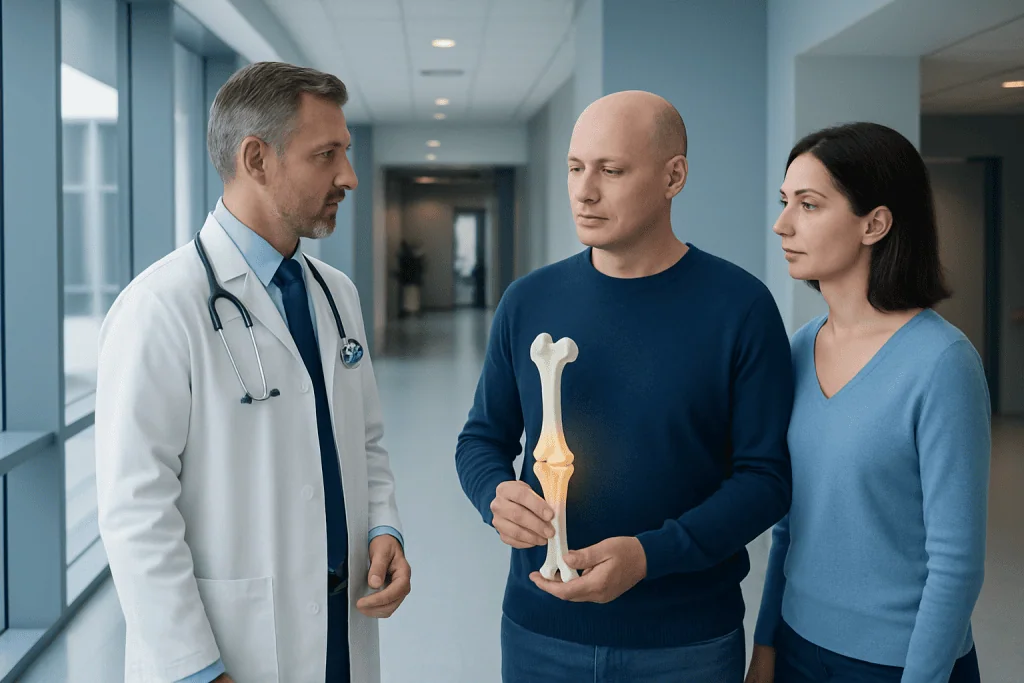
Radiation therapy is often used to ease pain from bone metastases and reduce the risk of local complications. Many people receive external beam radiation in one treatment or over several daily sessions.
Key Takeaways
- Radiation therapy is often used to ease pain from bone metastases and reduce the risk of local complications.
- Many people receive external beam radiation in one treatment or over several daily sessions.
- Pain relief may begin within days but often develops gradually over several weeks.
- Radiation treats selected bone lesions; systemic therapy may still be needed to treat cancer throughout the body.
- New or worsening weakness, numbness, loss of bladder or bowel control, or severe sudden pain needs urgent medical assessment.
Radiation for bone metastases is a targeted treatment that can reduce cancer-related bone pain, help prevent complications and control tumor growth in a specific area. It is commonly used alongside systemic cancer treatments and supportive care, with the treatment plan tailored to the affected bone, symptoms and overall health.
Overview: how radiation helps bone metastases
Radiation for bone metastases uses carefully planned high-energy radiation to damage cancer cells in bone and slow their growth in a targeted area. Its main goals are usually to relieve pain, reduce the chance of problems such as fracture or pressure on nearby nerves, and improve comfort and mobility. It does not usually remove cancer throughout the body, so it is often combined with medicines or other cancer treatments.
Bone metastases occur when cancer that began elsewhere spreads to bone. They are more common with certain cancers, including breast, prostate, lung, kidney and thyroid cancer, although they can occur with many cancer types. Symptoms and treatment needs vary widely depending on the location, number of affected bones, cancer type and a person’s general condition.
External beam radiation therapy is the most common approach. A radiation oncology team directs treatment from outside the body toward the affected bone while protecting as much surrounding healthy tissue as possible. For a small number of selected lesions, highly focused techniques such as stereotactic body radiation therapy may be considered.
How effective is radiation for bone metastases?
Radiation is an established and effective treatment for localized pain caused by bone metastases. Many patients experience meaningful pain improvement, and some may have complete relief at the treated site. Results differ between individuals because pain can have more than one cause, including bone damage, inflammation, nerve involvement or a nearby fracture.
Relief is not always immediate. Some people notice improvement within several days, while for others it takes two to four weeks. A temporary increase in pain, sometimes called a pain flare, can occur shortly after treatment and is usually manageable with the care team’s guidance.
Radiation can also help control tumor growth in the treated bone. When a lesion is weakening a weight-bearing bone or approaching the spinal cord, the team may combine radiation with surgery, stabilization procedures, corticosteroids or systemic treatment. The aim is to protect function as well as reduce pain.
- Best suited for pain or risk focused in one or several known bone sites
- Can be repeated in selected circumstances, depending on prior radiation and nearby organs
- Works alongside chemotherapy, hormone therapy, immunotherapy, targeted medicines or bone-strengthening medicines when appropriate
Candidacy and treatment planning

A radiation oncologist considers radiation when a bone metastasis is causing pain, affecting daily activity, threatening a fracture, irritating nerves or growing near the spinal cord. Treatment may also be recommended after surgery to stabilize a bone, or when imaging shows a lesion likely to cause symptoms or structural problems.
Planning starts with a review of the original cancer diagnosis, current treatments, symptoms, prior radiation and imaging. CT, MRI, PET/CT, bone scans or X-rays may be used to define the affected area and assess bone strength. If a long bone such as the femur is significantly weakened, an orthopedic surgeon may assess whether preventive stabilization is needed before radiation.
The plan is individualized. Doctors consider the treated body area, expected benefit, ability to lie still for treatment, overall health and personal goals. Radiation is generally appropriate for many people with metastatic cancer, but the safest option depends on the full clinical situation.
Step by step: what happens during radiation treatment
The first appointment is usually a simulation visit rather than treatment. The patient lies in the treatment position on a CT simulation scanner, and the team may use cushions, a mask or other positioning supports to ensure the same position can be reproduced accurately. Small skin marks or other alignment references may be used.
The radiation oncologist, medical physicist and dosimetry team create a plan that targets the metastasis while limiting radiation to nearby healthy structures. This planning process can take several days, especially for complex areas such as the spine, pelvis or skull.
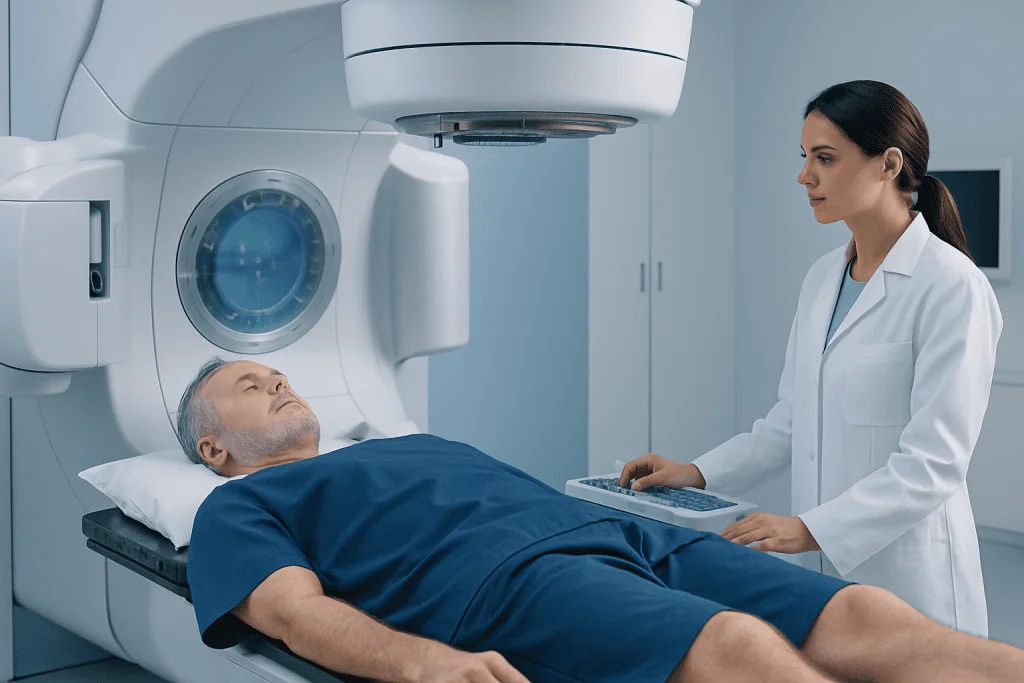
During each treatment session, the patient lies on a treatment table while the machine moves around them. The treatment itself is painless and the patient does not feel the radiation. Staff monitor from an adjacent room and can communicate throughout the session. Most visits are brief, although setup and imaging can take longer than the radiation delivery.
A course may be given as a single session or divided into several treatments over days or, less commonly, weeks. The schedule is chosen based on the bone involved, symptoms, previous treatment, cancer characteristics and practical needs. External radiation does not make a person radioactive, so it is safe to be around family and friends after treatment.
How long does radiation last for bone cancer?
For bone metastases, external beam radiation often lasts from one treatment session to several daily sessions. A common approach is a short course completed over one to two weeks, although schedules differ. The treatment team recommends a schedule that balances convenience, symptom control, safety and the location of the lesion.
Each visit commonly includes check-in, positioning and image guidance. The actual radiation delivery may take only minutes. More precise treatments, including stereotactic techniques, can require longer setup and may be delivered across a small number of sessions.
It is important to distinguish bone metastases from a primary bone cancer, which starts in bone. Radiation schedules and goals can be different for primary bone tumors. A radiation oncologist can explain whether treatment is intended mainly for symptom relief, local control, prevention of complications or part of a broader curative-intent plan.
Benefits, side effects and recovery timeline
The expected benefit of radiation is reduced pain and better ability to move, rest and take part in everyday activities. It may also lower local complications by shrinking or controlling a tumor in a vulnerable bone. Pain medicines may still be needed at first and can be adjusted as radiation takes effect.
Side effects are usually limited to the treated area and depend on its location. Tiredness is common, especially during the first few weeks. Skin in the treatment field can become mildly red, dry or sensitive. Treatment to the pelvis, abdomen or lower spine may temporarily cause nausea, loose stools, bladder irritation or changes in blood counts; treatment near the shoulder, ribs or neck can cause different local effects.
Most short-term effects improve over days to weeks after the course ends. The care team may recommend skin care, hydration, rest balanced with gentle movement, and medicines for nausea or pain where needed. Longer-term effects are less common but can include stiffness, tissue changes or effects on nearby organs, depending on the radiation field and dose.
Follow-up may include symptom review and imaging when clinically useful. The team should know if pain continues to worsen after the expected recovery period, as additional assessment may identify another cause or a need for further treatment.
How long can someone live with bone metastases?
Life expectancy with bone metastases varies greatly and cannot be predicted accurately from the presence of bone spread alone. It depends on the original cancer type and biology, where else cancer is present, how well it responds to systemic treatment, the person’s overall health and complications such as fractures or spinal cord compression.
Some people live for years with bone metastases, particularly when the underlying cancer responds well to modern treatments and symptoms are controlled. Others may have a more rapidly progressing illness. The oncology team is best placed to discuss prognosis because it can interpret current scans, laboratory results, response to treatment and individual priorities.
Supportive and palliative care can be valuable at any stage of metastatic cancer. It focuses on pain control, function, emotional wellbeing and practical support, and can be provided alongside active anticancer treatments. Asking for this support does not mean that cancer-directed treatment has stopped.
Can metastatic bone cancer go into remission?
Metastatic cancer involving bone is often considered treatable but not always curable. Some cancers can respond very well to treatment, and scans may show that visible disease has shrunk substantially or is no longer detectable. Doctors may describe this as a partial response, complete response or remission, depending on the findings.
Remission does not necessarily mean the cancer has been permanently eliminated, because microscopic cancer cells can remain. Continued monitoring and, in many cases, ongoing systemic treatment are important. Radiation can provide durable control in a treated bone site, but it does not by itself treat cancer cells elsewhere in the body.
People with limited metastatic disease may sometimes be offered intensive local treatments to all known sites alongside systemic therapy. Whether this is appropriate depends on cancer type, disease pattern and treatment response, and should be decided by a multidisciplinary cancer team.
When to seek medical care
Anyone with cancer who develops new persistent bone pain, pain that wakes them at night, increasing difficulty walking, or pain that does not improve with prescribed medicines should contact their oncology team promptly. Early assessment may help identify a bone metastasis, fracture risk or another treatable cause.
Urgent medical attention is needed for severe or sudden back pain, new weakness or numbness in the legs or arms, difficulty walking, or new loss of bladder or bowel control. These symptoms can indicate pressure on the spinal cord and require prompt evaluation. Sudden severe pain in an arm, leg or hip, especially after minimal movement, may indicate a fracture and also needs urgent assessment.
Care for bone metastases may involve medical oncology, radiation oncology, orthopedic surgery, radiology, pain medicine, rehabilitation and palliative care. Acibadem International’s multidisciplinary specialists and JCI-accredited hospitals provide diagnosis and treatment planning for international patients with metastatic cancer.
Frequently asked questions
Is radiation for bone metastases painful?
External beam radiation treatment is not painful. The patient lies still while the machine delivers radiation from outside the body. Some people develop temporary soreness or a short-term pain flare afterward, which the care team can help manage.
How soon does pain improve after radiation for bone metastases?
Some people notice improvement within a few days, but pain relief often develops gradually over two to four weeks. The timing and degree of benefit vary with the treated site, cancer type and other causes of pain. Pain medication may be continued and adjusted during this period.
Can radiation heal a broken bone caused by metastases?
Radiation can control tumor growth and reduce pain, but it does not mechanically repair an unstable or broken bone. A fracture or high-risk bone lesion may require orthopedic assessment, activity changes or surgical stabilization. Radiation may be used before or after surgery depending on the situation.
Will I be radioactive after external radiation therapy?
No. External beam radiation does not leave radiation in the body. After each session, a person can safely be near family members, children and pregnant people unless their care team gives separate instructions for another treatment type.
Can radiation for bone metastases be given more than once?
In some cases, a previously treated area can receive further radiation. Whether this is safe depends on the earlier dose, time since treatment, nearby organs and the current treatment goal. A radiation oncologist reviews the prior plan carefully before recommending repeat treatment.
What treatments may be used along with radiation for bone metastases?
Treatment may include pain medicines, systemic cancer therapy, bone-strengthening medicines, surgery, rehabilitation and supportive care. The combination depends on the primary cancer, location and number of bone lesions, fracture risk and overall treatment plan. A multidisciplinary team can coordinate these options.
References
- American Cancer Society
- National Cancer Institute
- European Society for Medical Oncology
- American Society for Radiation Oncology
- Cancer Research UK
This article is for general information only and is not a substitute for professional medical advice. Please consult a qualified doctor about your individual situation.
Joint and spine care in Turkey — expert assessment & treatment
JCI-accredited · board-certified surgeons · reply within 24h
Add us as a Preferred Source to see more of our trusted health content across Google Search, AI Overviews and Discover.