Radiation Therapy Following Prostatectomy: Procedure, Recovery and Results

Post-prostatectomy radiation may be recommended soon after surgery for selected high-risk findings or later if PSA begins to rise. Early salvage radiation, given when PSA is low but detectable and rising, is often preferred over routine radiation for everyone after surgery.
Key Takeaways
- Post-prostatectomy radiation may be recommended soon after surgery for selected high-risk findings or later if PSA begins to rise.
- Early salvage radiation, given when PSA is low but detectable and rising, is often preferred over routine radiation for everyone after surgery.
- Treatment is usually external-beam radiation delivered on weekdays over several weeks, with each visit lasting only a short time.
- Possible side effects include temporary urinary and bowel irritation, fatigue, and changes in sexual function; many can be managed with supportive care.
- Follow-up PSA testing is essential before, during and after treatment to assess response and guide further care.
Radiation therapy following prostatectomy is a targeted treatment used when prostate cancer has features that raise the risk of recurrence or when prostate-specific antigen (PSA) levels suggest cancer may have returned. It is commonly delivered as outpatient external-beam radiation and planned by a multidisciplinary team to balance cancer control with urinary, bowel and sexual health.
Overview: why radiation may be used after prostatectomy
Radiation therapy following prostatectomy is treatment directed at the prostate bed, the area where the prostate gland was removed, and sometimes nearby pelvic lymph nodes. Its purpose is to destroy microscopic cancer cells that may remain after surgery or to treat cancer that is suspected to have returned based on a rising prostate-specific antigen (PSA) blood test.
After radical prostatectomy, PSA should fall to a very low or undetectable level because normal prostate tissue has been removed. A detectable and rising PSA can indicate biochemical recurrence, even when scans do not show a visible tumour. Radiation can be most effective when used early in this setting, before disease is evident elsewhere.
Not every person with prostate cancer needs radiation after surgery. The decision depends on the surgical pathology report, PSA pattern, imaging results, overall health and personal priorities. The care team may discuss this alongside information about prostate cancer and the individual’s previous treatment.
How post-prostatectomy radiation works
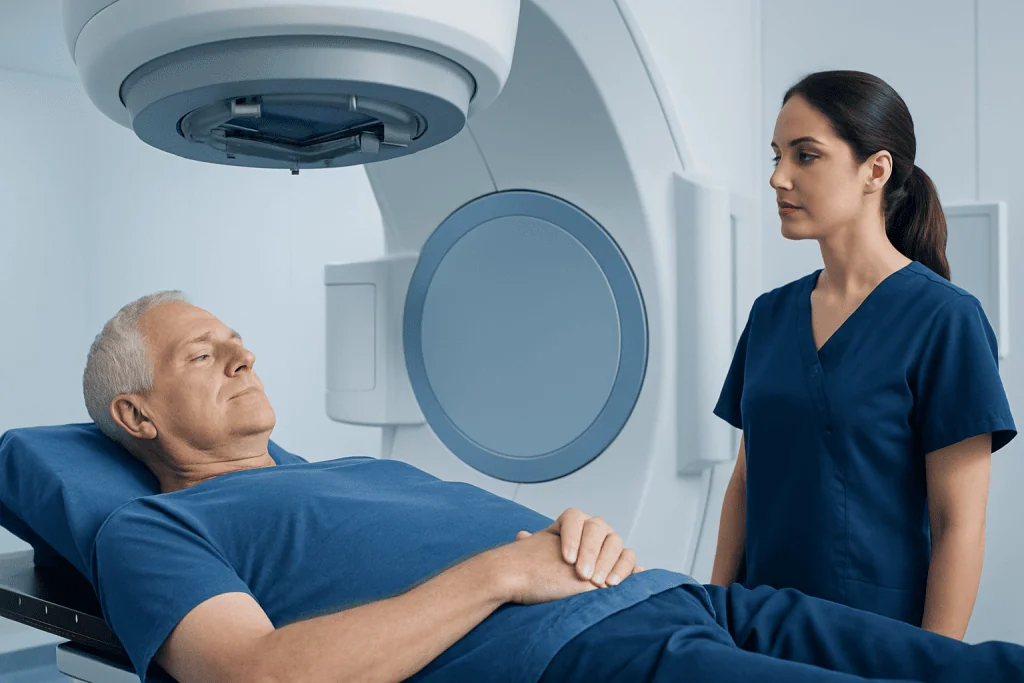
Most post-prostatectomy treatment uses external-beam radiation therapy (EBRT). A linear accelerator produces high-energy radiation beams that are shaped and guided to deliver a planned dose to the prostate bed while limiting exposure to nearby tissues, including the bladder, rectum and small bowel.
Modern techniques such as intensity-modulated radiation therapy (IMRT), image-guided radiation therapy (IGRT), and in some centres volumetric modulated arc therapy help improve precision. Daily image guidance checks body position and the location of internal structures because the bladder and bowel can shift slightly from day to day.
Radiation does not work like an operation that removes tissue immediately. It damages cancer-cell DNA, making the cells less able to divide and survive. Normal cells can also be affected, which explains possible short-term and longer-term side effects, but healthy tissues often repair themselves more effectively than cancer cells.
Who may be a candidate

Radiation may be considered as adjuvant therapy, meaning treatment given after surgery because pathology findings suggest a higher risk of recurrence. These findings can include cancer extending beyond the prostate, cancer involving seminal vesicles, positive surgical margins, or lymph node involvement. However, many people with these findings will not develop recurrence, so observation with frequent PSA testing is also a reasonable approach for selected patients.
More commonly, clinicians recommend early salvage radiation when PSA becomes detectable and shows a rising trend after initially becoming undetectable. Evidence supports discussing salvage treatment while PSA remains low, rather than waiting until it rises substantially. The timing should be individualized rather than based on one result alone whenever possible.
The team considers the original cancer grade and stage, margin status, PSA doubling time, urinary recovery after surgery, continence, bowel health, prior treatments and any imaging findings. Advanced molecular imaging, such as PSMA PET in appropriate settings, may help identify whether cancer appears confined to the prostate bed or may be elsewhere.
Some people may be advised to combine radiation with a temporary course of hormone therapy, also called androgen-deprivation therapy. This depends on recurrence risk and clinical features. A radiation oncologist, urologist and medical oncologist can help explain the expected advantages and possible trade-offs of each option.
Step by step: planning and treatment visits
The process starts with a consultation and review of the surgery report, PSA history, scans and current symptoms. The radiation oncologist explains the proposed target area, schedule, expected benefits and risks. Before treatment begins, it is important to report urinary leakage, urinary urgency, bowel conditions, anticoagulant use and any implanted medical devices.
At the planning appointment, often called simulation, the patient lies in the treatment position on a CT scanner. Small skin marks or tattoos may be used to support consistent positioning. The team may provide instructions for arriving with a comfortably full bladder and an empty rectum, as these steps can help protect normal tissues and improve daily reproducibility.
Radiation specialists then create an individualized plan, a process that can take several days. Treatment is usually delivered Monday through Friday for a number of weeks, although the precise number of sessions varies according to the planned dose, target volume and local protocol. The radiation itself is painless, and the beam is on for only minutes, although setup and imaging add time to each appointment.
During the course, patients meet the radiation team regularly to review symptoms, weight, medications and supportive-care needs. Radiotherapy services use detailed planning and image guidance to support accurate treatment delivery. Treatment should not be skipped or changed without speaking to the care team, except when medically necessary.
Benefits, results and follow-up
The main potential benefit of radiation after prostatectomy is a lower risk of local cancer progression and a greater chance of long-term PSA control when residual or recurrent disease is still limited to the prostate bed or nearby tissues. For some people, it may delay or reduce the need for later systemic treatment.
Results are assessed primarily with PSA testing rather than symptoms alone. PSA commonly declines gradually after radiation, and the pace of change can vary. The team will schedule blood tests at intervals after treatment and interpret the trend in the context of prior PSA values, hormone therapy if used, and imaging findings.
Radiation cannot guarantee that prostate cancer will not recur, particularly if microscopic cells have already spread beyond the pelvis. Still, prompt evaluation of a rising PSA gives the care team an opportunity to consider treatment at a stage when local therapy may offer meaningful benefit.
Follow-up also focuses on quality of life. Urinary control can continue improving for months after prostatectomy, and clinicians consider this recovery when choosing the timing of radiation. Sexual health, bowel function, emotional wellbeing and fatigue should all be raised during follow-up visits, as support and treatment are available.
Recovery timeline and possible side effects
Most people continue normal day-to-day activities during external-beam radiation, although schedules may need adjustment around daily visits. Tiredness can build gradually, especially toward the end of treatment, and may persist for several weeks afterward. Rest, gentle physical activity as tolerated, balanced meals and maintaining hydration can help.
Short-term urinary effects may include more frequent urination, urgency, burning when passing urine, a weaker stream or temporary worsening of leakage. Bowel effects can include looser stools, more frequent bowel movements, rectal urgency, gas or mild rectal discomfort. These symptoms often begin during treatment or shortly afterward and commonly improve over the following weeks to months.
Longer-term effects are less common but can include persistent urinary irritation, narrowing of the urethra, blood in the urine or rectum, ongoing bowel changes, erectile dysfunction or worsening continence. Radiation after surgery can add to sexual and urinary effects already associated with prostatectomy. The individual risk depends on prior function, radiation target area, other treatments and personal health factors.
Patients should tell the team about symptoms early rather than waiting for the next scheduled review. Medicines, dietary adjustments, pelvic-floor rehabilitation and referral to specialists may help. Urology care and radiation oncology follow-up can address urinary symptoms, erectile concerns and other treatment-related needs in a coordinated way.
Self-care and when to seek medical care
During treatment, patients should follow their radiation team’s instructions about bladder filling, bowel preparation, skin care and medications. A varied diet and sufficient fluids are generally helpful, although the team may recommend temporary changes, such as limiting foods that worsen diarrhoea or bladder irritation. Smoking cessation and regular gentle activity can support overall recovery.
It is important to contact the treatment team promptly for fever, chills, inability to pass urine, severe pain, heavy rectal bleeding, substantial blood in the urine, persistent vomiting, signs of dehydration, severe diarrhoea, or symptoms that are rapidly worsening. Emergency care is appropriate for severe bleeding, chest pain, severe shortness of breath, confusion or other urgent symptoms.
A rising PSA after prostatectomy is not usually an emergency, but it should be discussed with a urologist or oncology team without delay so that repeat testing, imaging and treatment options can be considered. People who are coping with worry, sleep changes or concerns about intimacy should also tell their clinicians; emotional support is a meaningful part of cancer care.
For international patients, Acibadem International’s multidisciplinary specialists and JCI-accredited hospitals provide assessment and treatment planning for prostate cancer and its recurrence. Care is individualized, with discussion among relevant specialties when radiation after surgery is being considered.
Frequently asked questions
Is radiation therapy always needed after prostatectomy?
No. Many people do not need radiation after surgery, including some with higher-risk pathology findings. Regular PSA monitoring helps identify those who may benefit from early salvage radiation if PSA becomes detectable and rises.
How soon after prostatectomy can radiation therapy begin?
The timing varies according to surgical recovery, urinary control, pathology findings and PSA results. When radiation is planned for a rising PSA, clinicians generally aim to discuss it early while PSA remains low, while also considering recovery from surgery.
How long does radiation therapy following prostatectomy take?
External-beam radiation is usually given on weekdays over several weeks. The total number of sessions depends on the treatment plan, whether pelvic lymph nodes are included, and the technique used by the treatment centre.
Will radiation therapy worsen urinary incontinence?
Radiation can temporarily worsen urgency, frequency or leakage, and a smaller number of people develop longer-lasting urinary changes. The care team considers existing continence and may recommend pelvic-floor therapy or other support before and after treatment.
Can PSA rise after radiation following prostatectomy?
PSA trends can be complex, and a single result does not always provide the full answer. The clinician will review repeat PSA measurements, the original pathology, whether hormone therapy was used, and imaging when appropriate to determine what the change may mean.
Is hormone therapy used with salvage radiation?
Some patients benefit from adding temporary hormone therapy to salvage radiation, particularly when there are features suggesting a greater risk of disease beyond the prostate bed. It is not necessary for everyone, and the decision should include a discussion of possible side effects and expected benefit.
References
- National Cancer Institute
- American Urological Association
- European Association of Urology
- American Society for Radiation Oncology
- National Comprehensive Cancer Network
This article is for general information only and is not a substitute for professional medical advice. Please consult a qualified doctor about your individual situation.
Radiation Therapy in Turkey — costs, top hospitals & a free quote
JCI-accredited · board-certified surgeons · reply within 24h
Add us as a Preferred Source to see more of our trusted health content across Google Search, AI Overviews and Discover.

Radiation Oncology
Precision radiotherapy and radiosurgery using advanced linear accelerators and image-guided techniques.
26 specialists in this unit