Reflux After Gastric Sleeve Surgery: Why It Happens and When to Seek Help

Reflux after gastric sleeve surgery may occur because the stomach is smaller and pressure inside it can increase. Common symptoms include heartburn, sour taste, regurgitation, chest discomfort, cough, or symptoms that worsen after meals or when lying down.
Key Takeaways
- Reflux after gastric sleeve surgery may occur because the stomach is smaller and pressure inside it can increase.
- Common symptoms include heartburn, sour taste, regurgitation, chest discomfort, cough, or symptoms that worsen after meals or when lying down.
- Doctors may use history, examination, endoscopy, imaging, or acid testing to understand the cause and severity.
- Treatment may include lifestyle measures, acid-reducing medicines, and in some cases revisional surgery.
- Trouble swallowing, vomiting, bleeding, severe pain, or ongoing symptoms despite treatment need prompt medical attention.
Reflux after gastric sleeve surgery is a common concern that may appear soon after the procedure or develop later. In many people it can be managed with eating changes, medication, and medical follow-up, but persistent or severe symptoms should be evaluated.
Overview
Reflux after gastric sleeve surgery refers to stomach contents moving back up into the esophagus after a sleeve gastrectomy. This can cause heartburn, a burning feeling in the chest or throat, a sour taste in the mouth, or regurgitation of food or fluid. Some people already have reflux before surgery, while others notice new symptoms during recovery or months later.
Gastric sleeve surgery helps with weight loss by making the stomach smaller. Although the operation can improve many obesity-related health problems, it may also change the way food and acid move through the upper digestive tract. In some patients these changes make reflux more likely, especially if there is also a hiatal hernia, narrowing of the sleeve, or delayed stomach emptying.
Occasional mild symptoms can happen during healing, especially while eating patterns are still adjusting. However, reflux that is frequent, persistent, or disruptive should not be ignored. Ongoing reflux can affect comfort, sleep, nutrition, and the lining of the esophagus, so regular follow-up with the surgical and gastroenterology team is important.
Symptoms of Reflux After Sleeve Surgery

Symptoms can vary from person to person. Some people notice classic heartburn, while others mainly experience throat symptoms, coughing, or chest discomfort. Symptoms may be more noticeable after eating, after drinking too quickly, when bending forward, or when lying flat.
Common symptoms include:
- Burning behind the breastbone or in the upper abdomen
- Sour, bitter, or acidic taste in the mouth
- Regurgitation of food or liquid
- Bloating, belching, or a feeling of pressure after meals
- Nausea or occasional vomiting
- Cough, hoarseness, throat clearing, or sore throat
- Symptoms that disturb sleep or wake a person at night
After bariatric surgery, symptoms can sometimes overlap with other recovery issues. For example, chest discomfort may come from reflux, esophageal irritation, eating too fast, or narrowing of the sleeve. Trouble swallowing may suggest inflammation, swelling, or a structural problem that needs assessment rather than simple home treatment.
It is also possible to have reflux-related damage with only mild symptoms. For that reason, people with ongoing complaints, repeated need for antacid medication, or poor tolerance of food should tell their doctor even if symptoms seem manageable.
Why It Happens: Causes and Risk Factors
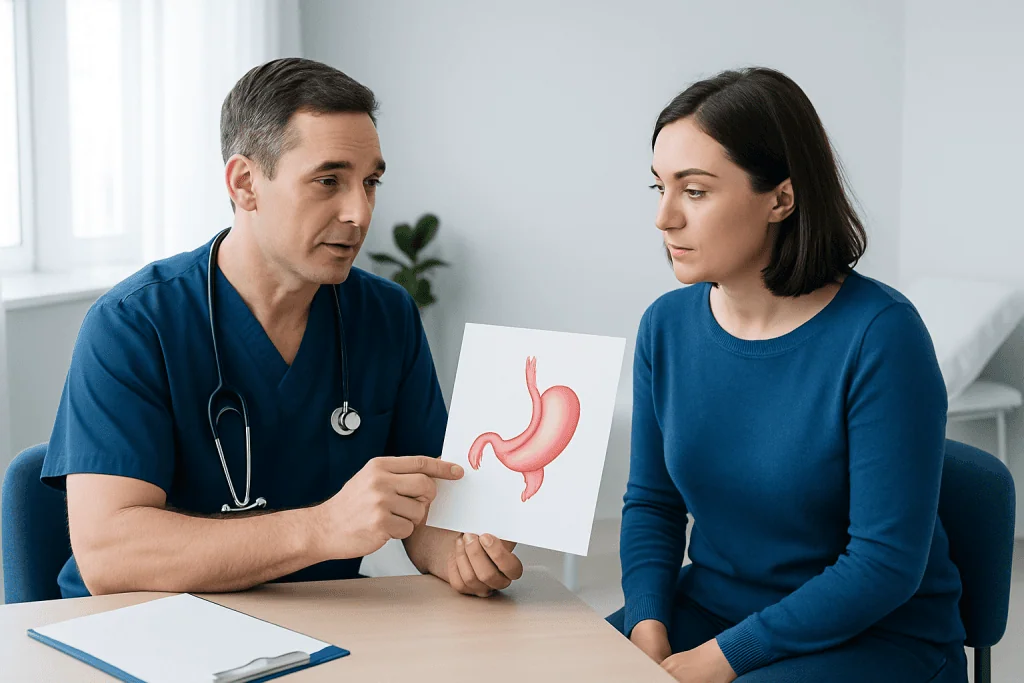
Several factors can contribute to reflux after sleeve gastrectomy. The surgery removes a large part of the stomach and creates a narrow tube-shaped stomach. This can raise pressure inside the stomach, especially after meals, making it easier for acid or food to move upward into the esophagus.
The anti-reflux barrier can also be affected. The lower esophageal sphincter, the muscular valve between the esophagus and stomach, may not close tightly enough in some people. A hiatal hernia, in which part of the stomach moves upward through the diaphragm, can further weaken this barrier. If a hiatal hernia is present before or after surgery, reflux may be more likely or more severe.
Other possible causes include a sleeve that is too narrow in one area, twisting or kinking of the sleeve, delayed emptying of the stomach, or eating habits that strain the new stomach. Large bites, eating too fast, drinking with meals, overeating, carbonated beverages, alcohol, and certain trigger foods can all worsen symptoms. Weight regain may also increase pressure in the abdomen and make reflux harder to control.
People with pre-existing gastroesophageal reflux disease (GERD) may continue to have symptoms after surgery, and some may feel worse. This is one reason why careful preoperative evaluation and long-term follow-up are important when planning gastric sleeve surgery.
How Doctors Diagnose the Problem
Diagnosis begins with a detailed review of symptoms, eating patterns, recovery progress, medication use, and any reflux history before surgery. The doctor may ask when symptoms started, what foods trigger them, whether they wake the person at night, and whether there are warning signs such as vomiting, difficulty swallowing, or weight loss beyond what is expected after surgery.
Upper endoscopy is commonly used when symptoms are persistent, severe, or unclear. This test allows the doctor to examine the esophagus, stomach sleeve, and the connection between them. It can help detect inflammation, ulcers, narrowing, bile reflux, a hiatal hernia, or other changes that may explain symptoms. In some situations, contrast imaging studies can show how liquid passes through the sleeve and whether there is twisting or obstruction.
When the diagnosis is uncertain, additional tests may be helpful. Esophageal pH monitoring can measure acid exposure in the esophagus, and manometry can assess the movement and muscle function of the esophagus. These tests are especially useful when symptoms do not match endoscopy findings or when revisional surgery is being considered.
Not every patient needs every test. The choice depends on the severity of symptoms, timing after surgery, response to treatment, and whether doctors suspect a mechanical issue that may need a procedural solution rather than medication alone.
Treatment Options
Treatment depends on the cause, severity, and timing of symptoms. Many people improve with a combination of meal changes and acid-reducing medication. Doctors often recommend eating smaller meals, chewing thoroughly, avoiding late-night eating, and staying upright after meals. For some patients, these steps significantly reduce discomfort.
Medicines may include acid suppression such as proton pump inhibitors or other reflux treatments recommended by a doctor. These can help the esophagus heal and relieve heartburn, but they do not correct every underlying structural problem. If symptoms return whenever medication is stopped, further evaluation may be needed.
When reflux is linked to a treatable anatomic problem, procedures may be considered. Repair of a hiatal hernia, endoscopic treatment for a narrowed area, or revisional bariatric surgery can be appropriate in selected cases. For patients with severe or persistent reflux after sleeve gastrectomy, conversion to gastric bypass surgery may reduce acid exposure and improve symptoms.
Treatment decisions should be individualized. The best approach depends on symptoms, nutritional status, weight-loss goals, test results, and overall health. A team that includes bariatric surgeons, gastroenterologists, dietitians, and other specialists can help determine whether symptoms are best managed medically or whether a mechanical issue needs correction.
Prevention and Self-care During Recovery
Good postoperative habits can lower the chance of reflux and help mild symptoms settle. Recovery eating plans are designed to protect the healing stomach and reduce pressure inside the sleeve. Following the surgeon’s instructions about food stages, portion sizes, and drinking habits is one of the most important parts of aftercare.
Helpful self-care strategies include:
- Eat small, slow meals and stop before feeling overly full
- Chew food well and avoid rushing meals
- Wait before lying down after eating
- Avoid eating close to bedtime
- Limit foods and drinks that trigger symptoms, such as spicy, fatty, acidic, caffeinated, or carbonated items if they cause discomfort
- Avoid smoking and limit alcohol, because both can worsen reflux
- Take prescribed medicines exactly as directed
Keeping a symptom and food diary can also help. This may reveal patterns such as symptoms after specific foods, large meals, or eating too quickly. If symptoms are linked with nausea, vomiting, or difficulty tolerating protein and fluids, the issue may be more than simple reflux and should be discussed with the care team.
Long-term follow-up remains important even after the early recovery phase. Weight changes, dietary shifts, and anatomical changes over time can all influence symptoms. If reflux becomes frequent months or years after surgery, reassessment is sensible rather than relying only on over-the-counter remedies.
When to Seek Medical Help
Medical advice is recommended when reflux happens often, interferes with eating or sleep, or does not improve with the recovery plan. Persistent heartburn is not something a person should simply try to tolerate after sleeve surgery. Evaluation can help distinguish manageable reflux from problems such as narrowing, hernia, ulceration, or more significant stomach inflammation.
Prompt medical attention is especially important if there is trouble swallowing, repeated vomiting, dehydration, black stools, vomiting blood, severe chest pain, fainting, shortness of breath, or severe abdominal pain. These symptoms do not always mean a serious complication, but they should be assessed urgently because they can overlap with other digestive or cardiac conditions.
People whose symptoms continue despite medication or who need long-term acid suppression should also speak with their doctor. Ongoing reflux can irritate the esophagus and may require endoscopic monitoring or a change in treatment strategy. In some cases, further procedures such as endoscopy or revisional bariatric evaluation are the safest next steps.
For international patients needing assessment and follow-up, Acibadem International’s multidisciplinary specialists and JCI-accredited hospitals diagnose and treat reflux and bariatric surgery-related problems with coordinated care.
Frequently asked questions
Is reflux after gastric sleeve surgery common?
It is a recognized issue after sleeve gastrectomy, and some people develop new reflux symptoms while others notice that existing reflux continues. The likelihood varies based on anatomy, surgical factors, and eating habits after surgery.
Can reflux after sleeve surgery go away on its own?
Mild symptoms during early recovery may improve as swelling settles and eating habits become more consistent. However, persistent, worsening, or late-onset reflux should be assessed because it may reflect an anatomical or functional problem that needs treatment.
What foods make reflux worse after gastric sleeve surgery?
Common triggers include large meals, fatty or spicy foods, acidic foods, caffeine, carbonated drinks, alcohol, and eating too close to bedtime. Trigger foods differ between individuals, so a food and symptom diary can be useful.
How is reflux after gastric sleeve surgery treated?
Treatment often starts with smaller meals, slower eating, avoiding lying down after meals, and taking doctor-recommended acid-reducing medication. If tests show a hiatal hernia, narrowing, or severe ongoing reflux, a procedure or revisional surgery may be considered.
When should a person worry about heartburn after sleeve gastrectomy?
Medical review is important if heartburn is frequent, wakes the person at night, affects hydration or nutrition, or continues despite treatment. Urgent care is needed for chest pain, repeated vomiting, bleeding, black stools, dehydration, or trouble swallowing.
Can gastric bypass help if reflux after sleeve surgery is severe?
In selected patients, conversion to gastric bypass may reduce reflux and improve quality of life. This decision is usually based on symptoms, endoscopy findings, other test results, and discussion with an experienced bariatric team.
References
- American Society for Metabolic and Bariatric Surgery
- National Institute of Diabetes and Digestive and Kidney Diseases
- American College of Gastroenterology
- Society of American Gastrointestinal and Endoscopic Surgeons
- National Health Service
This article is for general information only and is not a substitute for professional medical advice. Please consult a qualified doctor about your individual situation.
Gastric Sleeve Surgery in Turkey — costs, top hospitals & a free quote
JCI-accredited · board-certified surgeons · reply within 24h
Add us as a Preferred Source to see more of our trusted health content across Google Search, AI Overviews and Discover.

Bariatric & Metabolic Surgery
Surgical and endoscopic treatments for obesity and metabolic conditions.