Regular Temperature Human Body: A Complete Medical Overview

A regular temperature human body is not one fixed number; a small range is normal. Body temperature varies by age, time of day, menstrual cycle, activity, and measurement method.
Key Takeaways
- A regular temperature human body is not one fixed number; a small range is normal.
- Body temperature varies by age, time of day, menstrual cycle, activity, and measurement method.
- Fever is generally a temperature above the normal range and should be interpreted together with symptoms.
- Very high temperatures or unusually low temperatures need prompt medical attention.
- Correct thermometer use helps avoid misleading readings.
Regular temperature human body is often described as 98.6°F (37°C), but normal body temperature is a range rather than one exact number. In most healthy people, it falls around 97°F to 99°F and can change slightly with age, activity, time of day, and the way it is measured.
Overview: What Is a Regular Human Body Temperature?
The regular temperature human body is commonly said to be 98.6°F (37°C), but this is only a helpful average. For many healthy adults, normal body temperature can be a little lower or higher, often falling within a range of about 97°F to 99°F (36.1°C to 37.2°C). A person can feel well and still have a temperature that does not match the traditional single number.
Body temperature reflects how the body balances heat production and heat loss. This process is controlled mainly by the brain, especially the hypothalamus, which works like an internal thermostat. It responds to physical activity, surrounding temperature, hormones, infection, and many other signals to keep the body functioning properly.
Temperature also depends on where and how it is measured. Oral, ear, forehead, underarm, and rectal temperatures do not always give identical results. Because of this, a reading should be interpreted in context rather than judged by one universal cut-off.
Understanding the normal range can help people decide when a reading is likely harmless and when it may need medical advice. It is also useful for recognizing fever, dehydration, heat-related illness, or abnormally low body temperature.
What Affects Body Temperature?
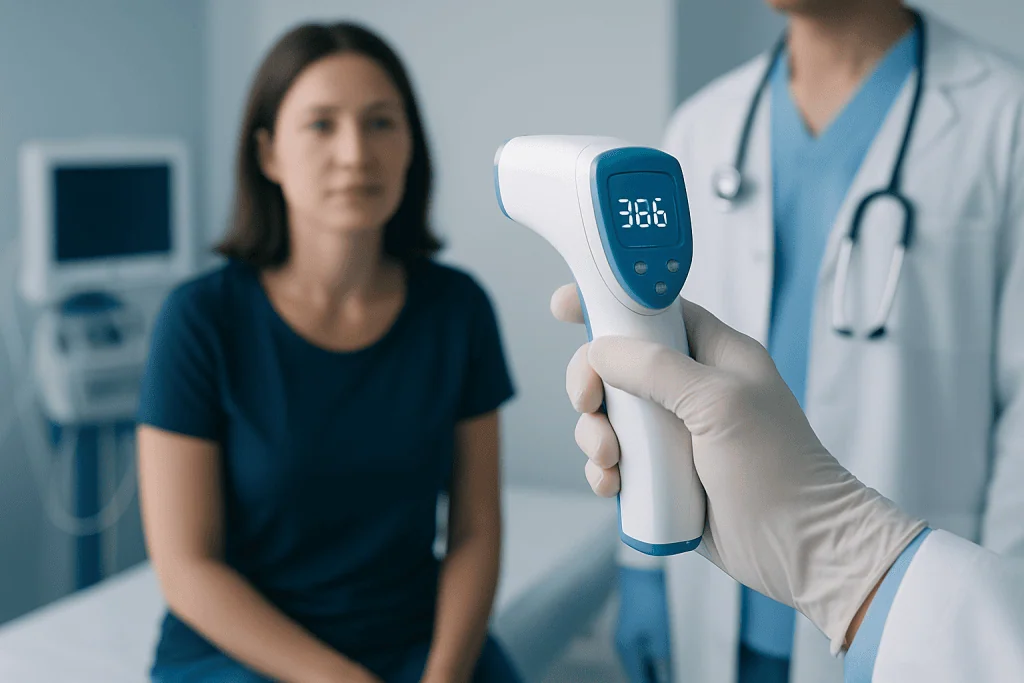
Normal temperature changes throughout the day. It is usually lower in the early morning and slightly higher in the late afternoon or evening. This daily pattern is part of the body’s natural circadian rhythm and can explain why two readings taken at different times may not match.
Age matters as well. Infants and young children may have more noticeable temperature fluctuations, while older adults sometimes have a lower baseline temperature and may not develop a strong fever even when they are ill. Hormonal changes, including those linked to the menstrual cycle and ovulation, can also raise body temperature slightly.
Physical activity, warm clothing, hot weather, emotional stress, and eating or drinking hot or cold foods can temporarily affect readings. Medicines may also play a role. For example, some drugs can reduce fever, while others may increase the risk of heat-related problems.
Measurement method is especially important. In general, rectal readings tend to be slightly higher than oral readings, while underarm readings are often a little lower. Ear and forehead thermometers can be useful, but accuracy depends on proper technique and the device used.
Normal Range, Fever, and Low Temperature

Rather than focusing on a single “perfect” number, it is more useful to think in terms of a personal normal range. Many healthy adults are close to 98.6°F (37°C), but others are naturally lower or higher. A temperature can still be normal if the person feels well and the reading fits their usual pattern.
Fever generally means the body temperature is above the expected range, often due to infection or inflammation. In adults, an oral temperature of 100.4°F (38°C) or higher is commonly considered a fever. Fever itself is not a disease; it is a sign that the body is responding to something.
Low body temperature, also called hypothermia when significantly reduced, is also important. A mild drop may occur after prolonged exposure to cold, but a clearly low temperature can also happen with serious illness, shock, alcohol use, some medications, or problems affecting metabolism and hormone balance. Disorders involving the thyroid gland can influence metabolism, although low temperature alone does not mean a person has thyroid disease.
- Typical average: about 98.6°F (37°C)
- Common normal range: roughly 97°F to 99°F (36.1°C to 37.2°C)
- Common adult fever threshold: 100.4°F (38°C) or higher
- Concerning low temperature: depends on context, symptoms, and how low the reading is
How to Measure Temperature Correctly
Accurate measurement starts with the right thermometer and method. Digital thermometers are widely used because they are quick and practical. The best method may depend on age, symptoms, and the need for precision. For infants and some clinical situations, rectal measurement may be recommended because it is close to core body temperature.
For oral readings, it helps to avoid hot or cold drinks for a short period beforehand and to place the thermometer correctly under the tongue. Ear thermometers must be positioned properly in the ear canal, and forehead devices should be used exactly as instructed. Underarm readings are convenient but may be less precise than other methods.
If a reading seems unusual, repeating it after a short rest can be helpful. The same method should be used each time when tracking temperature over several hours or days. Sudden changes between different measurement sites can be confusing and may not reflect a true medical change.
When temperature patterns are hard to interpret, a clinician may recommend further evaluation. In some situations, testing may be used to look for infection or another cause, and imaging such as MRI or CT scan can be part of a broader assessment when symptoms suggest a deeper medical problem rather than a simple fever.
When Temperature Changes May Signal Illness
A temperature outside a person’s usual range can occur with infections, inflammatory conditions, dehydration, heat exhaustion, or exposure to cold. Fever is often accompanied by chills, sweating, fatigue, body aches, headache, or loss of appetite. The cause may be mild and short-lived, but the meaning depends on the whole clinical picture.
Some people have important symptoms without a high fever. This is especially true in older adults, people with weakened immune systems, and very young infants. On the other hand, a modest fever after vaccination, exercise, or being in a warm environment may not indicate a serious problem.
Very high temperature can be dangerous because it may affect the brain, heart, and other organs, particularly if linked to heatstroke or severe infection. Severe infection can sometimes progress to sepsis, a medical emergency in which the body has an overwhelming response to infection. Persistent fever may also lead a doctor to investigate conditions involving the lungs, urinary tract, abdomen, or nervous system.
Low temperature can also be significant, particularly when combined with confusion, shivering, weakness, slow breathing, or drowsiness. Anyone with a concerning temperature change and worsening symptoms should seek professional advice rather than relying only on home monitoring.
What to Do at Home: Self-Care and Monitoring
Home care depends on how the person feels, not only on the number on the thermometer. Rest, fluids, light clothing, and a comfortable room temperature are often enough for mild fever or temporary temperature changes. If fever is present, many people improve with simple supportive care and, when appropriate, commonly used fever-reducing medicine taken as directed by a healthcare professional or product instructions.
Hydration is especially important because fever increases fluid loss. Cool drinks, soups, and regular water intake may help prevent dehydration. Overheating should be avoided, but very cold baths or ice water are generally not advised because they may cause discomfort and shivering, which can raise body temperature further.
Temperature should be monitored over time if symptoms continue. Useful details include the highest reading, the method used, the time of day, and associated symptoms such as cough, sore throat, rash, vomiting, pain with urination, shortness of breath, or confusion. This information helps clinicians assess whether more testing is needed.
If the underlying cause is unclear, doctors may use laboratory testing or additional studies such as blood tests to look for infection, inflammation, or metabolic problems. The goal is not simply to lower the temperature, but to identify and treat the cause when necessary.
When to Seek Medical Care
Medical advice is appropriate when a fever is high, lasts longer than expected, or is accompanied by concerning symptoms. Adults should seek prompt care for trouble breathing, chest pain, severe headache, stiff neck, confusion, dehydration, repeated vomiting, new rash, seizures, or a temperature that is very high or keeps rising. Low body temperature with drowsiness, weakness, slow breathing, or exposure to cold also needs urgent attention.
Infants, young children, older adults, pregnant people, and those with chronic illness or weakened immunity may need earlier evaluation because temperature changes can affect them differently. In babies, even a modest fever can be important. Any caregiver who is unsure should contact a qualified clinician.
Persistent or unexplained fever sometimes requires a broader medical workup. Depending on symptoms, a doctor may assess the chest, abdomen, urinary tract, or brain and may consider specialist referral. Near the end of this process, coordinated care can matter; Acibadem International’s multidisciplinary specialists and JCI-accredited hospitals diagnose and treat patients with complex causes of fever and temperature abnormalities, including international patients.
Timely assessment is especially important when temperature changes are not improving, when the person appears unwell, or when there is concern about serious infection, heat illness, or another underlying condition.
Frequently asked questions
Is 98.6°F always the regular temperature human body?
No. 98.6°F is a useful average, but normal body temperature varies from person to person. Many healthy people have temperatures a little below or above that number.
What is considered a normal body temperature range?
A common normal range is roughly 97°F to 99°F for many adults, depending on the measurement method. Age, time of day, and activity can all shift the reading slightly.
When is a temperature considered a fever?
In adults, an oral temperature of 100.4°F (38°C) or higher is commonly considered a fever. However, doctors also look at symptoms, medical history, and how the temperature was measured.
Why is my temperature different in the morning and evening?
Body temperature follows a daily rhythm called the circadian cycle. It is often lower in the morning and a bit higher later in the day, even in healthy people.
Which thermometer method is most accurate?
Accuracy depends on the person’s age, the device, and proper technique. Rectal measurements are often closest to core temperature, while oral, ear, and forehead methods can also be reliable when used correctly.
Can someone be sick without having a fever?
Yes. Some infections and other illnesses do not always cause a clear fever, especially in older adults or people with weakened immunity. Other symptoms such as fatigue, cough, pain, or confusion may be more noticeable.
When should low body temperature be a concern?
Low temperature can be concerning when it is clearly below normal or comes with shivering, confusion, weakness, or slow breathing. It is especially important to seek help if the person has been exposed to cold or seems increasingly unwell.
This article is for general information only and is not a substitute for professional medical advice. Please consult a qualified doctor about your individual situation.
Explore treatments in Turkey — costs, top hospitals & a free quote
JCI-accredited · board-certified surgeons · reply within 24h
Add us as a Preferred Source to see more of our trusted health content across Google Search, AI Overviews and Discover.
Check your numbers in seconds
BMI, calories, due date, blood pressure and 30+ more clinical calculators — free, instant, doctor-reviewed ranges.

More from the Health Library

Powerade: An Evidence-Based Guide for Patients

Intuitive Eating — Explained by Medical Evidence, Not Myths

Panthenol: An Evidence-Based Guide for Patients

AST: An Evidence-Based Guide for Patients

Fluoride Mouthwash — Explained by Medical Evidence, Not Myths