Restless Legs Syndrome vs Periodic Limb Movement Disorder

RLS mainly affects a person while awake or trying to fall asleep, causing an urge to move the legs. PLMD causes repeated leg or limb movements during sleep and is often noticed by a bed partner or on a sleep study.
Key Takeaways
- RLS mainly affects a person while awake or trying to fall asleep, causing an urge to move the legs.
- PLMD causes repeated leg or limb movements during sleep and is often noticed by a bed partner or on a sleep study.
- A person can have RLS and periodic limb movements together, but one does not automatically mean the other.
- Iron deficiency, certain medications, pregnancy, kidney disease, and neurological conditions can contribute to symptoms.
- Diagnosis is based on symptom history for RLS and often requires sleep testing to confirm PLMD.
- Treatment may include improving sleep habits, correcting iron deficiency, reviewing medications, and using targeted therapies when needed.
Restless legs syndrome (RLS) and periodic limb movement disorder (PLMD) are related but different sleep-related movement conditions. RLS causes uncomfortable leg sensations and an urge to move, usually during rest, while PLMD involves repetitive limb movements during sleep that a person may not notice.
Overview: How RLS and PLMD Differ
Restless legs syndrome and periodic limb movement disorder are both sleep-related movement problems, but they are not the same condition. Restless legs syndrome, often called RLS, is defined by an uncomfortable urge to move the legs. Symptoms usually begin or worsen during rest, especially in the evening or at night, and movement often brings temporary relief. In contrast, periodic limb movement disorder, or PLMD, involves repeated, patterned movements of the legs during sleep.
The key difference is timing and awareness. A person with RLS is usually awake and notices unpleasant sensations such as crawling, pulling, tingling, or inner restlessness. A person with PLMD may be completely unaware of the movements and instead experience poor sleep quality, repeated awakenings, or daytime tiredness. A bed partner may be the first to notice kicking or jerking at night.
These two conditions can occur together. Many people with RLS also have periodic limb movements during sleep, but not everyone with periodic limb movements has RLS. This is why careful evaluation matters. Understanding the distinction helps guide diagnosis, treatment, and expectations about symptom control.
Symptoms and Typical Patterns
RLS symptoms are often described as hard to explain but difficult to ignore. The classic pattern includes an urge to move the legs, symptoms that start or worsen during rest, relief with movement, and stronger symptoms in the evening or night. Some people feel the sensations in both legs, while others may notice them in one leg, the arms, or more rarely other body areas. Sitting through a meeting, traveling, or lying in bed can trigger discomfort.
PLMD, on the other hand, usually shows up as repetitive leg movements during sleep. These movements often involve extension of the big toe and bending at the ankle, knee, or hip. They tend to happen every 20 to 40 seconds in clusters and may disrupt normal sleep without fully waking the person each time. Because of this, someone may feel unrefreshed in the morning or have trouble with concentration, mood, or daytime alertness.
Common clues that a sleep-related movement problem may be present include:
- An urge to move the legs when resting
- Unpleasant leg sensations that improve with walking or stretching
- Difficulty falling asleep because of leg discomfort
- Frequent kicking or jerking during sleep
- Repeated nighttime awakenings
- Excessive daytime sleepiness or fatigue
Not every person has the same pattern. Symptoms can be mild and occasional or more persistent and disruptive. If symptoms affect sleep quality, daily functioning, or overall well-being, medical assessment is worthwhile.
Causes and Risk Factors

The exact cause of RLS is not always clear, but research suggests that brain pathways involving dopamine and iron regulation play a role. Some people have a family history, which makes inherited forms more likely. RLS can also be secondary to other conditions, including iron deficiency, pregnancy, chronic kidney disease, and certain neurological disorders. In some cases, symptoms appear or worsen with age.
PLMD may occur on its own, but it is also associated with other sleep and medical conditions. It can be seen in people with RLS, obstructive sleep apnea, narcolepsy, kidney disease, and some neurological illnesses. Certain medications, especially some antidepressants, antihistamines, and dopamine-blocking drugs, may worsen either RLS symptoms or periodic limb movements in susceptible individuals.
Factors that can increase the likelihood of RLS or PLMD include:
- Low iron stores, even without clear anemia
- Pregnancy, especially in the later months
- Family history of RLS
- Chronic kidney disease
- Peripheral neuropathy or nerve disorders
- Use of alcohol, caffeine, nicotine, or sleep-disrupting substances
- Poor sleep habits or irregular sleep schedules
Because symptoms can overlap with other problems, it is important not to assume every nighttime leg symptom is RLS or PLMD. Muscle cramps, arthritis pain, circulation problems, anxiety, and other sleep disorders may look similar and need different treatment.
How Doctors Diagnose RLS and PLMD
RLS is usually diagnosed based on a detailed medical history rather than a single test. A doctor asks about the urge to move, the nature of the sensations, whether symptoms worsen with rest, whether movement helps, and whether symptoms are worse in the evening or night. The doctor also reviews medications, sleep habits, family history, and conditions that may trigger secondary RLS. Blood tests may be used to check iron levels and look for contributing issues such as kidney problems.
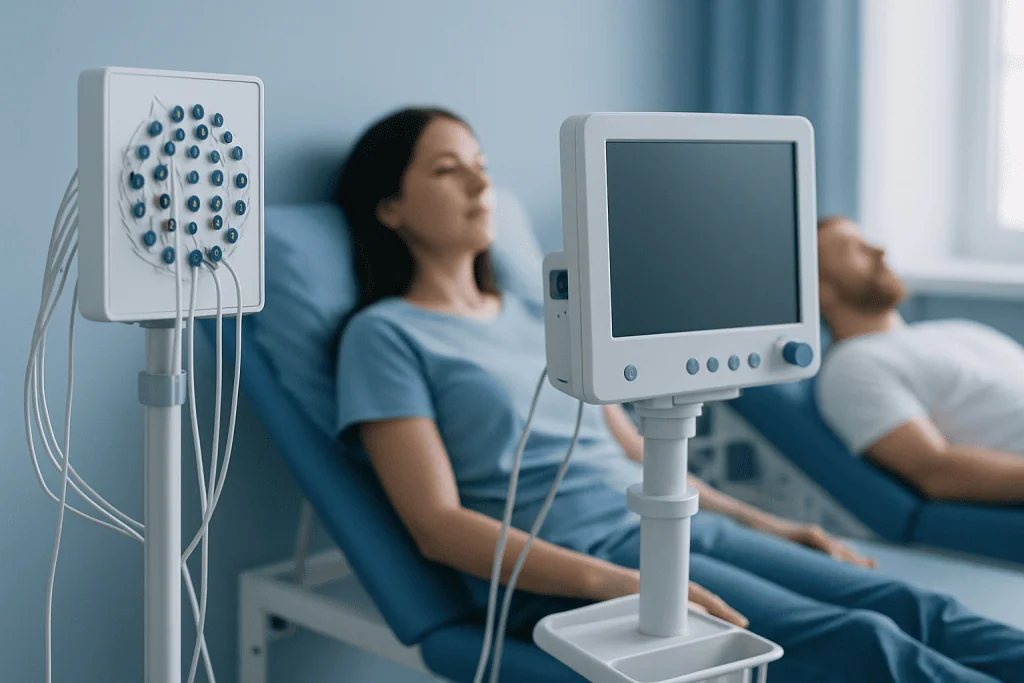
PLMD is different because repeated leg movements during sleep are difficult to confirm from symptoms alone. Diagnosis often requires an overnight sleep study, called polysomnography, which records limb movements, sleep stages, breathing, and other body signals. This is especially helpful when a person has unexplained daytime sleepiness, frequent awakenings, or suspected coexisting sleep conditions such as sleep apnea.
Doctors also try to rule out conditions that can mimic or complicate these disorders. For example, symptoms may overlap with Parkinson's disease in some patients, or with nerve-related discomfort such as peripheral neuropathy. A careful neurological and sleep evaluation helps identify whether symptoms reflect RLS, PLMD, another condition, or a combination of problems.
Treatment Options and Symptom Relief
Treatment depends on which disorder is present, how severe the symptoms are, and whether an underlying cause can be corrected. If iron deficiency is found, restoring iron stores may improve symptoms. Medication review is also important, since some drugs can worsen leg discomfort or nighttime movements. For people with mild symptoms, lifestyle changes and better sleep habits may be enough to provide meaningful relief.
When symptoms are more bothersome, doctors may consider medications that affect dopamine pathways, calcium channel signaling, or other neurological mechanisms. The choice of treatment is individualized, especially because some medicines can lose effectiveness over time or may cause symptom worsening in certain people. If a sleep study also shows another disorder, treating that condition can improve sleep quality and reduce nighttime disruption.
Management may include:
- Correcting low iron when appropriate
- Adjusting medications that may worsen symptoms
- Reducing caffeine, alcohol, and nicotine
- Regular moderate exercise and stretching
- Improving sleep schedule and sleep environment
- Targeted medications for persistent or severe symptoms
In more complex cases, evaluation in a specialized sleep center can be helpful. Testing such as sleep study testing may clarify the diagnosis, and some patients may benefit from a structured neurology consultation or sleep medicine consultation to tailor treatment safely.
Self-care, Prevention, and Living Well
Although RLS and PLMD cannot always be prevented, several self-care strategies may reduce symptom burden. Keeping a regular bedtime and wake time supports healthier sleep rhythms. Many people also find that gentle stretching, walking, massage, warm baths, or relaxation exercises before bed reduce evening discomfort. These approaches are most helpful when used consistently rather than only during severe flare-ups.
Healthy habits can also lower the chance that symptoms become more disruptive. Limiting caffeine later in the day, avoiding nicotine, and reducing alcohol near bedtime may improve both sleep quality and nighttime movements. Regular physical activity is useful, but very intense exercise late in the evening can sometimes make symptoms worse in some individuals. It helps to track personal triggers and discuss patterns with a doctor.
If there is an underlying medical issue, managing it well is part of prevention. This may include monitoring iron levels, treating kidney disease, addressing neuropathy, or evaluating other sleep disorders. Near the end of the care pathway, some international patients may seek support from experienced centers; Acibadem International’s multidisciplinary specialists and JCI-accredited hospitals evaluate and treat sleep-related movement disorders in an integrated way.
When to See a Doctor
A doctor should be consulted if leg discomfort, nighttime kicking, or poor sleep is happening often enough to affect quality of life. Trouble falling asleep, repeated awakenings, daytime sleepiness, difficulty concentrating, or mood changes are all good reasons to seek medical advice. Symptoms during pregnancy, in older adults, or in people with kidney disease or neurological conditions also deserve attention.
Medical review is especially important when symptoms appear suddenly, become severe, spread beyond the legs, or are associated with numbness, weakness, pain, or changes in walking. These features may suggest another condition that needs assessment. A doctor can also help determine whether current medications may be contributing.
Prompt evaluation can make treatment more effective and more precise. Rather than trying to self-diagnose from symptoms alone, it is safer to have a qualified professional confirm whether the problem is RLS, PLMD, another sleep disorder, or a different medical issue entirely.
Frequently asked questions
What is the main difference between restless legs syndrome and periodic limb movement disorder?
Restless legs syndrome causes an urge to move the legs, usually while a person is awake, resting, or trying to fall asleep. Periodic limb movement disorder causes repeated limb movements during sleep, and the person may not be aware of them.
Can a person have both RLS and PLMD?
Yes. Many people with restless legs syndrome also have periodic limb movements during sleep. However, having PLMD does not automatically mean a person has RLS, so proper evaluation is important.
Does PLMD always need a sleep study to diagnose?
PLMD is often confirmed with an overnight sleep study because the movements happen during sleep and need to be measured objectively. A sleep study also helps rule out other sleep disorders that can disturb sleep or cause similar symptoms.
What can make RLS symptoms worse?
Common triggers include low iron stores, lack of sleep, alcohol, caffeine, nicotine, and some medications such as certain antidepressants or antihistamines. Long periods of sitting or inactivity may also make symptoms more noticeable.
Is restless legs syndrome dangerous?
RLS is usually not dangerous in itself, but it can significantly affect sleep, comfort, and quality of life. Because it may be linked to iron deficiency, kidney disease, pregnancy, or neurological conditions, ongoing symptoms should be assessed by a doctor.
Can lifestyle changes really help these conditions?
For some people, yes. Regular sleep habits, moderate exercise, stretching, and avoiding substances that worsen symptoms can reduce discomfort and improve sleep quality, especially in mild cases.
When should someone seek medical care for nighttime leg symptoms?
A person should seek medical advice if symptoms are frequent, disturb sleep, cause daytime tiredness, or interfere with daily activities. Medical care is also important if symptoms are new, rapidly worsening, or occur along with pain, weakness, numbness, or balance changes.
References
- American Academy of Sleep Medicine
- National Institute of Neurological Disorders and Stroke
- National Heart, Lung, and Blood Institute
- Mayo Clinic
- International Restless Legs Syndrome Study Group
This article is for general information only and is not a substitute for professional medical advice. Please consult a qualified doctor about your individual situation.
Explore treatments in Turkey — costs, top hospitals & a free quote
JCI-accredited · board-certified surgeons · reply within 24h
Add us as a Preferred Source to see more of our trusted health content across Google Search, AI Overviews and Discover.