Rods and Cones Light: What Patients Need to Know

Rods are most important for seeing in dim light and detecting movement at the edges of vision. Cones work best in bright light and are responsible for color vision and sharp central detail.
Key Takeaways
- Rods are most important for seeing in dim light and detecting movement at the edges of vision.
- Cones work best in bright light and are responsible for color vision and sharp central detail.
- Problems affecting rods or cones can cause night blindness, light sensitivity, blurred vision, or changes in color perception.
- Eye examinations and retinal imaging can help identify whether symptoms are linked to retinal photoreceptors.
- Protecting overall eye health includes regular checkups, managing chronic disease, and seeking care for sudden vision changes.
Rods and cones light describes how two types of retinal cells respond to light and turn it into signals the brain can interpret as vision. Rods support dim-light and peripheral vision, while cones help with color vision, fine detail, and daylight sight.
Overview: What rods and cones light means
Rods and cones light refers to the way the eye’s photoreceptor cells respond to different kinds of light. These cells sit in the retina, the light-sensitive layer at the back of the eye, and they begin the process of turning light into electrical signals that travel through the optic nerve to the brain.
Rods are highly sensitive to low levels of light, so they are essential for seeing in dim environments such as at dusk, indoors with poor lighting, or at night. Cones are less sensitive to dim light but work especially well in bright conditions, where they provide detailed central vision and the ability to distinguish colors.
Together, rods and cones allow the visual system to adapt across a wide range of lighting conditions. This is why a person can move from daylight into a darker room, notice an adjustment period, and then gradually see better as rod function becomes more dominant.
Understanding rods and cones is helpful because symptoms such as poor night vision, difficulty recognizing colors, glare, or reduced sharpness may point to a problem affecting one or both cell types. These symptoms do not always mean serious disease, but they do deserve proper assessment when they are new, persistent, or worsening.
How rods and cones work in everyday vision
The eye focuses incoming light through the cornea and lens onto the retina. Once light reaches the retina, rods and cones absorb it using specialized visual pigments. This starts a chain of chemical and electrical events that creates nerve signals for the brain to interpret as shapes, brightness, color, and motion.
Rods are concentrated more in the outer parts of the retina. Because of this, they support peripheral vision and are very good at detecting movement, especially in low light. However, rods do not provide fine detail and do not distinguish color. This explains why colors seem muted in the dark.
Cones are packed most densely in the macula, especially in the fovea, the area responsible for the sharpest central vision. Cones allow activities such as reading, recognizing faces, driving in daylight, and seeing color differences. There are different cone types that respond best to different wavelengths of light, helping the brain perceive a range of colors.
Normal vision depends on both systems working together. When bright light is available, cones lead visual performance. In dim settings, rods become much more important. If either group of cells is damaged, a person may still see, but the quality and comfort of vision can change in noticeable ways.
Symptoms that may suggest rod or cone problems
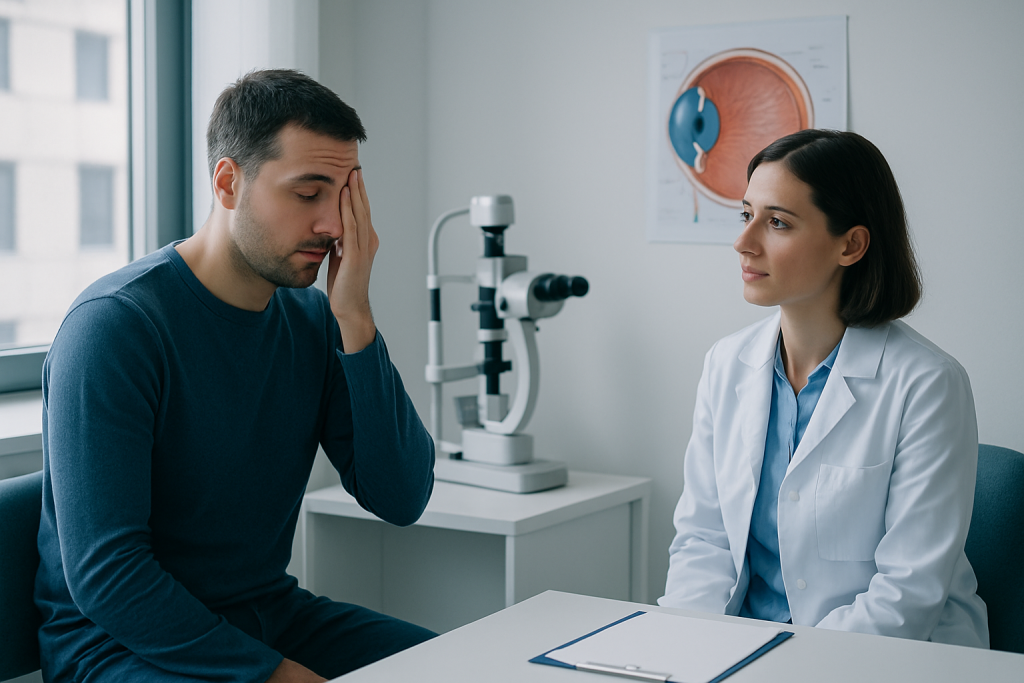
When rods do not function well, the most common symptom is difficulty seeing in low light. A person may notice trouble driving at night, walking in dark hallways, or adjusting after entering a dim room. Peripheral vision may also feel reduced, and motion at the edges of sight may be harder to detect.
When cones are affected, symptoms often include blurred central vision, trouble reading, increased sensitivity to bright light, and reduced color discrimination. Some people describe washed-out colors or difficulty telling similar shades apart. Glare in sunny conditions can also become more bothersome.
These symptoms can develop gradually or appear suddenly, depending on the cause. They may affect one eye or both eyes. Some changes are linked to inherited retinal disorders, while others are related to aging, inflammation, metabolic disease, medication effects, or damage to the retina itself.
- Poor night vision or slow dark adaptation
- Light sensitivity or glare
- Reduced color vision
- Blurred central vision
- Peripheral vision changes
- Difficulty with fine visual tasks such as reading
Because similar symptoms can occur in several eye conditions, a medical evaluation is the best way to understand whether rods, cones, or another part of the eye is involved. In some cases, symptoms may relate to macular degeneration or other retinal disorders rather than a general vision problem.
Causes and risk factors affecting rods and cones
Rods and cones can be affected by many different conditions. Age-related changes in the retina are common, especially in the macula, where cone-rich central vision is located. Inherited retinal diseases may affect photoreceptors more directly and can lead to progressive symptoms over time.
Other causes include diabetes, retinal inflammation, retinal detachment, trauma, and problems with blood supply to the retina. Nutritional deficiency, especially severe vitamin A deficiency, can impair rod function and contribute to night blindness. Certain medications may also affect the retina in rare cases, which is why medication history matters during evaluation.
Risk factors vary by condition but often include older age, family history of retinal disease, poorly controlled diabetes, smoking, and previous eye injury or surgery. Some infections and autoimmune conditions can also affect retinal health. For people with unexplained visual symptoms, eye specialists may consider both local eye causes and broader medical factors.
Not every issue with night vision or color perception means permanent retinal cell damage. Cataracts, uncorrected refractive errors, or dry eye can sometimes create overlapping symptoms. A careful exam helps separate these more common causes from diseases that directly affect photoreceptors.
How doctors evaluate photoreceptor function
Evaluation usually begins with a detailed history. The doctor may ask when symptoms started, whether they are worse in the dark or in bright light, whether one or both eyes are affected, and whether there is a family history of retinal disease. Questions about medications, diabetes, autoimmune disease, or prior eye surgery are also important.
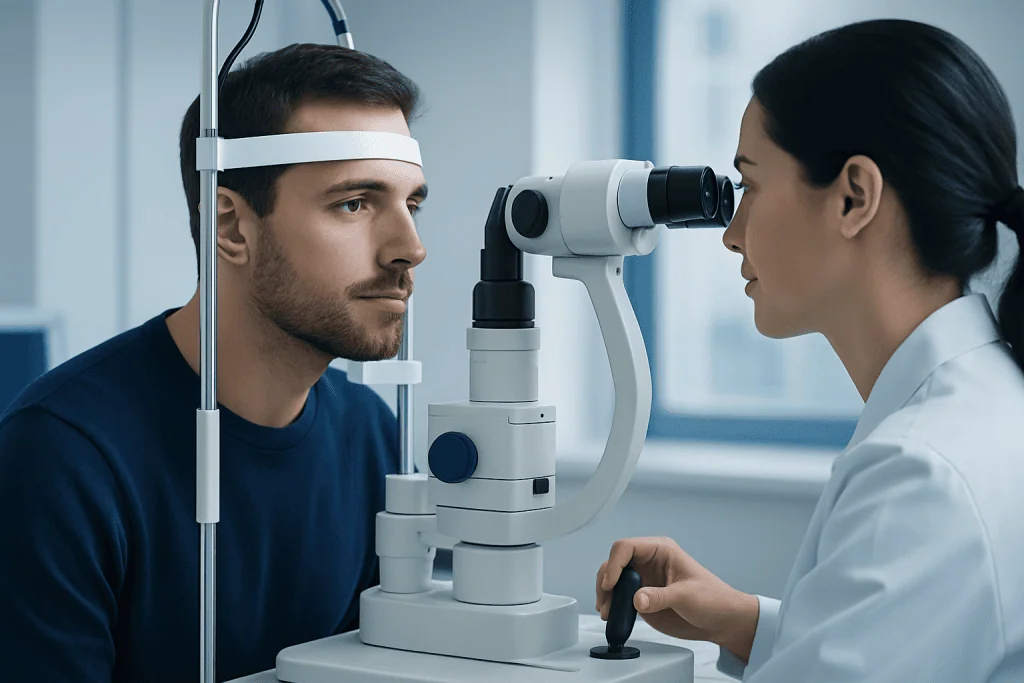
A comprehensive eye examination may include visual acuity testing, color vision testing, pupil examination, slit-lamp evaluation, and dilation to examine the retina. Retinal imaging can help show structural changes in the macula or peripheral retina. Depending on the findings, the doctor may recommend tests that measure how the retina responds to light.
Common diagnostic tools include optical coherence tomography, fundus photography, visual field testing, and electroretinography. These help assess whether rod or cone function appears reduced and whether the problem is limited to the retina or linked to another part of the visual system. In selected cases, genetic testing may be considered.
If surgery or a retina-focused procedure is needed for an underlying cause, patients may also hear about specialized retinal surgery approaches. The exact tests and treatment plan depend on the underlying diagnosis, not simply on the presence of night vision or color symptoms alone.
Treatment options and managing underlying causes
There is no single treatment for all rod and cone problems because therapy depends on why the photoreceptors are affected. In some cases, treatment targets a reversible cause, such as improving blood sugar control, correcting nutritional deficiency, or addressing cataracts that interfere with light reaching the retina. In other cases, the goal is to slow progression, preserve remaining vision, and improve day-to-day functioning.
When retinal disease is present, management may involve monitoring, medical therapy, laser treatment, injections, or surgery depending on the condition. For example, central vision changes related to retinal diseases may require ongoing follow-up with a retina specialist. If a cataract is significantly limiting visual quality, cataract surgery may improve the amount and quality of light reaching the retina.
Low vision support can also be valuable. Bright but comfortable task lighting, anti-glare strategies, magnifying devices, contrast enhancement, and orientation techniques may help people remain independent. Sunglasses or tinted lenses may be useful for individuals who experience pronounced light sensitivity, although the choice should be guided by an eye professional.
At the diagnostic and treatment planning stage, multidisciplinary evaluation can be helpful for complex cases. Acibadem International’s specialists in JCI-accredited hospitals diagnose and treat eye conditions for international patients, including cases that may need advanced imaging or coordinated retinal care.
Prevention and self-care for healthier vision
Not all photoreceptor problems can be prevented, especially inherited conditions. Still, several habits support long-term eye health. Regular eye examinations are important because some retinal disorders develop gradually and may be easier to monitor or treat when detected early.
Managing chronic conditions such as diabetes and high blood pressure helps protect the retina’s delicate blood supply. Avoiding smoking is also important, as smoking is linked to several eye diseases. A balanced diet that includes leafy vegetables, fruits, and sources of omega-3 fats may support overall retinal health, although diet is not a substitute for medical treatment.
Protective eyewear can reduce the risk of eye injury during sports, work, or home repairs. Good lighting at home may help people with early rod dysfunction feel safer and more comfortable, especially on stairs and in hallways. For bright-light discomfort, hats, visors, or clinician-recommended sunglasses may be helpful.
People who already have retinal disease may benefit from tailored follow-up. Some may need imaging, vision monitoring, or consultation about procedures such as vitrectomy when retinal complications occur. Self-care works best when paired with regular communication with a qualified eye doctor.
When to seek medical care
A routine eye appointment is appropriate if a person notices gradual trouble with night vision, increasing glare, color changes, or blurred central vision that is not explained by outdated glasses. These symptoms are often manageable, but they should be assessed because they can reflect retinal disease, cataract, or another eye condition.
Prompt medical evaluation is especially important for sudden vision loss, a new curtain-like shadow, flashes of light, a sudden increase in floaters, severe eye pain, or abrupt distortion of central vision. These symptoms can signal urgent retinal or eye problems that need timely treatment.
Children, younger adults, or multiple family members with similar visual symptoms may need specialist review, particularly if inherited retinal disease is possible. Early assessment can clarify the diagnosis and support planning for education, work, and daily living needs.
If symptoms are persistent or unexplained, an ophthalmologist may look for conditions such as retinal detachment or other disorders affecting the retina. Seeking care early is a practical way to protect vision and reduce uncertainty.
Frequently asked questions
What is the difference between rods and cones?
Rods are retinal cells that work best in dim light and help with night vision and peripheral awareness. Cones work best in bright light and provide color vision and sharp central detail.
Why do colors look less vivid in the dark?
In low light, rods do most of the visual work, and rods do not detect color. Because cones need brighter light to function well, color perception becomes weaker in dim settings.
Can problems with rods and cones be treated?
Treatment depends on the underlying cause rather than the photoreceptors alone. Some causes are reversible or manageable, while others require monitoring, retinal treatment, vision support, or long-term specialist care.
Do rods and cones change with age?
Yes, aging can affect the retina and the quality of vision, especially central detail and adaptation to different lighting conditions. Age-related eye diseases can also affect cone-rich areas such as the macula.
What symptoms suggest a rod problem?
Common signs include poor night vision, slow adjustment to darkness, and sometimes reduced peripheral awareness. These symptoms should be evaluated if they are new, troublesome, or getting worse.
What symptoms suggest a cone problem?
Cone-related symptoms may include blurred central vision, light sensitivity, difficulty reading, and reduced color discrimination. These symptoms can occur in several retinal conditions, so an eye examination is important.
This article is for general information only and is not a substitute for professional medical advice. Please consult a qualified doctor about your individual situation.
Explore treatments in Turkey — costs, top hospitals & a free quote
JCI-accredited · board-certified surgeons · reply within 24h
Add us as a Preferred Source to see more of our trusted health content across Google Search, AI Overviews and Discover.

More from the Health Library

Serous: What Patients Need to Know

Pressure Points: What Patients Need to Know

Early Stage Cold Sore: A Complete Medical Overview

Beef Bone Broth: An Evidence-Based Guide for Patients
Visually Impaired — Explained by Medical Evidence, Not Myths