Rolandic: A Complete Medical Overview

Rolandic epilepsy usually begins in school-age children and often causes seizures during sleep or on waking. Symptoms may include facial twitching, tingling around the mouth, drooling, speech difficulty and preserved awareness.
Key Takeaways
- Rolandic epilepsy usually begins in school-age children and often causes seizures during sleep or on waking.
- Symptoms may include facial twitching, tingling around the mouth, drooling, speech difficulty and preserved awareness.
- An electroencephalogram (EEG) helps support the diagnosis, while imaging is not always needed.
- Some children need anti-seizure medicine, while others can be monitored depending on seizure frequency and impact.
- Parents should seek urgent help for a prolonged seizure, breathing difficulty, injury or a first seizure.
Rolandic epilepsy, now commonly called self-limited epilepsy with centrotemporal spikes (SeLECTS), is a childhood epilepsy syndrome that causes brief focal seizures, often during sleep. Most children have a favorable outlook and outgrow seizures by adolescence, although individualized medical assessment remains important.
Rolandic epilepsy at a glance
Rolandic epilepsy is an older name for self-limited epilepsy with centrotemporal spikes (SeLECTS). It is an epilepsy syndrome that starts in childhood and is associated with focal seizures, meaning seizures that begin in one part of the brain. The term “rolandic” refers to the Rolandic area of the brain, near regions involved in facial movement and sensation.
The condition most often begins between about 4 and 13 years of age, commonly in otherwise healthy children with typical development. Seizures are frequently infrequent and tend to occur during sleep, shortly after falling asleep, or around waking. The word “self-limited” reflects that seizures usually stop naturally as the child reaches adolescence.
Although the outlook is generally reassuring, every child with a suspected seizure should be assessed by a qualified clinician. Similar symptoms can have different causes, and a careful diagnosis helps families understand what to expect and whether treatment is appropriate.
What a rolandic seizure can look like
Rolandic seizures often affect one side of the face, mouth, tongue or throat. A child may describe tingling, numbness, a pulling sensation or an unusual feeling around the lips, cheek or tongue. Facial twitching may be visible, and the child may be unable to speak clearly despite remaining awake and aware of what is happening.
Drooling is common because control of the mouth and throat muscles can be briefly affected. Noises such as gurgling, throat sounds or speech arrest may occur. Some seizures spread from the face to an arm or, less commonly, develop into a bilateral convulsive seizure involving stiffening and rhythmic jerking of the body.
Because many episodes happen overnight, families may only notice disrupted sleep, unusual sounds, bed shaking, or a child who is briefly confused or tired after waking. A detailed description from anyone who witnessed the event, and a safe video if one can be taken without delaying care, can help the medical team.
- Brief facial twitching or one-sided mouth movements
- Tingling or numbness of the face, tongue or throat
- Drooling or difficulty swallowing
- Temporary inability to speak or slurred speech
- Seizures occurring mainly during sleep or on waking
Why it happens and who may be affected

Rolandic epilepsy is related to a temporary tendency for certain brain networks to produce abnormal electrical activity during childhood development. It is not caused by anything a parent or child did, and it is not contagious. In many children, no single cause can be identified.
There may be a genetic contribution in some families. A child may have relatives with epilepsy, febrile seizures, learning differences or similar childhood seizure patterns, but a family history is not present in every case. Having a family member with seizures does not mean that other children will definitely develop epilepsy.
Sleep can make seizures and EEG changes more likely in this syndrome. Fever, illness, missed sleep and stress may lower the seizure threshold in some children, although they do not cause rolandic epilepsy itself. Maintaining regular sleep and following the care plan can be helpful.
Most children with SeLECTS continue to learn and develop normally. However, some may have temporary difficulties with attention, language, reading, behavior or school performance, particularly if nighttime electrical activity is frequent. These concerns deserve attention rather than being assumed to be unrelated to epilepsy.
How doctors confirm the diagnosis
Diagnosis begins with a clinical history. The clinician will ask about the child’s age, health and development, the timing and description of events, awareness during the episode, recovery afterward, family history and possible triggers. A neurological examination is also performed.
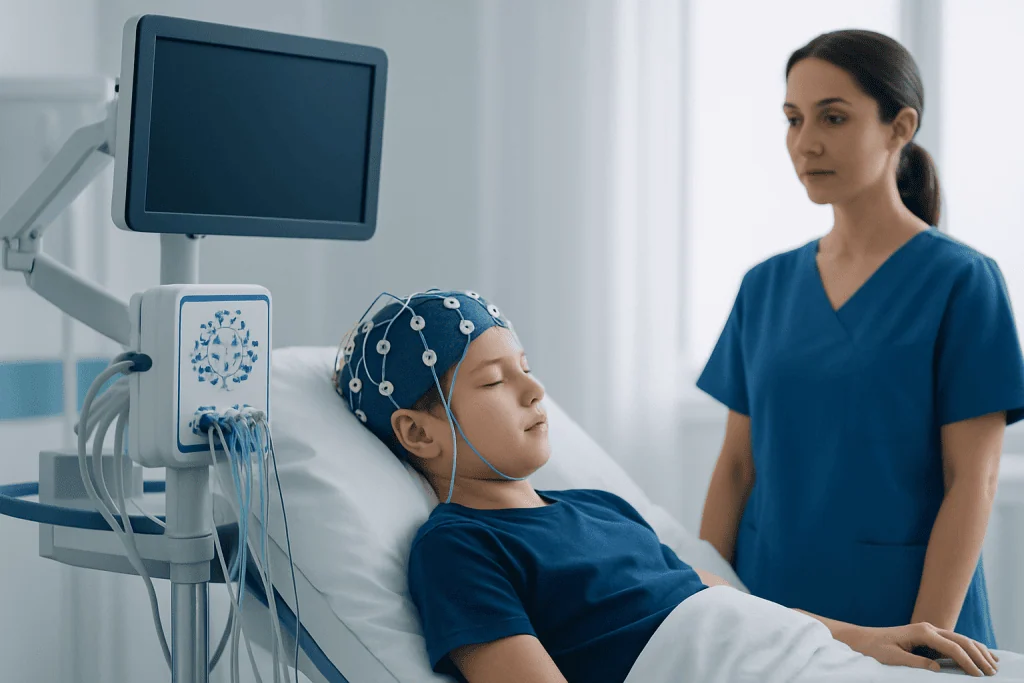
An electroencephalogram (EEG) is the main test used to support the diagnosis. It records the brain’s electrical activity and may show characteristic spikes in centrotemporal regions, often more clearly during drowsiness or sleep. A normal routine EEG does not always exclude epilepsy, so a sleep-deprived EEG or longer recording may sometimes be recommended.
Brain magnetic resonance imaging (MRI) is not required for every child with a typical presentation, normal examination and characteristic EEG. It may be considered when seizures are unusual, neurological findings are present, development has changed, or the EEG does not fit the expected pattern. Blood tests are generally not used to diagnose rolandic epilepsy but may be needed in selected circumstances.
Doctors also consider other explanations for episodes, including sleep disorders, fainting, migraine-related symptoms, movement disorders and other focal epilepsy syndromes. Accurate classification guides follow-up and prevents unnecessary treatment.
Treatment and everyday management
Not every child with rolandic epilepsy needs daily anti-seizure medication. When seizures are rare, short, occur only at night and do not significantly affect safety or quality of life, a neurologist may recommend observation with education about seizure first aid. This is a shared decision that considers the child’s seizure pattern and family circumstances.
Medication may be discussed when seizures are frequent, daytime events create safety concerns, convulsive seizures occur, recovery is difficult, or seizures affect sleep, learning or wellbeing. The choice of medicine is individualized by a pediatric neurologist, taking account of seizure type, age, other health conditions and possible side effects. Families should not start, stop or change seizure medicine without medical guidance.
A consistent sleep routine, regular meals, hydration and taking prescribed medication as directed may help reduce avoidable seizure triggers. Parents and school staff should know basic seizure first aid: stay calm, move harmful objects away, place the child on their side if possible, do not restrain them, and do not put anything in their mouth.
It can be useful to keep a seizure diary recording date, time, duration, sleep pattern, illness, symptoms and recovery. If school performance, speech, mood or attention changes, families should tell the treating clinician. Support may include educational assessment, speech and language support, or neuropsychological review when indicated.
Outlook, follow-up and growing out of seizures
The long-term outlook for rolandic epilepsy is usually very good. Seizures commonly become less frequent over time and generally stop by mid-adolescence. Many children eventually discontinue anti-seizure medication under medical supervision after a suitable seizure-free period and review of their individual circumstances.
Even with a favorable seizure prognosis, follow-up is valuable. It allows the clinician to monitor seizure control, medicine tolerance, sleep, emotional wellbeing and progress at school. A changing seizure pattern, increasing frequency or new developmental concerns may require reassessment.
Families can support a child by giving clear, age-appropriate information about seizures and encouraging normal participation in school, friendships and suitable activities. Safety plans should be individualized. For example, supervision may be appropriate around water, heights, traffic or other settings where a sudden loss of control could lead to injury.
Acibadem International’s multidisciplinary specialists and JCI-accredited hospitals assess and treat neurological conditions, including childhood seizure disorders, for international patients when specialist evaluation is needed.
When to seek medical care
Any child who has a first suspected seizure should receive prompt medical assessment. Families should arrange a medical review even if the child appears well afterward, since a description of the event and an EEG may be needed to clarify the cause.
Emergency medical help is needed if a seizure lasts longer than five minutes, repeated seizures occur without the child fully recovering between them, breathing appears difficult, the child is seriously injured, or recovery is not as expected. Emergency care is also appropriate if a seizure occurs in water or if there is a concern about poisoning, head injury, diabetes or a severe infection.
Parents should contact the child’s clinician sooner if seizures become more frequent, change in appearance, begin occurring during the day, or are accompanied by new weakness, persistent headache, loss of skills, marked behavior changes or academic decline. A clinician can determine whether the care plan or testing should be updated.
Frequently asked questions
Is rolandic epilepsy the same as SeLECTS?
Yes. Rolandic epilepsy is the traditional term for self-limited epilepsy with centrotemporal spikes, often shortened to SeLECTS. The newer name emphasizes that the condition typically resolves as the child gets older and describes the characteristic EEG pattern.
Can a child stay conscious during a rolandic seizure?
Yes. Many children remain aware during a rolandic seizure, even when they cannot speak normally or control facial movements. Awareness can vary, especially if a seizure spreads to involve more of the brain.
Do all children with rolandic epilepsy need medication?
No. Daily medicine may not be necessary when seizures are rare, brief and mainly occur during sleep without significant effects on safety or daily life. A pediatric neurologist can help families weigh the potential benefits and side effects of treatment.
Does rolandic epilepsy affect intelligence?
Most children have typical intelligence and a favorable developmental outlook. Some children may experience temporary challenges with attention, language, reading or school performance, so new concerns should be discussed with the healthcare team.
Can rolandic epilepsy be prevented?
There is no known way to prevent the underlying condition. Regular sleep, general health measures and following the treatment plan may help reduce factors that can make seizures more likely in some children.
What should a parent do during a seizure?
The parent should stay with the child, time the seizure, protect them from injury and place them on their side if possible. Nothing should be put in the child’s mouth, and the child should not be restrained. Emergency help is needed for a seizure lasting more than five minutes or when there are breathing problems, injury or repeated seizures without recovery.
This article is for general information only and is not a substitute for professional medical advice. Please consult a qualified doctor about your individual situation.
Explore treatments in Turkey — costs, top hospitals & a free quote
JCI-accredited · board-certified surgeons · reply within 24h
Add us as a Preferred Source to see more of our trusted health content across Google Search, AI Overviews and Discover.

More from the Health Library

Azithromycin: An Evidence-Based Guide for Patients

G-csf: What Patients Need to Know

Asymmetrical: What Patients Need to Know

Athlete’s Foot Fungus on Hands: An Evidence-Based Guide for Patients

Clomid: What Patients Need to Know