Roseola: An Evidence-Based Guide for Patients

Roseola most often affects children between 6 months and 2 years of age. A high fever for 3 to 5 days is often the first sign, and the rash commonly appears after the fever goes down.
Key Takeaways
- Roseola most often affects children between 6 months and 2 years of age.
- A high fever for 3 to 5 days is often the first sign, and the rash commonly appears after the fever goes down.
- The illness is usually caused by human herpesvirus 6, and sometimes human herpesvirus 7.
- Treatment focuses on rest, fluids, and fever relief rather than antibiotics.
- Parents should seek medical care promptly for seizures, poor fluid intake, trouble breathing, or a child who seems very unwell.
Roseola is a common viral illness, usually affecting infants and toddlers, that often causes a sudden high fever followed by a pink rash as the fever fades. In most children it is mild and self-limited, but medical assessment is important if warning signs such as seizures, dehydration, or breathing problems appear.
What is roseola?
Roseola is a common childhood viral infection that usually causes a sudden high fever followed by a light pink rash. It most often affects babies and young children, especially between 6 months and 2 years of age. The condition is also known as roseola infantum or sixth disease.
In most cases, roseola is mild and gets better on its own within about a week. The fever phase can worry parents because it may rise quickly, but many children recover fully with supportive care at home. The rash that appears afterward is usually not painful or itchy and often fades within one to two days.
Roseola is most commonly caused by human herpesvirus 6 and less often by human herpesvirus 7. These viruses are different from the viruses that cause cold sores or genital herpes, even though they belong to the same broad virus family. After the initial infection, the virus usually remains inactive in the body without causing ongoing illness.
How roseola typically appears
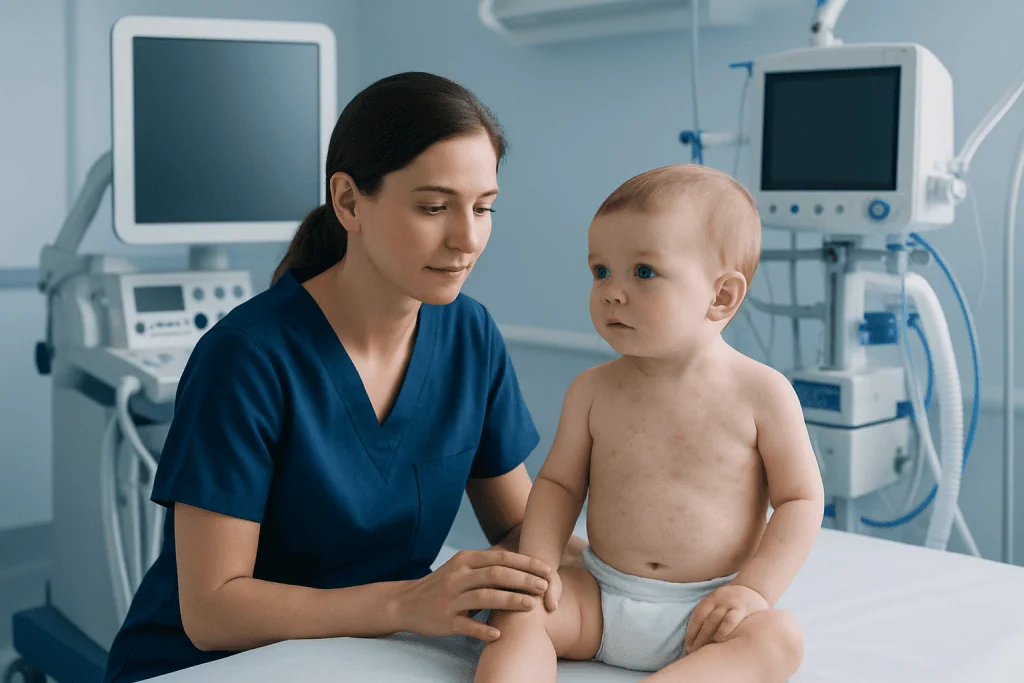
Roseola often follows a recognizable pattern. A child may seem fairly well at first and then suddenly develop a high fever, often above 39.4°C (103°F). The fever usually lasts 3 to 5 days. During this stage, some children may be irritable, tired, or less interested in feeding, while others may still appear relatively active.
As the fever drops, a rash may appear. This rash usually starts on the chest, abdomen, or back and may spread to the neck, arms, or legs. It is commonly made up of small pink spots or flat patches, sometimes with a lighter halo around them. The rash is generally not itchy and often fades within hours to two days.
Not every child develops all classic signs. Some children have fever without a noticeable rash, while others may have only mild symptoms. Because many viral illnesses can cause fever and rash, a doctor may consider roseola alongside other conditions such as measles or other common childhood infections, especially if the child is unvaccinated, has been exposed to illness, or has additional concerning symptoms.
Symptoms and possible complications

The most common symptom of roseola is a sudden high fever. During the fever phase, children may also have a sore throat, mild cough, runny nose, swollen glands in the neck, irritability, or reduced appetite. Some may have loose stools or puffiness around the eyelids. Once the fever settles, the rash often appears and can help explain the earlier symptoms.
Although roseola is usually mild, the rapid rise in temperature can sometimes trigger a febrile seizure. Febrile seizures can be frightening, but many are brief and do not cause long-term problems. Even so, any seizure needs urgent medical evaluation, especially if it is a child’s first seizure, lasts more than a few minutes, or is followed by difficulty waking up.
Complications are uncommon in otherwise healthy children. However, they may be more likely in children with weakened immune systems, those receiving cancer treatment, or people who have had an organ transplant. In these situations, doctors may evaluate the child more closely and consider whether specialist care or infectious diseases care is needed.
- High fever lasting several days
- Rash appearing after the fever breaks
- Irritability or unusual sleepiness
- Poor feeding or reduced fluid intake
- Rarely, febrile seizure
Causes, spread, and who is at risk
Roseola is caused mainly by human herpesvirus 6 and sometimes by human herpesvirus 7. These viruses spread from person to person, usually through saliva or respiratory secretions. A child may catch the virus from close contact with someone who has no symptoms, because people can spread the virus before the rash appears or even when they seem well.
Most children are exposed at a young age, which is why roseola is so common in infancy and toddlerhood. Babies younger than 6 months may have some temporary protection from maternal antibodies, although this protection gradually decreases. Older children and adults can be infected too, but by then many have already developed immunity from earlier exposure.
Risk is generally related to age and close contact rather than hygiene alone. Roseola can spread in homes, daycare settings, and other places where young children are together. The illness is not usually considered dangerous in healthy children, but the fever can be uncomfortable and may require monitoring. If the child has another medical condition or there are signs of a more serious infection, doctors may also assess for illnesses such as meningitis depending on the symptoms and examination findings.
How doctors diagnose roseola
Doctors usually diagnose roseola based on the child’s age, symptoms, and the sequence of fever followed by rash. A medical history and physical examination are often enough. The timing matters: the rash commonly appears as the fever fades, which helps distinguish roseola from some other childhood illnesses.
There is no routine need for laboratory testing in a straightforward case. However, if symptoms are unusual, severe, prolonged, or the child is very young or medically vulnerable, a doctor may order tests to rule out other causes of fever and rash. These may include blood tests, urine tests, or other studies depending on the child’s symptoms.
Doctors also consider whether the child’s vaccinations are up to date, whether there has been exposure to contagious illnesses, and whether there are warning signs such as neck stiffness, trouble breathing, severe lethargy, or dehydration. If concerns remain about the cause of the fever, the child may be referred for further pediatric assessment or pediatric evaluation and care.
Treatment and care at home
Roseola treatment is usually supportive, which means helping the child stay comfortable while the illness runs its course. Rest, fluids, and age-appropriate fever-reducing medicines recommended by a doctor are the main approaches. Antibiotics do not treat roseola because it is caused by a virus, not bacteria.
Parents and caregivers should encourage frequent fluids to reduce the risk of dehydration, especially if the child has a high fever or is eating less than usual. Lightweight clothing and a comfortable room temperature may also help. It is best to avoid over-bundling a child with fever. If a child seems very drowsy, is difficult to wake, has trouble drinking, or is breathing unusually fast, medical advice should be sought promptly.
In uncommon situations, children with weak immune systems may need more specialized evaluation and treatment planning. This is especially important if fever is persistent or there are signs of complications. Near the end of the care pathway, families seeking coordinated assessment can be supported by multidisciplinary specialists; Acibadem International’s JCI-accredited hospitals also diagnose and treat infectious and pediatric conditions for international patients when needed.
Prevention and practical self-care
There is no vaccine specifically used to prevent roseola. Because the virus can spread before symptoms are obvious, prevention is not always possible. Still, simple hygiene steps can lower the chance of passing many childhood infections from one person to another.
Frequent handwashing, cleaning shared surfaces, and avoiding close contact such as sharing cups or utensils when a child is unwell may help reduce spread. If a child has a fever, many families keep them home from daycare or group activities until they are feeling better and fever-free based on local advice and a clinician’s guidance.
Caregivers should also focus on comfort measures and observation. Helpful steps include offering fluids often, watching for normal urination, and monitoring how alert and responsive the child seems. If the rash appears after the fever improves and the child is otherwise recovering, this pattern is often reassuring, but any uncertainty can be discussed with a healthcare professional.
When to seek medical care
Medical care should be sought promptly if a baby younger than 3 months has a fever, if any child has a seizure, or if a child is hard to wake, has trouble breathing, shows signs of dehydration, or seems much more ill than expected. Parents should also contact a doctor if the fever lasts longer than about 5 days, returns after improving, or the rash looks unusual, bruised, or purple.
Children with chronic illness, immune system problems, or recent major treatments may need earlier medical review because they can be at higher risk of complications. It is also wise to seek advice if there is significant ear pain, severe sore throat, persistent vomiting, or symptoms that do not fit the usual pattern of roseola.
For urgent concerns, especially seizures or breathing difficulty, emergency care is appropriate. When there is diagnostic uncertainty, doctors may use examination and, if needed, a broader medical check-up to rule out other causes of high fever and rash and guide the safest next steps.
Frequently asked questions
Is roseola contagious?
Yes. Roseola can spread from person to person, usually through saliva or respiratory secretions. A child may be contagious before the rash appears, which is one reason it can spread easily among young children.
How long does roseola last?
The fever phase often lasts about 3 to 5 days. After the fever goes down, the rash may appear and usually fades within hours to two days, although the overall recovery time can vary slightly from child to child.
What does a roseola rash look like?
The rash is usually pink, flat or slightly raised, and often starts on the chest, back, or abdomen. It may spread to the neck, arms, and legs and is typically not itchy or painful.
Can adults get roseola?
Adults can be infected, but many have already been exposed in childhood and have immunity. When adults do become infected, symptoms may be mild or less typical than in young children.
Does roseola need antibiotics?
No. Roseola is caused by a virus, so antibiotics do not help. Treatment usually focuses on fluids, rest, and managing fever under medical guidance.
When should parents worry about a fever with roseola?
Parents should seek medical advice if the child is very sleepy, not drinking, breathing poorly, or has a seizure. Fever in a very young infant, fever lasting longer than expected, or a child who seems seriously unwell should also be assessed promptly.
References
- American Academy of Pediatrics
- Centers for Disease Control and Prevention
- National Health Service
- Merck Manual Consumer Version
- World Health Organization
This article is for general information only and is not a substitute for professional medical advice. Please consult a qualified doctor about your individual situation.
Explore treatments in Turkey — costs, top hospitals & a free quote
JCI-accredited · board-certified surgeons · reply within 24h
Add us as a Preferred Source to see more of our trusted health content across Google Search, AI Overviews and Discover.

More from the Health Library



Related Specialists

Assoc. Prof. Dr. Gökhan Karademir
Orthopedic Surgery & Traumatology
Dr. Ali Şenol Çelebi
Radiology
Dr. Tansel Yıldıran
Cardiology
Dr. Sema Demirsoy
Gynecology & Obstetrics