Rubella Antibodies: What Patients Need to Know

Rubella IgG antibodies usually indicate immunity from past vaccination or infection. Rubella IgM antibodies can suggest a recent infection, but false-positive results can occur and require confirmation.
Key Takeaways
- Rubella IgG antibodies usually indicate immunity from past vaccination or infection.
- Rubella IgM antibodies can suggest a recent infection, but false-positive results can occur and require confirmation.
- Rubella testing is especially important when exposure or illness occurs during pregnancy.
- A negative IgG result generally means immunity is not documented and vaccination may be discussed when appropriate.
- Vaccination is the most effective way to prevent rubella, but the live rubella-containing vaccine is not given during pregnancy.
Rubella antibodies are proteins measured in blood to help determine whether someone has immunity to rubella or may have had a recent infection. The meaning of a result depends on the antibody type, timing of testing, vaccination history, symptoms, and—in pregnancy—careful clinical assessment.
What are rubella antibodies?
Rubella antibodies are immune proteins found through a blood test. They can help show whether a person has previously developed protection against rubella, a viral illness that often causes a mild fever and rash but can be serious during pregnancy. Most testing looks for two main antibody types: immunoglobulin G (IgG) and immunoglobulin M (IgM).
A positive rubella IgG result usually means the immune system has encountered rubella before, most often through vaccination and less often through past infection. A rubella IgM result may appear after a recent infection, but it is not enough on its own to confirm that infection is present. Doctors interpret results alongside symptoms, exposure history, vaccination records, pregnancy status, and sometimes repeat or specialist laboratory testing.
Rubella is now uncommon in many countries because of widespread vaccination. However, it can still occur, particularly after international travel or contact with an infected person. The greatest concern is infection in early pregnancy, when the virus can affect fetal development.
Why rubella antibody testing is done
Healthcare professionals may request a rubella antibody test to document immunity, investigate a possible recent infection, or assess someone who has been exposed to rubella. Testing is commonly included in early pregnancy blood work because knowing whether immunity is present helps guide counseling and future prevention planning.
A test may also be considered when a person develops symptoms compatible with rubella, such as a rash, low-grade fever, swollen lymph nodes behind the ears or at the back of the neck, or joint discomfort. These symptoms are not specific to rubella and can be caused by many other infections, so laboratory testing is often needed when rubella is suspected.
Rubella antibody testing is not usually a routine screening test for everyone. Its purpose is determined by the clinical situation. If there is a suspected outbreak, exposure during pregnancy, or concern about a current infection, public health authorities and infectious disease specialists may recommend additional testing beyond a standard antibody result.
Understanding IgG and IgM test results

Rubella IgG and IgM results answer different questions. A positive IgG result generally supports immunity. In someone without recent symptoms or exposure, it most often reflects previous vaccination or a past infection. A negative IgG result means that laboratory evidence of immunity was not found, although the next step depends on the individual situation and local guidance.
IgM antibodies can develop soon after infection and may remain detectable for a period of time. A positive IgM can therefore raise concern for a recent rubella infection, particularly when it occurs with compatible symptoms or a known exposure. However, IgM tests may sometimes be falsely positive because of cross-reactions or other immune factors. Recent vaccination with a rubella-containing vaccine can also affect interpretation.
For this reason, a positive IgM result often needs confirmation. A clinician may arrange repeat blood testing, testing at a reference laboratory, or other assessments that help clarify when an infection may have occurred. Results are often reported as positive, negative, equivocal, or with a numerical value; the laboratory’s own reference range should always be used rather than comparing numbers from different laboratories.
- IgG positive, IgM negative: usually consistent with prior immunity and no evidence of a recent infection.
- IgG negative, IgM negative: no laboratory evidence of immunity or recent infection at that time.
- IgM positive: may indicate recent infection but needs clinical and laboratory confirmation.
- Equivocal result: may require repeat testing or further assessment, especially during pregnancy.
Rubella infection and pregnancy
Rubella is particularly important in pregnancy because infection can pass to the developing baby. When infection occurs early in pregnancy, it can lead to congenital rubella syndrome, which may affect hearing, vision, the heart, growth, and other areas of development. The likelihood and nature of complications vary with the timing of infection, which is why prompt specialist assessment is important after possible exposure.
A positive IgG result before or during pregnancy is generally reassuring because it indicates existing immunity. In contrast, a negative or uncertain result does not mean that infection is present; it means immunity has not been clearly documented. The healthcare team can explain practical ways to reduce exposure and plan vaccination after pregnancy if it is appropriate.
If a pregnant person has a rash illness, close contact with a confirmed or suspected case, or an unexpected positive IgM result, they should contact their obstetric clinician promptly. Management should be individualized and may involve obstetrics, maternal-fetal medicine, infectious diseases, laboratory medicine, and public health professionals. Decisions should not be made from an antibody result alone.
How the test is performed and prepared for
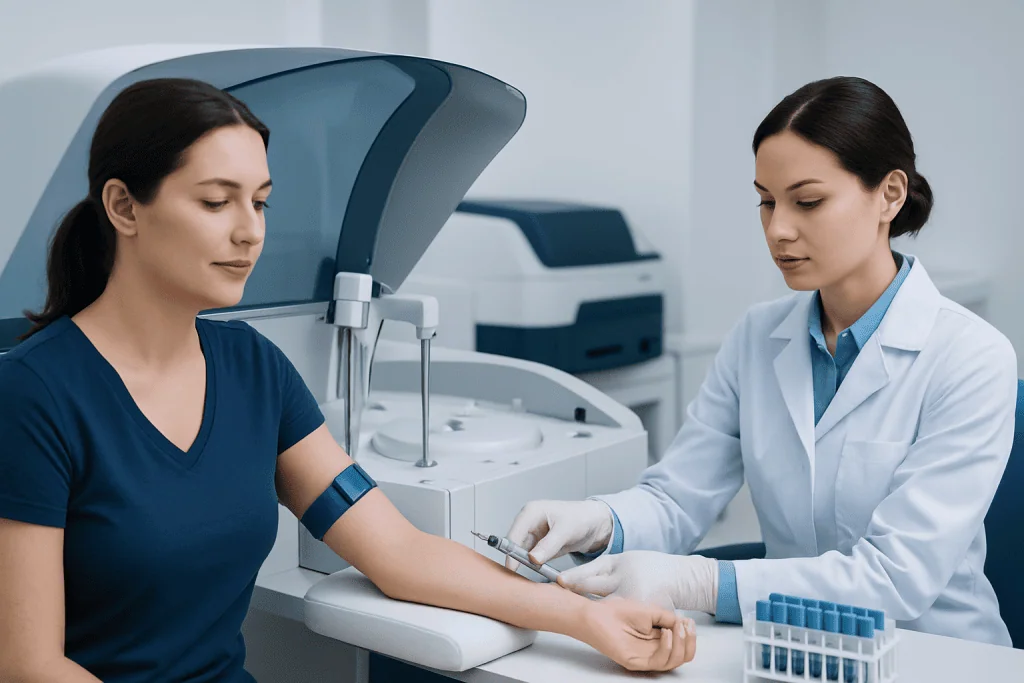
A rubella antibody test is a simple blood test. A healthcare professional collects a small sample from a vein, usually in the arm, and sends it to a laboratory. Fasting is not usually required, and most people can return to normal activities immediately afterward.
Before testing, it is helpful to tell the clinician about a previous rubella or measles-mumps-rubella (MMR) vaccination, any recent vaccines, pregnancy or plans for pregnancy, symptoms, travel, and possible exposures. Vaccination records can be useful, but a laboratory test may still be requested in some settings.
The timing of the sample matters when recent infection is being investigated. Testing too early may not detect antibodies that have not yet developed. When results and symptoms do not match, a clinician may recommend a second sample after an interval or order more specific confirmatory testing. This is a normal part of making an accurate diagnosis.
Prevention and practical next steps
Vaccination is the main way to prevent rubella. The rubella vaccine is generally given as part of the MMR vaccine, which also protects against measles and mumps. It is a live attenuated vaccine and is not recommended during pregnancy. People who are not immune should speak with a clinician about the right time for vaccination, particularly before trying to conceive.
People who receive an MMR vaccine are commonly advised to avoid pregnancy for one month afterward, following current public health guidance. Those who are already pregnant should not receive MMR during pregnancy, but vaccination can often be arranged after delivery if immunity is not documented. Household members who are eligible for vaccination can usually be vaccinated, which helps reduce the chance of exposure.
Good infection-control practices can also help during suspected outbreaks: avoid close contact with people who have a fever and rash, follow local public health advice, and stay home from work, school, or crowded settings if a clinician suspects rubella. Anyone with a possible acute infection should contact a healthcare facility before arriving, so appropriate precautions can be arranged.
When to seek medical care
Medical advice should be sought promptly if a pregnant person has been exposed to rubella, develops a rash with fever, or is told they have a positive or equivocal rubella IgM result. Early contact allows the care team to select the most appropriate tests and explain the findings in context.
Anyone with a widespread rash, fever, swollen glands, or joint pains after possible exposure or international travel should also speak with a doctor. These symptoms have many possible causes, but an assessment can help identify whether rubella or another infection needs specific precautions.
Urgent medical evaluation is appropriate for severe illness, breathing difficulty, confusion, persistent high fever, dehydration, or symptoms in a newborn. Acibadem International’s multidisciplinary specialists and JCI-accredited hospitals can assess infectious conditions and pregnancy-related concerns for international patients, with care guided by individual clinical needs.
Frequently asked questions
What does a positive rubella IgG antibody result mean?
A positive rubella IgG result usually means a person has immunity from a past rubella vaccination or previous infection. In most people without current symptoms, this is considered evidence of protection. A clinician can interpret the result using the laboratory reference range and the person’s medical history.
Does a positive rubella IgM result always mean a current infection?
No. A positive IgM result can occur with a recent rubella infection, but false-positive results are possible. Confirmation with repeat or specialized laboratory testing may be needed, particularly during pregnancy or when there are no compatible symptoms.
What does it mean if rubella antibodies are negative?
A negative rubella IgG result generally means there is no documented laboratory evidence of immunity. It does not necessarily mean that the person has rubella. A doctor may recommend MMR vaccination if appropriate, but the vaccine is not given during pregnancy.
Why is rubella antibody testing performed during pregnancy?
Testing helps establish whether immunity to rubella is present. This information is useful because rubella infection during pregnancy can affect fetal development. If immunity is not documented, the care team can advise on reducing exposure and discuss vaccination after pregnancy if needed.
Can a vaccinated person have negative rubella IgG antibodies?
Occasionally, a laboratory test may not show detectable IgG despite a history of vaccination, depending on the assay and individual immune response. Vaccination documentation and local recommendations may help guide next steps. A clinician can determine whether further testing or vaccination is appropriate.
Do rubella antibodies protect against measles and mumps?
No. Rubella antibodies specifically reflect the immune response to rubella. Although MMR vaccination protects against measles, mumps, and rubella, separate antibodies and tests are used to assess immunity to each virus.
References
- World Health Organization
- Centers for Disease Control and Prevention
- American College of Obstetricians and Gynecologists
- European Centre for Disease Prevention and Control
This article is for general information only and is not a substitute for professional medical advice. Please consult a qualified doctor about your individual situation.
Explore treatments in Turkey — costs, top hospitals & a free quote
JCI-accredited · board-certified surgeons · reply within 24h
Add us as a Preferred Source to see more of our trusted health content across Google Search, AI Overviews and Discover.

More from the Health Library

Mannitol: What Patients Need to Know

Ejection Fraction: A Complete Medical Overview

Lazy Eye: A Complete Medical Overview

Residual Volume: An Evidence-Based Guide for Patients

Trismus: A Complete Medical Overview