Trismus: A Complete Medical Overview

Trismus means restricted mouth opening and is often described as jaw tightness or “lockjaw.” It can develop from dental infections, temporomandibular joint disorders, trauma, surgery, radiation, or muscle inflammation.
Key Takeaways
- Trismus means restricted mouth opening and is often described as jaw tightness or “lockjaw.”
- It can develop from dental infections, temporomandibular joint disorders, trauma, surgery, radiation, or muscle inflammation.
- Diagnosis focuses on finding the underlying cause through history, examination, and sometimes imaging.
- Treatment may include pain control, jaw exercises, dental or ENT care, physical therapy, and treatment of the root problem.
- Urgent medical attention is needed if trismus is accompanied by fever, worsening swelling, trouble swallowing, or breathing difficulty.
Trismus is a reduced ability to open the mouth normally. It is a symptom rather than a disease itself, and it commonly relates to jaw muscle spasm, inflammation, dental problems, trauma, or conditions affecting the jaw joint and nearby tissues.
What trismus is and why it happens
Trismus is a limitation in how wide the mouth can open. Many people describe it as jaw stiffness, tightness, or a feeling that the jaw is “stuck.” It is not usually a diagnosis on its own. Instead, it is a sign that the muscles of chewing, the jaw joint, or nearby tissues are irritated, inflamed, injured, or affected by another medical condition.
The problem may appear suddenly, such as after a dental infection or jaw injury, or develop gradually over time. In some cases, trismus lasts only a few days. In others, especially when treatment is delayed or scar tissue forms, it can become more persistent and interfere with eating, speaking, oral hygiene, and dental care.
The jaw opens through a coordinated movement of the temporomandibular joints and the chewing muscles. When pain, muscle spasm, swelling, infection, joint dysfunction, or scarring affects this system, the mouth may no longer open comfortably or fully. Identifying the source matters because the best treatment depends on the cause rather than the symptom alone.
Common symptoms and daily effects
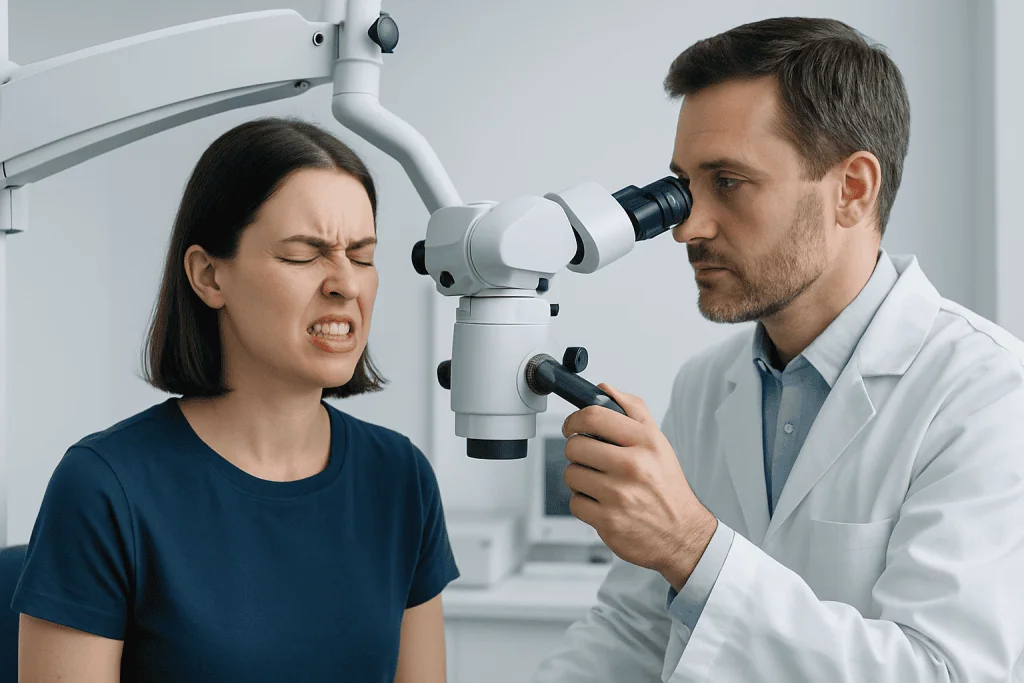
The main symptom of trismus is reduced mouth opening. Some people notice only mild tightness at first, while others have difficulty opening the mouth enough to eat, yawn, brush the teeth, or speak clearly. Jaw pain is common, but not everyone with trismus has severe pain.
Other symptoms can help point to the cause. These may include tenderness in the jaw muscles, pain around the temporomandibular joint, clicking or locking of the jaw, facial swelling, tooth pain, ear discomfort, headache, or soreness after dental work. If the cause is infection or significant inflammation, fever, fatigue, bad breath, or painful swallowing may also occur.
Trismus can affect day-to-day life more than many people expect. Limited mouth opening may make nutrition difficult if chewing becomes painful. It can also interfere with oral hygiene, increasing the risk of further dental problems. In children and older adults especially, reduced food intake and dehydration can become concerns if symptoms persist.
- Difficulty opening the mouth fully
- Pain or tightness in the jaw muscles
- Problems chewing, speaking, or brushing teeth
- Jaw clicking, locking, or facial swelling
- Toothache, sore throat, or ear pain depending on the cause
Causes and risk factors

Trismus has many possible causes. Dental and oral conditions are among the most common. A tooth abscess, infection around a wisdom tooth, inflammation after a dental procedure, or irritation from difficult injections into the jaw muscles can all trigger pain and muscle spasm. Problems involving the jaw joint, including temporomandibular joint disorders, may also reduce mouth opening.
Infections and inflammation in nearby areas can contribute as well. These include infections of the tonsils, salivary glands, deep tissues of the face or neck, and the tissues around the jaw. Trauma such as a blow to the face, a jaw fracture, overextension during a procedure, or severe teeth grinding can also lead to protective muscle tightening and trismus.
Some cases are related to medical treatment. Trismus may develop after head and neck surgery, radiation therapy, or prolonged intubation. Scar tissue and muscle fibrosis can limit normal movement over time. Less commonly, neurological or systemic conditions play a role. The term “lockjaw” is sometimes used for tetanus, but tetanus is only one rare cause of trismus and usually comes with wider body symptoms.
Risk factors include recent dental work, poor oral health, untreated infections, known TMJ dysfunction, head and neck cancer treatment, facial trauma, and habits that overload the jaw such as clenching or grinding. A clinician may also consider whether mouth opening has been gradually narrowing over weeks or months, which can suggest chronic inflammation, scarring, or tumor-related effects rather than a simple temporary spasm.
How doctors diagnose trismus
Diagnosis begins with a careful medical history and physical examination. The doctor will ask when the symptoms started, whether there is pain, swelling, dental disease, recent procedures, trauma, fever, swallowing difficulty, or previous jaw problems. They may measure how far the mouth opens and check how the jaw moves from side to side.
The examination often includes the teeth, gums, throat, face, and temporomandibular joints. The jaw muscles are checked for tenderness or spasm. If infection is suspected, the clinician looks for redness, swelling, drainage, or enlarged lymph nodes. If a joint problem is possible, the jaw may be assessed for clicking, deviation, or locking.
Not everyone needs imaging, but tests may be useful when the cause is unclear or complications are suspected. Dental X-rays can help identify tooth infections or impacted teeth. CT or MRI may be recommended if there is concern for deep infection, joint disease, soft-tissue injury, fracture, or structural problems. Blood tests are sometimes used if infection or inflammatory illness is suspected.
Because trismus can arise from several specialties, evaluation may involve dental, oral and maxillofacial, ENT, or rehabilitation experts. In some patients, doctors may recommend advanced imaging such as MRI or CT scan to better define the tissues around the jaw and neck.
Treatment options and recovery
Treatment focuses on the cause of trismus and on restoring comfortable jaw movement. For short-term muscle spasm or inflammation, clinicians often recommend a combination of rest, soft foods, hydration, gentle heat, and pain-relieving or anti-inflammatory medicines when appropriate. In selected cases, muscle relaxants may be considered. Self-treatment should not replace medical review if symptoms are severe, worsening, or linked to infection.
If an infection is present, prompt treatment is important. This may include antibiotics, dental treatment, drainage of an abscess, or care from an ENT or oral surgery team. When a jaw joint disorder is contributing, management may involve a soft diet, jaw exercises, a night guard for grinding, physical therapy, or targeted specialist care. Recovery depends on the duration and severity of the restriction.
Persistent trismus often improves with guided stretching and rehabilitation. Structured jaw exercises can help reduce stiffness and maintain range of motion, especially after surgery or radiation. Clinicians may recommend supervised rehabilitation or devices designed to gently increase opening over time. Improvement is usually gradual, so consistency matters.
If the problem is related to a structural issue such as scar tissue, severe joint dysfunction, or a tumor, more specialized treatment may be needed. Depending on the cause, care may include oral and dental treatment or evaluation in an ENT clinic. The goal is to control pain, preserve nutrition and oral hygiene, and address the underlying condition safely.
Self-care, prevention, and protecting jaw function
Prevention is not always possible, but many causes of trismus can be reduced by good oral and general health habits. Regular dental care, prompt treatment of tooth pain or swelling, and attention to gum health can lower the risk of oral infection. Avoiding prolonged jaw strain, such as very wide yawning, excessive gum chewing, or frequent clenching, may also help some people.
For mild symptoms, self-care usually focuses on reducing irritation while waiting for assessment. Soft foods are often easier to manage than hard or chewy foods. Small bites, adequate fluid intake, and careful oral hygiene can prevent additional discomfort. Warm compresses may relax tight muscles in some cases, but they should not delay medical care if swelling, fever, or rapidly worsening pain is present.
People who have had head and neck surgery or radiation may be advised to start preventive jaw exercises early under professional guidance. Following rehabilitation instructions closely can help maintain range of motion and reduce long-term stiffness. Those with known TMJ problems may also benefit from posture awareness, stress reduction strategies, and nighttime protection if grinding is present.
Near the end of the care pathway, some patients need coordinated follow-up among dentists, ENT physicians, rehabilitation specialists, and imaging services. Acibadem International’s multidisciplinary specialists and JCI-accredited hospitals evaluate and treat trismus for international patients when this level of coordinated care is needed.
When to seek medical care
Medical advice is recommended if the mouth cannot open normally for more than a short period, if pain is significant, or if eating and drinking are becoming difficult. Assessment is also important when symptoms follow dental work, facial trauma, surgery, or radiation therapy, because the underlying issue may need specific treatment.
Prompt or urgent care is especially important if trismus is accompanied by fever, facial or neck swelling, worsening tooth or throat pain, trouble swallowing, drooling, muffled voice, or signs of dehydration. Difficulty breathing or rapidly increasing swelling requires emergency care, as these can signal a serious infection or airway problem.
Early evaluation often makes treatment simpler and may prevent complications such as poor nutrition, worsening infection, chronic stiffness, or delayed healing. Even when the cause turns out to be a temporary muscle spasm, a clinician can help confirm that no more serious condition is being missed.
Frequently asked questions
Is trismus the same as lockjaw?
Not exactly. Trismus is the medical term for restricted mouth opening from many possible causes, while “lockjaw” is a common description people use for the symptom. Tetanus can cause lockjaw, but most cases of trismus are related to dental, jaw joint, inflammatory, or trauma-related problems instead.
Can trismus go away on its own?
Mild trismus from temporary muscle irritation may improve over a few days with rest and supportive care. However, symptoms should be assessed if they are severe, worsening, recurrent, or linked to swelling, fever, trauma, or dental pain. Persistent trismus can become harder to treat if the underlying cause is not addressed.
How is trismus measured?
Doctors usually measure the distance between the upper and lower front teeth when the mouth is opened as wide as possible. They also observe how the jaw moves and whether it deviates to one side. This helps track severity and improvement over time.
Can a tooth infection cause trismus?
Yes. Infections around the teeth, gums, or wisdom teeth can spread inflammation into nearby tissues and trigger painful jaw muscle spasm. Dental assessment is important because the infection itself often needs treatment, not just the jaw tightness.
What foods are easier to eat with trismus?
Soft foods are often the easiest choice. Examples include yogurt, soups, mashed vegetables, eggs, smoothies, oatmeal, and other foods that do not require wide opening or heavy chewing. If eating or drinking becomes difficult, medical advice is important to avoid dehydration or poor nutrition.
When is trismus an emergency?
It needs urgent attention if it occurs with fever, facial or neck swelling, trouble swallowing, drooling, muffled voice, or breathing difficulty. These signs can suggest a serious infection or airway risk. Rapidly worsening symptoms should not be managed at home.
References
- National Institute of Dental and Craniofacial Research
- American Dental Association
- MedlinePlus
- National Health Service
- World Health Organization
This article is for general information only and is not a substitute for professional medical advice. Please consult a qualified doctor about your individual situation.
Joint and spine care in Turkey — expert assessment & treatment
JCI-accredited · board-certified surgeons · reply within 24h
Add us as a Preferred Source to see more of our trusted health content across Google Search, AI Overviews and Discover.

More from the Health Library

Cure a Migraine Naturally: A Complete Medical Overview

Pregnancy and beta hcg levels: A Complete Medical Guide for Patients

Loose Tooth — Explained by Medical Evidence, Not Myths

Indolent: An Evidence-Based Guide for Patients

Lamaze Breathing — Explained by Medical Evidence, Not Myths