Safest Anesthesia for Colonoscopy: Preparation, Procedure and Results

Sedation choices range from little or no sedation to moderate sedation and deep sedation with propofol. A pre-procedure review of medications, heart and lung health, sleep apnea and previous anesthesia reactions helps make sedation safer.
Key Takeaways
- Sedation choices range from little or no sedation to moderate sedation and deep sedation with propofol.
- A pre-procedure review of medications, heart and lung health, sleep apnea and previous anesthesia reactions helps make sedation safer.
- Split-dose bowel preparation is widely used because it improves bowel cleansing and is often easier to tolerate than taking all the solution at once.
- Most people go home the same day, but they need a responsible adult and should not drive, drink alcohol or make important decisions until the next day.
- Severe abdominal pain, persistent vomiting, fever, heavy rectal bleeding or breathing problems after colonoscopy need urgent medical assessment.
The safest anesthesia for colonoscopy is not one medication for everyone. For most people, carefully monitored sedation—often propofol or moderate sedation—can be used safely when the anesthesia and endoscopy teams tailor the plan to medical history, airway and procedure needs.
Overview: choosing the safest anesthesia for colonoscopy
The safest anesthesia for colonoscopy is the option that matches the individual’s health, comfort needs and expected complexity of the examination. In many settings, this means monitored sedation rather than full general anesthesia. The goal is to keep the person comfortable while maintaining breathing, circulation and protective reflexes as safely as possible.
Colonoscopy examines the large intestine with a flexible camera passed through the rectum. It can identify inflammation, bleeding sources, polyps and signs of cancer, and it may allow polyps to be removed during the same procedure. Sedation can reduce anxiety and discomfort, but a person may also discuss minimal sedation or an unsedated examination when appropriate.
There is no universally “best” drug. Age, body weight, heart or lung disease, obstructive sleep apnea, medication use, alcohol or substance use, allergies, pregnancy, past anesthesia experiences and the planned procedure all influence the safest choice. A gastroenterologist and anesthesia professional assess these factors before the examination.
What is the safest sedation for colonoscopy?
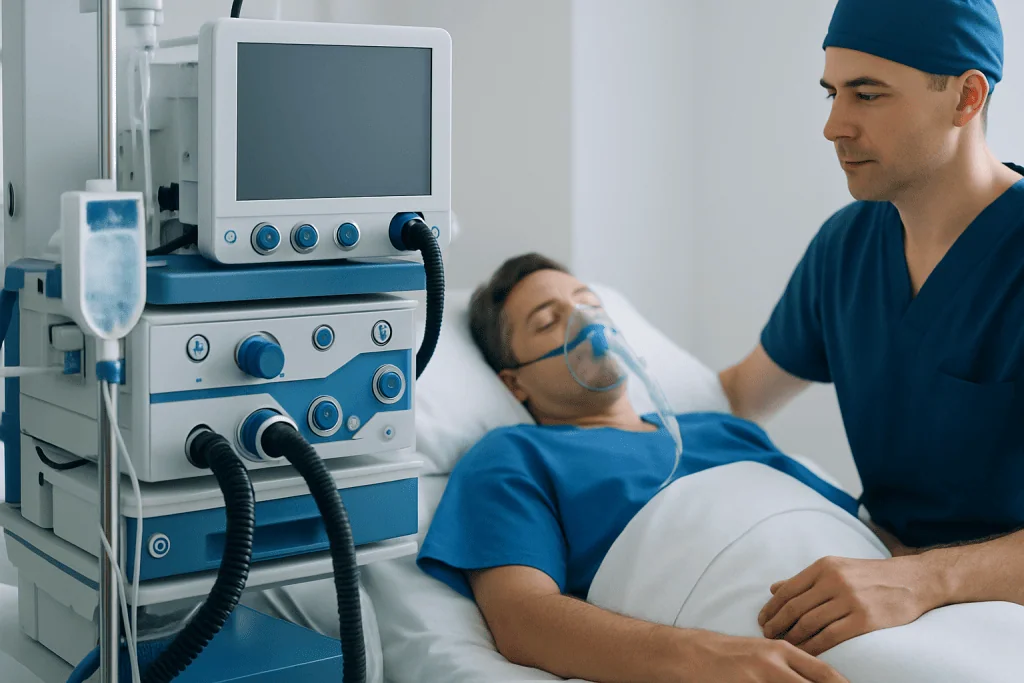
For many healthy adults, either moderate sedation or propofol-based deep sedation can be safe when delivered by trained clinicians with appropriate monitoring. Moderate sedation commonly uses a sedative medicine together with a pain-relieving medicine. People are drowsy and relaxed but may respond to verbal prompts and breathe independently.
Propofol usually produces deeper, rapidly acting sedation and often wears off quickly after the procedure. Because it can lower blood pressure and slow or suppress breathing, it requires continuous observation and readiness to support the airway. It is commonly administered under monitored anesthesia care according to local practice and individual risk.
For some people, the safest approach may be lighter sedation, no sedation, or a setting with additional anesthesia support. This can apply to people with difficult airway concerns, significant heart or lung disease, severe sleep apnea, a history of sedation complications, or an anticipated complex procedure. The safest option is therefore a personalized plan rather than a particular medication name.
- Minimal sedation: relaxed but awake and able to respond normally.
- Moderate sedation: sleepy and comfortable, usually still breathing without assistance.
- Deep sedation: little or no awareness, with closer airway monitoring required.
- General anesthesia: uncommon for routine colonoscopy and reserved for selected circumstances.
Before the procedure: candidacy, assessment and colonoscopy preparation

Colonoscopy may be recommended for screening, unexplained bleeding, anemia, long-lasting bowel changes, abdominal symptoms, inflammatory bowel disease monitoring, or follow-up after polyps. It can also help evaluate conditions such as colon cancer when symptoms or test findings require further investigation. The clinician explains why the test is needed and whether alternatives are suitable.
Before sedation, the team reviews medical conditions and all medicines, including blood thinners, diabetes medicines, weight-loss medicines, sleep medicines, opioids, supplements and herbal products. Patients should not stop prescribed medication on their own. Instructions may need adjustment to reduce bleeding, low blood sugar, dehydration or aspiration risk.
Bowel cleansing is essential because stool can hide small polyps and other findings. Patients generally follow a low-residue or modified diet before the test, switch to clear liquids as instructed, and drink a prescribed bowel-cleansing solution. They should tell the team if they have kidney disease, heart failure, swallowing difficulties or a history of severe constipation, as preparation may need individual adjustment.
Preparation is also a safety step for anesthesia. Fasting instructions help reduce the chance of stomach contents entering the lungs during sedation. Patients should arrange a responsible adult to take them home and stay available after the examination if sedation is used.
What is the easiest colonoscopy prep to tolerate?
The easiest colonoscopy prep to tolerate is usually the one a person can complete exactly as prescribed. Many people find a split-dose regimen more manageable: part of the cleansing solution is taken the evening before and the remainder closer to the procedure time, following the clinic’s timing instructions. This approach often improves cleansing quality and may reduce the amount taken at one time.
Different preparations use different volumes and ingredients. A clinician selects one based on kidney function, heart conditions, electrolyte risks, constipation, previous preparation quality and personal preferences. Lower-volume options may be suitable for some people, but they are not appropriate for everyone.
Chilling the solution, drinking it through a straw, using approved flavoring if permitted, and alternating with clear liquids can make the experience easier. Clear liquids may include water, clear broth, certain clear juices, tea or coffee without milk, and electrolyte drinks, depending on the instructions. Red or purple liquids are often avoided because they can resemble blood during the examination.
Nausea, bloating and frequent loose stools are expected during bowel cleansing. If vomiting prevents completion of the preparation, or if dizziness, fainting, very little urine output or severe weakness develops, the patient should contact the endoscopy team promptly for advice.
Step by step: how colonoscopy and sedation work
On arrival, staff confirm the person’s identity, medical history, allergies, fasting status and escort home. A clinician discusses consent, including the possibility of biopsy or polyp removal if a finding is seen. Baseline blood pressure, pulse and oxygen level are checked, and an intravenous line may be placed for sedation medicines and fluids.
During the procedure, the patient lies on their side. Monitoring usually includes oxygen level, heart rate and blood pressure; additional monitoring may be used based on the sedation level and health profile. The sedation clinician adjusts medicines carefully, while the endoscopist advances the colonoscope and uses air or carbon dioxide to gently expand the colon for visibility.
If a polyp is found, it may be removed or sampled with specialized instruments passed through the scope. This can reduce the need for a separate procedure and allows tissue to be examined in a laboratory. The examination commonly takes less than an hour, though timing varies if treatment is needed during the test.
Patients interested in coordinated endoscopy assessment and management can discuss colonoscopy services with their clinician. The results seen during the examination may be explained before discharge, while biopsy results generally take longer and are reviewed at follow-up.
How risky is anesthesia for colonoscopy?
Serious anesthesia-related problems during colonoscopy are uncommon, especially when patients are properly assessed and monitored. However, all sedation has potential risks. The most important immediate concerns are slowed breathing, low oxygen levels, low blood pressure, changes in heart rhythm, nausea, vomiting and allergic reactions.
Risk can be higher in older adults and in people with severe heart or lung disease, obesity, obstructive sleep apnea, kidney or liver impairment, frailty, or use of medicines that affect breathing or alertness. Incomplete fasting, heavy alcohol use and a prior difficult airway or anesthesia reaction are also important to report. These factors do not automatically prevent colonoscopy; they help the team plan safer monitoring and sedation.
Colonoscopy itself has rare but important risks, including bleeding after a biopsy or polyp removal and perforation, which is a tear in the bowel wall. The likelihood depends partly on what is done during the procedure. Removing potentially precancerous polyps can provide an important preventive benefit, and clinicians balance this benefit against the individual risks.
After sedation, temporary sleepiness, poor coordination and patchy memory are common. For safety, patients should not drive, use machinery, sign legal documents, drink alcohol or make major decisions until the next day or for the period specified by their care team.
What are some alternatives to propofol for colonoscopy?
Alternatives to propofol include moderate sedation with a benzodiazepine, such as midazolam, combined with an opioid pain medicine, as well as lighter sedation or no sedation in selected patients. The exact medicines and availability vary by country, facility and clinician practice. Some people prefer moderate sedation because they want to remain more responsive during the test.
Other anesthetic or sedative approaches may be considered in particular clinical circumstances, but they are not automatically safer or better than propofol. Each option has different effects on breathing, blood pressure, recovery time, nausea and interaction with other medicines. The anesthesia professional considers these trade-offs alongside the person’s health history.
Non-drug measures can also improve comfort. Clear explanations, a calm environment, careful positioning and use of carbon dioxide rather than room air for bowel expansion where available may reduce discomfort after the procedure. For a brief, straightforward examination, some people can complete colonoscopy with minimal or no sedation, but this should be discussed in advance rather than decided on the day.
Recovery, results and when to seek medical care
Following colonoscopy, patients recover in a monitored area until they are awake enough to drink, walk with assistance if needed and meet discharge criteria. Cramping, gas and bloating can occur because air or carbon dioxide was used to open the colon. These symptoms usually improve as gas is passed. A light meal may be appropriate unless the clinical team gives different advice.
Initial findings may be available immediately. If tissue samples were taken or a polyp was removed, the laboratory report may take several days. The care team explains follow-up, including whether another colonoscopy is needed and when. The interval depends on the reason for testing and the findings, not simply on the patient’s age.
When to seek medical care: Urgent assessment is needed for severe or worsening abdominal pain, a hard or swollen abdomen, fever, persistent vomiting, fainting, chest pain, breathing difficulty, or significant rectal bleeding. A small amount of blood after biopsy or polyp removal can occur, but ongoing bleeding, clots or black stools should be reported without delay.
Acibadem International’s multidisciplinary specialists and JCI-accredited hospitals provide diagnostic evaluation and treatment planning for international patients who need colonoscopy-related care. Patients should use their own clinician’s instructions as the primary guide for preparation, medication changes and recovery.
Frequently asked questions
Is general anesthesia used for a colonoscopy?
General anesthesia is not usually needed for a routine colonoscopy. Most procedures use moderate or deep sedation, allowing the person to breathe independently while being closely monitored. General anesthesia may be considered for selected complex procedures or when individual medical factors make it appropriate.
Can someone have a colonoscopy without sedation?
Yes, some people have colonoscopy with little or no sedation. This may allow a quicker return to normal activities, but the examination can be uncomfortable for some patients. The decision should be discussed in advance with the endoscopy team.
Does propofol make a person fully unconscious?
Propofol commonly causes deep sedation, so a person may have little or no memory of the procedure and may not respond to normal conversation. This is different from general anesthesia, although the depth of sedation can vary. Continuous monitoring is important because propofol can affect breathing and blood pressure.
How long does it take to recover from colonoscopy sedation?
Many people feel more alert within a few hours, especially after short-acting sedation. However, judgment, coordination and memory can remain affected for the rest of the day. A responsible adult should provide transport home, and driving should be avoided until the time advised by the care team.
Should a person with sleep apnea tell the team before colonoscopy?
Yes. Obstructive sleep apnea can increase the likelihood of breathing problems during and after sedation. The endoscopy and anesthesia teams may adjust the monitoring plan, sedation approach and recovery observation based on this information.
What happens if the bowel preparation is not completed?
An incomplete preparation can make it harder to see polyps, inflammation or bleeding, and the examination may need to be repeated sooner. Patients should contact the endoscopy unit if they cannot finish the preparation because of vomiting or another problem. The team may offer individualized instructions rather than having the patient guess what to do.
References
- American Society for Gastrointestinal Endoscopy
- American Society of Anesthesiologists
- National Institute of Diabetes and Digestive and Kidney Diseases
- National Health Service
- World Gastroenterology Organisation
This article is for general information only and is not a substitute for professional medical advice. Please consult a qualified doctor about your individual situation.
Persistent digestive symptoms? Get evaluated in Turkey
JCI-accredited · board-certified surgeons · reply within 24h
Add us as a Preferred Source to see more of our trusted health content across Google Search, AI Overviews and Discover.
Check your numbers in seconds
BMI, calories, due date, blood pressure and 30+ more clinical calculators — free, instant, doctor-reviewed ranges.