Sarah Jessica Parker Mude: What Patients Need to Know

Online claims about a person’s health are often incomplete or inaccurate and cannot replace verified medical information. A sudden inability to speak, slurred speech, or trouble understanding language can be a sign of stroke and requires emergency care.
Key Takeaways
- Online claims about a person’s health are often incomplete or inaccurate and cannot replace verified medical information.
- A sudden inability to speak, slurred speech, or trouble understanding language can be a sign of stroke and requires emergency care.
- Speech loss may arise from neurological conditions, voice disorders, anxiety-related conditions, hearing problems, or medication effects.
- Assessment may involve a medical history, neurological examination, speech-language evaluation, and imaging or laboratory tests when needed.
- Treatment depends on the underlying cause and may include emergency stroke care, speech therapy, mental health support, or treatment of a voice or neurological condition.
“Sarah Jessica Parker mude” appears to be a search phrase that may reflect confusion about the word “mute” or concerns about difficulty speaking. There is no reliable medical basis for diagnosing a public figure from online information; however, sudden or persistent speech changes should be assessed by a qualified clinician.
What does “Sarah Jessica Parker mude” mean?
The phrase “Sarah Jessica Parker mude” is commonly searched online, likely because of a misspelling of “mute” or a question about speech and voice. There is no appropriate way to diagnose a celebrity—or any individual—from internet posts, photographs, interviews, or unverified reports. Health information should be based on confirmed medical assessment, not speculation.
For patients and families, this search can also lead to an important general question: what does it mean when someone cannot speak, speaks less than usual, or develops a noticeable change in voice? The answer depends on whether the change is sudden or gradual, whether language understanding is affected, and whether other symptoms are present.
Speech difficulty is not one single condition. It can involve producing words, finding the right words, understanding language, moving the muscles used for speech, making sound with the voice, or choosing not to speak in certain settings because of severe anxiety. A clinician can help identify which process is involved and what care is needed.
Speech, voice, and mutism are not the same
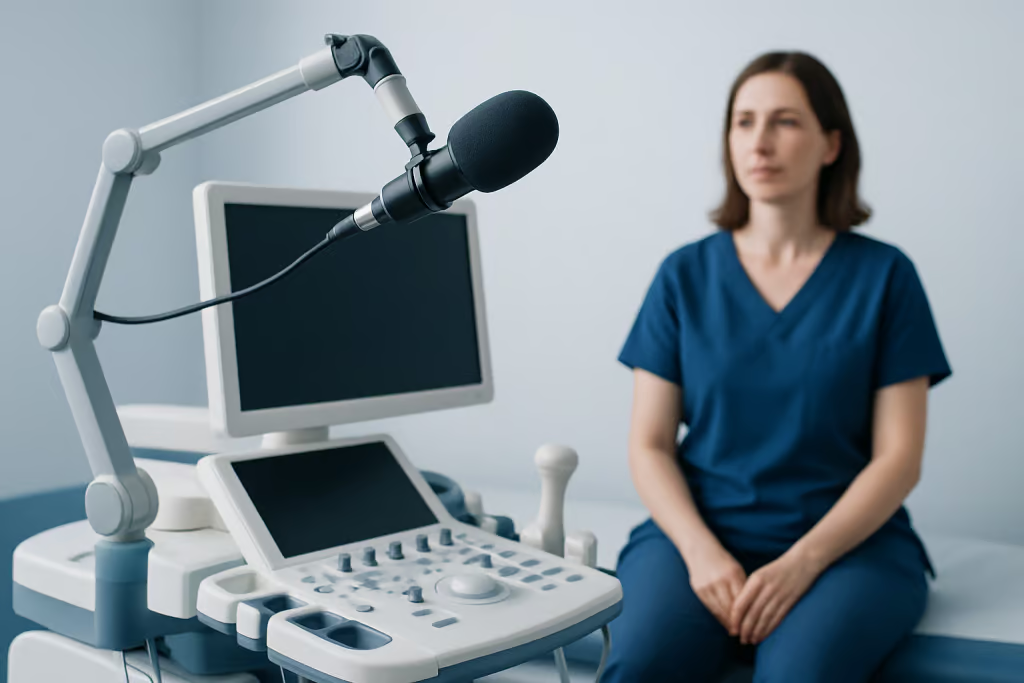
People often use the word “mute” to describe several different experiences. In medical care, it is helpful to distinguish speech from voice. Speech is the ability to form and communicate words and language. Voice is the sound produced by the vocal cords in the larynx. A person may have a weak, hoarse, or absent voice but still be able to write, understand, and use language normally.
Aphasia is a language disorder, most often caused by injury to areas of the brain that support language. It may make it difficult to speak, understand, read, or write. Dysarthria is different: language is usually intact, but weakness or impaired coordination of the muscles used for speech makes words sound slurred or unclear. Apraxia of speech involves difficulty planning the movements required for speaking.
Mutism describes markedly reduced or absent spoken communication. It can occur for different reasons, including neurological illness, severe psychiatric illness, trauma, developmental conditions, or selective mutism. Selective mutism is an anxiety disorder in which a person can speak in some situations but is unable to speak in particular social settings, often beginning in childhood. It is not simply shyness or deliberate refusal to communicate.
- Sudden speech loss: may be an emergency, particularly when stroke is possible.
- Gradual voice or speech change: should be evaluated, especially if it persists or worsens.
- Situation-specific inability to speak: may benefit from assessment for anxiety and selective mutism.
Possible causes of difficulty speaking

Sudden difficulty speaking can result from a stroke or transient ischemic attack (TIA), sometimes called a “mini-stroke.” It can also occur with seizures, migraine with neurological symptoms, low blood sugar, head injury, brain infection, or other acute medical problems. Because it is not possible to safely determine the cause at home, sudden symptoms should be treated as urgent.
Speech and language changes that develop gradually may have other causes. These include Parkinson’s disease and other neurological conditions, multiple sclerosis, dementia, brain tumors, traumatic brain injury, and progressive disorders affecting nerves or muscles. Hearing loss can also affect speech development and communication, particularly in children.
Voice changes may be linked to vocal strain, laryngitis, reflux, allergies, smoking, vocal cord nodules or polyps, vocal cord paralysis, or less commonly cancer of the larynx. Persistent hoarseness deserves medical evaluation, particularly when it lasts more than a few weeks or occurs with swallowing difficulty, a neck lump, coughing up blood, or unexplained weight loss.
Emotional distress, anxiety, depression, trauma, and certain psychiatric conditions can affect communication as well. These symptoms are real and deserve respectful, comprehensive assessment. A diagnosis should not be assumed until physical, neurological, hearing, developmental, and mental health factors have been considered.
How clinicians assess speech changes
Assessment begins with the timing and pattern of symptoms. Clinicians may ask when the problem began, whether it appeared suddenly, which situations make it better or worse, and whether there are symptoms such as weakness, facial drooping, headache, confusion, swallowing difficulty, fever, hearing changes, or voice pain. Information from a family member or caregiver can be especially valuable if communication is difficult.
A physical and neurological examination may assess alertness, language understanding, facial movement, muscle strength, coordination, vision, and swallowing. Depending on the symptoms, the clinician may also examine the mouth, throat, neck, ears, and vocal cords. A speech-language pathologist can evaluate speech clarity, language, voice, fluency, and safe swallowing.
Tests are selected according to the suspected cause. Emergency evaluation for possible stroke may include brain imaging, blood tests, heart rhythm assessment, and blood vessel imaging. Other patients may need hearing tests, laryngoscopy to view the vocal cords, magnetic resonance imaging, or cognitive and mental health assessment. Stroke is time-sensitive, so prompt evaluation is essential when symptoms begin abruptly.
It is useful to bring a list of medications, relevant medical history, and a record of when symptoms started. If possible, a short video showing an intermittent voice or movement symptom can help the clinician understand what is happening. This information supports diagnosis but does not replace an examination.
Treatment and communication support
Treatment is directed at the underlying cause. If stroke is suspected, emergency treatment aims to restore or protect brain function and prevent further injury. After acute care, rehabilitation may include stroke rehabilitation with speech and language therapy, occupational therapy, physiotherapy, and support for swallowing or cognitive changes when needed.
Speech-language therapy can help people improve communication after stroke, brain injury, Parkinson’s disease, or other neurological conditions. Therapy may focus on word finding, speech clarity, voice volume, understanding language, reading and writing, and alternative ways to communicate. Some people benefit from communication boards, writing tools, smartphone applications, or devices that generate speech.
When voice problems are related to the larynx, treatment may involve voice therapy, management of reflux or allergies, rest from vocal strain, or a procedure for a structural vocal cord condition. Neurological causes may require care from neurologists, ear, nose, and throat specialists, rehabilitation clinicians, and speech-language pathologists. For children or adults with anxiety-related inability to speak, psychological therapy and supportive school, family, or workplace strategies may be recommended.
Family members can help by allowing extra time to respond, speaking calmly, asking one question at a time, and offering choices that can be answered with gestures or writing. It is best not to finish every sentence for the person or pressure them to speak. Acibadem International’s multidisciplinary specialists and JCI-accredited hospitals assess and treat neurological, voice, and communication concerns for international patients.
When to seek medical care
Emergency medical care is needed if speech difficulty begins suddenly, even if it improves after a few minutes. Call local emergency services immediately for sudden trouble speaking or understanding speech, facial drooping, weakness or numbness on one side, severe dizziness, loss of balance, sudden vision changes, or an unusually severe headache. These may be warning signs of stroke.
Urgent assessment is also appropriate for speech or voice changes after a head injury, with confusion, seizures, high fever, breathing difficulty, swallowing difficulty, or choking. A person should not drive themselves to emergency care if stroke or another acute neurological condition is possible.
A non-emergency medical appointment should be arranged for hoarseness lasting more than a few weeks, recurrent voice loss, progressive speech changes, a new tremor or stiffness affecting communication, persistent difficulty finding words, or concerns about a child’s speech or ability to speak in social settings. Early assessment can identify treatable causes and connect the person with appropriate support.
Practical steps while awaiting assessment
For a sudden new speech problem, the priority is emergency evaluation rather than home treatment. Note the time the person was last known to be well, because this can affect urgent treatment decisions. Do not give food, drink, or oral medication if swallowing may be impaired unless a healthcare professional advises it.
For non-urgent voice or communication concerns, people can reduce strain by resting the voice, staying hydrated, avoiding smoking and secondhand smoke, and limiting shouting or repeated throat clearing. Whispering can also strain the voice for some people, so speaking gently at a comfortable volume is generally preferable.
Supportive communication matters. Use short, clear sentences, reduce background noise, maintain eye contact, and allow time for responses. A notebook, text message, picture board, or phone-based communication aid can reduce frustration while medical evaluation and therapy are arranged.
Online discussions about public figures may raise awareness, but they should not be used to draw conclusions about anyone’s health. People with symptoms should seek individualized advice from a qualified healthcare professional rather than comparing themselves with media reports.
Frequently asked questions
Is Sarah Jessica Parker mute?
There is no reliable basis for making a medical claim about a public figure from online search terms or unverified reports. “Sarah Jessica Parker mude” may be a misspelling or a search prompted by curiosity about speech and voice. Medical diagnoses should only be made through appropriate clinical assessment.
Can suddenly being unable to speak be a stroke?
Yes. Sudden inability to speak, difficulty finding words, slurred speech, or trouble understanding language can be a sign of stroke or TIA. Emergency services should be contacted immediately, especially if there is facial drooping, weakness, numbness, balance problems, or vision changes.
What is the difference between aphasia and dysarthria?
Aphasia affects language, so a person may have trouble speaking, understanding, reading, or writing. Dysarthria affects the muscles or coordination needed for speech, making speech unclear or slurred even when the person knows what they want to say. Both require medical assessment, particularly if symptoms start suddenly.
Can anxiety make someone unable to speak?
Severe anxiety can contribute to an inability to speak in certain circumstances, as occurs in selective mutism. This condition is most commonly recognized in children, but communication difficulties related to anxiety can affect people of different ages. Physical and neurological causes should still be considered by a qualified clinician.
When should persistent hoarseness be checked?
Hoarseness that persists for more than a few weeks should be evaluated by a healthcare professional. Earlier assessment is important if there is pain, trouble swallowing or breathing, a neck lump, coughing up blood, or unexplained weight loss. Many causes are treatable, but diagnosis guides safe care.
Which specialist treats speech and voice problems?
The appropriate specialist depends on the symptoms and likely cause. Care may involve a primary care doctor, neurologist, ear, nose and throat specialist, speech-language pathologist, audiologist, or mental health professional. A coordinated assessment can identify whether the concern involves language, voice, swallowing, hearing, nerves, or anxiety.
References
- World Health Organization
- American Stroke Association
- National Institute on Deafness and Other Communication Disorders
- American Speech-Language-Hearing Association
- National Health Service
This article is for general information only and is not a substitute for professional medical advice. Please consult a qualified doctor about your individual situation.
Explore treatments in Turkey — costs, top hospitals & a free quote
JCI-accredited · board-certified surgeons · reply within 24h
Add us as a Preferred Source to see more of our trusted health content across Google Search, AI Overviews and Discover.