Scab on Lip — Explained by Medical Evidence, Not Myths
A scab is a temporary protective crust that forms while injured lip skin repairs itself. Dryness, lip biting, minor trauma and cold sores are frequent causes of a scab on lip.
Key Takeaways
- A scab is a temporary protective crust that forms while injured lip skin repairs itself.
- Dryness, lip biting, minor trauma and cold sores are frequent causes of a scab on lip.
- Picking, scrubbing or repeatedly wetting the lips can delay healing and increase irritation.
- Cold sores are caused by herpes simplex virus and can be contagious from the tingling or blister stage until fully healed.
- A lip lesion that does not heal within about two weeks, repeatedly bleeds, grows or feels firm needs medical review.
A scab on lip commonly develops as damaged skin heals after chapping, accidental injury, irritation or a cold sore. Gentle protection and avoiding picking usually support healing, while a scab that persists, bleeds repeatedly or changes should be assessed by a clinician.
What does a scab on lip mean?
A scab on lip is most often a sign that the surface of the lip has been damaged and is healing. When skin is cracked, scraped or affected by a blister, blood and fluid can dry on the surface and create a protective crust. The crust helps shield the healing tissue underneath, although lips can take longer to settle because they move often during eating, talking and smiling.
Common triggers include dry or chapped lips, accidental biting, friction, a minor burn from hot food, irritation from a cosmetic product, or a cold sore. The appearance alone cannot always identify the cause. For example, a dry fissure may crust, while a cold sore often begins with tingling and small fluid-filled blisters before it dries into a scab.
Most minor lip scabs improve with simple care. However, a lesion that remains present, returns in the same place, becomes larger, or repeatedly cracks and bleeds should not be assumed to be simple dryness. A healthcare professional can examine the area and identify whether further assessment is needed.
How a lip scab develops
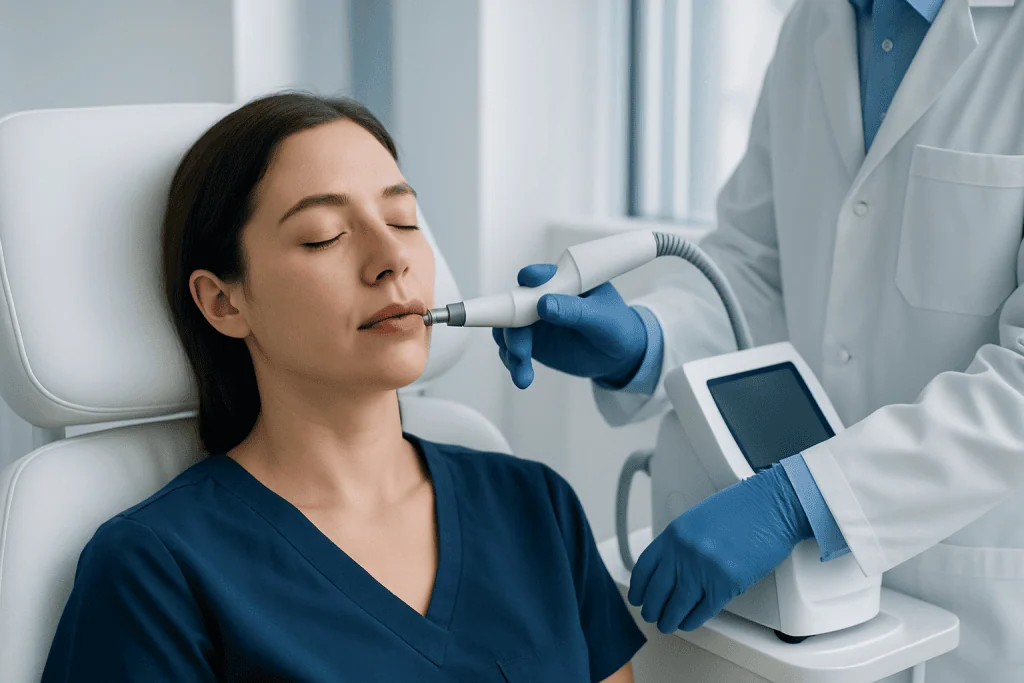
Scabbing is part of the body’s normal wound-healing response. After a small break in the skin, platelets and clotting proteins help stop bleeding. A dry layer of blood, serum and skin cells may then form over the area. New skin develops beneath this layer, which gradually loosens and falls away once healing is complete.
The lips have a thin outer barrier and are exposed to saliva, food, weather and frequent movement. These factors can cause a crust to soften, crack or come off early. Repeated disruption may restart the healing process and make the area feel sore for longer.
A scab itself is not necessarily a sign of infection. Increasing warmth, swelling, spreading redness, pus-like drainage, worsening pain or fever are more concerning features and should be evaluated. Keeping the area clean and protected can reduce unnecessary irritation while the skin repairs.
Common causes of a scab on lip
Chapped lips are a very common cause. Cold, wind, dry indoor air, dehydration, sun exposure and frequent lip licking can weaken the lip barrier. Small cracks may then sting, bleed slightly and form a crust. Some people also develop irritation from flavored or fragranced lip products, toothpaste ingredients, or contact with certain foods.
Minor trauma can also lead to a scab. Examples include biting the lip, a cut during shaving, rubbing from a dental appliance, a sports injury, or a burn from hot food or drink. These injuries usually heal steadily when protected from further friction.
Cold sores are another important cause. They are usually caused by herpes simplex virus type 1 and often follow a recognizable pattern: tingling, itching or burning; clusters of small blisters; an open sore; then crusting and healing. More information about this condition is available in cold sore guidance.
Less commonly, persistent crusting may be related to ongoing inflammation, infection, sun-related damage or another lip condition. This is why duration and change over time matter more than the presence of a scab alone.
Clues that may help identify the cause
The symptoms that occur before and alongside a scab can provide useful clues. Dryness and fine cracking across both lips often suggest chapping or irritant exposure. A single sore after biting or a known injury is more likely to be traumatic. A burning or tingling sensation followed by grouped blisters is more typical of a cold sore.
Cold sores can spread through direct contact, including kissing and oral contact, particularly when blisters or open sores are present. Sharing lip balm, drinks, utensils or towels may also increase the chance of transmission. People with a suspected cold sore should avoid touching it, wash their hands after accidental contact, and avoid close oral contact until the area has healed.
A bacterial infection may cause yellowish crusting, tenderness, oozing or spreading redness. Allergic or irritant reactions may produce persistent burning, peeling or swelling after use of a new product. A clinician may consider these possibilities based on the examination and the person’s medical history.
Safe care while the lip heals
For a minor scab on lip, gentle care is usually best. The area can be rinsed with clean water and patted dry rather than scrubbed. Applying a plain, fragrance-free protective ointment can reduce moisture loss and help prevent the scab from cracking. A person should avoid picking, peeling or biting the crust, even if it feels uneven or itchy.
It is also helpful to pause products that sting or appear to worsen the area. This may include flavored lip balms, fragranced cosmetics, exfoliating products and strong mouth products. Drinking fluids regularly and using lip protection outdoors can support comfort when weather exposure is contributing to dryness.
If a cold sore is suspected, antiviral treatment may be appropriate for some people, especially when started early in the tingling or blister stage. A doctor or pharmacist can advise whether an antiviral option is suitable. Do not share lip products, and avoid applying potentially irritating home remedies, such as alcohol, essential oils or harsh acids, to broken skin.
- Use a plain protective balm or ointment as needed.
- Avoid licking, picking and rubbing the lip.
- Choose broad-spectrum lip sun protection for outdoor exposure.
- Wash hands before and after touching the face or applying a product.
- Seek professional advice before using medicated creams on the lips.
Reducing the chance of recurrence
Preventing recurrent lip crusting often means identifying the trigger. For recurrent chapping, regular use of a bland moisturizer, reducing lip licking and protecting the lips from wind and sun may help. A lip balm with broad-spectrum sun protection can be particularly useful during prolonged outdoor activity.
People who notice irritation after a particular lip product, toothpaste or food should stop using the suspected trigger and discuss persistent symptoms with a clinician. Keeping a brief note of products used and when symptoms occur can make patterns easier to identify.
For those who get recurrent cold sores, triggers may include sunlight, illness, stress, fatigue or local trauma, although triggers differ between individuals. A clinician can discuss prevention strategies and whether prescription antiviral treatment may be appropriate for frequent or troublesome episodes. Good hand hygiene remains important during active outbreaks.
When to seek medical care
Medical advice is recommended if a scab on lip has not clearly improved within about two weeks, or if it repeatedly returns in the same area. A clinician should also assess a lesion that grows, becomes firm, changes color, forms a persistent ulcer, or bleeds without an obvious injury. These features do not automatically indicate a serious condition, but they deserve an examination.
Prompt assessment is also appropriate for severe swelling, spreading redness, significant pain, pus-like drainage, fever, difficulty eating or drinking, or sores in a person with a weakened immune system. Emergency care is needed if swelling affects breathing or swallowing.
Depending on the findings, a doctor may review medications and skin products, inspect the mouth and nearby skin, take a swab if infection is suspected, or arrange further tests. Acibadem International’s multidisciplinary specialists and JCI-accredited hospitals can assess persistent lip concerns and related skin or oral conditions for international patients.
Frequently asked questions
How long should a scab on lip take to heal?
A minor lip scab often improves within several days and usually heals within one to two weeks. Healing can take longer if the area is repeatedly licked, picked, rubbed or exposed to irritants. A scab that is not improving after about two weeks should be checked by a healthcare professional.
Should a person remove a scab from the lip?
No. Pulling off a scab can reopen the skin, cause bleeding and delay healing. It may also increase the risk of irritation or infection. Letting it loosen naturally while keeping the area gently protected is usually preferable.
Is a scab on lip always a cold sore?
No. Dry, cracked lips, accidental trauma, lip biting, burns and irritation are all common causes of scabbing. Cold sores often begin with tingling or burning and progress through blistering before crusting. A clinician can help clarify the cause if symptoms are recurrent or unclear.
Can a cold sore scab spread to other people?
Cold sores can be contagious from the earliest tingling symptoms until the lesion is completely healed. The virus is most easily spread through direct contact with the sore or saliva. Avoid kissing, oral contact and sharing lip products, drinks or utensils during an active outbreak.
What can be applied to a dry lip scab?
A plain, fragrance-free protective ointment or balm can help reduce cracking and discomfort. Harsh exfoliants, fragranced products, alcohol-based products and home remedies that sting should be avoided on broken skin. A pharmacist or doctor can advise if a medicated treatment may be needed.
Can sun exposure cause a scab on the lip?
Yes. Sun exposure can dry and damage lip skin, contribute to cracking, and trigger cold sores in some people. Regular use of broad-spectrum lip sun protection and a hat can help reduce exposure. Persistent rough or crusted areas on the lip should be medically assessed.
This article is for general information only and is not a substitute for professional medical advice. Please consult a qualified doctor about your individual situation.
Explore treatments in Turkey — costs, top hospitals & a free quote
JCI-accredited · board-certified surgeons · reply within 24h
Add us as a Preferred Source to see more of our trusted health content across Google Search, AI Overviews and Discover.

More from the Health Library

Healthy Dinner Recipes for Two — Explained by Medical Evidence, Not Myths

Shredded Coconut — Explained by Medical Evidence, Not Myths
Promethazine Dm Syrup: A Complete Medical Overview
Atrial Fibrillation ECG: What Patients Need to Know

Azelastine — Explained by Medical Evidence, Not Myths