Scarring Alopecia: What Patients Need to Know

Scarring alopecia is permanent in areas where hair follicles have been destroyed and replaced by scar tissue. Early signs may include scalp itching, burning, tenderness, redness, scale, bumps, or patches of hair loss.
Key Takeaways
- Scarring alopecia is permanent in areas where hair follicles have been destroyed and replaced by scar tissue.
- Early signs may include scalp itching, burning, tenderness, redness, scale, bumps, or patches of hair loss.
- A dermatologist may use scalp examination, dermoscopy, blood tests, and a scalp biopsy to identify the specific type.
- Treatment aims to stop or reduce active inflammation, ease symptoms, and prevent further hair loss rather than regrow scarred follicles.
- Hair transplantation or cosmetic camouflage may be considered only after the condition has been inactive for a sustained period.
Scarring alopecia, also called cicatricial alopecia, is a group of conditions in which inflammation destroys hair follicles and replaces them with scar tissue. Hair loss in affected areas is usually permanent, but timely assessment and treatment can help control inflammation and protect follicles that remain.
What Is Scarring Alopecia?
Scarring alopecia is a form of hair loss caused by damage to the hair follicles, the small structures in the skin that produce hair. When inflammation permanently injures a follicle, the body may replace it with scar tissue. Because the follicle is no longer present, hair generally cannot grow back from that specific area.
The term covers several conditions rather than one single diagnosis. Doctors may also call it cicatricial alopecia. Some forms mainly affect the scalp, while others can involve the eyebrows, beard, eyelashes, or body hair. The pattern, symptoms, and pace of hair loss vary widely between people and between types of scarring alopecia.
Scarring alopecia is different from common non-scarring hair loss, such as androgenetic alopecia or temporary shedding after illness. In non-scarring conditions, follicles are usually still present and may be capable of producing hair. With scarring alopecia, the priority is recognizing active inflammation early, before additional follicles are permanently affected.
Signs That May Suggest Active Scalp Inflammation
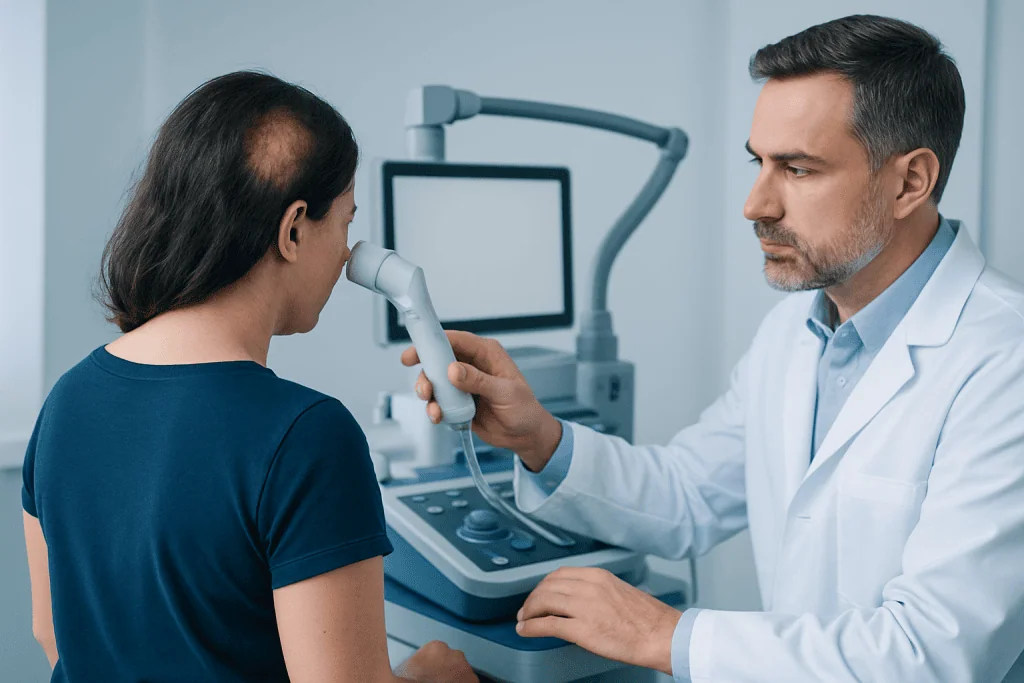
Hair loss may begin gradually or progress more quickly. A person may notice smooth, shiny patches where the openings of hair follicles are no longer visible. Patches can be small at first, may merge over time, and may have an irregular shape. In some conditions, hair loss develops around the hairline or crown; in others, it appears in scattered areas across the scalp.
Symptoms are not the same for everyone. Some people have little discomfort, while others notice itching, burning, pain, tenderness, tightness, or a tingling feeling before or during hair loss. Visible changes can include redness, scaling, crusting, pustules, small raised bumps, darker or lighter skin color, or broken hairs around an affected patch.
A receding frontal hairline with loss of eyebrows can occur in a condition called frontal fibrosing alopecia. Painful, inflamed bumps or pustules around follicles may be seen in other forms. These signs do not confirm a diagnosis by themselves, as scalp infections, eczema, psoriasis, and other hair disorders can look similar. A clinical assessment is important, particularly when hair loss is accompanied by scalp symptoms.
Types, Causes and Risk Factors

Scarring alopecia is often classified as primary or secondary. In primary scarring alopecia, inflammation begins around the hair follicle itself. The immune system is believed to play an important role in several primary types, although the exact trigger is not always known. Examples include lichen planopilaris, frontal fibrosing alopecia, central centrifugal cicatricial alopecia, discoid lupus erythematosus, and folliculitis decalvans.
Secondary scarring alopecia occurs when follicles are damaged by another process, such as a severe skin infection, burn, radiation exposure, surgery, traumatic injury, or certain inflammatory skin diseases. The underlying cause influences the appropriate treatment and outlook.
Risk factors differ by subtype. Some conditions occur more often in certain age groups, sexes, or ethnic backgrounds, but anyone can develop scarring hair loss. Family history may contribute in some cases. Hair-care practices may worsen traction or breakage in vulnerable hair, but they do not explain every case of scarring alopecia and should not be assumed to be the cause without medical evaluation.
- Autoimmune or inflammatory activity: may contribute to several primary types.
- Infection or injury: can cause secondary follicle damage and scarring.
- Delayed assessment: may allow active inflammation to affect more follicles before treatment begins.
- Associated conditions: some people may have other skin or autoimmune conditions that require consideration during assessment.
How Scarring Alopecia Is Diagnosed
Diagnosis usually begins with a detailed history and scalp examination by a dermatologist. The clinician may ask when hair loss started, whether it has spread, what scalp symptoms are present, which hair products or styling practices are used, and whether there is a personal or family history of skin, thyroid, or autoimmune conditions. They will also examine the distribution of hair loss and look for signs of inflammation.
A handheld magnifying device called a dermoscope may be used to inspect the scalp and hair follicles more closely. This can help identify features such as absent follicular openings, scale around hairs, broken hairs, redness, or pustules. Photographs may be taken to track changes over time, which can be particularly useful because activity can fluctuate.
A scalp biopsy is often the most helpful test for confirming the diagnosis and determining the type of inflammation present. During this procedure, a clinician removes one or more small samples of skin under local anesthetic, usually from an active edge of hair loss rather than a fully smooth, scarred center. Blood tests may be recommended when symptoms or examination findings suggest an associated medical condition, but no single blood test can diagnose all forms of scarring alopecia.
Treatment Goals and Options
The main goal of treatment is to reduce active inflammation, relieve symptoms, and limit further permanent hair loss. Treatment cannot reliably restore follicles that have already been replaced by scar tissue, so starting care promptly when disease activity is suspected is important. The best approach depends on the specific diagnosis, severity, symptoms, medical history, and whether infection is involved.
For localized inflammation, a dermatologist may recommend anti-inflammatory treatments applied to the scalp or injected into selected areas. For more extensive or active disease, oral medicines that regulate inflammation or treat infection may be considered. Antimicrobial medicines can be important when bacterial folliculitis is contributing. Treatment plans are individualized, and some medicines require regular monitoring for effectiveness and possible side effects.
Response is usually assessed over months rather than days. A reduction in itching, burning, redness, scale, pustules, or expansion of hairless areas can indicate that inflammation is becoming controlled. Even when hair does not regrow in scarred areas, stabilizing the condition is a meaningful result because it may preserve existing hair.
Once the condition has been inactive for a sustained period, some people may discuss cosmetic options such as wigs, hairpieces, scalp camouflage products, or hair transplantation. Transplantation is not suitable during active disease because inflammation may affect transplanted follicles. A dermatologist can advise whether the scalp appears stable enough to explore these options.
Scalp Care, Prevention and Emotional Well-Being
Not all forms of scarring alopecia can be prevented, especially when the cause is immune-mediated or unclear. However, gentle scalp care can help reduce avoidable irritation. People are generally advised to avoid scratching, picking, aggressive brushing, harsh chemical treatments, and hairstyles that place prolonged tension on the hair and scalp. Any new scalp product should be stopped if it causes burning, redness, or worsening symptoms.
Following the treatment plan consistently and attending follow-up appointments are important parts of care. It can be helpful to note symptoms, take periodic photographs in the same lighting, and report new patches, discomfort, pustules, or increased shedding promptly. These observations may help the treating clinician distinguish active inflammation from stable scarring.
Permanent hair loss can affect self-image, confidence, and daily life. Practical options such as hairstyle adjustments, head coverings, cosmetic fibers, or counseling can be valuable. Emotional support is not a sign that a person is overreacting; it is a reasonable part of managing a visible long-term health condition.
When to Seek Medical Care
A person should arrange an appointment with a dermatologist or qualified doctor if they notice a new patch of hair loss, a widening hairline, loss of eyebrows, or areas of scalp where the skin looks smooth and shiny. Assessment is also recommended for hair loss accompanied by itching, burning, pain, redness, scaling, crusting, bleeding, pustules, or drainage.
More urgent medical advice is appropriate if the scalp is very painful, rapidly swelling, producing significant discharge, or accompanied by fever or feeling unwell, as these features may indicate infection or another condition requiring prompt care. It is best not to self-treat persistent scalp inflammation with repeated over-the-counter products, as this may delay an accurate diagnosis.
Acibadem International’s multidisciplinary specialists and JCI-accredited hospitals assess and treat scalp and hair conditions for international patients. A dermatologist can help identify whether hair loss is scarring or non-scarring, explain the likely course, and create an individualized plan focused on protecting remaining hair.
Frequently asked questions
Is scarring alopecia permanent?
Hair loss is usually permanent in areas where inflammation has destroyed follicles and scar tissue has formed. However, treatment may help stop or slow the disease process and preserve hair in unaffected or still-active areas. This is why early evaluation is important.
Can hair grow back after scarring alopecia?
Hair generally does not regrow from follicles that have been fully destroyed. Sometimes hair can appear to improve when inflammation is treated before irreversible follicle damage occurs. A dermatologist can assess whether an area is actively inflamed, scarred, or potentially able to recover.
How quickly does scarring alopecia progress?
Progression varies considerably by the specific type and by the individual. Some forms develop slowly over years, while others may become active over weeks or months. Symptoms such as increasing redness, discomfort, scale, pustules, or enlarging hair-loss patches may suggest active disease.
Is scarring alopecia contagious?
Most primary forms of scarring alopecia are not contagious. They are related to inflammation around hair follicles and may involve immune-system activity. If an infection is suspected as a cause of scalp symptoms, a clinician can determine whether treatment is needed and whether there is any risk of spread.
Can stress cause scarring alopecia?
Stress is well known to contribute to some types of temporary, non-scarring hair shedding, but it is not considered a proven direct cause of most scarring alopecias. Stress can still affect overall well-being and may make coping with symptoms more difficult. It should not replace a medical assessment of new hair loss.
Can hair transplantation treat scarring alopecia?
Hair transplantation may be considered for selected people when the underlying inflammatory condition has been inactive and stable for a sustained period. It is usually avoided during active disease because transplanted follicles may be affected by ongoing inflammation. Suitability should be assessed by clinicians experienced in both hair disorders and transplantation.
References
- American Academy of Dermatology Association
- British Association of Dermatologists
- National Institute of Arthritis and Musculoskeletal and Skin Diseases
- DermNet
- Mayo Clinic
This article is for general information only and is not a substitute for professional medical advice. Please consult a qualified doctor about your individual situation.
Hair transplant in Turkey — costs, graft counts & a free assessment
JCI-accredited · board-certified surgeons · reply within 24h
Add us as a Preferred Source to see more of our trusted health content across Google Search, AI Overviews and Discover.