Sciatica and Exercises: An Evidence-Based Guide for Patients

Sciatica describes symptoms caused by irritation or compression of a nerve root that contributes to the sciatic nerve. Remaining gently active is usually more helpful than prolonged bed rest for uncomplicated sciatica.
Key Takeaways
- Sciatica describes symptoms caused by irritation or compression of a nerve root that contributes to the sciatic nerve.
- Remaining gently active is usually more helpful than prolonged bed rest for uncomplicated sciatica.
- Exercises should be selected according to symptom response, mobility, strength, and the underlying cause of nerve irritation.
- Pain that moves out of the leg and closer to the lower back during activity may be a favorable sign, while spreading leg pain should prompt a change in approach.
- New weakness, numbness around the groin or buttocks, or bladder and bowel changes require urgent medical assessment.
Sciatica and exercises can be part of a safe, effective recovery plan for many people, especially when movement is gradual and adapted to the cause of symptoms. The best exercise is not the same for everyone: it should reduce or centralize leg pain rather than worsen it.
Sciatica and Exercises: The Main Principle
Sciatica and exercises are closely linked because carefully chosen movement can help many people manage symptoms, maintain daily function, and recover confidence in their back and leg. For most uncomplicated cases, complete bed rest is not recommended. Instead, short periods of relative rest during severe pain can be followed by gentle, regular movement within tolerable limits.
Sciatica is not a diagnosis by itself. It is a pattern of symptoms that may include pain, tingling, numbness, or weakness traveling from the lower back or buttock into one leg. Symptoms occur when a spinal nerve root is irritated, inflamed, or compressed; this nerve root forms part of the sciatic nerve pathway.
The goal of exercise is not to “push through” sharp nerve pain. It is to gradually improve movement, reduce sensitivity, maintain strength, and support a return to normal activities. A clinician or physiotherapist can help identify which movements are most appropriate, particularly when pain is severe, persistent, recurrent, or accompanied by weakness.
How Exercise Can Help Sciatic Symptoms
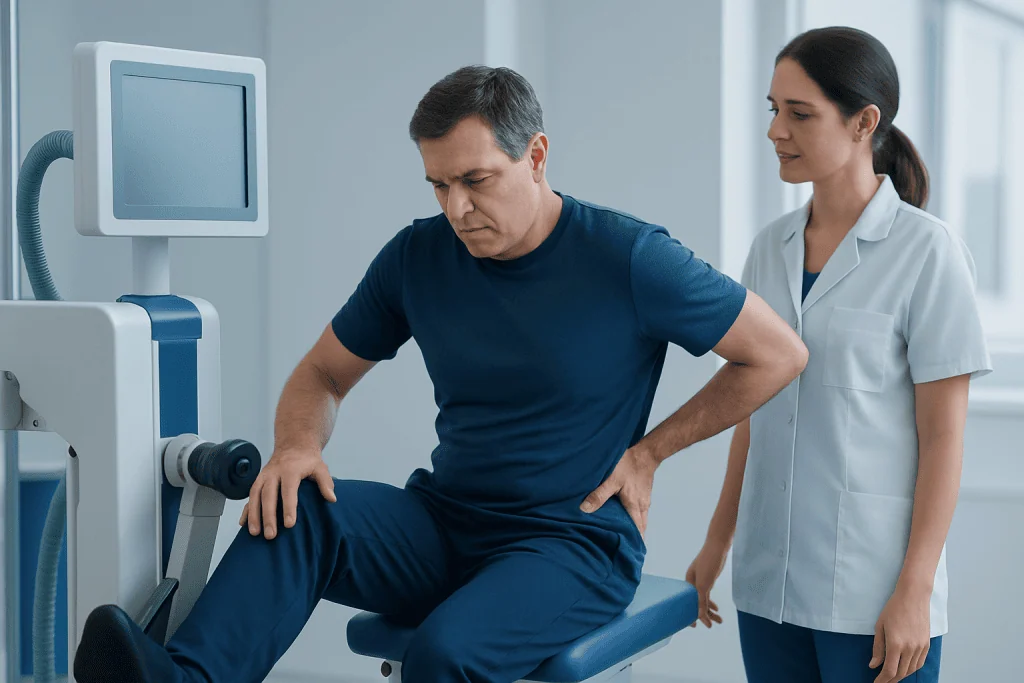
Movement can help prevent stiffness and deconditioning that often develop when a person becomes afraid to bend, walk, or change position. Gentle activity also supports circulation, muscle function, and the ability of the nervous system to tolerate normal daily movement. Walking, swimming, and other low-impact activities may be useful when they do not increase leg symptoms.
Exercise programs commonly include mobility work, gradual strengthening, and movement education. Mobility exercises aim to make positions such as sitting, standing, and bending more comfortable. Strengthening focuses on the trunk, hips, and legs, which can improve control during everyday tasks such as lifting, climbing stairs, and getting up from a chair.
One useful symptom guide is the direction of pain. If symptoms become less intense in the calf or foot and move closer to the buttock or lower back, this is sometimes called centralization and may indicate that a movement is well tolerated. In contrast, pain that spreads farther down the leg, new tingling, or increasing numbness suggests the activity should be stopped and reviewed.
Choosing Exercises Based on Symptom Response

There is no single exercise routine that works for every person with sciatica. A disc-related problem, spinal narrowing, joint changes, pregnancy-related pelvic changes, and muscle-related pain can produce different patterns. The most suitable movements depend on the person’s symptoms, physical examination, overall health, and daily demands.
Some people feel better with gentle backward-bending movements, such as lying on the stomach and gradually supporting the upper body on the forearms if comfortable. Others, particularly those whose symptoms worsen with standing or walking and ease when leaning forward, may tolerate gentle forward-bending positions or a stationary bicycle more easily. These patterns are clues, not a substitute for medical evaluation.
Common exercise categories that a physiotherapist may use include:
- Gentle walking or other low-impact aerobic movement.
- Comfortable lower-back and hip mobility exercises.
- Trunk and hip strengthening, progressed gradually.
- Carefully performed nerve-mobility exercises, sometimes called nerve glides.
- Training in lifting, sitting, standing, and pacing daily activities.
Exercises should be slow and controlled. A mild sense of muscular effort or stretching can be acceptable, but electric, burning, shooting, or increasingly distant leg pain is not a signal to continue. The person should return to a more comfortable position and seek professional advice if symptoms do not settle.
Useful Movement Habits During Recovery
Regular, manageable activity is often more valuable than an intense exercise session performed occasionally. Many people benefit from breaking up long periods of sitting, driving, or standing with brief changes of position. A short walk, a few comfortable movements, or simply standing and shifting posture may reduce stiffness and prevent symptoms from building up.
Body position matters, but there is no universally perfect posture. Rather than trying to hold one rigid position all day, it is usually better to vary positions and avoid staying in any posture that consistently aggravates symptoms. When sitting is uncomfortable, adjusting chair height, using back support, or alternating sitting with standing may help.
Daily tasks should be resumed gradually. During an irritated phase, a person may need to modify heavy lifting, repeated twisting, deep bending, or high-impact exercise. This does not mean these activities must be avoided permanently. Once symptoms settle and strength improves, they can often be reintroduced in a stepwise way with attention to technique and recovery.
Exercises and Approaches to Use Carefully
A stretch is not automatically helpful simply because it targets the hamstrings, buttocks, or lower back. Strong stretching of the back of the thigh can sometimes pull on sensitive nerve tissue and worsen sciatic symptoms. If a stretch brings on tingling, burning, numbness, or pain farther down the leg, it should be reduced or stopped.
High-load lifting, forceful twisting, jumping, and aggressive self-manipulation may also be unsuitable during an acute flare. A person should avoid copying an online routine without considering how their own symptoms respond. Exercises that help one person can be uncomfortable or counterproductive for another.
Pain medicines, heat or cold packs, and manual therapy may offer short-term comfort for some individuals, but they do not replace a gradual rehabilitation plan. If symptoms continue, a healthcare professional may assess whether physiotherapy, medication review, imaging, injections, or other treatments are appropriate. Imaging is not routinely needed at the start unless there are warning signs or the result is likely to change management.
When to Seek Medical Care
Medical advice is appropriate when leg pain is severe, symptoms do not begin to improve with conservative care, pain repeatedly returns, or everyday activities and sleep remain significantly affected. Assessment is especially important when there is noticeable weakness in the foot or leg, such as difficulty lifting the front of the foot, climbing stairs, or standing on the toes.
Urgent medical assessment is needed for new loss of bladder or bowel control, inability to pass urine, numbness around the genitals, inner thighs, or buttocks, or rapidly worsening weakness. These symptoms are uncommon but can indicate serious nerve compression that requires prompt evaluation.
A clinician will usually ask about the location and pattern of pain, examine strength, sensation, reflexes, walking, and spinal movement, and consider other possible causes of leg pain. They can also advise when it is safe to restart or progress exercises. Acibadem International’s multidisciplinary specialists and JCI-accredited hospitals diagnose and treat spine and nerve-related conditions for international patients.
Building a Sustainable Return to Activity
Recovery from sciatica is often gradual rather than perfectly linear. Symptoms may fluctuate with sleep, work demands, stress, travel, or an unexpected increase in activity. A temporary flare does not always mean new damage, but a sustained increase in leg symptoms is a reason to reduce the activity level and discuss the plan with a qualified professional.
A practical plan starts with activities the person can complete without a meaningful symptom increase, then progresses one element at a time: duration, frequency, resistance, range of motion, or task complexity. Keeping a simple record of activities and symptoms may help identify what is tolerated and what needs adjustment.
Long-term prevention focuses on maintaining general physical activity, building trunk and hip strength, using safe lifting habits, and avoiding prolonged inactivity. Healthy sleep, smoking cessation where relevant, and management of overall health conditions can also support recovery. The most successful program is usually one that fits the person’s goals, work, and daily routine well enough to continue.
Frequently asked questions
Should a person exercise when sciatica is painful?
In many cases, gentle movement is preferable to prolonged bed rest, even when sciatica is painful. The activity should be adapted so that it does not cause increasing pain, tingling, or numbness down the leg. A clinician can advise on safe options when symptoms are severe or unclear.
What is the best exercise for sciatica?
There is no single best exercise because sciatica can arise from different causes and symptom patterns. Walking, gentle spinal mobility, hip and trunk strengthening, and nerve-mobility exercises may be used, depending on the individual. The best choice is one that is comfortable and does not make leg symptoms spread or intensify.
Can stretching make sciatica worse?
Yes, forceful stretching can aggravate sciatica in some people, especially if it tensions an irritated nerve. A stretch that causes sharp, burning, electric, or traveling pain should be stopped. Gentle, symptom-guided movement is safer than trying to stretch through nerve pain.
Is walking good for sciatica?
Walking is often a useful low-impact activity because it helps maintain mobility and fitness. It should be started at a manageable level and increased gradually. If walking consistently makes pain travel farther down the leg or causes weakness, medical advice is recommended.
How long does it take for exercise to help sciatica?
The timeline varies according to the cause, severity, activity level, and overall health of the individual. Some people notice improved movement and confidence within a short period, while others need a more gradual rehabilitation plan. Persistent, worsening, or recurrent symptoms should be assessed by a healthcare professional.
When should sciatica not be treated with home exercises alone?
Home exercises alone are not appropriate when there is new or worsening leg weakness, loss of bladder or bowel control, numbness around the groin or buttocks, or severe and rapidly progressing symptoms. These signs need urgent medical evaluation. Professional assessment is also helpful when pain remains disabling or does not improve over time.
References
- National Institute for Health and Care Excellence
- National Institute of Neurological Disorders and Stroke
- American Academy of Orthopaedic Surgeons
- North American Spine Society
- World Health Organization
This article is for general information only and is not a substitute for professional medical advice. Please consult a qualified doctor about your individual situation.
Joint and spine care in Turkey — expert assessment & treatment
JCI-accredited · board-certified surgeons · reply within 24h
Add us as a Preferred Source to see more of our trusted health content across Google Search, AI Overviews and Discover.

More from the Health Library



Related Specialists

Prof. Dr. Cem Demirel
Gynecology & Obstetrics
Dr. Aynur Göksel
Physical Medicine & Rehabilitation
Dr. Rüya Göz
Anesthesiology
Dr. Eren Yılmaz
Otorhinolaryngology