Scleral Lenses: An Evidence-Based Guide for Patients

Scleral lenses vault over the cornea and rest on the sclera, which can improve both comfort and visual quality. They are commonly prescribed for keratoconus, corneal irregularity, severe dry eye, and some post-surgical or post-injury eye conditions.
Key Takeaways
- Scleral lenses vault over the cornea and rest on the sclera, which can improve both comfort and visual quality.
- They are commonly prescribed for keratoconus, corneal irregularity, severe dry eye, and some post-surgical or post-injury eye conditions.
- Successful wear depends on expert fitting, careful cleaning, and regular follow-up with an eye care professional.
- Many people adapt well to scleral lenses, but insertion, removal, and daily hygiene require practice.
- Persistent redness, pain, discharge, or sudden vision changes need prompt medical assessment.
Scleral lenses are specialized gas-permeable contact lenses designed to rest on the white part of the eye and create a fluid reservoir over the cornea. They are often used to improve comfort and vision in people with irregular corneas, severe dry eye, or corneal surface disease when standard glasses or contacts are not enough.
Overview: what scleral lenses are and how they help
Scleral lenses are large, rigid gas-permeable contact lenses that do not sit directly on the cornea. Instead, they vault over the cornea and rest on the sclera, the white outer part of the eye. Before insertion, the lens is filled with sterile saline, creating a liquid layer between the lens and the cornea that can improve comfort and vision.
This design makes scleral lenses different from standard soft lenses and smaller rigid lenses. Because they create a smooth optical surface, they can help people whose vision remains blurred with glasses due to an irregular cornea. The fluid reservoir can also protect the ocular surface and reduce symptoms in some forms of significant dryness or surface irritation.
Scleral lenses are not a cosmetic trend or a one-size-fits-all product. They are medical devices that require a detailed eye examination, precise measurements, and individualized fitting. For many patients, they are considered when simpler options have not provided adequate vision, comfort, or protection for the front of the eye.
Who may benefit from scleral lenses
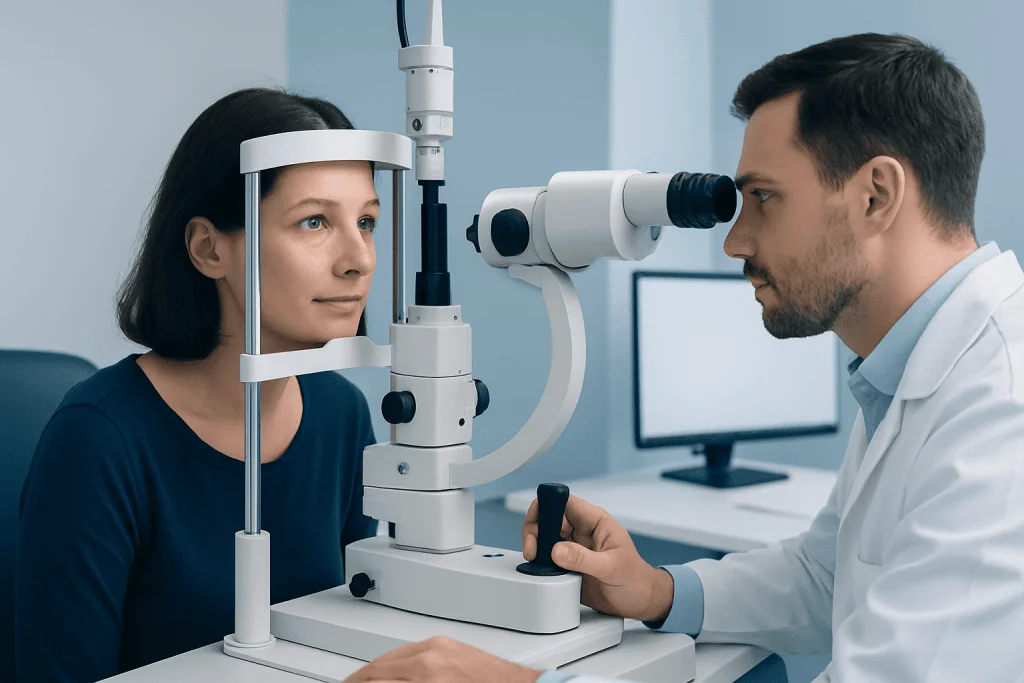
Scleral lenses are often recommended for people with corneal conditions that distort the normal curve of the eye. One common example is keratoconus, in which the cornea becomes thinner and more cone-shaped over time. In this setting, a scleral lens can create a more regular front surface for light to pass through, often improving visual clarity.
They may also help after corneal surgery, after eye injury, or in people with scarring, transplants, or other surface irregularities. Some patients with advanced dry eye disease, exposure-related dryness, or autoimmune-related ocular surface disease may benefit because the lens holds a cushion of fluid over the cornea throughout wear.
In addition, scleral lenses can sometimes be considered when standard soft lenses are unstable, uncomfortable, or unable to correct vision adequately. They are not always the first option, but they can be especially useful when glasses, conventional contact lenses, lubricating drops, or simpler approaches have not been enough. A specialist in eye care can determine whether they are appropriate for the individual patient.
What to expect: fitting, adaptation, and daily wear

Getting scleral lenses usually takes more than one visit. The eye care professional assesses vision, corneal shape, tear film, eyelids, and the overall health of the ocular surface. Specialized imaging or topography may be used to map the cornea and guide lens design. Trial lenses are often placed on the eye to check clearance, edge alignment, comfort, and visual performance.
After the fitting, patients are taught how to insert, remove, clean, and store the lenses safely. Unlike many soft lenses, scleral lenses are filled with preservative-free sterile saline before insertion. This step is important because the liquid reservoir is part of how the lens works. Most people need time and practice to become comfortable with handling them.
Adaptation varies from person to person. Some notice clearer, more stable vision quickly, while others need adjustments to lens parameters or wearing time. Follow-up visits are important because a lens that seems acceptable at first may still need refinement to improve comfort, oxygen transmission, or alignment with the eye.
- Initial fitting may require several appointments.
- Training in insertion and removal is essential.
- Regular follow-up helps reduce complications and optimize comfort.
Benefits and limitations of scleral lenses
The main benefits of scleral lenses are visual quality, stability, and surface protection. For irregular corneas, they can reduce distortion and improve vision more effectively than glasses. Because the lens rests on the sclera rather than the sensitive cornea, many people find them more comfortable than smaller rigid lenses once they are fitted properly.
For severe dryness or surface disease, the saline reservoir can provide ongoing moisture and a protective barrier during wear. This may reduce symptoms such as burning, grittiness, light sensitivity, or fluctuating vision in selected patients. In some complex cases, scleral lenses are part of a broader plan that may also include cornea treatment or other therapies directed at the underlying cause.
At the same time, scleral lenses have limitations. They require daily maintenance, careful hygiene, and manual dexterity. They can be more time-consuming to insert and remove than standard soft lenses, and not every patient is a good candidate. Some people may still need additional treatments for dry eye, allergies, eyelid disease, or changes in the cornea itself.
It is also important to understand that scleral lenses manage symptoms and improve optical function, but they do not necessarily cure the underlying eye condition. For example, in progressive corneal disease, the lens may improve vision while the doctor continues to monitor the condition and discuss treatments such as corneal cross-linking when appropriate.
Safety, hygiene, and possible complications
When used correctly and monitored regularly, scleral lenses are generally considered safe. However, as with any contact lens, problems can occur. The most common issues include discomfort, redness, fogging, lens awareness, or difficulty with insertion and removal. These problems are often manageable with adjustments to fit, wear schedule, cleaning routine, or the saline used to fill the lens.
More serious complications are less common but important to recognize. These can include corneal swelling from reduced oxygen, abrasions from poor handling, inflammation, or infection. Contact lens–related infections are uncommon, but they can threaten vision if treatment is delayed. This is why careful handwashing, proper disinfection, and avoiding non-sterile water exposure are essential.
Patients should use only the products recommended by their eye care professional. Tap water should not be used to clean, rinse, or fill scleral lenses. Lens cases, plungers, and storage solutions also need routine attention. If a lens becomes painful, cloudy, damaged, or difficult to remove, it should not be forced, and medical advice should be sought.
How to care for scleral lenses at home
Good daily care supports both comfort and eye safety. Before handling lenses, hands should be washed and dried thoroughly with a lint-free towel. The lenses should be cleaned and disinfected exactly as instructed, and only sterile, preservative-free saline intended for scleral lens filling should be used unless the prescribing clinician advises otherwise.
Many patients benefit from developing a consistent routine for insertion, removal, and storage. A clean, well-lit surface and a mirror can make handling easier. Makeup, lotions, and sprays are best kept away from the lenses during insertion. If debris, bubbles, or discomfort occur after insertion, the lens may need to be removed, rinsed, refilled, and reinserted.
Home care does not replace follow-up. Even if vision seems good, scheduled examinations remain important to check the cornea, conjunctiva, tear film, and lens fit over time. At centers such as Acibadem International, multidisciplinary specialists in JCI-accredited hospitals evaluate and treat complex ocular surface and corneal conditions for international patients when advanced assessment is needed.
- Wash and dry hands before touching lenses.
- Use only approved cleaning and filling solutions.
- Never use tap water in or on the lenses.
- Attend regular follow-up visits, even if symptoms are mild.
When to seek medical care
Prompt medical care is important if there is sudden eye pain, marked redness, light sensitivity, discharge, or a sudden drop in vision while wearing scleral lenses. These symptoms do not always mean a serious problem, but they should not be ignored because infection or corneal injury needs early treatment. The same is true if the lens can no longer be worn comfortably or if it becomes stuck and cannot be removed safely.
Medical review is also advisable if vision becomes more blurred than usual, if fogging worsens, or if symptoms of dryness increase despite correct use. A change in fit, lens deposits, eyelid inflammation, or progression of an underlying eye condition may be responsible. People with known corneal disease or severe ocular surface disease should maintain regular appointments even when they are doing well.
For new or ongoing concerns, an ophthalmologist or contact lens specialist can assess whether the issue relates to the lens, the cornea, the tear film, or another eye condition. Early evaluation usually gives the best chance of restoring comfort and protecting vision.
Frequently asked questions
What are scleral lenses used for?
Scleral lenses are used to improve vision and comfort in people with irregular corneas, severe dry eye, and some ocular surface disorders. They can be especially helpful when glasses or standard contact lenses do not provide enough clarity or comfort.
Are scleral lenses comfortable?
Many patients find scleral lenses comfortable once they are properly fitted and they become used to handling them. Because the lens rests on the sclera rather than the cornea, it may feel more stable than smaller rigid lenses for some people.
Can scleral lenses help dry eye?
Yes, in selected patients they can help by creating a fluid reservoir over the cornea. This may reduce dryness symptoms during wear, but the underlying cause of dry eye still needs medical evaluation and treatment when necessary.
How long can scleral lenses be worn each day?
Daily wearing time varies from person to person and depends on the eye condition, lens fit, and advice from the prescribing clinician. Patients should follow their specialist's instructions rather than trying to extend wear time on their own.
Are scleral lenses hard to put in and take out?
They can feel challenging at first because they are larger than standard contact lenses and must be filled with sterile saline before insertion. With training and practice, most patients learn a safe routine for daily use.
Do scleral lenses cure keratoconus or other corneal conditions?
No, scleral lenses usually improve vision and may protect the ocular surface, but they do not cure the underlying condition. Ongoing follow-up is important so the eye doctor can monitor for progression and discuss other treatments if needed.
This article is for general information only and is not a substitute for professional medical advice. Please consult a qualified doctor about your individual situation.
Persistent digestive symptoms? Get evaluated in Turkey
JCI-accredited · board-certified surgeons · reply within 24h
Add us as a Preferred Source to see more of our trusted health content across Google Search, AI Overviews and Discover.

More from the Health Library

Spots on Vagina Lips — Explained by Medical Evidence, Not Myths

Broccoli Sprouts: A Complete Medical Overview

Intuitive Eating — Explained by Medical Evidence, Not Myths

Hb Ac1: What Patients Need to Know

Fluocinolone: An Evidence-Based Guide for Patients