Scoliosis Brace: Symptoms, Causes, and Treatment Options

A scoliosis brace is most often recommended for children and adolescents who are still growing and have a moderate spinal curve. Bracing aims to prevent a curve from worsening, rather than permanently correcting the spine.
Key Takeaways
- A scoliosis brace is most often recommended for children and adolescents who are still growing and have a moderate spinal curve.
- Bracing aims to prevent a curve from worsening, rather than permanently correcting the spine.
- Not every person with scoliosis needs a brace; treatment depends on age, growth remaining, and curve size.
- Regular follow-up visits and imaging are important to check whether the brace is working.
- Comfort, fit, skin care, and daily routines strongly affect how well bracing is tolerated and used.
A scoliosis brace is a non-surgical treatment used mainly in growing children and teenagers with certain spinal curves. It does not usually "straighten" the spine completely, but it can help limit curve progression and may reduce the need for surgery in selected patients.
Overview: What a Scoliosis Brace Does
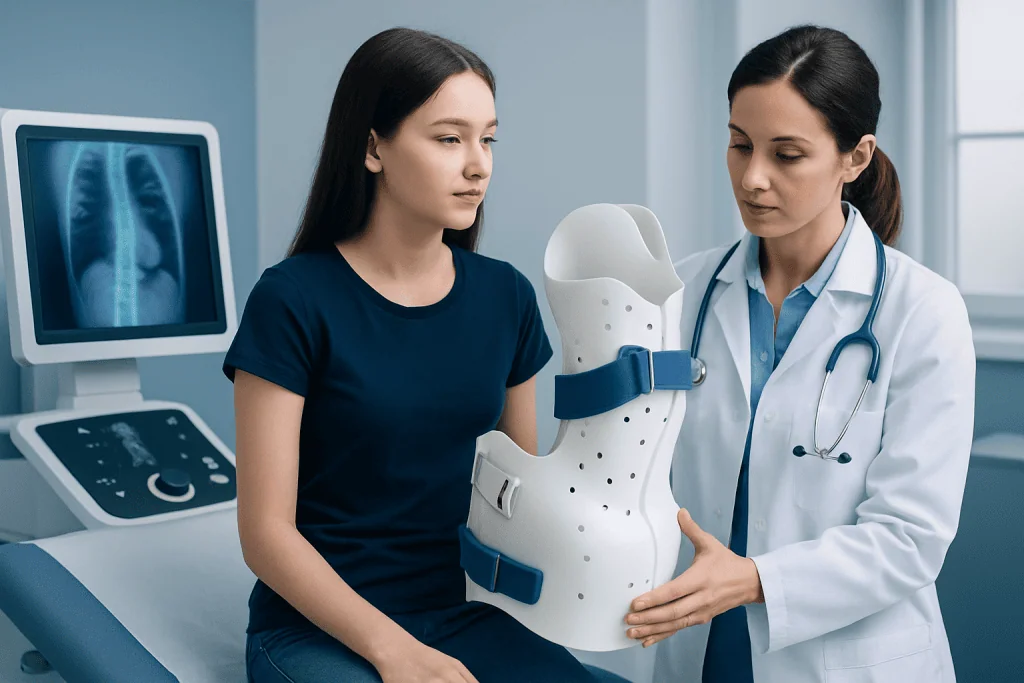
A scoliosis brace is a custom-fitted device worn around the torso to help control the progression of an abnormal spinal curve. It is used most commonly for children and adolescents whose bones are still growing, especially when the curve is large enough to need treatment but not severe enough to clearly require surgery. In this setting, bracing can be an important step between observation and an operation.
The main goal of a brace is to slow or prevent the curve from getting worse during growth. This is a key point, because many families expect a brace to fully straighten the spine. In practice, a brace works by applying gentle, targeted pressure and support that helps guide growth. Some improvement may be seen on imaging while the brace is worn, but the long-term aim is usually curve control rather than complete correction.
Bracing is not the right choice for every type of scoliosis. Decisions depend on the person’s age, the degree of curvature, the pattern of the curve, and how much growth remains. A specialist may also discuss related conditions such as scoliosis more broadly to explain why one person may simply need monitoring while another may benefit from bracing or surgery.
Symptoms and Signs That May Lead to Bracing
Scoliosis itself often causes few symptoms in the early stages. Many children and teens feel no pain and remain active in sports and daily life. Because of this, the first clues are often changes in posture rather than discomfort. A parent, teacher, or pediatrician may notice that one shoulder sits higher than the other, the waist looks uneven, or clothing hangs asymmetrically.
Other visible signs can include one shoulder blade appearing more prominent, the rib cage looking uneven, or the body seeming to lean slightly to one side. During a forward bend test, a rib hump or uneven back contour may become easier to see. These findings do not automatically mean a brace is needed, but they are common reasons for further evaluation.
When scoliosis progresses, some people may develop back fatigue, muscle tightness, or reduced confidence related to body shape. Significant pain is less typical in uncomplicated adolescent scoliosis, so persistent or severe pain may prompt doctors to look for other causes as well. Bracing is considered after proper assessment confirms that the spinal curve and growth stage fit common treatment guidelines.
- Uneven shoulders or hips
- One side of the rib cage appearing higher
- Clothes not fitting evenly
- A visible curve or trunk shift
- Changes noticed during growth spurts
Causes and Risk Factors
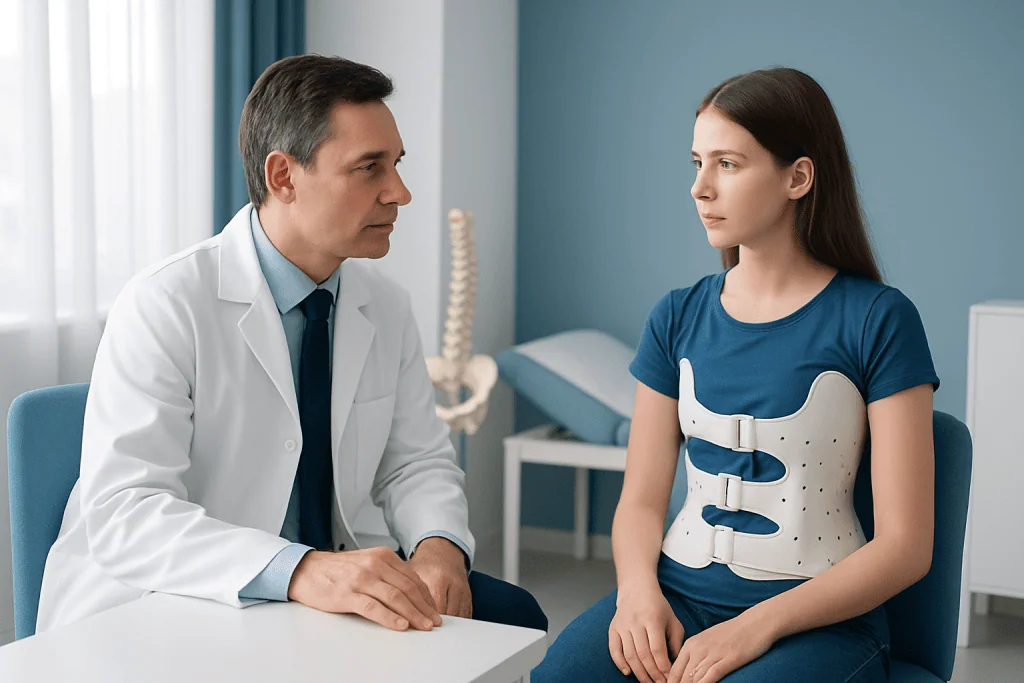
The most common reason a young person may need a scoliosis brace is adolescent idiopathic scoliosis. “Idiopathic” means the exact cause is not known. It is thought to involve several factors, including growth patterns, spinal mechanics, and possible genetic influences. It is not caused by poor posture, carrying a school bag, or sleeping in the wrong position.
Risk factors that matter most for bracing are not just the presence of scoliosis, but the likelihood that the curve will progress. A child who is still growing has a higher chance of progression than someone who has nearly reached skeletal maturity. The measured angle of the curve on X-ray, the shape of the curve, family history, and how quickly the child is growing all help doctors estimate risk.
Some forms of scoliosis are linked to neuromuscular or congenital conditions, and these cases may need a different treatment approach. A brace can be helpful in some of these situations, but management is often more individualized. If a curve becomes severe or continues to worsen despite bracing, specialists may discuss more advanced options, including scoliosis surgery when appropriate.
How Doctors Decide Whether a Brace Is Needed
Bracing decisions are usually based on a combination of physical examination, imaging findings, and growth assessment. The spinal curve is commonly measured using the Cobb angle on X-ray. In general, a brace is most often considered for moderate curves in patients who are still growing. Curves that are very small may simply be observed, while more severe curves may lead to discussion of surgical treatment.
Doctors also estimate how much growth remains, because bracing works best when the spine is still developing. Puberty stage, growth history, menstrual history in girls, and bone maturity signs can all be part of this assessment. The exact threshold for recommending a brace can vary slightly by patient and by specialist, but the overall principle is consistent: the brace is used when there is meaningful risk of progression during growth.
The fitting process itself is important. A brace should be prescribed and adjusted by experienced professionals, often with input from an orthopedic specialist and an orthotist. Follow-up imaging may be done to see how well the brace controls the curve. In some patients, doctors may also compare bracing with structured monitoring, physical therapy, or spine-focused physical therapy and rehabilitation as part of a broader care plan.
Types of Scoliosis Braces and What to Expect
Several brace designs are used in scoliosis care. Most are custom-made rigid braces worn under clothing and designed to fit closely around the torso. Some are intended for daytime use, while others are prescribed mainly for nighttime wear. The best choice depends on the curve pattern, curve size, the person’s age, and how likely they are to tolerate the wearing schedule.
At the start, wearing a brace can feel unfamiliar. Pressure points, warmth, restricted clothing choices, and self-consciousness are common concerns, especially in teenagers. These challenges are real, but many improve after an adjustment period and with careful fitting. Regular review helps the team refine comfort and function as the child grows.
Successful bracing depends not only on the brace design but also on consistent use. Families often benefit from practical counseling on school routines, sports participation, skin care, and emotional adjustment. While a brace can support treatment, it is only one part of scoliosis management. Some patients also need posture guidance, supervised exercises, and in selected cases evaluation by specialists in spine surgery.
- Daytime braces are often used for many hours each day
- Nighttime braces may be suitable for selected curve types
- Custom fitting improves both effectiveness and comfort
- Braces should be reviewed regularly as the child grows
Treatment Options Beyond the Brace
A scoliosis brace is one treatment option, not the only one. Mild curves may only need observation with regular follow-up appointments and repeat imaging. This is often the safest and most sensible plan when the curve is small and the risk of progression is low. Watching a curve closely is active care, not neglect.
Exercise-based programs may be recommended to support posture, balance, muscle endurance, and body awareness. Although exercise alone does not replace bracing when a brace is clearly indicated, it can be a useful companion therapy for some patients. Pain management, if needed, usually focuses on activity guidance, stretching, and rehabilitation rather than long-term medication use.
If the curve becomes severe, progresses rapidly, or continues to worsen despite good brace use, surgery may be considered. Surgical planning depends on the person’s age, curve pattern, symptoms, and overall health. Near the end of the treatment journey, some international patients seek multidisciplinary evaluation at centers such as Acibadem International, where JCI-accredited hospitals assess and treat spinal conditions with orthopedic, rehabilitation, and imaging specialists.
Prevention, Self-care, and Living With a Brace
There is no proven way to prevent idiopathic scoliosis from developing. However, early recognition can make treatment simpler and more effective. Routine pediatric visits, attention during growth spurts, and timely evaluation of posture changes can help identify scoliosis before a curve progresses further.
For those already using a brace, daily self-care matters. The skin under the brace should be checked regularly for irritation, especially during hot weather or after increased activity. A thin, well-fitting layer under the brace may improve comfort. If the brace becomes too tight, painful, or visibly worn, it should be reviewed rather than quietly tolerated.
Emotional well-being also deserves attention. Children and teens may worry about appearance, school, sports, or sleeping in the brace. Supportive communication from family, clinicians, and school staff can help. Many patients continue normal activities with adjustments, and a realistic routine often improves confidence and adherence over time.
When to Seek Medical Care
Medical assessment is appropriate if a child, teenager, or adult develops visible signs of scoliosis such as uneven shoulders, a leaning posture, or a rib hump during bending forward. Care is also important if an existing scoliosis diagnosis seems to be changing, particularly during rapid growth. Earlier review can help determine whether observation is still enough or whether a brace or another treatment should be discussed.
Prompt medical advice is especially important if scoliosis is accompanied by significant pain, weakness, numbness, walking changes, breathing difficulties, or bowel or bladder symptoms. These features are not typical of uncomplicated idiopathic scoliosis and may require more urgent evaluation. Families should also contact the treating team if a brace causes persistent skin injury, severe discomfort, or is no longer fitting well.
A qualified doctor can explain which tests are needed and whether specialist referral is appropriate. Diagnosis and treatment planning may involve physical examination, X-rays, and sometimes further imaging. Clear follow-up is a key part of safe care, because spinal curves can change as the body grows.
Frequently asked questions
What is a scoliosis brace used for?
A scoliosis brace is used to help prevent a spinal curve from getting worse while a child or teenager is still growing. It is most often recommended for moderate curves with a meaningful risk of progression. The goal is usually curve control, not complete straightening of the spine.
Can a scoliosis brace fix scoliosis permanently?
A brace does not usually cure scoliosis or permanently return the spine to a completely straight position. Instead, it helps guide growth and reduce the chance that the curve will worsen. Long-term results depend on the curve type, growth remaining, and how consistently the brace is worn.
Who is most likely to need a brace for scoliosis?
Bracing is most commonly used for children and adolescents with idiopathic scoliosis who are still growing. Doctors look at the curve size, the pattern of the curve, and the amount of growth left. Adults with scoliosis are less likely to benefit from standard bracing for progression control.
How many hours a day does a scoliosis brace need to be worn?
The recommended wearing time varies depending on the brace type and the treatment plan. Some braces are intended for daytime wear over many hours, while others are designed mainly for nighttime use. The treating specialist will give specific guidance based on the individual case.
Is wearing a scoliosis brace painful?
A new brace can feel uncomfortable at first, especially as the body adjusts to pressure and support points. However, it should not cause severe pain or skin injury. If there is persistent discomfort, poor fit, or skin breakdown, the brace should be reassessed promptly.
Can a child play sports while wearing a scoliosis brace?
Many children and teens with scoliosis can continue sports and regular physical activity. The care team may advise when the brace should be worn during exercise and when it can be removed. Staying active is often encouraged unless a doctor recommends otherwise for a specific reason.
References
- Scoliosis Research Society
- American Academy of Orthopaedic Surgeons
- National Institute of Arthritis and Musculoskeletal and Skin Diseases
- National Health Service
- American Academy of Pediatrics
This article is for general information only and is not a substitute for professional medical advice. Please consult a qualified doctor about your individual situation.
Joint and spine care in Turkey — expert assessment & treatment
JCI-accredited · board-certified surgeons · reply within 24h
Add us as a Preferred Source to see more of our trusted health content across Google Search, AI Overviews and Discover.