Scoliosis Bracing in Children and Teens: Who Needs It and What Results Are Realistic
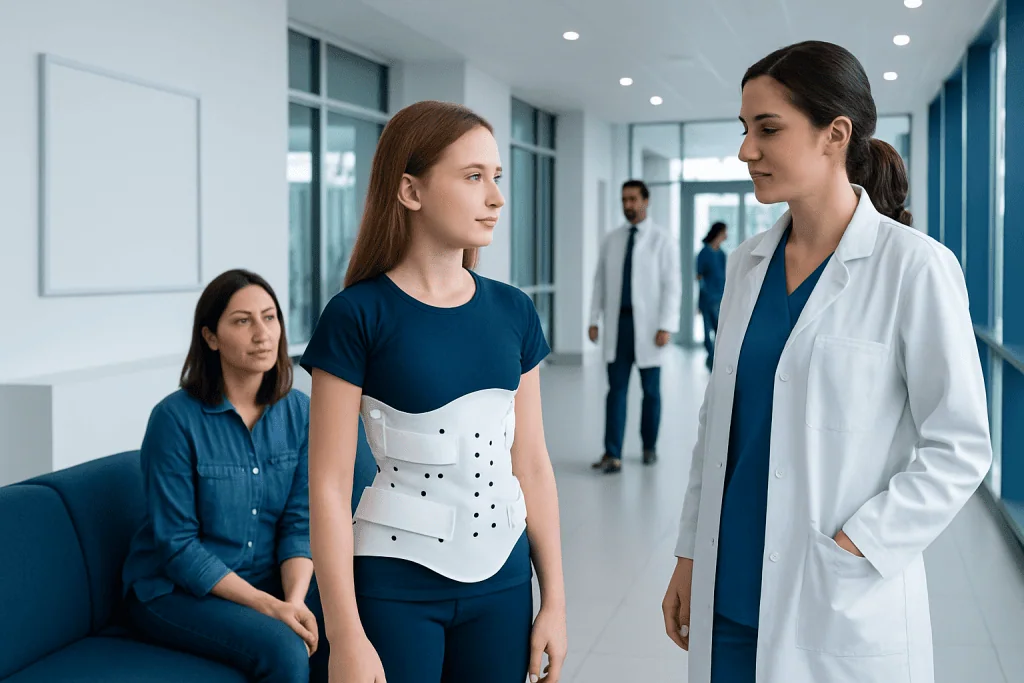
Bracing is usually considered for children and teens who are still growing and have a moderate scoliosis curve. A scoliosis brace aims to slow or stop curve progression, especially during rapid growth.
Key Takeaways
- Bracing is usually considered for children and teens who are still growing and have a moderate scoliosis curve.
- A scoliosis brace aims to slow or stop curve progression, especially during rapid growth.
- Results depend on growth remaining, curve size and pattern, and how consistently the brace is worn.
- Bracing does not usually make the spine perfectly straight, but it may help avoid or delay surgery.
- Regular follow-up visits and imaging are important to check fit, comfort, and curve changes over time.
Scoliosis bracing is commonly used in growing children and teens to reduce the chance that a spinal curve will get worse. The main goal is usually curve control during growth, not a permanent cure or complete straightening of the spine.
Overview: What scoliosis bracing is meant to do
Scoliosis is a sideways curvature of the spine that can develop during childhood or adolescence. When a child is still growing, some curves can become larger over time, especially during growth spurts. For this reason, doctors may recommend a brace for selected children and teens with scoliosis.
The purpose of scoliosis bracing is usually to help keep the curve from worsening while the bones are still growing. In most cases, the brace is not expected to completely correct the curve or make the spine permanently straight. Instead, it is a non-surgical treatment used to support the spine during a period when progression is most likely.
Bracing is most often used for adolescent idiopathic scoliosis, the most common type of scoliosis in otherwise healthy teenagers. Treatment decisions are individualized and usually depend on the child’s age, stage of growth, curve size, and the way the curve behaves over time.
Who may need a brace
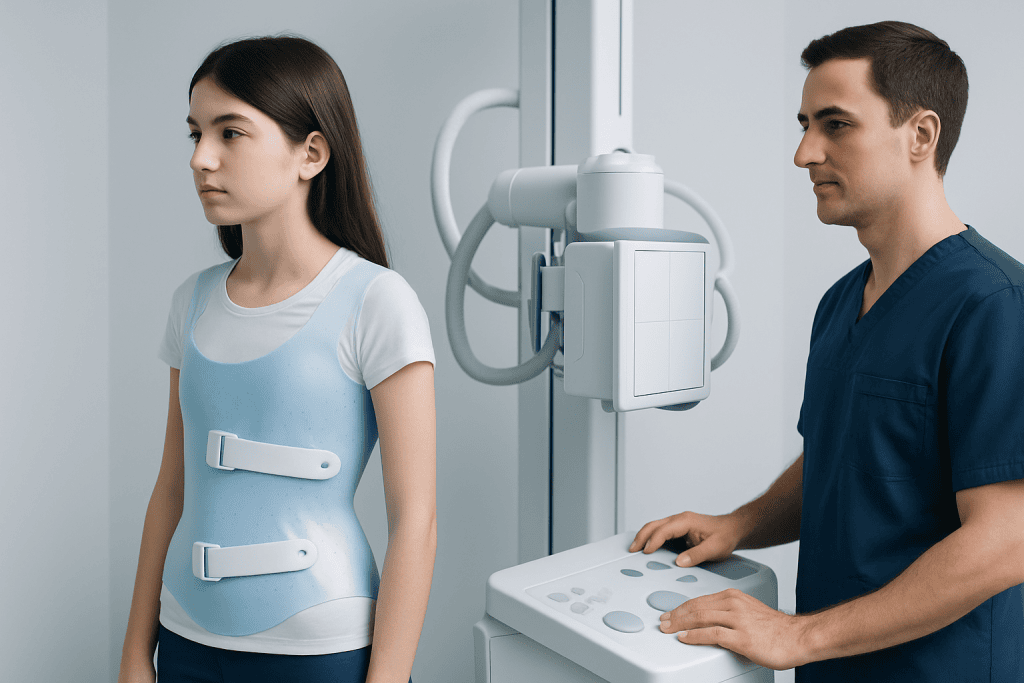
Not every child with scoliosis needs a brace. Bracing is generally considered for children and teens who still have significant growth remaining and whose spinal curve is in a range where progression is a concern. In practice, this often means a moderate curve that is not severe enough for surgery but large enough to need close management.
Doctors look at several factors together rather than relying on a single number. These may include the degree of the curve on X-ray, whether the child has entered a rapid growth phase, family and medical history, and whether the curve has already increased on repeat imaging. A smaller curve in a very young child may be watched closely, while a similar curve in a nearly fully grown teen may not need bracing.
Bracing tends to work best when it starts at the right time and is used consistently. If a curve is very mild, observation may be enough. If a curve is more advanced or continues to worsen despite proper brace use, the care team may discuss other options, including scoliosis treatment planning with a spine specialist.
What symptoms and signs families may notice
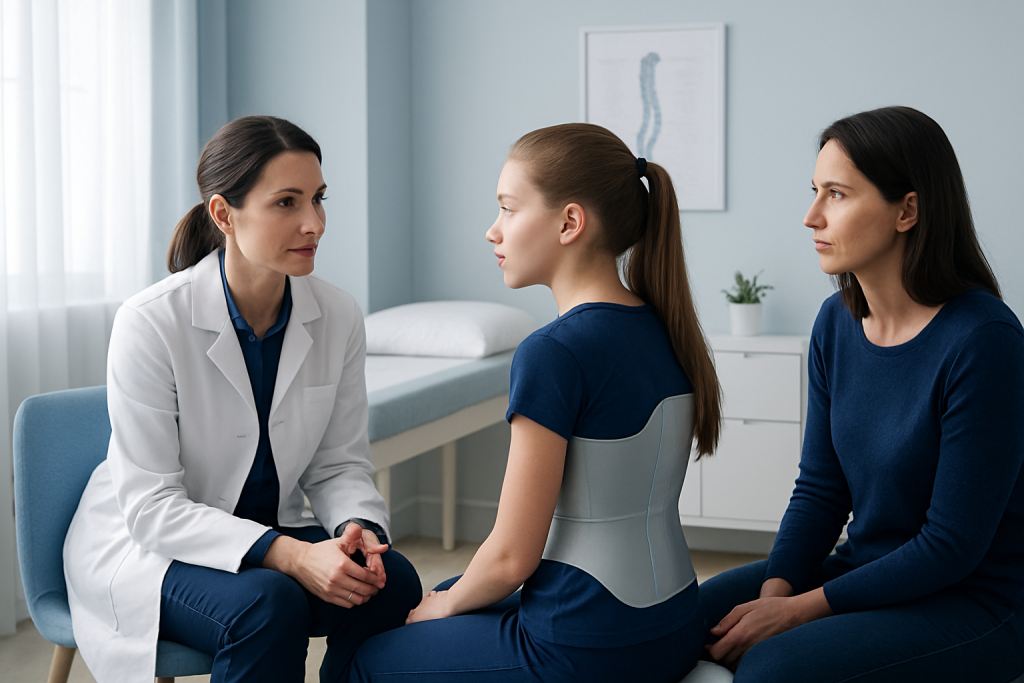
Scoliosis itself often does not cause obvious pain, especially in children and teenagers. Many families first notice uneven shoulders, one shoulder blade appearing more prominent, a waist that looks uneven, or clothing that hangs differently. Sometimes a rib hump becomes noticeable when the child bends forward.
Because symptoms can be subtle, scoliosis is often found during a routine school, sports, or pediatric examination. The child may feel well and may not realize there is any change in the shape of the back. This is one reason regular checkups are helpful during the growing years.
If back pain is significant, if symptoms are progressing quickly, or if there are neurologic signs such as weakness, numbness, or balance problems, doctors may look for causes other than typical idiopathic scoliosis. Those situations deserve a more detailed medical evaluation.
How doctors decide if bracing is appropriate
Evaluation usually begins with a physical examination and spinal imaging. The doctor checks posture, shoulder and hip alignment, trunk balance, and flexibility. X-rays are commonly used to measure the curve and monitor whether it changes over time. Growth status is also important because bracing is most useful before skeletal maturity.
When recommending a brace, clinicians balance the likelihood of progression against the burden of treatment. A child who has a moderate curve and substantial growth remaining is often more likely to benefit than a teen who is nearly done growing. The type and location of the curve also matter, because some patterns respond differently to bracing.
Families are often advised that successful bracing depends on a partnership between the child, caregivers, orthotist, and medical team. The brace must fit correctly, be adjusted as the child grows, and be worn for the recommended number of hours. Follow-up appointments help confirm that the brace is doing what it is meant to do.
Types of braces and what wearing one is like
Several brace designs may be used, but many are custom-made rigid braces worn under clothing. These braces are shaped to apply gentle corrective pressure and support the trunk in a way that helps control the curve. The exact design depends on the curve pattern and the specialist’s treatment approach.
At first, wearing a brace can feel unfamiliar. Children and teens may need time to adjust to pressure points, changes in body image, and practical issues such as sitting in class, participating in daily activities, or choosing clothes. An experienced orthotist can make adjustments to improve comfort and fit without losing the brace’s intended effect.
Doctors usually give specific instructions about how many hours a day the brace should be worn. In general, better adherence is linked with better curve control. The child can often continue many normal activities, and some may remove the brace for sports or exercise depending on medical advice. When needed, a broader orthopedic evaluation can help guide brace planning and ongoing care.
Realistic results: what bracing can and cannot achieve
The most realistic expectation is that bracing may slow or stop curve progression during growth. This can be very meaningful because keeping a curve from getting larger may reduce the chance that surgery will be needed later. Some children show a visible improvement in posture while wearing the brace, and some have modest improvement in curve measurement over time, but complete correction is uncommon.
Results vary from one child to another. Important factors include how much growth remains, the original curve size, the shape and location of the curve, how well the brace fits, and how consistently it is worn. Bracing is generally less effective if the curve is already large at the time treatment begins or if the child is close to skeletal maturity.
It is also helpful for families to know that the spine may look straighter while the brace is on than it will without the brace. This does not mean the treatment is failing. The brace works as a management tool during growth rather than a permanent internal correction. If the curve continues to progress despite proper use, specialists may discuss additional options, including spinal surgery when appropriate.
Supporting daily life, self-care, and follow-up
Adjustment to bracing is not only physical but emotional. Children and teenagers may worry about comfort, school routines, appearance, or feeling different from friends. Clear explanations, gradual adaptation, and practical problem-solving can make the process easier. Support from family, school staff, and the medical team often improves confidence and adherence.
Skin care and brace maintenance are also important. The care team may recommend wearing a thin layer under the brace, checking the skin regularly for irritation, and returning for modifications if pressure areas develop. A brace that causes persistent pain or skin problems should be reassessed rather than simply tolerated.
Regular follow-up is essential because children grow, bodies change, and curves can change too. Appointments often include an exam, fit check, and periodic imaging to see whether the curve is stable. Near the end of growth, the team may discuss gradually reducing brace use. For families seeking coordinated care, Acibadem International’s multidisciplinary specialists and JCI-accredited hospitals diagnose and treat scoliosis for international patients.
When to see a doctor
A child or teen should be assessed by a doctor if there are visible signs of scoliosis, such as uneven shoulders, an asymmetric waist, or a rib prominence when bending forward. Early evaluation helps determine whether the curve is mild and simply needs observation or whether treatment may be helpful during growth.
Children already using a brace should return as advised and sooner if the brace becomes too tight, too loose, causes ongoing skin irritation, or no longer seems to fit properly after a growth spurt. Changes in comfort can affect whether the brace is worn consistently, so practical issues deserve attention.
Urgent medical review is important if scoliosis is accompanied by severe pain, weakness, numbness, trouble walking, bladder or bowel changes, or other unusual symptoms. These are not typical features of routine adolescent idiopathic scoliosis and may require prompt investigation.
Frequently asked questions
Does a scoliosis brace fix the curve permanently?
Usually not. A scoliosis brace is mainly used to help prevent the curve from getting worse while a child is still growing. Some improvement may occur, but the main goal is curve control rather than a permanent cure.
At what age is bracing most useful?
Bracing is generally most useful during the growing years, especially around times of rapid growth. Doctors decide based on skeletal maturity, not just age alone. A child with more growth remaining often has more potential to benefit.
How many hours a day does a brace need to be worn?
The number of hours depends on the child’s curve pattern and the doctor’s treatment plan. In general, wearing the brace as prescribed is important because better adherence is associated with better control of curve progression. Families should follow individualized instructions from the scoliosis team.
Can a child play sports while using a scoliosis brace?
Many children and teens can continue sports and regular physical activity. Some may be allowed to remove the brace for certain activities, depending on medical advice. Staying active is often encouraged unless the doctor recommends restrictions.
Is scoliosis bracing painful?
A new brace can feel uncomfortable at first, and mild pressure is expected because the brace is designed to guide the spine and trunk. However, ongoing pain, skin breakdown, or major difficulty wearing the brace should be reported. Adjustments can often improve comfort and fit.
How do doctors know whether bracing is working?
Doctors monitor progress with regular examinations and periodic imaging. They look for whether the curve remains stable during growth and whether the brace fits and is being used as planned. The best sign of success is often that the curve does not significantly worsen.
References
- Scoliosis Research Society
- American Academy of Orthopaedic Surgeons
- National Institute of Arthritis and Musculoskeletal and Skin Diseases
- American Academy of Pediatrics
- National Health Service
This article is for general information only and is not a substitute for professional medical advice. Please consult a qualified doctor about your individual situation.
Joint and spine care in Turkey — expert assessment & treatment
JCI-accredited · board-certified surgeons · reply within 24h
Add us as a Preferred Source to see more of our trusted health content across Google Search, AI Overviews and Discover.

More from the Health Library


Related Specialists
Dr. Nihal Üstün
Aesthetic Plastic & Reconstructive Surgery
Dr. Mahmut Hakan Ertürk
Physical Medicine & Rehabilitation
Fzt. Erdem Terzi
Physical Medicine & Rehabilitation
Dr. Bilal Arık
Radiology