Scoliosis Treatment for Kids: How It Works, Results and What to Expect
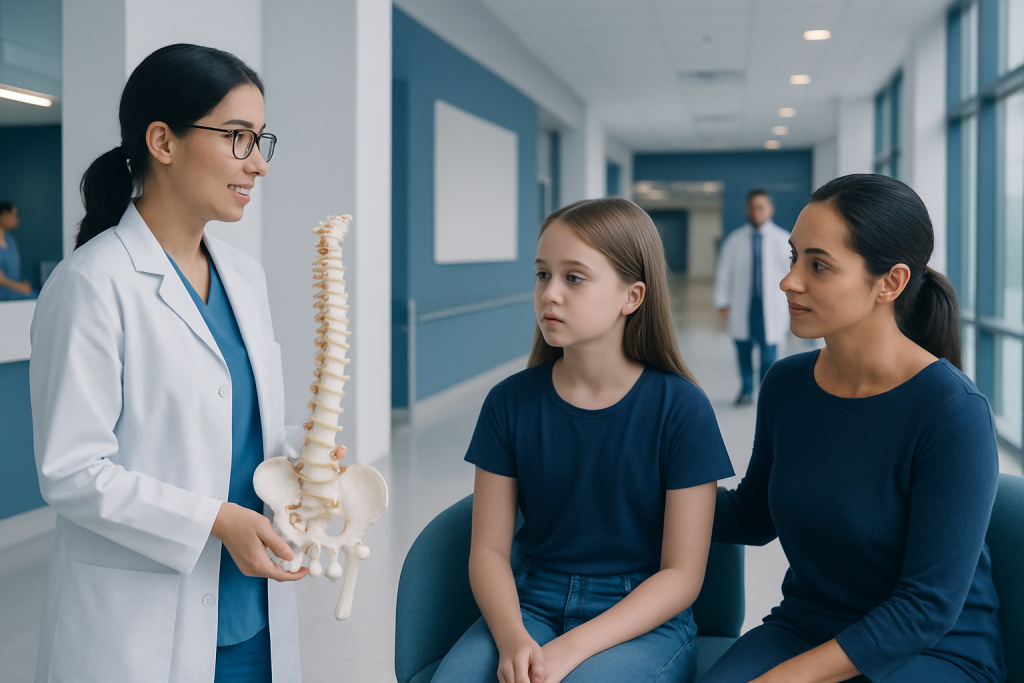
Most childhood scoliosis is mild and can be monitored with regular specialist visits. Bracing is intended to slow curve progression while a child is still growing; it does not usually straighten the spine permanently.
Key Takeaways
- Most childhood scoliosis is mild and can be monitored with regular specialist visits.
- Bracing is intended to slow curve progression while a child is still growing; it does not usually straighten the spine permanently.
- Surgery is generally reserved for curves that are large, progressive or likely to cause future imbalance or functional concerns.
- Children often return to school and many usual daily activities within weeks after scoliosis surgery, but full recovery takes several months.
- With appropriate follow-up and support, most children with scoliosis can take part in school, friendships and age-appropriate activities.
Scoliosis treatment for kids is tailored to the spinal curve, the child’s remaining growth and whether the curve is progressing. Many children need monitoring or a brace, while surgery may be considered for larger or worsening curves to improve spinal balance and help prevent future problems.
Overview: How scoliosis treatment for kids works
Scoliosis treatment for kids is based on how curved the spine is, where the curve is located, whether it is getting bigger and how much growth the child has left. The main approaches are observation, bracing and, for selected children with larger or progressive curves, surgery. The goal is not always to make every spine completely straight; it is to support healthy growth, preserve balance and reduce the chance that a curve will worsen.
Scoliosis is a sideways spinal curve that also involves rotation of the vertebrae. It may be noticed as uneven shoulders, a prominent shoulder blade, an uneven waist or one side of the ribs appearing higher when the child bends forward. In many children, especially adolescents, no single cause is identified; this is called idiopathic scoliosis.
A pediatric orthopedic or spine specialist considers the child as a whole rather than relying on one X-ray result. Growth stage, symptoms, medical history, activity goals and emotional wellbeing all help guide a care plan. Families can also find broader background information in scoliosis information.
How serious is scoliosis in kids?
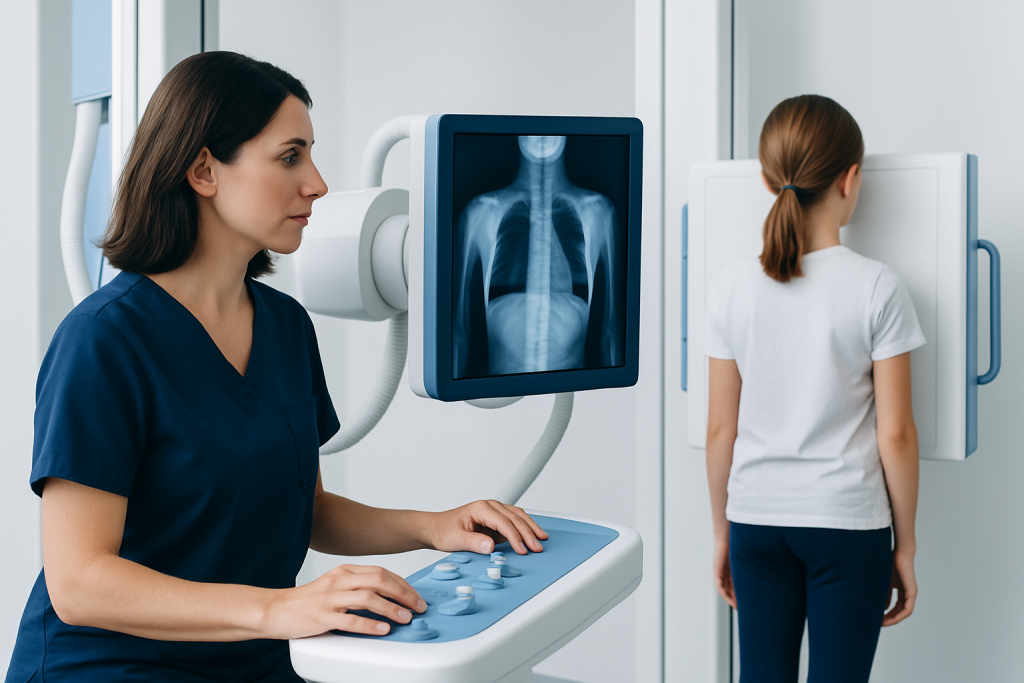
Most scoliosis in children is not immediately dangerous. Mild curves commonly cause no pain or limitations and can be followed safely with periodic examinations and imaging. However, a curve can change during rapid growth, particularly around puberty, so regular follow-up is important when a specialist recommends it.
The likelihood of progression depends on several factors, including curve size, the child’s age and skeletal maturity, curve pattern and family history. Larger curves have a greater chance of continuing to progress, particularly when substantial growth remains. Severe untreated curves may affect posture and body balance and, in uncommon cases, can contribute to breathing limitations later in life.
Back pain should not automatically be assumed to be caused by scoliosis. Persistent, severe or night-time pain, weakness, numbness, changes in walking, fever or bowel or bladder changes need timely medical assessment because they may point to another condition.
Candidacy and treatment choices
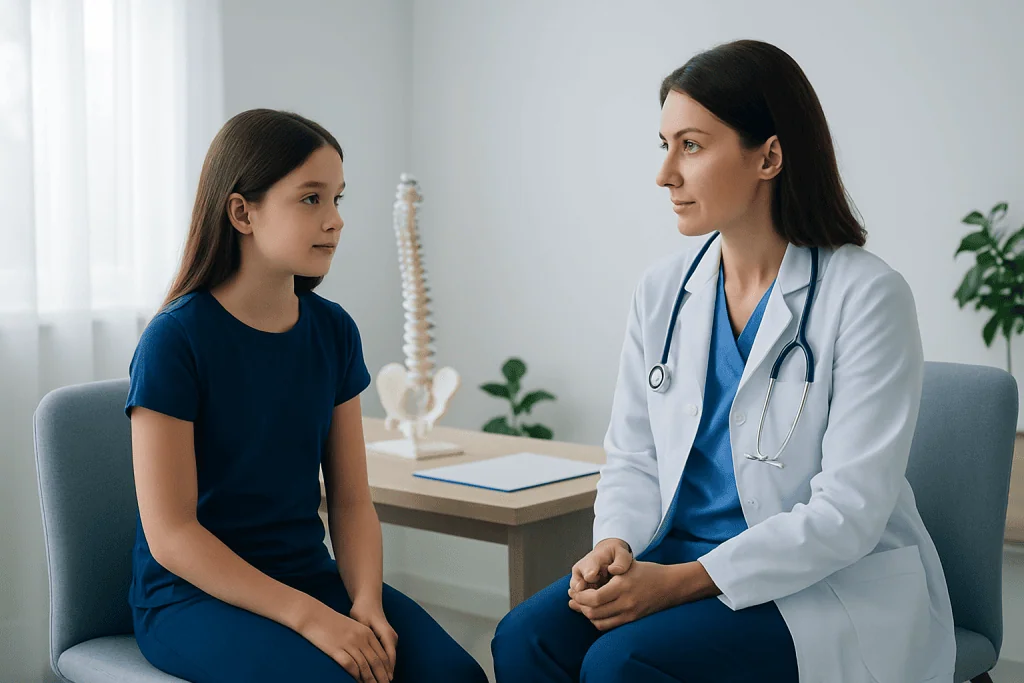
Observation is often appropriate for a small curve in a child who is close to skeletal maturity or whose curve is not changing. Follow-up visits allow the clinical team to measure the curve and review growth. The interval between appointments varies according to the individual child and the estimated risk of progression.
For some growing children with moderate curves, a custom-fitted brace may be advised. A brace is worn beneath clothing for the schedule prescribed by the specialist and is adjusted as the child grows. Its purpose is to reduce the likelihood that the curve will progress to the point where surgery is considered. Exercise and physiotherapy may support strength, posture and confidence, but they should not replace surveillance or bracing when these are clinically indicated.
Surgery is usually discussed when a curve is large, continues to progress despite bracing, or is expected to create significant imbalance or functional concerns. The decision is planned carefully with the child and family. It includes discussion of curve type, bone maturity, general health, imaging findings and the child’s priorities. Scoliosis surgery may be one part of a comprehensive pediatric spine care plan.
- Observation: for selected mild, stable curves.
- Bracing: for eligible growing children with curves at risk of progression.
- Surgery: for selected severe or progressive curves when the expected benefits outweigh the risks.
Scoliosis surgery: what happens step by step
The most common operation for adolescent idiopathic scoliosis is spinal fusion. Before surgery, the child has a detailed assessment that may include standing spinal X-rays, blood tests and, in certain situations, MRI or other imaging. The anesthesiology team reviews health conditions, medications and fasting instructions, while the surgical team explains the planned procedure and recovery arrangements.
During surgery, performed under general anesthesia, the surgeon carefully aligns the relevant part of the spine and uses implants such as screws, hooks or rods to maintain correction. Bone graft material is placed so the selected vertebrae can gradually fuse together. Teams commonly use techniques to monitor nerve function during the operation, helping them respond promptly if signals change.
In some children, growth-friendly systems or other approaches may be considered instead of a standard fusion, particularly when scoliosis develops at a very young age. The appropriate method depends on the cause of scoliosis and how much spinal growth remains. Families should ask the surgeon why a particular approach is recommended and what future procedures, if any, might be needed.
Potential benefits of surgery include improving spinal alignment and appearance, helping maintain a balanced posture and limiting further curve progression. The extent of correction varies; the priority is a safe, stable and well-balanced spine rather than a perfectly straight X-ray.
How long does it take for a 12-year-old to recover from scoliosis surgery?
Recovery after scoliosis surgery differs from child to child, but many 12-year-olds stay in hospital for several days after an uncomplicated spinal fusion. Pain control, early movement and breathing exercises are important parts of inpatient care. The child is gradually helped to sit, stand and walk, usually with guidance from the care team.
At home, fatigue, stiffness and discomfort are common at first and usually improve steadily. Many children return to school within a few weeks, sometimes with a reduced schedule initially. The timing depends on the operation, the child’s energy level, pain control, travel needs and school support. Follow-up appointments monitor wound healing, posture and progress.
Walking is usually encouraged as recovery advances, while bending, twisting, heavy lifting, contact sports and other high-impact activities are limited initially. The surgeon provides individualized activity guidance. Return to sports may take several months, and complete bone fusion continues over a longer period. Following the team’s instructions supports a safe return to normal routines.
Possible risks include bleeding, infection, blood clots, wound problems, implant-related concerns, incomplete fusion and nerve injury. Serious neurological complications are uncommon, but they are important to discuss before surgery. The surgical team explains the measures used to reduce risk and the symptoms that require urgent contact after discharge.
At what age can scoliosis be corrected?
Scoliosis can be assessed and managed at any age, including early childhood, adolescence and adulthood. The best timing for treatment is not determined by age alone. It depends on the type of scoliosis, the curve’s behavior, the child’s stage of growth and whether the curve is affecting balance, comfort or function.
In children who are still growing, early specialist assessment can be particularly helpful because treatment may be able to slow progression during a key growth period. This does not mean every child needs active treatment. Many mild curves only need monitoring, while bracing is considered for some children whose growing spines are at greater risk of progression.
When surgery is appropriate, it may be performed during adolescence or at another age suited to the child’s clinical needs. Very young children require especially individualized planning because their spine and chest are still developing. Families should avoid delaying an evaluation solely because they think a child is too young or too old for care.
Can a child live a normal life with scoliosis?
Yes. Most children with scoliosis live active, fulfilling lives and participate in school, friendships, hobbies and many sports. A scoliosis diagnosis can bring understandable worries about appearance, treatment and fitting in, so clear information and supportive communication are valuable parts of care.
Unless a clinician advises otherwise, children with mild scoliosis can generally remain physically active. Regular activity supports overall health, strength and confidence. A specialist may tailor advice for a child wearing a brace, recovering from surgery or living with another medical condition that affects the spine.
Parents and caregivers can help by keeping follow-up appointments, encouraging age-appropriate independence and listening to concerns without focusing only on posture or appearance. If low mood, anxiety, bullying or body-image worries are affecting daily life, discussing this with the child’s doctor or a mental health professional can be helpful.
When to seek medical care
Parents or caregivers should arrange a medical assessment if they notice uneven shoulders, a prominent shoulder blade, an uneven waist, a shifted trunk or rib prominence during a forward bend. A school screening observation or family history of scoliosis can also be a reason to request an evaluation. Early assessment provides a baseline and helps determine whether monitoring is needed.
Prompt medical advice is appropriate if scoliosis appears to be changing quickly, if the child has persistent or worsening back pain, or if pain interferes with sleep or usual activities. Urgent assessment is needed for new weakness, numbness, difficulty walking, loss of coordination, or bowel or bladder changes.
Care may involve pediatric orthopedic surgeons, spine surgeons, radiologists, anesthesiologists, physiotherapists and nursing teams. Acibadem International’s multidisciplinary specialists and JCI-accredited hospitals diagnose and treat scoliosis for international patients, with care plans based on the child’s individual needs.
Frequently asked questions
What is the first treatment for scoliosis in children?
For many children, the first step is observation with regular specialist review and spinal imaging when appropriate. If a growing child has a moderate curve that is likely to progress, a brace may be recommended. The right approach depends on the curve, growth stage and overall clinical assessment.
Does a scoliosis brace cure scoliosis?
A brace does not usually cure scoliosis or permanently straighten the spine. Its main purpose is to slow or prevent curve progression while the child is growing. Wearing time and follow-up adjustments should follow the specialist’s plan.
Is scoliosis surgery painful for children?
Some pain and stiffness are expected after surgery, especially in the first days and weeks. Hospital teams use a structured pain-management plan and encourage safe movement to support recovery. Pain should gradually improve, and the care team should be contacted if it is worsening or difficult to control.
Will scoliosis surgery stop a child from playing sports?
Most children can return to many sports after healing, but the timing and type of activity depend on the procedure and the surgeon’s guidance. Walking and gentle activity are commonly introduced first, while impact and contact sports are delayed. A personalized clearance plan is important.
Can scoliosis get worse after a child stops growing?
Some curves remain stable after growth is complete, while others can continue to change over time, especially if they are larger. Follow-up recommendations depend on curve size, symptoms and treatment history. A specialist can explain the child’s longer-term outlook.
What questions should parents ask a scoliosis specialist?
Parents may ask about the curve size and pattern, risk of progression, expected benefits of observation or bracing, and whether surgery is being considered. It is also useful to ask about imaging needs, activity guidance, school support, recovery expectations and signs that should prompt earlier contact. Families should feel comfortable asking for explanations in clear, practical language.
References
- Scoliosis Research Society
- American Academy of Orthopaedic Surgeons
- National Institute of Arthritis and Musculoskeletal and Skin Diseases
- OrthoInfo from the American Academy of Orthopaedic Surgeons
- National Health Service
This article is for general information only and is not a substitute for professional medical advice. Please consult a qualified doctor about your individual situation.
Joint and spine care in Turkey — expert assessment & treatment
JCI-accredited · board-certified surgeons · reply within 24h
Add us as a Preferred Source to see more of our trusted health content across Google Search, AI Overviews and Discover.