

Sesamoiditis: Diagnosis, Outlook, and Modern Treatment Approaches

Sesamoiditis usually causes pain under the big toe, especially during walking, running, jumping, or pushing off the foot. It is commonly linked to repetitive stress, high-impact sports, foot shape, and shoes that increase pressure on the forefoot.
Key Takeaways
- Sesamoiditis usually causes pain under the big toe, especially during walking, running, jumping, or pushing off the foot.
- It is commonly linked to repetitive stress, high-impact sports, foot shape, and shoes that increase pressure on the forefoot.
- Diagnosis is based on symptoms, physical examination, and sometimes imaging to rule out fracture or other conditions.
- Treatment often begins with rest, footwear modification, padding, anti-inflammatory measures, and physical therapy.
- Persistent or severe pain should be assessed by a doctor to exclude a stress fracture, avascular changes, or joint disease.
Sesamoiditis is an overuse injury that affects the small sesamoid bones and surrounding tissues beneath the big toe joint, often causing pain in the ball of the foot. Most people improve with activity changes, supportive footwear, and guided treatment, but an accurate diagnosis is important because sesamoid pain can also be caused by fracture, arthritis, or tendon problems.
Overview: what sesamoiditis is
Sesamoiditis is irritation and inflammation around the sesamoid bones, two small bones located under the joint of the big toe. These bones sit within tendons and act like pulleys, helping the big toe move smoothly and bear weight during walking, running, and jumping. When they are exposed to repeated pressure, the surrounding tissues can become painful.
This condition is usually considered an overuse injury rather than a sudden traumatic problem. It often develops gradually, especially in people who spend long periods on their feet or take part in sports and activities that place repeated force on the forefoot. The pain is typically felt at the ball of the foot, directly beneath the big toe.
Although sesamoiditis is common, the term is sometimes used loosely. Pain in this area can also come from a sesamoid stress fracture, arthritis of the big toe joint, tendon inflammation, nerve irritation, or problems such as hallux rigidus. Because treatment can differ depending on the cause, careful evaluation is useful when symptoms do not improve as expected.
Symptoms and how it feels
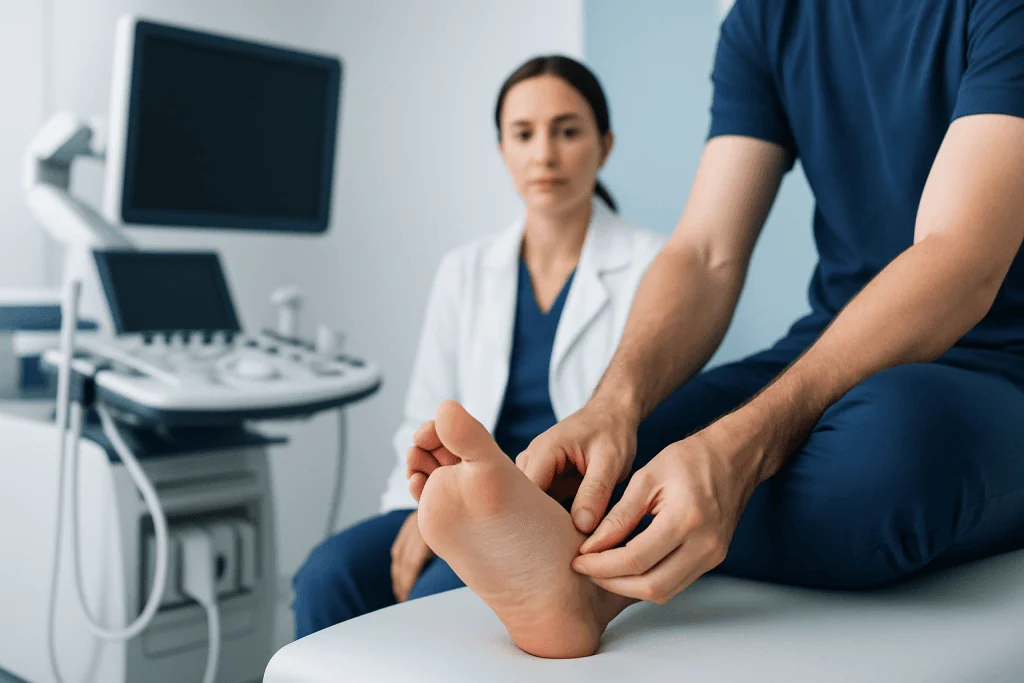
The main symptom of sesamoiditis is pain under the base of the big toe, often described as an aching, bruised, or sharp sensation. It may start mildly and become more noticeable over time, especially during push-off movements such as climbing stairs, sprinting, dancing, or walking quickly. Some people notice that the pain eases with rest and returns when activity increases.
Discomfort can be focused on one point or spread across the ball of the foot. There may also be swelling, tenderness when pressing the area, and difficulty bending the big toe comfortably. Wearing thin-soled shoes or high heels often makes symptoms worse because these styles shift body weight toward the front of the foot.
In some cases, people change the way they walk to avoid pressure on the painful area. This can lead to limping or strain in other parts of the foot, ankle, or leg. If pain begins suddenly after an injury, or if it is severe enough to make weight-bearing difficult, a sesamoid fracture or another foot problem should be considered rather than assuming it is simple overuse.
Causes and risk factors
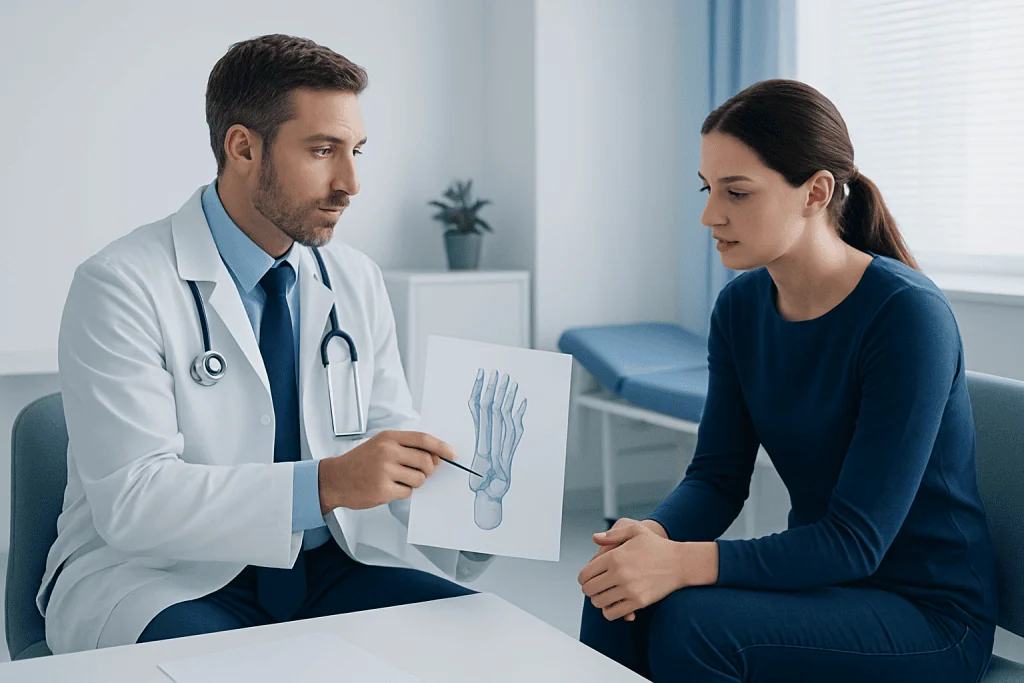
Sesamoiditis most often develops from repetitive stress. Every step places force through the sesamoid bones, and activities that involve frequent toe-off can increase that pressure. Over time, repeated loading may irritate the bone surface, tendons, and nearby soft tissues.
People at higher risk include runners, dancers, basketball players, and anyone whose work or lifestyle involves prolonged standing or frequent forefoot loading. Foot structure also matters. A high arch, limited ankle flexibility, a foot that rolls in an unbalanced way, or a naturally prominent forefoot can increase pressure under the big toe. Tight calf muscles may also contribute by altering walking mechanics.
Footwear is another important factor. Shoes with poor cushioning, thin soles, limited support, or a narrow toe box can concentrate force on the sesamoid area. High heels are a common trigger because they place more body weight on the ball of the foot. Less commonly, pain in this region may be related to inflammatory joint disease, reduced blood supply to a sesamoid, or degeneration around the big toe joint.
- Repetitive running, jumping, dancing, or stair climbing
- High heels or unsupportive footwear
- High arches or other foot-shape variations
- Tight calf muscles or altered gait mechanics
- Previous forefoot injury or big toe joint problems
How sesamoiditis is diagnosed
Diagnosis begins with a medical history and foot examination. A doctor will ask when the pain started, whether it developed gradually or after a specific event, what activities make it worse, and what shoes are usually worn. During the examination, the painful area is gently pressed, the range of movement of the big toe is checked, and walking pattern is assessed.
The main goal is not only to identify inflammation but also to rule out other causes of pain under the big toe. These may include a sesamoid stress fracture, arthritis, tendon injury, bursitis, nerve irritation, or forefoot overload from a nearby structural problem. In some patients, especially if pain is prolonged or severe, imaging may be recommended.
X-rays can help identify a fracture, changes in bone shape, or joint disease. If X-rays are normal but symptoms suggest a stress injury or soft-tissue problem, MRI may provide more detail. In selected cases, other studies may be used to assess bone health or surrounding structures. If broader foot alignment issues are suspected, evaluation by specialists in orthopedics and traumatology can help guide a full treatment plan.
Treatment options and modern approaches
Treatment for sesamoiditis usually starts conservatively. The first step is reducing the load on the painful area so inflammation can settle. This often includes avoiding high-impact activities for a period, switching temporarily to lower-impact exercise, and wearing shoes with a wide toe box, cushioning, and a stiff or rocker sole to reduce pressure beneath the big toe.
Doctors may recommend padding, off-loading insoles, or custom orthotics to redistribute weight away from the sesamoids. Ice and short-term anti-inflammatory measures may help relieve pain, depending on the individual’s health profile. Taping or temporary immobilization can be useful if symptoms are more intense. Recovery often takes time because the sesamoid bones are involved in every step.
Physical therapy can be an important part of modern treatment, especially when gait mechanics, muscle tightness, or return-to-sport planning need attention. A rehabilitation program may focus on calf flexibility, foot and ankle strength, balance, and movement patterns to reduce repeated stress on the forefoot. This is one reason some patients benefit from a coordinated plan that includes physical therapy and rehabilitation.
If symptoms persist despite careful conservative treatment, further assessment is needed to confirm the diagnosis and look for problems such as fracture nonunion, chronic overload, or joint disease. In selected cases, image-guided injections or surgical treatment may be discussed, depending on the underlying cause. When an operation is considered for ongoing forefoot or sesamoid-related problems, it is usually planned within experienced foot and ankle surgery services after non-surgical options have been explored.
Outlook, recovery, and return to activity
The outlook for sesamoiditis is generally good, especially when treatment starts early and the source of pressure is addressed. Many people improve with rest, shoe changes, padding, and gradual rehabilitation. Recovery can be slower than expected because the sesamoid area is repeatedly loaded during daily walking, even when sports are stopped.
How long recovery takes depends on several factors, including how long symptoms have been present, whether there is an underlying stress fracture or joint problem, and how effectively pressure is reduced during healing. Returning too quickly to running, dancing, or impact exercise can trigger a setback, so a gradual stepwise increase in activity is usually safest.
Persistent symptoms do not always mean the condition is severe, but they do suggest the diagnosis and biomechanics should be reviewed. In some people, long-term symptom control depends on ongoing footwear choices, orthotic support, and training adjustments. If sesamoid pain is part of a broader forefoot problem, doctors may also assess related conditions such as metatarsalgia that can alter weight distribution across the ball of the foot.
Prevention and self-care
Preventing sesamoiditis centers on reducing repeated excess pressure under the big toe. Supportive shoes with cushioning and enough room in the toe box can make a meaningful difference. For people who exercise regularly, rotating training intensity and including lower-impact days may help protect the forefoot from cumulative stress.
Warm-up, calf stretching, and attention to foot and ankle strength can improve mechanics during walking and sport. People who know they have a high arch, a history of forefoot pain, or a job that requires long hours standing may benefit from insoles or orthotic advice before symptoms become persistent. Replacing worn athletic shoes on time is also a simple but important measure.
At home, early self-care usually includes resting from aggravating activity, icing the area for short periods, and avoiding shoes that place extra weight on the ball of the foot. However, self-care should not replace assessment if pain is severe, keeps returning, or interferes with normal walking. Near the end of the care pathway, some international patients choose multidisciplinary evaluation at Acibadem International, where JCI-accredited hospitals and specialists assess and treat foot conditions in a coordinated way.
When to seek medical care
Medical assessment is sensible if pain under the big toe lasts more than a few days despite rest, repeatedly returns with activity, or makes normal walking uncomfortable. A doctor can help confirm whether the problem is sesamoiditis or another condition that needs different treatment.
Prompt review is especially important if pain started suddenly after a twist, fall, or direct impact; if there is marked swelling; or if putting weight on the foot is difficult. These features can suggest a fracture or another more acute injury. People with diabetes, poor circulation, inflammatory arthritis, or reduced bone strength should also seek professional advice earlier because foot problems may need closer follow-up.
Frequently asked questions
Can sesamoiditis go away on its own?
Mild sesamoiditis may improve with rest and reduced activity, but it often returns if the pressure on the area is not addressed. Supportive footwear, off-loading, and a gradual return to activity usually improve the chance of lasting recovery.
What is the difference between sesamoiditis and a sesamoid fracture?
Sesamoiditis usually refers to inflammation caused by repetitive stress, while a sesamoid fracture is a break in one of the small bones under the big toe. The symptoms can overlap, so imaging may be needed when pain is severe, sudden, or slow to improve.
How long does sesamoiditis take to heal?
Recovery time varies depending on how irritated the area is, how long symptoms have been present, and whether there is an underlying stress injury. Some people improve within weeks, while others need a longer period of activity modification and rehabilitation.
Is walking bad for sesamoiditis?
Walking is not always harmful, but repeated pressure through the ball of the foot can keep symptoms active. Doctors often advise reducing painful walking, using better footwear, and adding padding or orthotics to unload the area while it heals.
What shoes are best for sesamoiditis?
Shoes that usually help are cushioned, supportive, and roomy in the toe area. A stiff sole or rocker-bottom design may reduce bending at the big toe and lower pressure under the sesamoids.
When is surgery needed for sesamoiditis?
Surgery is not needed for most people and is generally considered only when symptoms continue despite appropriate non-surgical treatment. The decision depends on the exact diagnosis, such as chronic overload, fracture complications, or another structural problem in the forefoot.
References
- American Academy of Orthopaedic Surgeons
- American Orthopaedic Foot & Ankle Society
- National Institute of Arthritis and Musculoskeletal and Skin Diseases
- MedlinePlus
- National Health Service
This article is for general information only and is not a substitute for professional medical advice. Please consult a qualified doctor about your individual situation.
Joint and spine care in Turkey — expert assessment & treatment
JCI-accredited · board-certified surgeons · reply within 24h
Add us as a Preferred Source to see more of our trusted health content across Google Search, AI Overviews and Discover.

More from the Health Library



Related Specialists

Dr. Gamze Uçar
Pulmonology
Dt. Büşra Sevinç
Oral & Dental Health
Assoc. Prof. Dr. Zeynep Selen Aslan
Pediatric Neurology
Dr. Özlem Bodur Yalçın
Internal Medicine