Skin Cancer on Scalp: Early Signs, Risk Factors, and How It Is Treated
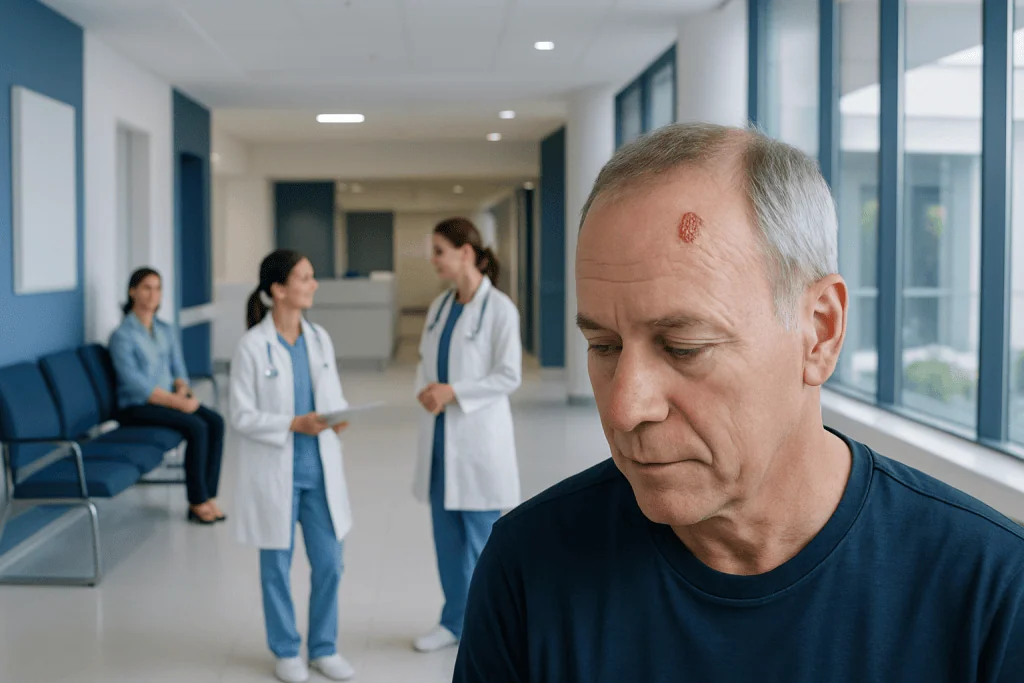
Skin cancer on scalp may present as a crusted, bleeding, itchy, tender, or nonhealing spot hidden by hair. The most common types are basal cell carcinoma, squamous cell carcinoma, and melanoma.
Key Takeaways
- Skin cancer on scalp may present as a crusted, bleeding, itchy, tender, or nonhealing spot hidden by hair.
- The most common types are basal cell carcinoma, squamous cell carcinoma, and melanoma.
- Main risk factors include cumulative sun exposure, a history of sunburns, fair skin, older age, and a weakened immune system.
- Diagnosis usually involves a skin examination and a biopsy to identify the exact cancer type.
- Treatment depends on the type, size, depth, and location of the lesion and may include surgery or other targeted skin cancer treatments.
- Any scalp spot that changes, bleeds, or does not heal should be assessed by a qualified doctor.
Skin cancer on scalp can look like a sore that does not heal, a scaly patch, a new lump, or a mole or spot that changes over time. Because hair can hide early changes, prompt evaluation of any persistent or unusual scalp lesion is important so treatment can begin early if needed.
Overview: what skin cancer on scalp means
Skin cancer on scalp is a malignant growth that starts in the skin of the scalp. It most often develops after years of ultraviolet (UV) exposure from sunlight, although not every case is caused by sun alone. The scalp is an easy area to overlook because hair can conceal small lesions, so signs may be noticed later than on the face or arms.
The three main forms are basal cell carcinoma, squamous cell carcinoma, and melanoma. Basal cell carcinoma is usually slow growing and often begins as a shiny bump or a sore that keeps returning. Squamous cell carcinoma may appear as a thickened, scaly, crusted, or tender patch and can be more likely to grow deeper if ignored. Melanoma is less common but more serious because it can spread earlier than other skin cancers.
Not every scalp spot is cancer. Common noncancerous conditions such as cysts, psoriasis, seborrheic dermatitis, actinic keratoses, and irritated hair follicles can also cause bumps, scaling, or redness. Even so, a persistent scalp lesion deserves medical attention, especially if it is new, changing, bleeding, or not healing.
Early signs and symptoms to look for
The early signs of skin cancer on scalp are often subtle. A person may notice a rough patch while washing the hair, a spot that catches on a comb, or an area that repeatedly crusts over. Some lesions are painless, while others may itch, sting, feel tender, or bleed easily.
Warning signs can vary by cancer type. Basal cell carcinoma may look pearly, translucent, or slightly pink, sometimes with visible tiny blood vessels. Squamous cell carcinoma may look firmer, thicker, redder, or more scaly. Melanoma may appear as a dark spot, a new pigmented lesion, or a mole that changes in shape, size, color, or border.
A doctor may recommend evaluation for any scalp lesion with the following features:
- A sore that does not heal within several weeks
- Repeated crusting, oozing, or bleeding
- A spot that grows, darkens, or changes shape
- A firm or raised bump that feels different from surrounding skin
- A scaly patch that persists despite usual skin care
- Tenderness, pain, or itch in one specific area
It can be especially difficult to detect skin cancer on scalp in people with thick hair, wigs, hairpieces, or hairstyles that limit visibility. For this reason, regular self-checks and professional skin examinations can be helpful, particularly for those with known risk factors.
Why the scalp is a higher-risk area
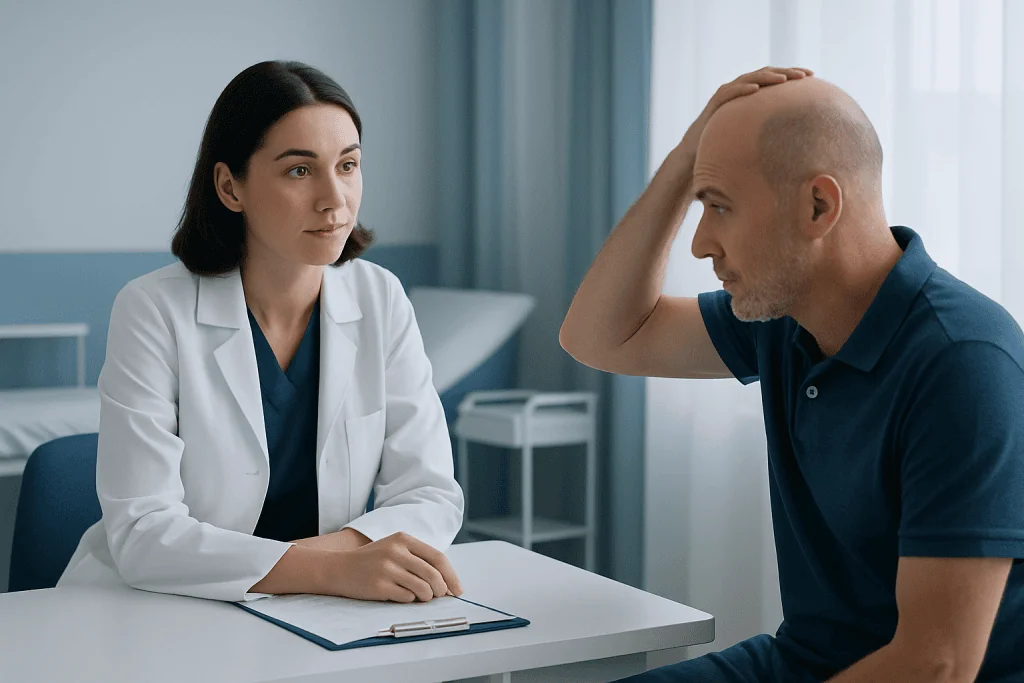
The scalp receives significant sun exposure over a lifetime, especially along thinning hair, part lines, and bald areas. Unlike the face, it may not routinely receive sunscreen, and hats may not always be worn. This long-term UV exposure can damage skin cells and increase the chance of cancerous changes.
The scalp also has a rich blood supply and many hair follicles and oil glands, which can make some lesions more complex to assess. In practical terms, cancers on the scalp may be diagnosed later simply because they are harder to see. Delayed detection is one reason clinicians encourage careful attention to persistent scalp changes.
People who have had substantial cumulative sun exposure, outdoor work, frequent sunburns, or tanning bed use may face a higher risk. Baldness or thinning hair can further increase UV exposure of the scalp. A personal history of skin cancer or precancerous spots such as skin cancer elsewhere on the body also raises the chance of developing a new lesion on the scalp.
Causes and risk factors
The main cause of most scalp skin cancers is DNA damage in skin cells, usually related to ultraviolet radiation from the sun. Over time, this damage can disrupt normal cell growth and repair. In some cases, genetics, immune status, or prior medical treatments also contribute.
Important risk factors include fair skin, light eyes, light or red hair, a tendency to burn easily, older age, and long-term sun exposure. Men may be affected more often in some scalp cancer types, partly because of shorter hair or baldness exposing the scalp to more UV radiation. However, anyone can develop skin cancer on scalp, including people with darker skin tones.
Other factors that may increase risk include:
- A personal or family history of skin cancer
- Previous radiation treatment to the scalp area
- A weakened immune system, including after organ transplantation
- Use of tanning beds
- Chronic inflammation, scarring, or certain long-standing wounds
- Multiple actinic keratoses or severe sun damage
Having risk factors does not mean a person will definitely develop cancer, but it does justify closer observation and earlier medical review of suspicious lesions.
How doctors diagnose skin cancer on scalp
Diagnosis begins with a careful history and skin examination. The doctor asks how long the lesion has been present, whether it has changed, and whether there is bleeding, pain, or itching. The scalp, face, ears, neck, and other sun-exposed areas are usually examined because people can have more than one suspicious lesion at the same time.
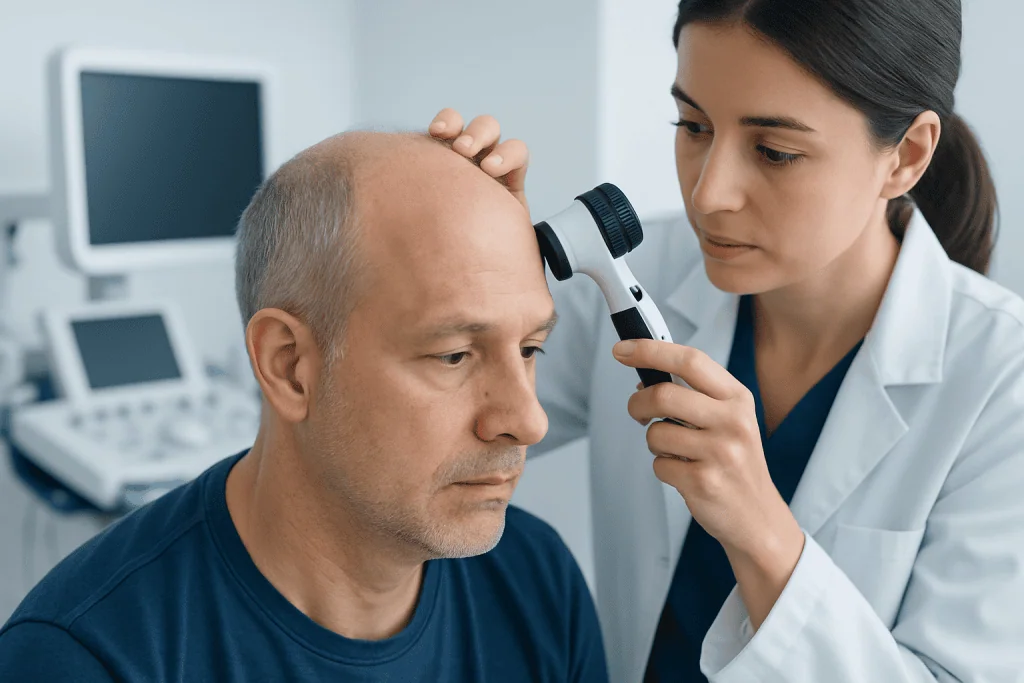
Dermatoscopy, a close-up examination using a specialized lighted device, can help the clinician assess pigment patterns, blood vessels, and surface features. Even when a lesion looks strongly suspicious, a biopsy is usually needed to confirm the diagnosis. A biopsy removes all or part of the spot so it can be examined under a microscope.
If cancer is confirmed, the pathology result identifies the type and may describe features such as thickness, depth, or whether margins are involved. These details help guide treatment. In selected cases, especially with larger or more advanced tumors, the care team may recommend imaging or additional assessment. This is particularly relevant for suspected melanoma or aggressive squamous cell carcinoma.
Treatment options and what affects the plan
Treatment for skin cancer on scalp depends on the cancer type, size, depth, location, and whether it has spread. The goal is to remove or destroy the cancer while preserving as much healthy tissue as possible. Because the scalp has limited skin mobility in some areas and cosmetic considerations matter, treatment planning often involves both cancer control and reconstruction.
Surgery is the most common treatment. Small, localized cancers may be removed with standard excision or tissue-sparing techniques such as Mohs surgery when available and appropriate. Mohs surgery is often considered for cancers with poorly defined borders, recurrent lesions, or areas where preserving healthy tissue is important. Depending on the wound size, closure may be simple, or reconstruction may involve techniques used in skin cancer treatment and, in selected cases, reconstructive surgery.
Other options may include curettage and electrosurgery for suitable superficial lesions, cryotherapy for selected precancerous or very superficial changes, topical therapies for some noninvasive conditions, and radiation therapy when surgery is not suitable or as an additional treatment in certain cases. Advanced melanoma or other higher-risk cancers may require wider excision, lymph node assessment, immunotherapy, targeted therapy, or coordinated oncology care.
Follow-up is an important part of treatment. People who have had one skin cancer are at increased risk of another, so regular skin checks are usually advised. Near the end of the care pathway, some international patients may choose centers such as Acibadem International, where multidisciplinary specialists in JCI-accredited hospitals diagnose and treat skin cancers with individualized planning.
Prevention and self-checks
Prevention focuses mainly on protecting the scalp from ultraviolet exposure. Wearing a wide-brimmed hat or a hat with UPF protection can reduce direct sun exposure to the scalp, ears, and face. For exposed part lines or thinning areas, broad-spectrum sunscreen can help when used as directed, especially during prolonged outdoor activity.
It also helps to avoid tanning beds and to be mindful of midday sun. People with thinning hair or bald areas may benefit from making scalp protection a routine part of daily skin care. Hairdressers, barbers, and family members sometimes notice scalp changes first, but any concerning spot should still be evaluated by a clinician rather than watched indefinitely.
Self-checks can be done with a mirror, good lighting, and a comb or blow dryer to part the hair in sections. A person should look for new spots, nonhealing sores, scaly patches, color changes, or areas that bleed or crust repeatedly. Taking a photo can help track whether a lesion is changing over time, but photos should not replace professional evaluation.
When to seek medical care
Medical care should be sought promptly for any scalp lesion that does not heal, continues to bleed, changes noticeably, or keeps recurring in the same area. This is especially important for people with a personal history of skin cancer, significant sun exposure, or a weakened immune system.
Urgent assessment is also appropriate for a rapidly growing bump, a dark lesion with uneven color or border, or a painful, ulcerated spot. Early evaluation does not mean cancer is certain, but it allows the doctor to rule out serious causes and begin treatment early if needed.
If there is already a confirmed diagnosis, the care plan may involve dermatology, pathology, plastic and reconstructive surgery, or oncology depending on the type and extent of disease. A coordinated approach is particularly valuable for larger lesions, recurrent tumors, or cancers near sensitive structures.
Frequently asked questions
What does skin cancer on scalp usually look like?
It may look like a sore that does not heal, a scaly or crusted patch, a shiny bump, or a dark spot that changes over time. Some scalp skin cancers bleed easily or come back after seeming to improve. Because hair can hide them, they may first be felt rather than seen.
Is every scab or bump on the scalp cancer?
No. Many scalp lesions are benign and may be caused by cysts, dermatitis, psoriasis, folliculitis, or irritation. Still, a spot that persists, changes, or bleeds should be checked by a doctor to make sure the cause is identified correctly.
Which type of skin cancer is most dangerous on the scalp?
Melanoma is generally considered the most serious because it can spread more quickly than many other skin cancers. However, squamous cell carcinoma on the scalp can also behave aggressively in some cases. The exact risk depends on the cancer type, size, depth, and how early it is diagnosed.
How is skin cancer on scalp confirmed?
A doctor examines the lesion and usually performs a biopsy. The biopsy is the key test because it shows under the microscope whether cancer is present and what type it is. That information guides the treatment plan.
Can hair grow back after scalp skin cancer treatment?
Sometimes, but it depends on the size of the lesion and the treatment used. If the cancer and surrounding tissue are removed deeply, hair may not regrow in that scarred area. The doctor can explain likely cosmetic outcomes before treatment.
Can skin cancer on scalp be cured?
Many scalp skin cancers can be treated successfully, especially when found early. Outcomes depend on the type of cancer, how large or deep it is, and whether it has spread. Regular follow-up remains important because new skin cancers can develop later.
References
- American Academy of Dermatology
- National Cancer Institute
- American Cancer Society
- National Comprehensive Cancer Network
- World Health Organization
This article is for general information only and is not a substitute for professional medical advice. Please consult a qualified doctor about your individual situation.
Skin Cancer in Turkey — costs, top hospitals & a free quote
JCI-accredited · board-certified surgeons · reply within 24h