Skin Ulcer: An Evidence-Based Guide for Patients

A skin ulcer is a slow-healing open sore, not just a simple cut or scrape. Common causes include poor circulation, pressure, diabetes, venous disease, injury, and infection.
Key Takeaways
- A skin ulcer is a slow-healing open sore, not just a simple cut or scrape.
- Common causes include poor circulation, pressure, diabetes, venous disease, injury, and infection.
- Treatment depends on the cause and may include wound care, pressure relief, compression, antibiotics, blood flow assessment, or surgery.
- Warning signs such as spreading redness, fever, severe pain, bad odor, or black tissue need prompt medical attention.
- Good skin care, blood sugar control, mobility, and early treatment of foot or leg wounds can help prevent ulcers.
A skin ulcer is an open sore that does not heal normally, often because the skin and underlying tissue are not getting enough blood flow, are under pressure, or are affected by infection or inflammation. Early evaluation helps identify the cause, guide treatment, and reduce the risk of complications such as infection, delayed healing, or recurrence.
What is a skin ulcer?
A skin ulcer is an open sore that breaks through the skin and heals slowly, incompletely, or not at all without proper treatment. Unlike a minor scratch, a skin ulcer usually involves deeper tissue damage and often reflects an underlying problem such as poor circulation, long-term pressure, nerve damage, diabetes, inflammation, or infection.
Skin ulcers can develop on many parts of the body, but they are especially common on the legs, feet, ankles, heels, and areas exposed to prolonged pressure, such as the hips or lower back. Some ulcers start after a small injury that would normally heal, while others appear gradually because the skin becomes fragile and breaks down over time.
The appearance of a skin ulcer can vary. It may look like a shallow crater, a deeper wound, or a sore with a red, yellow, or black base. The surrounding skin may be swollen, discolored, warm, itchy, hard, or painful depending on the cause.
Because a skin ulcer is often a sign of an ongoing medical issue rather than only a surface wound, treatment usually focuses on both the sore itself and the condition causing it. This is why medical assessment is important, especially if the wound is growing, draining, or not improving.
Types and symptoms of skin ulcers
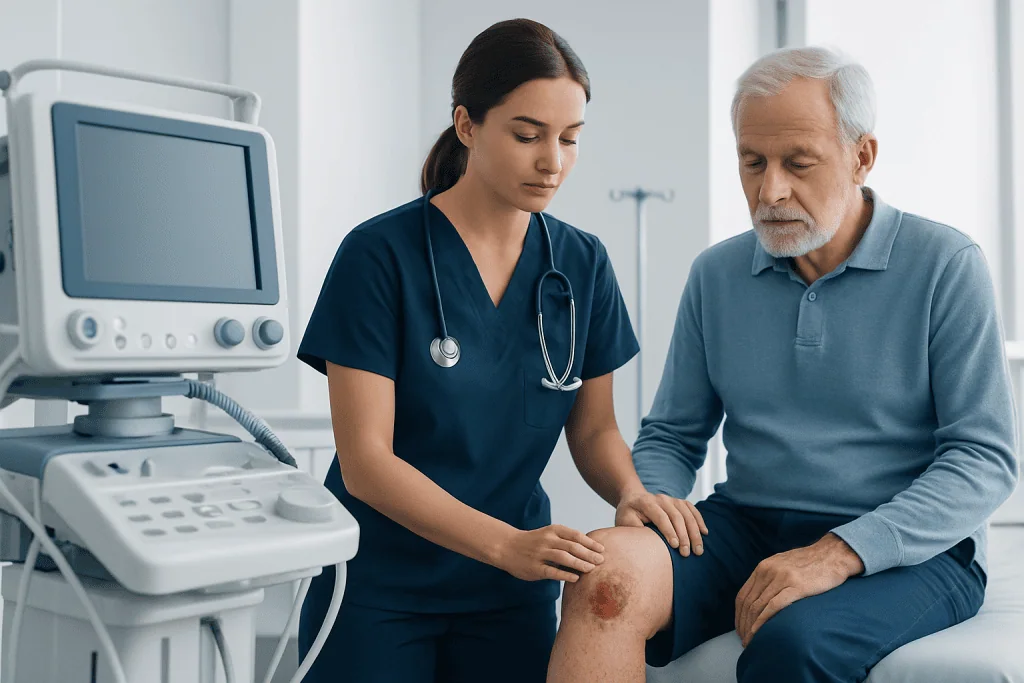
Doctors often classify skin ulcers by their cause. Venous ulcers usually occur near the inner ankle and are linked to poor blood return in the leg veins. Arterial ulcers are more often found on the feet, toes, or outer ankle and are related to reduced blood flow to the tissues. Pressure ulcers form over bony areas after prolonged pressure, and diabetic foot ulcers develop when nerve damage and circulation problems affect the feet. Some people may also develop ulcers from inflammatory skin disease, trauma, infection, or autoimmune conditions.
Common symptoms include a sore that does not heal, drainage or crusting, skin discoloration, swelling, tenderness, and a visible break in the skin. The ulcer may be painful, although some diabetic or nerve-related ulcers are surprisingly painless because sensation is reduced.
The skin around the wound can provide clues. Venous ulcers may be accompanied by leg swelling, aching, varicose veins, or brownish skin changes. Arterial ulcers may occur with cold feet, shiny skin, pain at night or during walking, and weak pulses. Pressure ulcers often begin as a persistent red or dark area before the skin opens.
- Slow healing over days or weeks
- Fluid, pus, or unpleasant odor
- Redness, warmth, or increasing swelling
- Black, yellow, or dead-looking tissue in the wound
- Skin breakdown in a person with diabetes, limited mobility, or vascular disease
Causes and risk factors

Skin ulcers most often develop when the skin cannot repair itself normally. One major reason is poor circulation. If blood does not flow well into the tissues through the arteries, or if blood pools in the veins and cannot return effectively, the skin receives less oxygen and nutrients and becomes more likely to break down.
Pressure is another common cause. Remaining in one position for long periods, especially in bed or in a wheelchair, can compress tiny blood vessels and injure the skin. Friction and moisture further increase the risk. This is why pressure ulcers are more common in people with reduced mobility, severe illness, or neurologic conditions.
Diabetes is an important risk factor because it can damage both nerves and blood vessels. Reduced feeling in the feet means a person may not notice a blister, cut, or hot spot, and poor circulation can delay healing. For some patients, a chronic wound may overlap with diabetic foot problems and require specialized assessment.
Other risk factors include smoking, advanced age, obesity, malnutrition, immune suppression, kidney disease, inflammatory disorders, previous ulcers, and infection. Tight footwear, untreated swelling, and even small injuries can trigger an ulcer in vulnerable skin.
How a skin ulcer is diagnosed
Diagnosis starts with a careful history and physical examination. A clinician will ask when the sore began, whether it has changed in size, whether it is painful, and whether there has been fever, drainage, odor, or trauma. Medical history matters because conditions such as diabetes, vein disease, peripheral artery disease, and limited mobility often shape both the cause and treatment plan.
The wound itself is examined for size, depth, edges, color, drainage, surrounding skin changes, and signs of infection. Doctors may also check pulses, temperature, swelling, sensation, and the shape of the foot or leg. This step helps distinguish a venous, arterial, pressure-related, diabetic, or inflammatory ulcer.
Tests may be needed to identify the underlying problem. Blood tests can look for diabetes, inflammation, anemia, or infection. A wound culture may be taken if infection is suspected, especially when there is pus or worsening redness. Imaging such as X-ray or more advanced scans may be used if there is concern about a deep infection or bone involvement.
When blood flow is in question, vascular studies are often important. These may include a bedside circulation test or a formal review by specialists in vascular surgery to determine whether reduced blood supply is preventing healing. In selected cases, a skin biopsy may be recommended to rule out an unusual infection, inflammatory disease, or skin cancer that can mimic a chronic ulcer.
Treatment options for skin ulcers
Skin ulcer treatment depends on the cause, the location, the depth of the wound, and whether infection or circulation problems are present. Basic wound care usually includes cleaning the ulcer, protecting it with an appropriate dressing, and removing dead tissue when necessary. This process, called debridement, can help healthy tissue grow and reduce bacterial burden.
Addressing the underlying cause is just as important as dressing the wound. Venous ulcers may improve with compression therapy if arterial circulation is adequate. Pressure ulcers need pressure relief through frequent repositioning, support surfaces, and moisture control. Diabetic foot ulcers often require off-loading, meaning pressure is taken off the area with special footwear, dressings, or devices.
Antibiotics are not needed for every skin ulcer, but they may be used when there is clear infection in the skin or deeper tissue. Pain control, nutrition support, and blood sugar management can all support healing. Some patients need input from dermatology, endocrinology, infectious disease, plastic surgery, rehabilitation, or wound-care specialists.
If blood flow is poor, procedural treatment may be needed to restore circulation. Depending on the case, this may involve specialized wound care, diabetes treatment, or evaluation for varicose veins treatment in patients with venous disease. In advanced cases, surgery may be considered to remove infected tissue, close a wound, or improve circulation. Near the end of the care pathway, patients seeking international care may also be assessed by Acibadem International’s multidisciplinary specialists in JCI-accredited hospitals.
Prevention and self-care
Prevention focuses on protecting the skin and managing the medical conditions that make ulcers more likely. Keeping the skin clean and moisturized, treating swelling early, and avoiding poorly fitting shoes can all help reduce breakdown. People with diabetes should inspect their feet daily, including the soles and between the toes, because even a small unnoticed wound can worsen quickly.
Healthy circulation also matters. Regular movement, leg elevation when appropriate, smoking cessation, and weight management may support blood flow and reduce pressure on vulnerable areas. People with venous disease may be advised to wear compression garments, while those with arterial disease should seek medical guidance before using compression.
Nutrition plays a meaningful role in healing and prevention. Adequate protein, fluids, and a balanced intake of vitamins and minerals support skin repair. If appetite is poor, swallowing is difficult, or chronic illness is present, a clinician or dietitian may recommend a more personalized plan.
At home, it is safest not to use harsh antiseptics, adhesive products that damage fragile skin, or unproven remedies on an ulcer without medical advice. A chronic wound should be monitored for size, drainage, odor, and pain. Taking photos over time can sometimes help document whether it is improving, but this should not replace a professional wound assessment.
When to seek medical care
Medical review is important for any sore that does not begin to heal within a reasonable time, especially if it persists for more than one to two weeks, becomes deeper, or keeps coming back. Early care can identify the cause before the wound becomes harder to treat.
Prompt medical attention is needed if the ulcer shows signs of infection or poor tissue health. Warning signs include increasing redness, warmth, swelling, pus, bad odor, fever, chills, severe pain, black tissue, or red streaks extending from the wound. People with diabetes, weak circulation, reduced sensation, or immune suppression should seek evaluation sooner rather than later.
Urgent assessment is also advised if a foot or leg becomes suddenly cold, pale, numb, or very painful, or if walking pain rapidly worsens. These symptoms may suggest a serious blood flow problem that needs immediate care.
If a skin ulcer is not improving despite routine care, referral to wound care, dermatology, or vascular specialists may be appropriate. A persistent or unusual ulcer should never be ignored, because occasionally it can reflect a deeper infection, inflammatory disease, or another condition that needs specific treatment.
Frequently asked questions
Can a skin ulcer heal on its own?
Some very minor sores may improve with careful protection, but a true skin ulcer usually heals slowly and often needs medical assessment. Because the cause may involve circulation, pressure, diabetes, or infection, treating the wound alone is often not enough.
Is a skin ulcer always infected?
No. A skin ulcer can exist without infection, especially in the early stages. However, ulcers are more vulnerable to infection because the skin barrier is broken, so new redness, pus, odor, fever, or worsening pain should be checked by a doctor.
What is the difference between a wound and a skin ulcer?
A wound is a broad term for any break in the skin. A skin ulcer is a type of wound that tends to be deeper, slower to heal, and often linked to an underlying health problem such as poor blood flow, pressure, or diabetes.
Are skin ulcers painful?
Many are painful, especially arterial or infected ulcers. But some ulcers, particularly in people with diabetic nerve damage, may cause little or no pain, which is one reason they can be missed until they become more serious.
Should a skin ulcer be kept covered or left open to air?
Most skin ulcers heal better when they are cleaned and covered with an appropriate dressing rather than left open to air. The best dressing depends on the amount of drainage, the depth of the wound, and whether there is dead tissue or infection.
Can diabetes cause skin ulcers?
Yes. Diabetes can reduce sensation in the feet and slow healing by affecting blood vessels and immunity. This makes small cuts, pressure points, or blisters more likely to turn into chronic ulcers if they are not noticed and treated early.
References
- World Health Organization
- American Academy of Dermatology
- National Institute of Diabetes and Digestive and Kidney Diseases
- National Health Service
- Wound, Ostomy and Continence Nurses Society
This article is for general information only and is not a substitute for professional medical advice. Please consult a qualified doctor about your individual situation.
Persistent digestive symptoms? Get evaluated in Turkey
JCI-accredited · board-certified surgeons · reply within 24h
Add us as a Preferred Source to see more of our trusted health content across Google Search, AI Overviews and Discover.

More from the Health Library

Hyperdontia — Explained by Medical Evidence, Not Myths

Hereditary Angioedema: What Patients Need to Know

Hyoscyamine: What Patients Need to Know

Stress Incontinence — Explained by Medical Evidence, Not Myths

Nose Spray Nasal: A Complete Medical Overview