

Sleep EEG and Polysomnography: What’s the Difference?
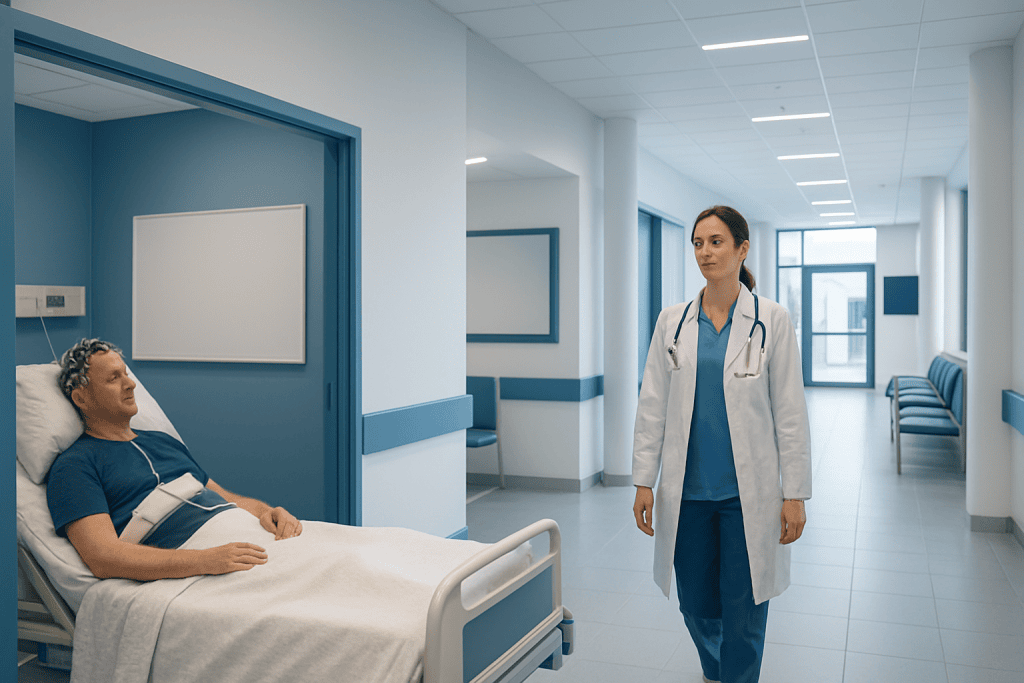
A sleep EEG is mainly used to evaluate brain electrical activity, especially when seizures or other neurological events are suspected during sleep. Polysomnography is a full sleep study used to assess sleep stages, breathing problems, limb movements, and other sleep disorders.
Key Takeaways
- A sleep EEG is mainly used to evaluate brain electrical activity, especially when seizures or other neurological events are suspected during sleep.
- Polysomnography is a full sleep study used to assess sleep stages, breathing problems, limb movements, and other sleep disorders.
- The two tests may look similar because both can be done overnight and use scalp electrodes, but they are not interchangeable.
- Doctors choose the test based on symptoms such as snoring, pauses in breathing, unusual nighttime movements, or possible nocturnal seizures.
- Both tests are noninvasive and are usually safe, painless, and well tolerated.
Sleep EEG and polysomnography are both used during sleep, but they answer different medical questions. A sleep EEG focuses mainly on brain wave activity, while polysomnography is a broader sleep study that also tracks breathing, oxygen levels, heart rhythm, and body movements.
Overview: how the two tests differ
Sleep EEG and polysomnography are diagnostic tests that may both take place during sleep, but they are designed for different purposes. An EEG, or electroencephalogram, records the brain’s electrical activity through small electrodes placed on the scalp. When performed during sleep, it helps doctors look for abnormal brain wave patterns that may suggest epilepsy, nocturnal seizures, or other neurological conditions.
Polysomnography, often called an overnight sleep study, is more comprehensive. It typically records brain waves as well, but it also monitors breathing, oxygen levels, heart rate, eye movements, muscle activity, body position, and sometimes leg movements. This gives a broader picture of how the body functions during sleep and is especially useful for diagnosing sleep disorders such as obstructive sleep apnea, periodic limb movement disorder, and some parasomnias.
Because both tests may involve sleeping in a monitored setting and wearing sensors, people sometimes assume they are the same. The main difference is the clinical question being asked. A sleep EEG asks, “Is there abnormal brain activity during sleep?” Polysomnography asks, “What is happening across the whole sleep process, including breathing, movement, and sleep stages?”
What a sleep EEG measures
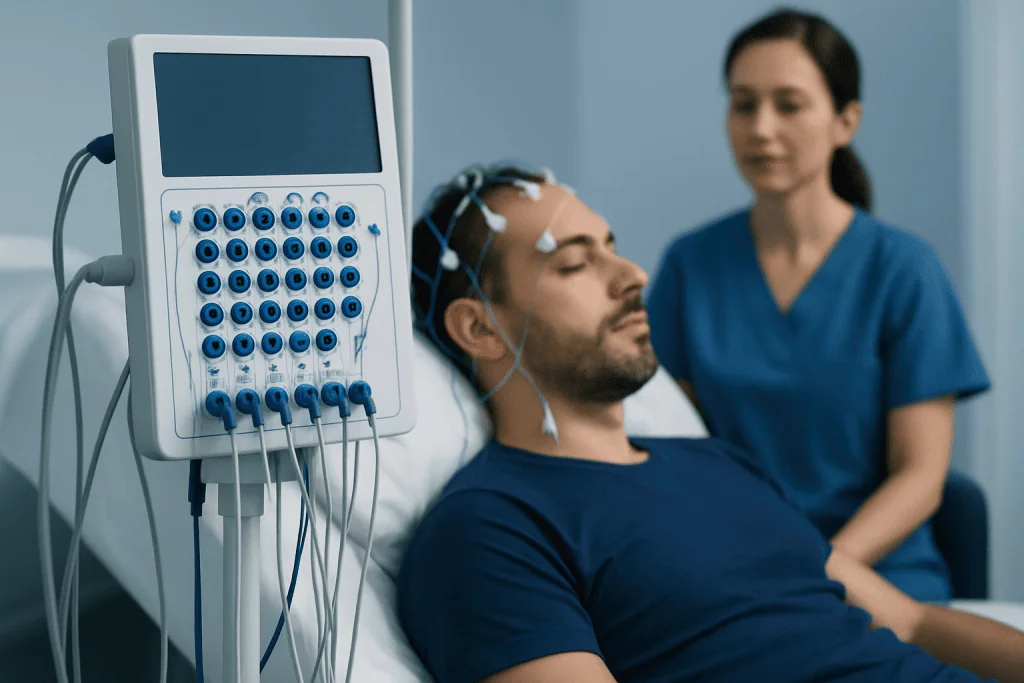
A sleep EEG is centered on the brain. It records electrical signals produced by brain cells and displays them as wave patterns that a neurologist can interpret. Sleep can sometimes make abnormal electrical discharges easier to detect, which is why an EEG may be done after sleep deprivation or during a natural or monitored sleep period.
This test is often used when a person has episodes that raise concern for seizures during sleep, unexplained staring spells, sudden jerks, confusion on waking, or unusual nighttime behaviors that may not clearly fit a typical sleep disorder. In some cases, a doctor may recommend longer or repeated EEG monitoring to capture events that do not happen every night.
A sleep EEG does not usually provide enough information to fully assess breathing-related sleep disorders. Even though it can help identify sleep and wake states through brain wave patterns, it is not designed to measure airflow, chest effort, snoring, or oxygen changes in the same detailed way as polysomnography.
What polysomnography measures
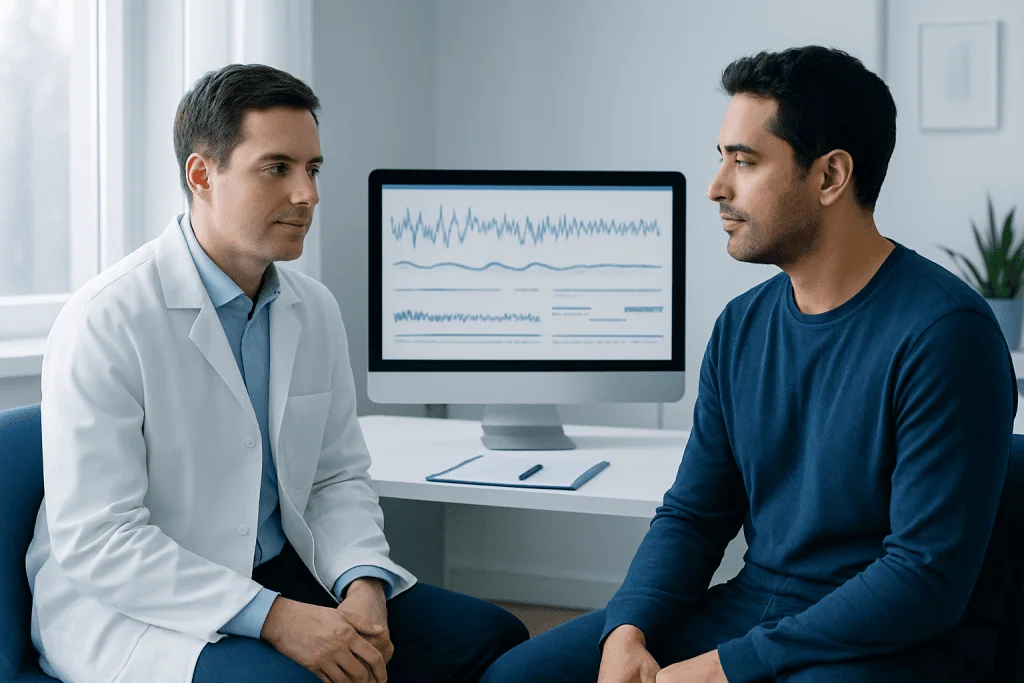
Polysomnography is a multiparameter sleep test. It usually includes EEG leads to identify sleep stages, but it goes much further by monitoring eye movements, chin and leg muscle activity, airflow through the nose and mouth, breathing effort in the chest and abdomen, blood oxygen levels, and heart rhythm. Some studies also include video monitoring to help evaluate unusual behaviors during sleep.
This broader setup helps doctors understand not only whether a person is sleeping, but how well they are breathing, whether sleep is fragmented, and whether movements or behaviors are disrupting rest. It is considered a standard test for evaluating symptoms such as loud snoring, witnessed pauses in breathing, choking or gasping at night, excessive daytime sleepiness, and complex nighttime behaviors.
Polysomnography may be recommended when conditions such as sleep apnea are suspected. It can also support the evaluation of restless sleep, unexplained awakenings, or movement-related sleep problems. In some situations, doctors may combine sleep medicine and neurology assessments if the symptoms could overlap with seizure-related events or other disorders such as epilepsy.
When doctors choose one test over the other
The choice between sleep EEG and polysomnography depends on symptoms, medical history, and the kind of event being investigated. If the main concern is abnormal brain activity, such as possible nocturnal seizures, a sleep EEG is often the more direct test. If the concern is poor sleep quality, snoring, daytime fatigue, breathing interruptions, or movement disorders during sleep, polysomnography is usually more appropriate.
Sometimes the symptoms are not clear-cut. For example, unusual nighttime movements, bed shaking, sudden awakenings, or confused behaviors can be caused by seizures, parasomnias, or sleep-disordered breathing. In these situations, doctors may recommend a video EEG study, a polysomnogram, or occasionally a combined approach depending on what information is most important to capture.
The tests are not competing options so much as complementary tools. One looks closely at brain electrical function, while the other examines the overall physiology of sleep. A specialist in neurology or sleep medicine will decide which test is more suitable, and in some cases a person may need both at different stages of evaluation.
How each test is performed and what to expect
Both tests are noninvasive and usually painless. For a sleep EEG, a technician places small electrodes on the scalp using adhesive or paste. The person is then asked to rest or sleep while the recording takes place. Depending on the reason for testing, the study may be brief, overnight, or part of a longer period of monitoring. Some people are asked to reduce sleep the night before because sleepiness can increase the chance of detecting certain EEG abnormalities.
For polysomnography, the setup is more extensive. In addition to scalp electrodes, sensors are placed near the eyes, on the chin, on the chest, and often on the legs. Belts around the chest and abdomen measure breathing effort, and a small sensor checks oxygen levels. Although the wires can feel unfamiliar, most people are still able to sleep enough for the test to gather useful information.
Sleep centers often give simple preparation instructions, such as avoiding caffeine late in the day, arriving with clean and dry hair, and bringing any regular nighttime medications unless told otherwise by a doctor. If treatment is needed after testing, options may range from lifestyle measures and sleep hygiene support to formal polysomnography evaluation and therapies such as CPAP treatment for breathing-related sleep disorders.
What the results can show
A sleep EEG can show whether brain waves are normal during drowsiness and sleep or whether there are abnormal discharges that may support a diagnosis of epilepsy or another neurological condition. It can also help classify seizure types or guide decisions about further testing. However, a normal EEG does not always rule out seizures, because some abnormal activity may occur only occasionally or outside the recording period.
Polysomnography can reveal disruptions in sleep architecture, repeated breathing pauses, oxygen drops, frequent awakenings, abnormal limb movements, and behaviors that occur in certain sleep stages. The results may help diagnose obstructive sleep apnea, central sleep apnea, parasomnias, or movement-related sleep disorders. In many cases, the findings explain symptoms such as unrefreshing sleep, morning headaches, or excessive daytime sleepiness.
Interpretation always depends on the person’s symptoms and medical background. A test result is one piece of the picture, not the whole diagnosis by itself. Doctors often combine the findings with a clinical history, physical examination, and sometimes additional studies such as home sleep testing, imaging, or EEG assessment in a neurology setting.
Limitations and why follow-up matters
Neither test answers every question. A sleep EEG may miss events that do not occur during the recording, and polysomnography may not fully capture rare neurological episodes if they happen infrequently or require a different monitoring method. Sleep in the laboratory can also be different from sleep at home, which may affect how often certain symptoms appear during testing.
This is why follow-up is important, especially if symptoms continue despite a normal or unclear result. A doctor may recommend repeating the study, arranging a different type of recording, or referring the patient to a neurologist, sleep specialist, or both. Bringing a bed partner’s observations or a home video of events can also be helpful when nighttime symptoms are hard to describe.
For international patients who need coordinated evaluation, Acibadem International’s multidisciplinary specialists and JCI-accredited hospitals diagnose and treat neurological and sleep-related conditions using tailored testing pathways. The most appropriate plan depends on the individual’s symptoms, overall health, and previous test results.
When to seek medical advice
A person should consider medical advice if they have repeated nighttime events such as shaking, stiffening, confusion, sleepwalking, choking, gasping, or prolonged pauses in breathing. Ongoing daytime sleepiness, poor concentration, morning headaches, or unexplained fatigue are also good reasons to seek evaluation, especially if they affect daily life or safety.
Urgent medical attention is important if nighttime episodes involve injury, loss of consciousness, blue discoloration, severe breathing difficulty, or prolonged unresponsiveness. Children, older adults, and people with heart, lung, or neurological conditions may need earlier assessment because sleep-related symptoms can have several causes.
Keeping a simple sleep diary can help. Noting bedtimes, awakenings, snoring, unusual movements, and daytime symptoms may give the doctor useful clues about whether a sleep EEG, polysomnography, or another form of testing is the best next step.
Frequently asked questions
Is a sleep EEG the same as a sleep study?
Not exactly. A sleep EEG records brain electrical activity during sleep, while a sleep study usually refers to polysomnography, which measures several body functions during sleep. Both may include scalp electrodes, but polysomnography is much broader.
Can polysomnography detect seizures?
Polysomnography can sometimes capture unusual nighttime events and includes EEG channels, but it is not as focused on seizure diagnosis as a dedicated EEG or video EEG study. If seizures are strongly suspected, a neurologist may recommend more specialized brain monitoring.
Which test is used for sleep apnea?
Polysomnography is the standard test when sleep apnea is suspected. It measures airflow, breathing effort, oxygen levels, and sleep stages, which are all important for confirming the diagnosis and understanding severity.
Does a normal sleep EEG rule out epilepsy?
No. A normal sleep EEG does not completely exclude epilepsy because abnormal electrical activity may happen only occasionally and may not appear during the test. Doctors may recommend repeat EEGs, longer monitoring, or additional evaluation if symptoms continue.
Are these tests painful or dangerous?
Both tests are generally safe and noninvasive. The sensors and electrodes may feel unfamiliar or mildly inconvenient, but they should not be painful. A qualified healthcare team monitors the study and explains what to expect.
How should someone prepare for a sleep EEG or polysomnography?
Preparation varies slightly by test center, but common advice includes washing the hair, avoiding heavy hair products, and limiting caffeine later in the day. A doctor may also give specific instructions about medications or sleep schedule before the test.
References
- American Academy of Sleep Medicine
- National Institute of Neurological Disorders and Stroke
- National Heart, Lung, and Blood Institute
- Epilepsy Foundation
- MedlinePlus
This article is for general information only and is not a substitute for professional medical advice. Please consult a qualified doctor about your individual situation.
Hair transplant in Turkey — costs, graft counts & a free assessment
JCI-accredited · board-certified surgeons · reply within 24h
Add us as a Preferred Source to see more of our trusted health content across Google Search, AI Overviews and Discover.
Check your numbers in seconds
BMI, calories, due date, blood pressure and 30+ more clinical calculators — free, instant, doctor-reviewed ranges.






